



Impact & Provenance

Low GI Energy for Endurance Sports and Sustained Energy
Low-GI foods can be a useful choice before endurance exercise, but they aren’t automatically the best fuel throughout an event. For low GI energy for endurance sports, choose foods with a GI under ...
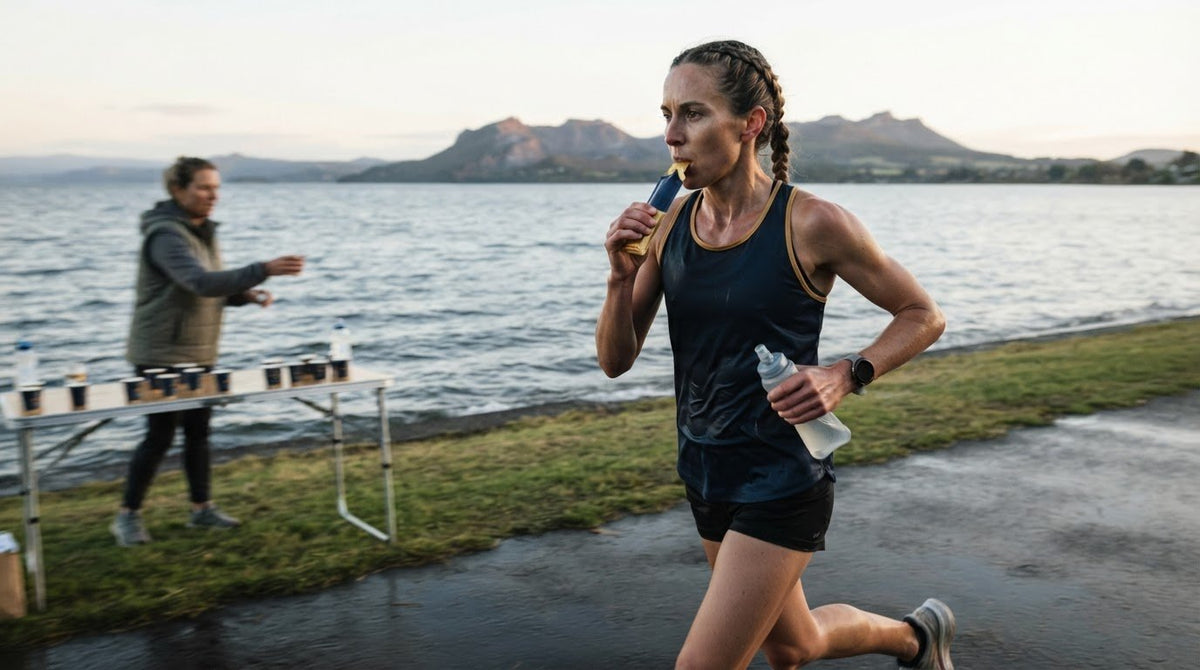
What pro endurance athletes eat during races to fuel well
Carbohydrate is the foundation of race fuelling, but caffeine is a separate part of the plan, not a substitute for it. During a race, endurance athletes are advised to consume 30 to 60 grams of car...

Energy gels for cycling: how to choose and use them
What if the best choice isn’t the gel with the most carbohydrates, but one that fits a fuelling plan you can repeat? Choosing energy gels for cycling can feel complicated: products vary in carbohyd...

Triathlon Nutrition and Honey: The Bio-Analytical Case for Natural Fueling
Research indicates that up to 70% of long-distance triathletes suffer from gastrointestinal distress during competition, a physiological complication frequently attributed to the high osmolality an...

How to Avoid Bonking: A Bio-Analytical Endurance Guide
Recent clinical data suggests that as many as 70 per cent of endurance athletes encounter significant gastrointestinal distress during competition, a figure that highlights the systemic limitations...

The Science of Honey Endurance Fuel: A Bio-Analytical Case Study for Athletes
The highly engineered synthetic maltodextrin gel, long considered the gold standard for elite performance, may actually be the primary catalyst for the systemic energy failures and gastrointestinal...

Functional Honey for Athletes: Bio-Analytical Reference
The prevailing assumption that synthetic, maltodextrin-dominant formulations represent the pinnacle of endurance fueling is increasingly challenged by advancements in bio-analytical research. For m...

What Does Hitting the Wall Feel Like? The Science of Glycogen Depletion in Runners
The sensation commonly described as 'the wall' is not a mere failure of willpower; it is a sophisticated physiological preservation mechanism triggered by the central nervous system to prevent cata...

Natural Endurance Nutrition in New Zealand: A Scientific Framework for Elite Performance
The prevailing reliance on synthetic carbohydrate isolates as the primary vector for athletic fuelling may, in fact, be the fundamental physiological bottleneck currently limiting elite performance...