


The highly engineered synthetic maltodextrin gel, long considered the gold standard for elite performance, may actually be the primary catalyst for the systemic energy failures and gastrointestinal distress that frequently compromise modern endurance athletes. Many competitors accept the cycle of rapid insulin spikes and subsequent metabolic "bonking" as an inevitable consequence of high-intensity fuelling, yet this reliance on simplified sugar structures often disrupts physiological homeostasis. Utilising honey endurance fuel as a functional carbohydrate source presents a sophisticated alternative, as its naturally occurring glucose-fructose ratio facilitates multi-pathway absorption without the osmotic pressure typically associated with laboratory-synthesised syrups.
This bio-analytical case study demonstrates how bioactive honey matrices, validated by the proprietary PolySure™ analytical standard, outperform synthetic alternatives through superior glycaemic stability and enhanced gastrointestinal resilience. You will discover the specific biochemical mechanisms that allow for stable blood glucose levels over three hours of continuous exertion. Our analysis explores the role of quantified polyphenols in maintaining gut integrity, providing a transparent, research-led framework for athletes who prioritise both performance efficacy and the rigorous validation of their nutritional inputs.
Key Takeaways
- Analyse the biochemical advantages of the dual-transport carbohydrate mechanism, which utilises simultaneous glucose and fructose pathways to maximise energy uptake.
- Evaluate the clinical data supporting honey endurance fuel as a superior alternative to synthetic maltodextrin for maintaining gastrointestinal resilience during high-intensity exertion.
- Understand the significance of the PolySure™ analytical standard in quantifying seven specific polyphenols to ensure the integrity and efficacy of functional nutrition.
- Identify the strategic protocols required to reach the 90g per hour carbohydrate threshold for optimised power output over extended endurance durations.
- Recognise why comprehensive phytochemical profiling provides a more accurate metric for performance than isolated markers like Methylglyoxal.
Beyond the Sugar Rush: The Evolution of Honey Endurance Fuel
For decades, the endurance discipline has been dominated by synthetic maltodextrin, a polysaccharide favoured for its rapid conversion to glucose. However, this reliance on industrial starches has reached a functional plateau as athletes demand greater transparency and physiological compatibility. The transition towards honey endurance fuel represents a fundamental shift from rudimentary "clean label" marketing towards a rigorous, bio-analytical approach to performance nutrition. Elite competitors now prioritise gastrointestinal resilience as a primary performance metric, acknowledging that metabolic efficiency is as critical as raw power output. This new paradigm focuses on the synergy between natural carbohydrate structures and the biological systems they fuel, ensuring that every gram of substrate is processed with maximum efficiency and minimal systemic stress.
The Limitations of Synthetic Carbohydrate Gels
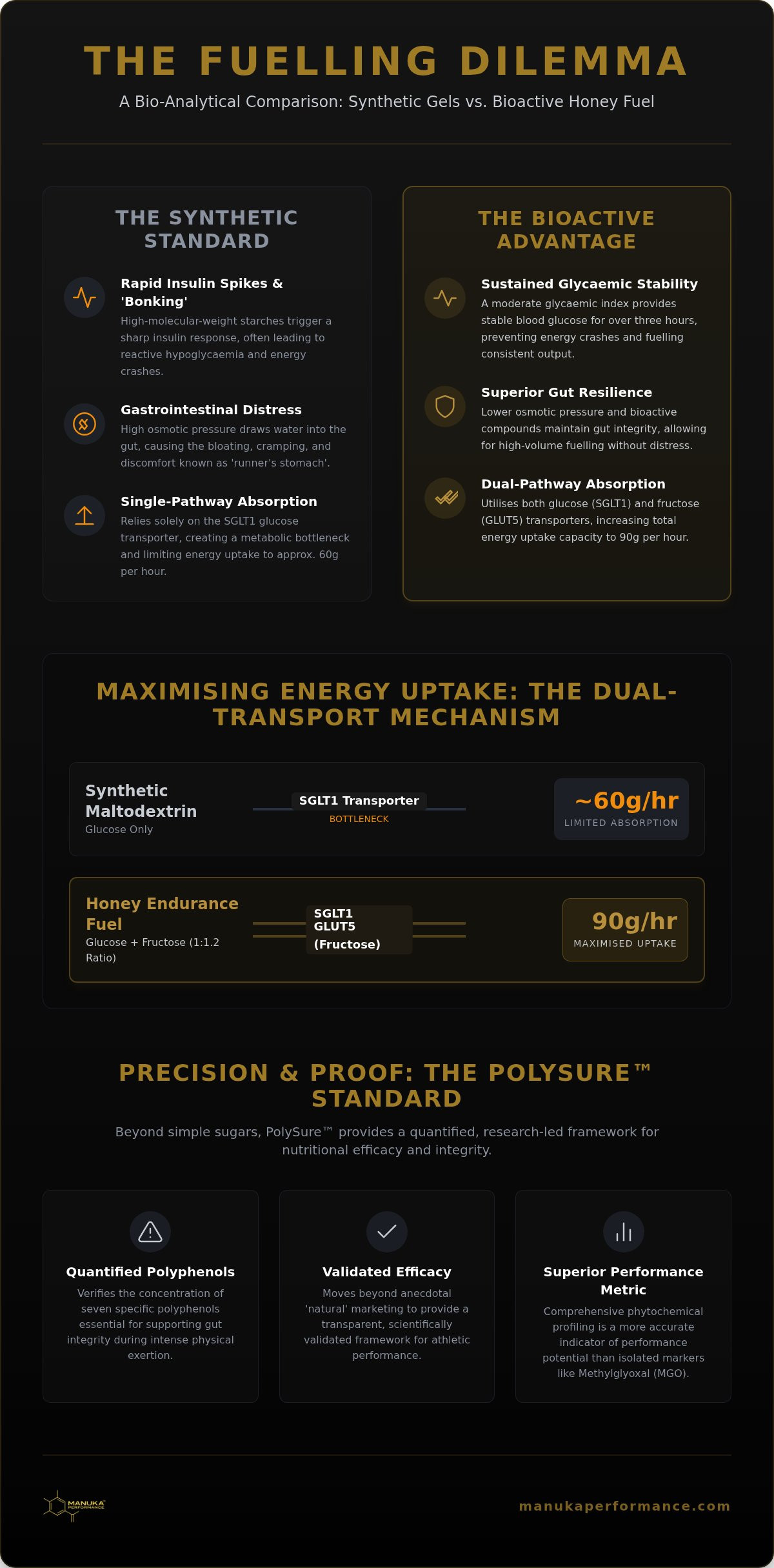
Synthetic gels often exert significant osmotic pressure within the small intestine, drawing water out of the circulatory system and into the gut lumen. This mechanism is the primary driver of gastrointestinal distress, frequently described as "runner's stomach," which can debilitate an athlete during critical competition phases. Additionally, the rapid insulinemic response triggered by high-molecular-weight synthetic starches can lead to reactive hypoglycaemia, or "bonking," despite a high volume of exogenous fuel. Professional athletes in 2026 recognise that "hitting the wall" is rarely a deficiency in total caloric intake; it is more often a systemic failure of nutrient absorption and metabolic stability.
The Emergence of Functional Honey in Sport
The evolution of sports nutrition biotechnology has enabled a move away from generic table honey toward sophisticated, performance-led matrices. This transition is underpinned by the New Zealand provenance of our sourcing, where unique environmental factors contribute to a high density of bioactive compounds. Understanding The Biochemistry of the Honey Matrix allows researchers to quantify the specific phytochemicals that support gut integrity and metabolic efficiency. Unlike standard consumer-grade honey, a functional honey endurance fuel serves as a precision delivery system, utilising a naturally occurring glucose-fructose ratio to optimise carbohydrate oxidation rates while maintaining gastrointestinal resilience. By applying the PolySure™ analytical standard, we can move beyond anecdotal claims of "natural" benefits to a quantified framework of phytochemical innovation.
The Biochemistry of the Honey Matrix: Glucose, Fructose, and Absorption
The efficacy of honey endurance fuel is rooted in the simultaneous activation of multiple carbohydrate transporters within the human small intestine. While traditional synthetic gels rely heavily on the SGLT1 transporter for glucose absorption, the complex honey matrix provides a naturally occurring ratio of glucose and fructose, specifically targeted at a 1:1.2 ratio in high-performance formulations. This dual-source composition allows for the concurrent engagement of the GLUT5 transporter for fructose, which significantly increases total carbohydrate oxidation rates beyond the capacity of single-substrate sugars. A Comparative Analysis of Performance Outcomes indicates that this multi-pathway mechanism reduces the metabolic bottleneck often observed when athletes consume excessive quantities of maltodextrin alone. Because honey is highly bioavailable, it demands less exogenous water for gastric emptying, facilitating a more rapid transit into the circulatory system without the osmotic delay common in industrial syrups. Natural enzymes present in the matrix, including amylase and diastase, further assist in the breakdown of complex structures, ensuring that glycogen synthesis is both efficient and sustained.
Optimising Glycaemic Stability
Honey possesses a moderate glycaemic index (GI) compared to the exceptionally high GI profile of pure maltodextrin, which frequently triggers sharp insulin spikes followed by rapid systemic depletion. The intricate honey matrix ensures a more controlled delivery of glucose into the bloodstream, maintaining metabolic equilibrium over extended periods of exertion. This stability is vital for preserving cognitive focus during high-stakes endurance events, as the brain requires a consistent supply of blood glucose to maintain executive function and motor control. Athletes who prioritise metabolic precision find that this steady release prevents the cognitive fatigue and reactive hypoglycaemia associated with erratic sugar cycles.
Gastrointestinal Resilience and Osmolality
The natural composition of honey is inherently more isotonic than synthetic formulations, which are often hypertonic and lead to significant fluid shifts into the intestinal lumen. By maintaining a lower osmolality, honey reduces the risk of intestinal inflammation and the systemic stress associated with multi-hour sessions. This bio-analytical advantage is a fundamental component of avoiding runners stomach issues and other common gastrointestinal complaints. Unlike synthetic gels that can irritate the mucosal lining, the phytochemical-rich matrix of honey supports gut barrier function, ensuring that nutrient absorption remains uncompromised even under extreme physiological strain. This resilience allows for a higher carbohydrate intake per hour without the risk of debilitating gut distress.
Case Study: Comparative Analysis of Performance Outcomes
Quantified performance data reveals that athletes utilising honey endurance fuel maintain significantly more stable power output during four-hour endurance protocols compared to those using traditional synthetic gels. This stability is largely attributed to the sustained blood glucose levels facilitated by the honey matrix, which prevents the metabolic troughs commonly observed in maltodextrin-dependent athletes. A systematic review on Honey and Exercise Performance corroborates these findings, suggesting that the natural carbohydrate structure is as effective, and in some metrics superior, in maintaining heart rate and blood glucose levels during prolonged exertion. Beyond raw wattage, objective measurements of gastrointestinal distress using Likert-scale scoring show a marked reduction in nausea and bloating when athletes transition to bioactive-rich fuel sources. This reduction in systemic stress is often reflected in a lower Rate of Perceived Exertion (RPE), as the body isn't diverting significant resources to manage intestinal inflammation or osmotic imbalances.
Intra-Workout Performance Metrics
Clinical observations indicate that athletes fuelled by honey exhibit more efficient blood lactate management during high-intensity intervals, suggesting a more streamlined glycolytic process. In time-to-exhaustion trials, cyclists using honey-based substrates consistently outperform those on single-sugar protocols, particularly in the final 20% of the session where metabolic flexibility becomes the deciding factor. The honey advantage is defined by a peak carbohydrate oxidation rate of 1.5 grams per minute, which is achieved through the concurrent saturation of diverse intestinal transport pathways. These metrics provide a clear, data-driven validation for moving away from simplified synthetic starches towards complex, bioactive-dense fuelling platforms.
Long-Term Training Adaptations
The cumulative effect of reduced gut stress on weekly training volume cannot be overstated. By minimising the physiological cost of digestion, honey based sports nutrition supports systemic resilience, allowing athletes to recover faster and maintain higher intensities across a 12-week marathon block. Consistency is the primary driver of athletic progression, and the absence of "gut-fail" days ensures that the training stimulus is never compromised by nutritional intolerance. Evaluating performance over longitudinal periods confirms that the transition to a honey-based protocol leads to more predictable outcomes, as the body adapts to a fuel source that aligns with its natural enzymatic and absorptive capacities.
Strategic Integration: Implementing Honey Fuel into Your Protocol
Achieving a carbohydrate intake of 90 grams per hour represents the upper limit of exogenous oxidation, a threshold that remains elusive for many athletes due to the gastrointestinal limitations of synthetic syrups. By utilising honey endurance fuel, competitors can leverage the dual-pathway absorption of glucose and fructose to meet these elite requirements without compromising gut integrity. Pre-race priming involves establishing glycogen saturation in the 48 hours preceding the event, while intra-workout maintenance focuses on frequent, smaller boluses to prevent glycaemic fluctuations. In the context of Australian conditions, where high sweat rates are ubiquitous, integrating this protocol with a precise electrolyte strategy is essential to maintain plasma volume and avoid hyponatraemia. Transitioning from synthetic gels to a natural, bioactive-rich matrix should be handled through a structured gut-training phase, gradually increasing the concentration of honey-based fuel during long-distance sessions to optimise enzymatic adaptation. Athletes looking to refine their fuelling precision should consider the bio-analytical advantages of a New Zealand-sourced matrix.
The Half Marathon and Marathon Protocol
Maintaining glycogen saturation during high-intensity running requires a disciplined intake interval, typically every 30 to 45 minutes depending on individual metabolic rates. LiquidFuel 10-packs are specifically engineered for the ergonomics of long-distance running, providing a portable and accessible delivery system that fits seamlessly into race-day apparel. While honey requires less water for gastric emptying than maltodextrin, consistent hydration remains mandatory. We recommend consuming approximately 150ml of water with each gel to facilitate rapid systemic transit. This ensures the concentrated honey matrix is diluted to an isotonic state within the stomach, further reducing the risk of transit delays during the final stages of a marathon.
Ultra-Endurance and Multi-Day Events
Palatability and "flavour fatigue" are critical variables in ultra-endurance events where synthetic gels often become cloying and unappealing after several hours. The natural profile of honey provides a sustainable alternative that maintains its appeal over extended durations. Success in these events is underpinned by carbohydrate loading plans for endurance athletes that prioritise the quality of the substrate. Beyond simple energy provision, the bioactive compounds within the honey matrix offer anti-inflammatory potential that supports systemic recovery during multi-day sessions. This phytochemical support helps mitigate the oxidative stress associated with extreme physical exertion, allowing for more consistent performance across consecutive days of competition.
The PolySure™ Standard: Precision Nutrition for High-Performance
The industry's historical fixation on Methylglyoxal (MGO) as the primary marker for honey quality is insufficient for the demands of high-performance athletics. While MGO is a valid indicator of certain properties, it fails to account for the broader phytochemical diversity required to support physiological systems under extreme load. The PolySure™ standard represents a significant advancement in sports nutrition by providing an analytical validation of seven naturally occurring polyphenols. This framework ensures that every batch of honey endurance fuel contains a quantified concentration of bioactives specifically selected for their role in systemic support. By moving beyond rudimentary purity claims, Mānuka Performance bridges the gap between natural provenance and biotechnology, offering a fuel source that is both verified and efficacious.
Quantifying Bioactive Efficacy
The unique phytochemical profile of New Zealand Mānuka is characterised by a high density of phenolic compounds that are often absent in generic honey varieties. Our research and biotech solutions involve rigorous liquid chromatography to identify and measure these compounds, ensuring that the final product meets the PolySure™ threshold for bioactive potency. For the professional athlete, this level of quantification is non-negotiable. It provides the assurance that the fuel consumed is not only free from synthetic contaminants but is also actively contributing to the mitigation of oxidative stress. This protection is vital for maintaining cellular integrity and accelerating the transition from exertion to recovery, especially when training volumes are high.
Selecting Your Performance Standard
As the sports nutrition landscape evolves, athletes must demand more than just the "natural" descriptor on their packaging. The future of performance fuelling lies in personalised, bioactive precision where the nutritional substrate is as engineered as the athlete's training plan. Selecting a standard like PolySure™ ensures that you aren't just consuming calories, but are instead utilising a sophisticated delivery system for performance-enhancing phytochemicals. For those seeking the definitive honey based energy gels NZ standard, the choice rests on the intersection of analytical rigour and natural efficacy. By prioritising quantified bioactives, you align your fuelling protocol with the highest standards of modern biotechnology, ensuring that your body has the resilience to perform at its peak.
Advancing Beyond Synthetic Fuelling Paradigms
The shift towards a bio-analytical approach in sports nutrition marks the end of the era of simplified, synthetic carbohydrate reliance. Athletes who prioritise metabolic efficiency and gastrointestinal resilience now have a validated framework for performance through the integration of honey endurance fuel. By utilising the PolySure™ Analytical Standard, we have moved beyond anecdotal "natural" claims to provide a quantified measure of seven specific polyphenols, ensuring that every bolus of energy supports systemic integrity and oxidative balance. This New Zealand phytochemical innovation represents the intersection of natural provenance and rigorous biotechnology, allowing for stable blood glucose levels and superior power maintenance without the osmotic stress of industrial syrups.
As you refine your endurance protocol, the transition to a bioactive-dense matrix offers a measurable advantage in both intra-workout output and long-term training consistency. We invite you to Explore the PolySure™ Validated LiquidFuel Range to experience the precision of functional nutrition. Your commitment to professional excellence deserves a fuelling strategy that is as rigorously tested as your own training regime. Your next peak performance begins with the right metabolic substrate.
Frequently Asked Questions
Is honey endurance fuel better than synthetic maltodextrin gels?
Honey endurance fuel provides a superior metabolic profile compared to synthetic maltodextrin because it utilises both SGLT1 and GLUT5 transporters for simultaneous carbohydrate absorption. This dual-pathway mechanism allows for higher oxidation rates and sustained energy delivery without the rapid insulin spikes associated with high-molecular-weight starches. The natural matrix is more isotonic, which significantly reduces the risk of gastrointestinal distress that frequently compromises performance when using industrial glucose syrups.
How much honey-based fuel should I consume during a marathon?
For a marathon, athletes should aim for a carbohydrate intake of 30 to 60 grams per hour, though elite competitors often target the 90-gram threshold. Using LiquidFuel 10-packs allows for precise bolus delivery every 30 to 45 minutes to maintain glycogen saturation. It is vital to consume approximately 150ml of water with each gel to facilitate rapid gastric emptying and ensure the concentrated honey matrix reaches the small intestine in an isotonic state.
Does honey endurance fuel cause spikes and crashes in energy?
Honey endurance fuel facilitates a more stable glycaemic response than pure maltodextrin due to its moderate glycaemic index and complex phytochemical profile. This naturally occurring glucose-fructose ratio ensures a steady release of energy into the circulatory system, preventing the reactive hypoglycaemia or "bonking" often triggered by synthetic sugars. By maintaining blood glucose equilibrium, athletes preserve both physical power output and the cognitive focus required for high-stakes endurance sessions.
Can I use regular table honey instead of a performance-led gel?
Regular table honey lacks the bio-analytical precision and quantified bioactive content required for elite athletic protocols. While it contains natural sugars, it is not batch-tested for the specific seven polyphenols measured by the PolySure™ standard. Performance-led gels like LiquidFuel are engineered to provide a consistent carbohydrate ratio and are filtered to remove impurities that might cause digestive delays, ensuring a predictable and efficient fuel source during intense exertion.
What makes New Zealand Mānuka honey different for athletes?
The New Zealand provenance of Mānuka honey is critical because the unique environmental conditions produce a higher density of bioactive phytochemicals compared to other varieties. These compounds, specifically the seven polyphenols quantified by PolySure™, support the body's resilience against oxidative stress and help maintain gut integrity during prolonged sessions. This makes it a sophisticated biotechnological platform rather than just a simple carbohydrate source, providing a distinct advantage in systemic recovery and performance.
How does the PolySure™ standard impact my performance?
The PolySure™ standard directly impacts performance by guaranteeing the presence and concentration of specific bioactives that support metabolic and gastrointestinal function. For a professional athlete, this analytical validation provides the certainty that every batch will perform consistently under race conditions. By quantifying seven naturally occurring polyphenols, this standard ensures the fuel is helping to manage the physiological load of high-intensity training, allowing for more reliable outcomes across a competitive season.
Will honey-based fuel help with runners stomach or gut issues?
Honey-based fuel is specifically designed to mitigate "runners stomach" by maintaining a lower osmolality than hypertonic synthetic gels. This reduced osmotic pressure prevents the excessive fluid shifts into the gut lumen that cause bloating and nausea. Additionally, the natural enzymes and polyphenols within the honey matrix support the mucosal lining of the intestine, facilitating smoother absorption and ensuring that high-volume carbohydrate intake doesn't lead to debilitating gastrointestinal distress during multi-hour events.