


The prevailing reliance on synthetic carbohydrate isolates as the primary vector for athletic fuelling may, in fact, be the fundamental physiological bottleneck currently limiting elite performance. While the industry has long prioritised the rapid delivery of glucose via maltodextrin, the resulting gastrointestinal distress and volatile glycaemic fluctuations often negate the intended ergogenic benefits. Many high-performance athletes accept these systemic disruptions as an unavoidable trade-off for energy; however, empirical research into natural endurance nutrition NZ suggests that a more sophisticated, matrix-based approach is required for optimal metabolic stability.
This article explores the biochemical advantages of whole-food structures and the specific ways New Zealand innovation is redefining the category through rigorous analytical validation. You'll discover how the PolySure™ standard quantifies seven naturally occurring polyphenols to ensure a phytochemical profile that supports sustained power without the typical metabolic crashes associated with simple sugar spikes. By moving beyond anecdotal natural claims and into the realm of quantified bioactives, we provide a scientific framework for understanding how these complex honey-based matrices facilitate superior nutrient absorption and gastrointestinal resilience during prolonged exertion. We'll examine the intersection of nature and biotechnology to establish a new benchmark for purity and performance efficacy.
Key Takeaways
- Analyse the transition from synthetic carbohydrate isolates to functional whole-food matrices designed to enhance metabolic efficiency and gastrointestinal resilience.
- Evaluate the "dual-fuel" mechanism of the honey-based matrix, which utilises distinct SGLT1 and GLUT5 transporters to mitigate the risk of intestinal saturation.
- Assess the comparative bioavailability of phytochemicals within natural endurance nutrition NZ versus traditional synthetic gels to ensure sustained power output without systemic disruption.
- Develop a quantified approach to endurance fuelling by calculating precise carbohydrate requirements based on individual intensity metrics and periodised training blocks.
- Understand the significance of the PolySure™ analytical standard in providing rigorous, data-driven validation for the seven specific polyphenols found in high-performance bioactive ingredients.
The Evolution of Natural Endurance Nutrition in the New Zealand Landscape
Natural endurance nutrition NZ is defined as the strategic application of minimally processed, whole-food matrices to facilitate sustained metabolic output. This discipline represents a paradigm shift from the reductive use of synthetic isolates toward the integration of complex, bioavailable phytochemical structures. The unique geographical conditions of New Zealand, characterised by high ultraviolet radiation and distinct soil compositions, compel botanical species to synthesise elevated levels of secondary metabolites. These compounds, specifically polyphenols, serve as protective mechanisms for the plant but offer significant functional advantages when utilised within an athletic fuelling strategy. To move beyond the ambiguity of general health claims, the industry now demands analytical rigor to quantify these bioactives, ensuring performance outcomes are predictable and evidence-based.
The Limitations of Synthetic Isolate Formulations
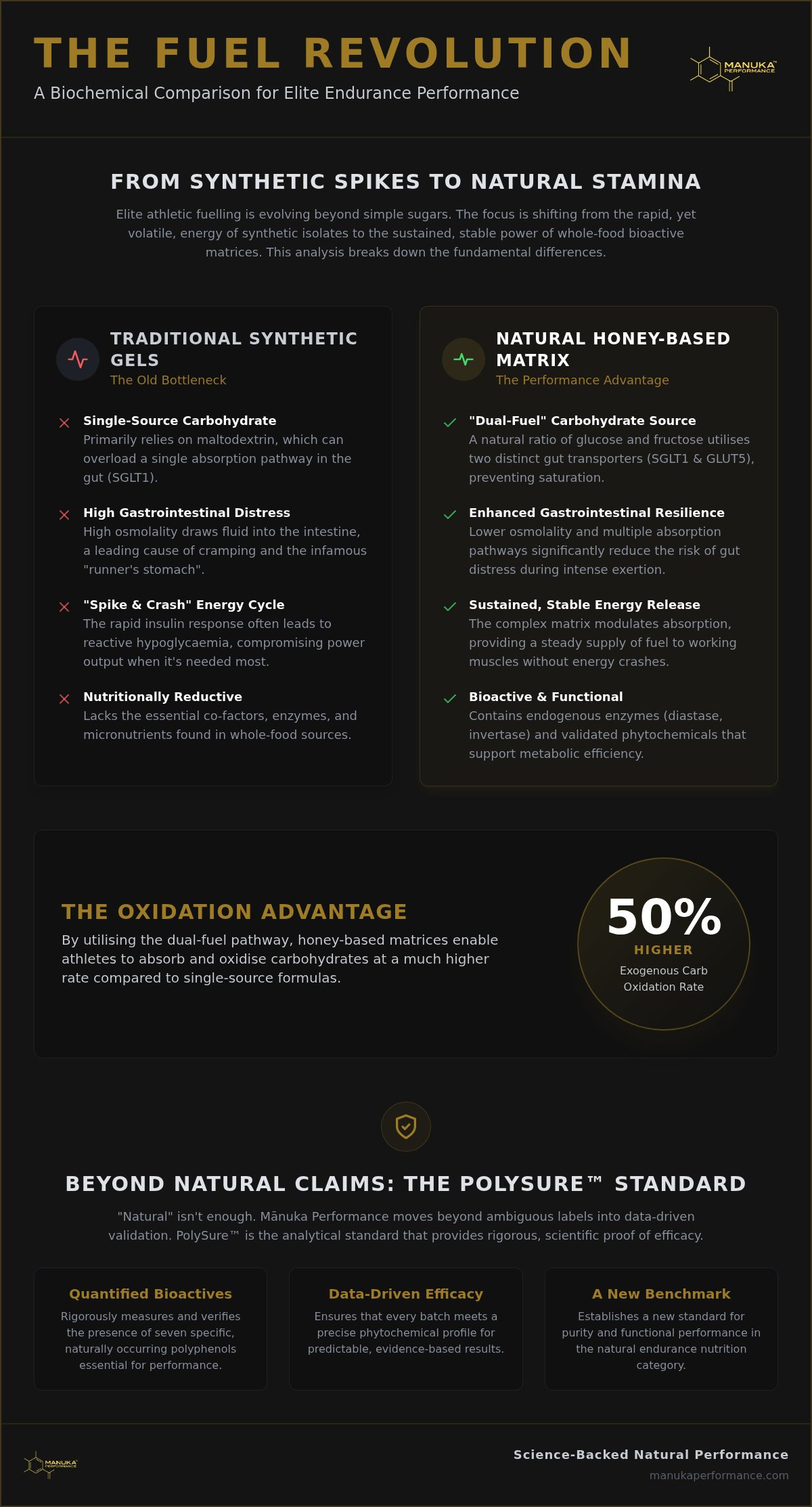
Traditional sports nutrition has long been dominated by maltodextrin, a polysaccharide often derived from hydrolysed corn starch. While effective for rapid glucose delivery, its high molecular weight significantly increases osmotic pressure within the small intestine. This often results in the gastrointestinal distress colloquially known as "runners stomach". These ultra-processed gels lack the essential co-factors and micronutrients found in whole-food sources, leading to a "spike and crash" cycle. Without a complex matrix to modulate absorption, the subsequent insulin response can trigger reactive hypoglycaemia. This compromises power output during critical phases of competition, leaving athletes depleted when they need energy most.
Defining Functional Nutrition for the Modern Athlete
Modern elite performance requires a transition from "clean label" products, which focus on the absence of synthetic additives, to "functional nutrition". This prioritises the presence of validated bioactives. This approach leverages New Zealand's provenance to deliver performance-led innovation rooted in biotechnology. Bio-analytical validation is the cornerstone of this evolution. It's no longer sufficient to claim a product is natural. Athletes require proof of efficacy through quantified standards. By focusing on the systemic benefits of phytochemical complexes, such as improved oxidative stress management and efficient carbohydrate transport, functional nutrition provides a superior physiological alternative to traditional synthetic interventions. This ensures that the fuel consumed isn't just "clean", but actively contributes to the maintenance of high-intensity output over extended durations.
The Biochemistry of Honey-Based Matrices in Athletic Fueling
The efficacy of natural endurance nutrition NZ is fundamentally rooted in the carbohydrate profile of the New Zealand honey matrix. Unlike synthetic gels that rely on isolated maltodextrin, honey comprises a naturally occurring ratio of glucose and fructose. This configuration activates the "dual-fuel" pathway, utilising both SGLT1 and GLUT5 transporters in the small intestine. By distributing the absorption load across these two distinct channels, the system avoids the saturation of a single transporter, which is a primary cause of gastrointestinal stasis. Honey also contains endogenous enzymes like diastase and invertase. These biocatalysts facilitate the hydrolysis of complex sugars into simpler forms, reducing the metabolic energy required for digestion. The lower osmolality of a honey-based matrix further mitigates the risk of "runners stomach" by ensuring that fluid isn't excessively drawn into the gut, maintaining a stable osmotic balance during high-intensity efforts.
Optimising Carbohydrate Oxidation Rates
The specific carbohydrate ratio inherent in honey allows athletes to achieve higher oxidation rates compared to single-source formulations. Research indicates that dual-source carbohydrates can increase exogenous carbohydrate oxidation by up to 50 percent, allowing for intakes exceeding 90 grams per hour without intestinal distress. This efficiency is a hallmark of the honey-based LiquidFuel matrix, which provides a sustained energy release profile. By avoiding the rapid glycaemic spikes associated with synthetic sugars, the honey matrix ensures a more consistent supply of fuel to the working muscles, preserving glycogen stores and delaying the onset of fatigue.
Phytochemical Complexity and Oxidative Stress
Endurance training imposes significant oxidative stress on the body, requiring a robust internal defence system to maintain performance. The presence of secondary metabolites, specifically polyphenols, within the honey matrix offers a sophisticated mechanism for managing this physiological burden. These compounds aren't merely generic additions; they're functional bioactives that contribute to systemic resilience. Through the application of the PolySure™ analytical standard, it's possible to identify high-performance honey variants with specific phytochemical profiles. This level of quantification ensures that the nutrition provided isn't just a source of calories, but a complex biological tool designed to support the athlete’s overall physiological stability under extreme conditions.
Comparative Analysis: Natural Whole-Food Matrices vs. Synthetic Formulations
The manufacturing of synthetic energy gels typically involves high-heat processing and chemical refinement to isolate specific saccharides, such as maltodextrin or crystalline fructose. This reductive approach prioritises caloric density over biological integrity. In contrast, the production of cold-processed honey matrices prioritises the preservation of heat-sensitive bioactives and endogenous enzymes. This distinction is critical for the efficacy of natural endurance nutrition NZ. While synthetic products often feature "fortified" vitamins, these isolated compounds lack the requisite co-factors and organic acids found in whole-food structures. The common misconception that "sugar is just sugar" ignores the role of these secondary metabolites in modulating the glycaemic response. Chronic reliance on synthetic additives and preservatives can also lead to systemic inflammation or microbiome disruption, whereas natural matrices offer a more harmonious physiological profile for long-term athletic health.
Gastrointestinal Resilience and Osmolality
The gastric emptying rate of a fuel source is heavily influenced by its osmolality. Synthetic gels, particularly those with high concentrations of maltodextrin, create a high osmotic pressure in the stomach. This requires the athlete to consume excessive volumes of water to dilute the solution and facilitate transit into the small intestine. Failure to do so often results in gastric pooling and distress. Honey-based LiquidFuel possesses a more favourable osmotic profile. The presence of natural enzymes assists in the immediate breakdown of carbohydrates, ensuring a faster transit time. This gut-friendly matrix allows for more efficient nutrient delivery during the mechanical stress of running or cycling, reducing the likelihood of gastrointestinal failure.
The Role of Flavour Profiles in Palate Fatigue
Palate fatigue represents a significant psychological and physiological barrier during ultra-endurance events. Synthetic sweeteners like sucralose or acesulfame K provide a singular, intense sweetness that often leads to sensory aversion after several hours of exertion. This can result in an athlete being unable to maintain their required caloric intake. The complex, multi-dimensional flavour profile of natural honey is far more sustainable. It provides a nuanced sensory experience that maintains its appeal over extended durations. There is a documented relationship between sensory satisfaction and psychological endurance; when the fuel is palatable and biologically compatible, the athlete is more likely to adhere to their planned nutrition strategy under extreme fatigue.
Optimising Your Endurance Nutrition Strategy for Competitive Performance
The integration of natural endurance nutrition NZ into a periodised training block requires a systematic approach that aligns with specific physiological adaptations. Athletes shouldn't merely consume fuel; they must strategically deploy it based on the metabolic demands of each individual session. High-intensity intervals demand a higher glycolytic flux, whereas long-duration aerobic efforts benefit significantly from the stable energy release of a honey-based matrix. Calculating requirements involves a baseline of 60 to 90 grams of carbohydrates per hour, adjusted for body mass, intensity, and duration. Training the gut is a prerequisite for success; the digestive system must adapt to the specific osmolality of the fuel matrix while under mechanical stress. This ensures that on race day, the synergy between daily functional nutrition and intra-workout fuelling is fully optimised, allowing for the maintenance of peak power output without systemic disruption.
Tactical Fueling Protocols for Long-Duration Efforts
Adopting a "little and often" protocol is the most effective way to maintain blood glucose levels without overloading the gastric capacity. Utilising LiquidFuel 10-packs allows for precise dosing and portability throughout the effort. In temperate conditions, one gel every 30 to 45 minutes serves as a standard baseline for most elite competitors. However, in high heat and humidity, sweat rates increase and the body's cooling mechanisms demand more blood flow, often diverting it from the digestive tract. In these scenarios, balancing hydration with natural carbohydrate intake is vital. Athletes should prioritise isotonic solutions or consume additional water alongside the honey matrix to maintain gastric emptying rates and prevent the dehydration-induced GI distress that often plagues long-duration events.
Transitioning from Synthetic to Natural Fuel
Transitioning from synthetic isolates to natural matrices should occur over a structured 4-week protocol to allow for physiological adjustment. This period allows for the assessment of gastrointestinal response and the identification of performance markers.
- Week 1 and 2: Replace 25 percent of synthetic gels with natural alternatives during low-intensity, aerobic sessions.
- Week 3: Increase the natural ratio to 50 percent, including at least one high-intensity session to monitor power output and heart rate stability.
- Week 4: Complete the full transition to natural fuel across all training intensities.
During this phase, athletes often report "feel-good" markers such as the absence of the typical post-spike lethargy. Stable blood glucose levels result in a more consistent perceived exertion and a reduction in the cognitive fatigue often associated with simple sugar crashes. For those ready to implement this protocol and enhance their metabolic resilience, you can buy the LiquidFuel 10-pack to begin your structured transition.
Mānuka Performance: Redefining Functional Nutrition through PolySure™ Validation
Mānuka Performance operates at the intersection of nature and advanced biotechnology, establishing a new benchmark for natural endurance nutrition NZ. Unlike standard commercial entities that rely on subjective "natural" claims, the brand utilises rigorous analytical standards to ensure systemic efficacy. The PolySure™ standard is the cornerstone of this approach. It's a proprietary validation protocol that quantifies seven naturally occurring polyphenols within their honey-based matrices. This level of precision allows elite athletes to move beyond the ambiguity of clean-label marketing and into a sphere of data-driven performance. By prioritising the biochemical profile of their ingredients, they ensure that each formulation supports the physiological demands of high-intensity training.
The PolySure™ Difference: Beyond MGO
It's essential to distinguish between medical markers and performance markers. Methylglyoxal (MGO) is the primary metric used to measure the antibacterial activity of Mānuka honey, yet it provides no insight into its athletic utility. For the endurance competitor, the presence of specific phytochemicals is far more relevant. PolySure™ validation focuses on the quantification of polyphenols, which are critical for managing oxidative stress and supporting systemic resilience during prolonged exertion. This transparency in the validation process provides a level of certainty that social proof or testimonials don't provide. It ensures the bioactive compounds responsible for metabolic stability are present in specific concentrations, facilitating a more efficient recovery process and enhancing the athlete's ability to maintain a consistent training load. Understanding how the body adapts to various substances is also crucial for preventing performance plateaus; for instance, Bitter Boost examines how physiological plateaus can manifest in other wellness areas when the system builds a tolerance to active compounds.
LiquidFuel represents the flagship application of this scientific rigor, designed specifically for the logistical and physiological needs of the elite athlete. The LiquidFuel 10-pack prioritises portability and ease of use, ensuring that the honey-based matrix can be consumed efficiently during high-intensity efforts. This formulation leverages the dual-fuel pathway discussed previously, providing a stable energy release that synthetic isolates simply don't replicate. The commitment to performance-led innovation is further detailed in our Natural Honey-Based Energy Gels: A Performance Analysis of NZ Innovation. By combining the inherent advantages of the New Zealand landscape with advanced biotech solutions, Mānuka Performance delivers a fuelling strategy that's as clean as it's effective. This ensures the pursuit of professional excellence isn't compromised by suboptimal nutrition.
Advancing Elite Performance through Quantified Phytochemical Innovation
The transition from synthetic carbohydrate isolates toward sophisticated, whole-food matrices represents a critical advancement in the field of natural endurance nutrition NZ. By prioritising the biochemical complexity of the New Zealand honey matrix, athletes can achieve superior metabolic stability and gastrointestinal resilience while mitigating the systemic disruptions inherent in maltodextrin-based formulations. This scientific framework, underpinned by rigorous analytical validation, ensures that the pursuit of elite performance is supported by high-performance bioactives rather than anecdotal claims. It's a shift toward a more harmonious physiological profile that respects the body’s metabolic pathways.
The integration of phytochemical-rich fuel into a periodised training block provides a measurable advantage for those operating at the limits of human endurance. Mānuka Performance remains at the forefront of this evolution, offering solutions that are developed by phytochemical specialists and utilised by elite NZ endurance athletes to maintain peak power output. To ensure your nutrition strategy is as precise as your training, we invite you to Explore the PolySure™ Validated Range at Mānuka Performance and experience the efficacy of PolySure™ Certified Bioactives. It’s a commitment to precision that reflects the demands of the modern competitor. We look forward to supporting your journey toward sustained athletic excellence and physiological resilience.
Frequently Asked Questions
Is natural honey-based nutrition as effective as synthetic energy gels?
Natural honey-based nutrition is equal to or more effective than synthetic gels because it provides a validated carbohydrate matrix that facilitates high oxidation rates. For those seeking natural endurance nutrition NZ, honey utilises a naturally occurring glucose-fructose ratio. This allows for dual-pathway absorption via SGLT1 and GLUT5 transporters. Consequently, athletes can maintain peak power output without the metabolic volatility or gastrointestinal stasis often caused by ultra-processed carbohydrate sources.
How does the PolySure™ standard differ from standard honey grading?
The PolySure™ standard prioritises performance-led bioactives rather than the antibacterial markers typically measured by standard honey grading systems like MGO. While Methylglyoxal is a medical metric for topical application, PolySure™ quantifies seven specific polyphenols critical for athletic recovery and systemic resilience. This analytical standard ensures that the honey matrix possesses the phytochemical density required to support elite athletes during prolonged physiological stress, providing a level of transparency that traditional grading lacks.
Can natural endurance nutrition help prevent "runners stomach" and GI issues?
Natural endurance nutrition NZ significantly reduces the risk of "runners stomach" by maintaining a lower osmotic pressure in the gastrointestinal tract. Unlike synthetic gels that can cause gastric pooling, honey-based matrices contain endogenous enzymes like diastase and invertase. These biocatalysts assist in the immediate breakdown of complex sugars, facilitating faster gastric transit. This gut-friendly profile ensures that nutrients are absorbed efficiently without drawing excess fluid into the gut, preventing common digestive failures.
What is the specific carbohydrate ratio in Mānuka Performance LiquidFuel?
Mānuka Performance LiquidFuel utilises the naturally occurring carbohydrate ratio inherent in high-quality New Zealand honey, which typically presents a balanced glucose-to-fructose profile. This specific configuration is scientifically recognised for its ability to saturate multiple carbohydrate transporters simultaneously. By providing approximately 0.8 to 1.0 grams of fructose for every gram of glucose, the matrix allows for exogenous carbohydrate oxidation rates that surpass those of single-source maltodextrin formulations, ensuring a sustained energy supply.
How should I incorporate natural gels into my marathon training plan?
You should integrate natural gels using a periodised approach, starting with your low-intensity aerobic base sessions to assess initial tolerance. As you progress to race-pace training, implement a "little and often" protocol, consuming one gel every 30 to 45 minutes. This strategy trains the gut to process the honey-based matrix under mechanical stress. Consistency during your long runs ensures that your digestive system is fully optimised for the specific osmolality of the fuel before race day.
Are there any synthetic additives or preservatives in Mānuka Performance products?
There are no synthetic fillers, artificial colourants, or complex preservatives in Mānuka Performance products. The brand adheres to a strict clean-label philosophy, focusing on functional nutrition where every ingredient serves a physiological purpose. By avoiding chemical additives, the formulations reduce the risk of systemic inflammation and microbiome disruption. This commitment to purity ensures that the athlete receives a bioavailable phytochemical complex that supports performance without the unnecessary burden of ultra-processed synthetic compounds.
Why is polyphenol content important for endurance athletes?
Why is polyphenol content important for endurance athletes?
Polyphenol content is vital for endurance athletes because these secondary metabolites help manage the significant oxidative stress generated during high-intensity training. These compounds contribute to systemic resilience and support the body's natural recovery processes. This scientific focus on bioavailable compounds for recovery extends to veterinary care as well; you can learn more about PetREGEN to see how regenerative nutrition supports canine health. By utilising the PolySure™ standard to quantify these bioactives, athletes can ensure they're consuming a fuel source that provides more than just caloric energy—a sophisticated biological tool that enhances their ability to maintain a consistent, high-volume training load.
Mānuka Performance LiquidFuel is highly suitable for triathletes and cyclists due to its rapid absorption and portable 10-pack design. The matrix is formulated to remain stable under varying environmental conditions, making it an ideal choice for the prolonged efforts required in multi-sport events. Because it avoids the volatile glycaemic fluctuations of synthetic sugars, it provides the consistent power output necessary for the final stages of a race, whether you're on the bike or transitioning to the run.