


Carbohydrate is the foundation of race fuelling, but caffeine is a separate part of the plan, not a substitute for it. During a race, endurance athletes are advised to consume 30 to 60 grams of carbohydrate per hour; what pro endurance athletes eat during races also depends on event duration, intensity and gut comfort. Practising a fuelling plan in training helps athletes learn what they can tolerate.
When planning race nutrition, it’s understandable to focus on gels, drinks and other quick sources of carbohydrate. A practical plan also accounts for hydration, electrolytes and caffeine timing, with choices tailored to the event and your own response.
This article explains how to plan carbohydrate intake during a race, what to consider about fluids and electrolytes, and how to reduce the risk of gastrointestinal discomfort. It also covers caffeine timing and why you should test race-day products and routines in training, so every part of your plan has a clear purpose.
Key Takeaways
- Match carbohydrate sources and timing to race duration and intensity, rather than relying on a single fuelling approach.
- Adjust fluid and electrolyte intake to conditions and your own needs instead of following a rigid plan.
- Practise your race-day food and drink routine during training to identify what your gut tolerates.
- Plan caffeine separately from carbohydrate fuelling, considering when it may be useful during the event.
1. Carbohydrate intake during long events
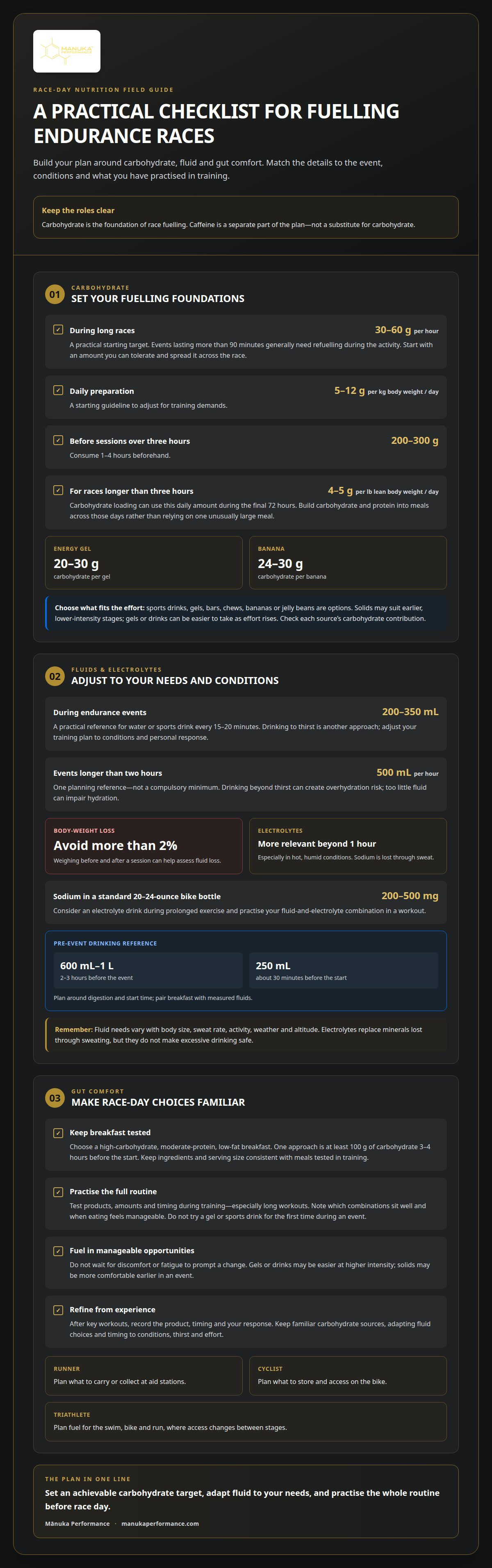
For long races, a practical starting target is 30 to 60 grams of carbohydrate per hour. Events lasting more than 90 minutes generally require refuelling during the activity, because stored carbohydrate alone may not sustain race effort. Begin with an hourly target you can tolerate, then distribute intake across the event rather than leaving it until fatigue sets in.
Daily intake supports both training and race preparation. A starting guideline is 5 to 12 grams of carbohydrate per kilogram of body weight per day, adjusted for training demands. Before sessions lasting more than three hours, consume 200 to 300 grams of carbohydrate one to four hours beforehand. For races longer than three hours, carbohydrate loading can involve 4 to 5 grams per pound of lean body weight daily during the final 72 hours. Build carbohydrate and protein into meals across those days, rather than relying on an unusually large meal the night before.
During a race, athletes can draw on sports drinks, energy gels, bars, chews, bananas or jelly beans. A gel typically supplies 20 to 30 grams of carbohydrate; a banana provides 24 to 30 grams. Solid sources may suit earlier, lower-intensity stages, while gels or drinks can be easier to take as effort rises. Check each source’s carbohydrate contribution and practise its taste, texture and timing during training to assess gut tolerance.
Fuelling strategies differ largely by how athletes carry and access food. Runners may carry supplies or use aid stations, while cyclists can store more on the bike. Triathletes need a plan for the swim, bike and run, where access to fuel changes between stages.
In New Zealand, common race-day options include sports drinks, gels, energy bars and chews, as well as familiar foods such as bananas. Choose a combination that makes your planned intake manageable and lets you fuel without disrupting your pace.
2. Hydration and electrolytes
Fluid needs vary with body size, sweat rate, activity, weather and altitude, so one race-day target won’t suit every athlete. During endurance events, a practical reference is 200 to 350 millilitres of water or sports drink every 15 to 20 minutes. Another approach is drinking according to thirst, then adjusting a training plan to conditions and personal response.
For events longer than two hours, one recommendation is 500 millilitres per hour. Treat that as a planning reference, not a compulsory minimum: drinking beyond thirst can create overhydration risk, while too little fluid can impair hydration. Avoid losing more than 2% of body weight during training or racing. Weighing before and after a session can help assess fluid loss.
Electrolyte replacement becomes more relevant during endurance bouts lasting longer than one hour, particularly in hot, humid conditions. Sodium is lost through sweat; a standard 20-24-ounce bike bottle can contain 200-500 milligrams of sodium. Consider an electrolyte drink during prolonged exercise, and practise the combination of fluid and electrolytes during a workout.
On race day, plan pre-event drinking around digestion and the start time. One guideline is 600 millilitres to 1 litre of water or sports drink 2-3 hours before the event, followed by another 250 millilitres about 30 minutes before the start. Pair breakfast with fluids; for example, a familiar sandwich and measured drinks can be easier to manage than unfamiliar foods and rushed drinking.
How much fluid and sodium do endurance athletes consume during races? A useful starting point is 200-350 millilitres every 15-20 minutes, with sodium considered during prolonged efforts. Adjust the plan for heat, sweat rate, thirst and race intensity; electrolytes replace minerals lost through sweating, but they don’t make excessive drinking safe.
3. Avoiding gastrointestinal issues on race day
Race-day nutrition works best when it’s familiar, measured and matched to the event. Before racing, choose a high-carbohydrate, moderate-protein, low-fat breakfast; lower fat can make a substantial meal easier to digest. One approach is eating at least 100 grams of carbohydrate three to four hours before the start. Keep ingredients and serving size consistent with meals already tested in training.
Glycogen preparation begins before race morning. Eat adequate carbohydrate and protein in the days before an event instead of relying on excessive loading the night before. Familiar meals and a regular eating pattern can support carbohydrate intake without making one large evening meal the main strategy. Avoid adding unfamiliar foods just because race day feels like a reason to change your routine.
How do athletes train their gut to tolerate food and drink during races? They practise their planned products, timing and amounts in training, then adjust for comfort and the demands of each session. Repeat the routine during long workouts and note which combinations sit well and when eating feels manageable. Don’t try a gel or sports drink for the first time during an event.
During a race, divide fuel and fluids into manageable opportunities instead of waiting for discomfort or fatigue to prompt a change. At higher intensity, gels or drinks may be easier to consume than solid food; earlier in an event, solids may be more comfortable. After key workouts, record the product, timing and your response to refine the plan.
What do professional endurance athletes eat during races in hot or cold conditions? They stick with familiar carbohydrate sources while adapting fluid choices and timing to the conditions, thirst and effort. Heat can affect fluid needs, while cold weather may reduce the urge to drink. Plan drinks you can access easily and practise the routine in similar training conditions. In either setting, prioritise digestion and tolerance over last-minute changes.
4. Caffeine during races
Caffeine deserves a separate place in your race plan from carbohydrate, fluids and electrolytes. To understand what pro endurance athletes eat during races, consider caffeine a timing decision, not a replacement for carbohydrate fuel. Whether to use it before the start, during later stages or both depends on event duration, intensity and personal tolerance.
One approach is 100 to 300 milligrams in the 2-3 hours before the race. Another is 25 to 50 milligrams hourly or during the later stages. These are options, not amounts to stack automatically: include every caffeine source in the day’s total, and avoid consuming more than 500 milligrams on race day.
Plan caffeine alongside familiar food and drinks. For example, an athlete might use a measured source before the race and reserve a smaller amount for a demanding late section. Check labels and serving sizes to avoid accidentally combining coffee, caffeinated drinks and other products. A banana provides carbohydrate, but it does not contribute to your caffeine plan.
Practise your caffeine timing during exercise before relying on it in competition. Test one change at a time, noting the amount, timing and how it fits with carbohydrate intake, stomach comfort and race intensity. This helps you assess what works without adding an unfamiliar product on race day, when a new combination can complicate your fuelling plan.
Deciding what pro endurance athletes eat during races also means deciding whether caffeine suits your own tested routine. Keep recovery in view, and make late-race caffeine a deliberate choice rather than an automatic addition to every drink. A simple written plan can track the source, amount and timing alongside your carbohydrate schedule, giving you a clear basis for future adjustments.
For carbohydrate fuel alongside a separate caffeine plan, explore honey-based sports energy gels. Treat them as a carbohydrate source, not as a caffeine product, and trial them during training to assess taste and tolerance before race day.
Mānuka Performance: Natural, clean label honey based sports energy gels
Mānuka Performance offers natural, clean label honey based sports energy gels for runners and endurance athletes planning convenient carbohydrate fuel. Its LiquidFuel 10-Pack Running Gel uses a New Zealand honey-based matrix, providing a practical option to trial during training and assess how it fits your race-day fuelling routine.
The company’s products are differentiated by PolySure™, an analytical standard that validates seven naturally occurring polyphenols in the finished product. This reflects an approach that combines natural ingredients with analytical science, alongside its CPG Sports Nutrition Products, Polysure™ Bioactive Ingredients and Research & Biotech Solutions.
If you’re refining a carbohydrate plan, consider whether a honey-based gel suits your preferred format and training routine. Explore Mānuka Performance’s products at manukaperformance.com.
Build a race plan you can trust
Understanding what pro endurance athletes eat during races is less about copying a professional’s menu and more about building a routine that works for you. Use your next training block to test your plan deliberately: record what you consume, when you take it, how your stomach responds and whether the routine remains practical as effort changes. These observations can guide considered adjustments before your next event, instead of leaving you to guess at the start line.
A dependable strategy is built through repeatable practice, not last-minute changes. Keep the plan clear enough to follow when concentration narrows, and make each adjustment for a reason you have observed in training. For carbohydrate options that can fit into this process, contact Mānuka Performance to discuss its sports nutrition offering. Then take your refined routine into training with confidence, and approach race day prepared to put it into practice.
Frequently Asked Questions
How many carbohydrates do you need?
Carbohydrate needs depend on whether you mean race fuelling or daily training intake. During a race, 30 to 60 grams per hour is a starting range; daily intake guidelines span 5 to 12 grams per kilogram of body weight, adjusted to training demands. For a practical plan, convert your hourly target into portions you can carry and tolerate, then consider how event duration and intensity affect timing.
How many electrolytes do you need?
Electrolyte needs vary with sweat losses, event duration and conditions. For a practical reference, a standard 20-24-ounce bike bottle may contain 200-500 milligrams of sodium; replacement becomes more relevant during endurance exercise lasting over an hour, particularly in hot, humid weather. Don’t treat sodium as a reason to overdrink: match fluid intake to thirst and your tested race plan.
What do professional endurance athletes eat and drink during races?
Professional athletes commonly combine carbohydrate foods with water or sports drinks, choosing formats to suit the course and effort. A runner might take a gel at an aid station, while a cyclist can carry bars or a banana on the bike. During longer events, some athletes also use electrolyte drinks. The practical lesson is to choose complementary sources rather than rely on just one format.
How many grams of carbohydrates per hour do elite endurance athletes consume during races?
A broad race-fuelling guideline is 30 to 60 grams of carbohydrate per hour. For exercise lasting over two hours, recommendations can rise to 60-90 grams hourly; some professional cyclists consume more than 120 grams. That higher intake isn’t a universal target: current research hasn’t proven carbohydrate oxidation above 90 grams per hour. Match intake to event demands and practised tolerance.
What foods and sports products do athletes use for fuel during marathons, cycling races, and triathlons?
Runners may use gels, chews, sports drinks or bananas, depending on aid-station access and what’s manageable while moving. Cyclists can carry more options, including bars and solid foods, and may choose them earlier when intensity is lower. Triathletes should plan for each discipline’s access points, with portable fuel for the run and practical options for the bike.
How do endurance athletes plan their race-day nutrition and fuelling schedule?
Start by matching your target intake to the event duration, then map each fuel opportunity against the course, aid stations and transitions. Plan fluid, electrolytes and any caffeine separately so the schedule stays clear and each source has a purpose. Rehearse the plan in comparable training sessions, recording what you consume and how it feels before making race-day changes.