



Impact & Provenance

Low GI Energy for Endurance Sports and Sustained Energy
Low-GI foods can be a useful choice before endurance exercise, but they aren’t automatically the best fuel throughout an event. For low GI energy for endurance sports, choose foods with a GI under ...

Recovery nutrition for endurance athletes: protein, fluids and race planning
Race-day recovery is shaped before the start line. Recovery nutrition for endurance athletes centres on replacing carbohydrate and fluid losses while supplying protein to support repair; after exer...
4 Endurance Nutrition Mistakes That Can Disrupt Your Fueling
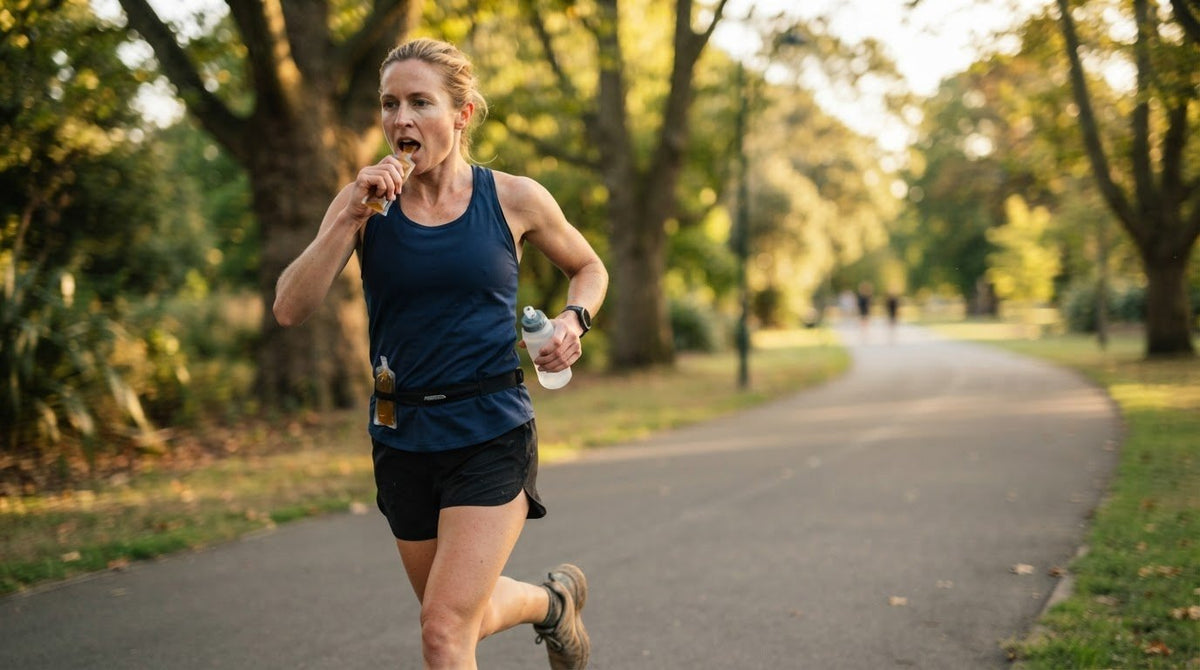
Four common endurance nutrition mistakes are mismatching energy intake to training load, poorly timing meals around workouts, unbalancing carbohydrates, protein and fat, and overlooking how glucose...

Carbs Per Hour for Marathon Runners: How Gels Fit In
A marathon gel plan is a carbohydrate calculation, not a fixed gel count. The practical answer to how many carbs per hour for marathon runners is 30-60 g per hour during the first three hours, incr...

Building a Bulletproof Race Nutrition Strategy for Fueling and Recovery
For training lasting one to two hours, target 30-60 grams of carbohydrate per hour; for sessions longer than two hours, aim for 60-90 grams, with intake up to 120 grams per hour if tolerated. A pra...

Simple vs Complex Carbs for Running: Which Should You Choose
For running, the best carbohydrate choice depends on the session and when you eat. Simple sugars can provide readily available fuel during a run, while complex-carbohydrate foods can work well in e...

Trail running nutrition: how to fuel for distance and weather
A trail run is fuelled before the first climb: choose a light, high-carbohydrate breakfast, with a small amount of protein, and aim to eat a balanced meal 2–3 hours before setting out. Trail runnin...

Manuka honey sports fuel
A jar isn’t the only practical way to use honey as training fuel. For manuka honey sports fuel, a single-serve format is easier to carry, while Mānuka honey is advised about 30 to 45 minutes before...

Real food fuel for long runs: what to eat instead of gels
Gels aren't the only way to fuel a long run: real food alternatives to running gels include bananas, dates, dried fruit, applesauce and pretzels. Most runners should aim for 30-60 grams of carbohyd...