


Gels aren't the only way to fuel a long run: real food alternatives to running gels include bananas, dates, dried fruit, applesauce and pretzels. Most runners should aim for 30-60 grams of carbohydrate per hour, and combining portable foods with gels or carbohydrate drinks can help you meet that target while varying texture and flavour.
It’s reasonable to prefer familiar foods, especially if gels taste too sweet or are difficult to stomach. But real food isn’t automatically easier to eat on the move: chewing, packaging, portion size and personal tolerance all matter. Candy can also provide carbohydrate, though its composition and texture differ from fruit and other whole foods.
This guide compares practical food choices and candy with gels, explains how to estimate carbohydrate in a serving, and shows how to practise a fuelling plan during training. You’ll also learn how to combine solid foods, gels and drinks to suit the distance, pace and conditions of your run.
Key Takeaways
- Use an hourly carbohydrate target to plan how much fuel to carry, then adjust your choices to suit the run and your tolerance.
- Compare portable options such as bananas, dates, applesauce and dried fruit by carbohydrate content, texture and ease of eating on the move.
- Assess candy as a practical source of carbohydrate while considering how it differs from fruit and other real-food choices.
- Test foods and timing on training runs so you can identify what sits comfortably and is manageable while running.
- Combine solid foods, gels and carbohydrate drinks to vary texture and flavour while keeping your fuelling plan practical over longer distances.
1. Carbohydrate intake during long runs
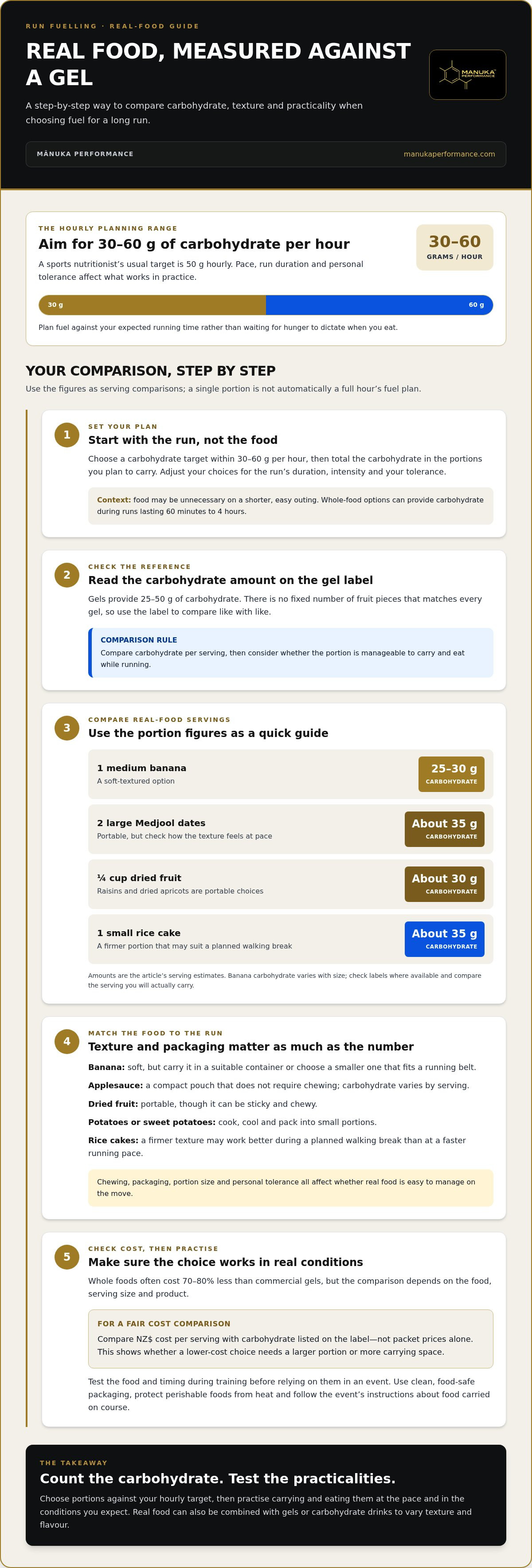
For long runs, most runners should aim for 30-60 grams of carbohydrate per hour. A sports nutritionist’s usual target is 50 grams hourly, although an athlete’s pace, duration and tolerance influence the amount that works in practice. Start by planning fuel against the time you expect to run, rather than relying on hunger to dictate when you eat. For a hard 75-minute training session, include carbohydrate during the run, particularly if maintaining intensity matters.
Carbohydrate stores help explain why fuelling can become more relevant as a run progresses. An average person stores about 2500 calories of energy as carbohydrate, enough for roughly 90 minutes of hard, steady running when starting fully stocked. Runners may approach glycogen depletion 60 to 90 minutes into exercise, depending on intensity and starting stores. “Hitting the wall” can follow when carbohydrate availability no longer matches the demands of the effort, making pace harder to sustain.
Duration and intensity both guide the decision to eat. Supplemental carbohydrate is recommended for runs lasting over an hour, while high-intensity sessions lasting 75 minutes are another practical point to plan around. For most runners, whole-food options can provide carbohydrate during runs lasting 60 minutes to 4 hours. On a shorter, easy outing, food may be unnecessary; on a longer or harder session, schedule portions before energy and concentration noticeably fall.
Pretzels and cereal offer measurable options, though their texture affects how easily runners can eat them while moving. About 19 mini pretzels provide 23 grams of carbohydrate and 110 calories. A half-cup serving of plain Cheerios provides 20 grams of carbohydrate, alongside 100 calories, 140 milligrams of sodium and 170 milligrams of potassium. Together, those portions provide 43 grams of carbohydrate, within the hourly target, but they may be easier to manage at a planned stop than at a fast pace.
For chips, distinguish energy from carbohydrate: one ounce of bagel chips provides about 130 calories, but that figure alone doesn’t tell you its carbohydrate content. Check the nutrition panel and portion the amount you intend to carry. Dry or crunchy foods can also take more chewing than drinks or soft foods, so test them at the pace and conditions you expect on your run.
Use a simple planning step: choose a target within 30-60 grams per hour, total the carbohydrate in your planned portions, then decide whether drinks or other fuel should fill the gap. A 23-gram pretzel portion, for example, falls below the lower end of that hourly range on its own. This calculation helps endurance athletes compare real food with compact energy options.
2. What is the best fuel for running not gels?
Whole-food alternatives to an energy gel include bananas, dates, applesauce, dried fruit, potatoes and rice cakes. Bananas and applesauce pouches can provide carbohydrate, though the amount varies by serving. For runners comparing real food alternatives to running gels, the best fit depends on carbohydrate content, texture and how easily each food can be carried and eaten.
There’s no fixed number of fruit pieces that equals every gel, because gels provide 25-50 grams of carbohydrate. One medium banana, at about 25-30 grams, is close to the lower end of that range; two large Medjool dates provide approximately 35 grams. A quarter-cup of dried fruit supplies about 30 grams. Check the gel’s label and compare carbohydrate amounts to calculate a closer match.
Bananas provide carbohydrate in a soft texture that many runners find easy to eat. Their carbohydrates include sugars such as glucose and fructose, as well as starch, with proportions changing as the fruit ripens. Carry a peeled banana in a suitable container, or choose a smaller one that fits comfortably in a running belt. Test its texture and timing during training before relying on it in an event.
Applesauce pouches are compact and don’t require chewing, while raisins, dried apricots and other dried fruit are portable choices. Two large Medjool dates contain about 35 grams of carbohydrate. Because pouch contents and dried-fruit portions vary, use the nutrition label to calculate what you’ll carry. Dried fruit can be sticky and chewy, so test whether its texture feels manageable at your intended pace.
Potatoes and sweet potatoes can be cooked, cooled and packed into small portions. Potatoes and sweet potatoes can provide a practical source of carbohydrate for runners. A small rice cake provides about 35 grams, making it a higher-carbohydrate portion than one medium banana. Their firmer texture may suit a planned walking break better than a faster section of running.
Whole foods often cost 70-80% less than commercial gels, although the comparison depends on the food, serving size and product. In New Zealand, compare the NZ$ cost per serving with carbohydrate listed on the label, rather than comparing packet prices alone. This helps show whether a lower-cost choice needs a larger portion or more carrying space.
For homemade fuel, use clean, food-safe packaging and protect perishable foods from heat. Event rules vary, so follow the specific event’s instructions about food carried on course. Bananas, dates and rice cakes can fit in a belt or pocket, while applesauce pouches keep soft food contained. You can find these options at New Zealand supermarkets, dairies and fruit shops, or prepare portions at home. Practising with real food alternatives to running gels helps you find what’s practical to carry and eat.
3. Candy as an alternative source of running fuel
Candy can supply carbohydrate during a run, but it isn’t nutritionally identical to fruit or other whole foods. Choose something you can chew and swallow comfortably at your planned pace, then use its nutrition panel to count the carbohydrate. A solid option may be manageable on an easy run; at a faster pace, chewing can compete with breathing and concentration.
Intensity changes what’s practical. On a relaxed long run, a small sandwich or soft fruit may be comfortable to eat, while hard intervals leave less opportunity to chew. A slice of white bread provides approximately 12-15 grams of carbohydrate, and white bread with honey offers a simple, familiar snack. The example serving contained 28 grams of carbohydrate, 7 grams of sugar and 180 milligrams of sodium.
Honey, maple syrup and fruit can be used to make running fuel at home. Mash soft fruit, such as banana, with a little honey or maple syrup, then pack the mixture in a clean, sealed food pouch. Adjust the texture until it’s easy to swallow. Alternatively, spread honey on white bread and fold it into a compact sandwich. Use each ingredient’s nutrition information to estimate the carbohydrate, and test the recipe during training.
Dried fruit offers a portable option, though its concentrated sweetness and chewy texture may not suit every runner at speed. Raisins or chopped dried apricots can be portioned into a small pocket or pouch, while a cup of dried apricots contains about 7.5 milligrams of iron. That figure describes iron content, not carbohydrate, so check the packet’s nutrition panel when planning fuel.
Dry cereal fits in a small sealed bag and can be eaten in small mouthfuls, but loose pieces may be awkward to handle while running. Cereal bars or a firm sandwich may be easier to manage during a walking break. For any option, consider whether you can open the package with one hand and whether the texture is comfortable without frequent sips of fluid.
On a long run, carry a mix rather than relying on one flavour or texture. A honey sandwich, dried fruit and a small portion of candy offer different ways to fuel, but practise each to see how it sits. Keep homemade food sealed, avoid squashing soft items in a pocket, and test the exact recipe and packaging on a training run before using them in an event.
4. Practising fuelling strategies during training
A fuelling plan is useful only if your stomach tolerates it and you can eat while moving. Practise with the same foods, portions and packaging you intend to use for an event. A four-week trial across longer runs of 10-16 miles is one example of testing alternatives systematically. Record the food, timing, effort and any discomfort after each run, then adjust one variable at a time.
Start with a familiar option, such as a banana, then try a different texture on another long run. Notice whether chewing affects your breathing, whether a pouch is easier to use, and whether the food feels comfortable at your target pace. Practising with solid energy foods also shows whether you can open and eat them while running. Keep the packaging and method consistent so your notes reflect the food, not a change in how you carried it.
Test race foods during long training runs before using them in an ultra. Include the exact products and homemade recipes you plan to carry, rather than relying on a similar flavour or texture. A peanut butter sandwich, for example, contains about 30-40 grams of carbohydrate, but its protein, fat and texture may make it feel different from fruit or a drink. Track how your stomach responds during the run, not just whether the food tastes appealing beforehand.
Build your trial around the demands of the event. For an ultra, one suggested rotation uses 40% solid food during hours 0 to 4, then 50% real food and 50% gels and drink mix during hours 4 to 8. After hour 8, the suggested balance shifts to 60% real food and 40% liquid calories. Treat these as a strategy to test, not a schedule to adopt without practice.
Flavour is another training variable. Avoid staying with the same flavour for more than 90 minutes during an ultra rotation, and test alternatives on long runs. A sweet gel followed by a less sweet food may feel more manageable than repeating one taste. Note how each change affects appetite and whether you can continue taking in your planned fuel.
Use your notes to refine the plan. Record what the food contains, including carbohydrate, calories, protein and fat, then note the portion you carried and how much you ate. If a bar feels heavy, compare it with an option lower in protein, fat and fibre. If bananas work during easy training but not faster sessions, save them for a pace where chewing feels manageable. Butter or nut butter adds richness to a sandwich, so test that combination separately rather than changing several ingredients at once.
Keep the final plan simple enough to remember when you’re tired. Practise carrying, opening and eating each item on the terrain and at the pace you expect, then repeat what works on another long run before race day.
5. Combining gels and real food
A mixed fuelling plan lets runners use compact energy gels when eating is difficult, then add solid food for variety. Energy gels can provide compact carbohydrate fuel for runners. A banana, sandwich or portion of dried fruit can offer a different texture and flavour, helping break up repeated sweet tastes during a marathon or ultra.
Start with the hourly carbohydrate target you’ve established for your run, then add the carbohydrate in each planned gel, food and drink. A gel might provide much of an hour’s intake, with a smaller food portion supplying the rest. Count the carbohydrate listed on each package instead of assuming every gel or piece of fruit contains the same amount.
Plan around the changing demands of a long event. One suggested approach uses gels and drink mix for the first 4 hours of an ultra, then introduces a 50% real-food and 50% gels-and-drink rotation during hours 4 to 8. After hour 8, the suggested balance becomes 60% real food and 40% liquid calories. Use these proportions as a structure to practise, not a substitute for a plan that suits your tested tolerance.
At the first major aid station after hour 4, one suggested strategy is taking 10 minutes to eat real food instead of reaching immediately for another gel. Choose a familiar portion that’s easy to digest and resume your planned fuelling afterwards. This pause can also make it easier to refill supplies and organise the next section of the course.
Practise the sequence before race day, including how you carry and open each package. Test whether dried fruit or a sandwich fits comfortably in your pocket, and whether a gel is easier to use at pace. During training, record the timing and carbohydrate from each item. Adjust the mix if a portion is difficult to eat or leaves too much fuel to manage later.
The practical takeaway is to give each option a role: gels and drinks provide compact carbohydrate, while real food adds variety and a different eating experience. If a honey-based option fits your tested plan, explore honey-based sports energy gels as one compact fuelling choice.
Mānuka Performance: Natural, clean label honey based sports energy gels
Mānuka Performance offers natural, clean label honey based sports energy gels for runners who want a portable carbohydrate option alongside foods they have practised during training. Its flagship LiquidFuel 10-Pack Running Gel uses a New Zealand honey-based matrix, providing convenient carbohydrate fuel for runners and endurance athletes. A gel can suit sections where carrying or chewing solid food is less practical, while bananas, dates or other familiar foods can add variety to a longer fuelling plan.
Choose options based on the carbohydrate target you’ve tested, the demands of the run, and what you can comfortably carry and consume. Mānuka Performance develops CPG sports nutrition products, including honey-based energy gels, as well as PolySure™ bioactive ingredients. Its PolySure™ analytical standard validates seven naturally occurring polyphenols in the finished product.
Contact Mānuka Performance to explore its honey-based sports energy gels and related offerings.
Make your next long run a practical rehearsal
Use your next training session to decide what you’ll reach for when pace, appetite or course conditions change. Choosing real food alternatives to running gels involves more than carbohydrate alone: consider whether you’ll be moving quickly, able to chew, or carrying food for an extended stretch. Set simple cues before you head out, such as choosing a soft option when eating feels difficult or carrying a compact backup for sections without an easy place to stop.
A repeatable fuelling routine should leave room to adapt without requiring a complete rethink mid-run. Keep your preferred options accessible, notice how the plan fits the demands of your route, and refine the details as you gain experience. For a portable honey-based option within that approach, contact Mānuka Performance for fuelling support. A considered plan gives you a clear starting point, and each training run helps make it more your own.
Frequently Asked Questions
What is the best fuel for running not gels?
Bananas, dates, applesauce, dried fruit, potatoes and rice cakes are useful options, with the best fit depending on pace, texture preference and how you carry food. A medium banana provides about 25-30 grams of carbohydrate, while a small rice cake provides about 35 grams. For a mixed approach, choose one portable food and pair it with a drink or gel when needed to meet your fuelling plan.
How much should you eat during a long run?
For most long runs, plan around 30-60 grams of carbohydrate per hour, then adjust according to your effort and what you tolerate. A practical way to organise this is to total the carbohydrate in the food and drinks you’ll carry for each hour. A banana can contribute a substantial portion, while smaller bites or sips can make the remainder easier to take consistently.
How do you avoid stomach issues with real food in ultras?
Reduce the chance of discomfort by practising with the exact foods, portions and packaging you plan to use during an ultra. Start with familiar options and avoid making several changes in one run, so you can identify what affects your stomach. Bars with less protein, fat and fibre may be easier to manage during exercise. Consider whether the food’s texture is practical at your race pace.
When should ultra runners switch from gels to real food?
Ultra runners can begin introducing real food around hour 4 to 6, when palate fatigue may make repeated gel flavours less appealing. A switch doesn’t need to mean stopping gels altogether: alternate a familiar gel with a food portion or carbohydrate drink. Practise the sequence in training, and decide where food fits according to the course, your appetite and how easily you can chew while moving.
How many grams of carbohydrate per hour should runners consume during exercise?
Most runners should aim for 30-60 grams of carbohydrate per hour during long runs. A sports nutritionist’s usual running recommendation is 50 grams hourly, while individual needs and tolerance vary. The demands of a hard session can differ from an easy outing, so use your planned pace and duration to choose a workable target. Count carbohydrate from all sources, including food, gels and drinks.
What are the risks of eating high-fibre or high-fat foods during a run?
High-fibre or high-fat foods can feel heavy and may be harder to tolerate while running, particularly at higher effort. They can also take up space in a fuelling plan without supplying carbohydrate as efficiently as a simpler option. For example, if you’re testing a peanut butter sandwich, consider its fat, fibre and protein alongside its carbohydrate, then compare how it feels with a lower-fat alternative.
How should runners test real-food alternatives before race day?
Test each food during training at a pace and effort similar to the event, using the same portion and packaging you plan to carry. Record what you ate, when you ate it, and how manageable it felt to chew, swallow and carry. Change one feature at a time, such as flavour or texture. This makes it easier to identify a reliable combination before race day.