


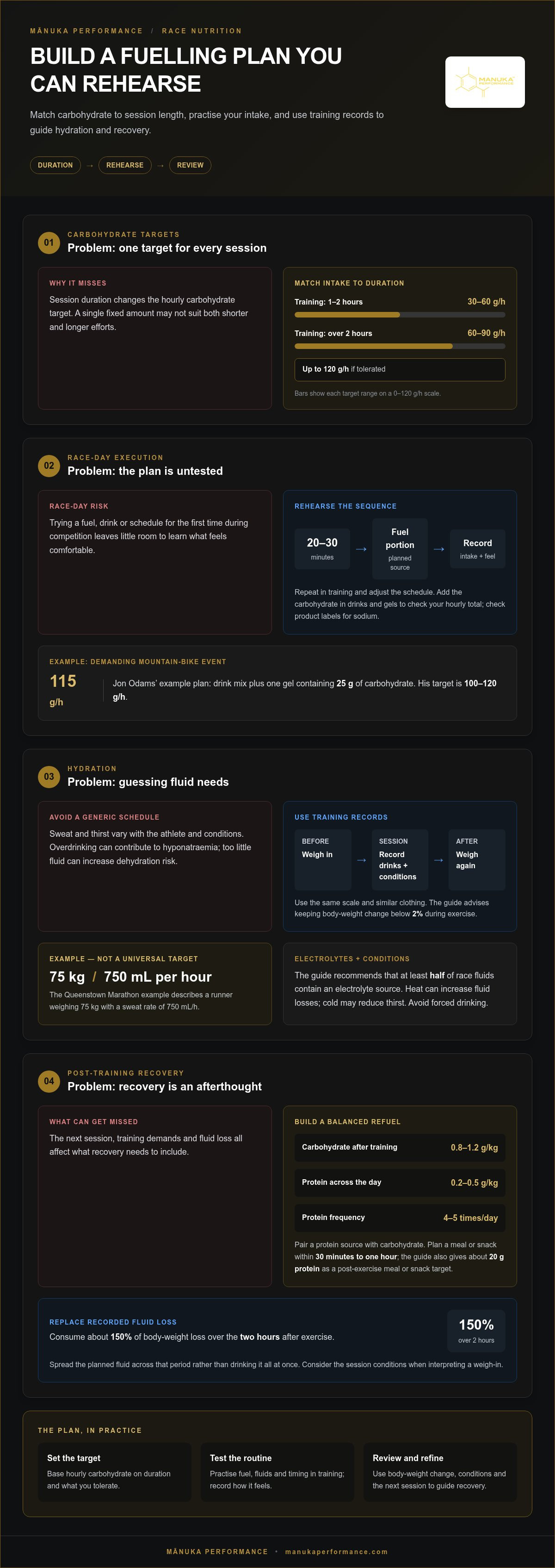
For training lasting one to two hours, target 30-60 grams of carbohydrate per hour; for sessions longer than two hours, aim for 60-90 grams, with intake up to 120 grams per hour if tolerated. A practical approach to building a bulletproof race nutrition strategy pairs those hourly targets with a hydration plan and rehearsed fuelling, rather than leaving decisions until race day.
It’s understandable to focus on what to consume during an event, but recovery timing and meal composition also belong in the plan. After exercise, aim for a meal or snack within 30 minutes to one hour, with about 20 grams of protein; post-training carbohydrate needs can be planned in relation to body weight and the demands of the next session. This guide explains how to set race-day carbohydrate targets, track hydration through body-weight change, and organise refuelling before and after training, with particular attention to the recovery meal that helps bring the full strategy together.
Key Takeaways
- Match hourly carbohydrate intake to event duration and intensity, then practise the plan during training so race-day fuelling is familiar.
- Use body-weight change around exercise to assess fluid needs and refine your hydration approach for different conditions.
- Plan post-training refuelling around the next session, combining carbohydrate, protein and fluid rather than treating recovery as an afterthought.
- Build race recovery around timely, balanced food choices, with meal composition supporting the demands of the event and the hours that follow.
Hourly carbohydrate targets for demanding events
Building a bulletproof race nutrition strategy starts with an hourly target matched to session duration. For training lasting one to two hours, aim for 30-60 grams of carbohydrate per hour. For sessions longer than two hours, target 60-90 grams, with up to 120 grams if tolerated. During a race, 30-90 grams per hour is a practical range, and some athletes may use up to 120 grams.
Practise the target during training, not for the first time in competition. Divide your hourly intake into portions and test the foods or drinks you plan to carry. The example race plan starts with a carbohydrate source every 20-30 minutes. Record your intake and how it felt, then adjust the schedule and repeat it during a later session.
Running, cycling, triathlon and race distance affect how you carry and consume fuel, even when the hourly target is similar. Cycling can allow easier access to bottles and food, while running calls for options that are practical to carry. For a demanding mountain-bike event with major climbs and hard racing, Jon Odams aims for 100-120 grams per hour. His example plan supplies 115 grams per hour through a drink mix and one gel containing 25 grams of carbohydrate.
For on-bike fuelling, add the carbohydrate in your drinks and gels to work out your hourly total. Check product labels for sodium and account for it in your plan, as needs and product composition vary. Build a bulletproof race nutrition strategy by practising your complete fuel and fluid plan in training.
Food and drink permitted at New Zealand races depend on each event’s rules. The Queenstown Marathon course guide lists 11 aid stations, approximately 2-4 kilometres apart; use the spacing to plan your carried supplies without assuming what each station provides.
Create a race-day schedule with elapsed time, planned fuel portions and refill points. This turns an hourly target into a sequence you can rehearse and follow.
Hydration and sweat-related weight change
Use body-weight change during training to assess fluid replacement. The guide advises keeping the change below 2 percent of body weight during exercise. Weigh yourself before and after a representative session, using the same scale and similar clothing. Record what you drank and note conditions such as heat, cold or altitude. Repeat this process across different sessions to see how your fluid needs vary.
A race plan should reflect your observed sweat rate, not a generic drinking schedule. The Queenstown Marathon example describes a 75-kilogram runner with a sweat rate of 750 millilitres per hour. Treat that as an example, not a target for every runner. The guide recommends that at least half of an athlete’s fluids during a race contain an electrolyte source. Include fluid and electrolytes in the plan, while avoiding forced drinking beyond your needs.
To estimate race-nutrition costs in New Zealand dollars, list each planned drink, snack and fuel serving, then multiply the quantity by its NZ$ price per serving. Add the amounts to estimate your event cost. Practising the plan in training also helps you identify which items you actually use.
Overdrinking can contribute to hyponatraemia, while inadequate fluid replacement can increase dehydration risk. Gastrointestinal distress may also occur if your race plan calls for more fluid or fuel than you can comfortably tolerate. Practise your intended intake in training, and adjust the plan if symptoms arise rather than forcing yourself to consume more.
Heat can increase fluid losses, while cold conditions may reduce thirst. Altitude can also change how a session feels. Use body-weight records and thirst, along with the conditions, to refine your approach. Do not assume the same intake will suit every course or training day.
Before a race, plan breakfast and fluids around familiar training habits. Jon Odams eats breakfast a couple of hours before a race. The example race plan recommends 30 millilitres of fluid per kilogram of body weight on the day before the race. For evening hydration, spread fluids through the day and include them with dinner, rather than trying to compensate with a large intake immediately before bed.
Post-training refuelling and recovery
After training, plan a meal around the session’s demands and your next workout. The recommended post-training meal contains 0.8-1.2 grams of carbohydrate per kilogram of body weight. This gives you a practical target to use when choosing familiar foods. A longer or harder session may require a more substantial meal than an easy training day. Consider what you have available, how soon you’ll train again, and which foods you tolerate comfortably.
Include protein across the day, rather than relying on one large serving after exercise. The guide recommends 0.2-0.5 grams of protein per kilogram of body weight, four to five times per day. For a post-session meal, pair a protein source with carbohydrate, then continue with your usual meals and snacks. A shake can be a convenient option when a sit-down meal isn’t practical; check its nutrition label and account for its carbohydrate and protein in your overall plan.
Rehydration can be calculated from the body-weight loss recorded around training. The recommendation is to consume about 150 percent of that loss over two hours after exercise. Divide the planned fluid across that period instead of drinking it all at once. Include food as part of recovery, and consider the session’s conditions when interpreting your weigh-in; a single measurement may not represent every training day.
For stage racing, recovery starts at the finish, not just at the next start. Jon Odams recommends a proper post-stage meal within two hours of finishing. If travel or event logistics delay a full meal, a shake can provide a portable interim option. Set out the shake, water and meal components in advance, then follow the plan after each stage. This creates a repeatable routine across successive days without making the shake a substitute for the planned meal.
Post-race meal timing and composition
Plan the first meal before race day, rather than deciding while tired at the finish. The guide recommends a meal or snack within 30 minutes to one hour after exercise, with about 20 grams of protein. Building a bulletproof race nutrition strategy includes deciding what you can access at the finish and packing an option that is practical to eat. If appetite is limited, begin with a familiar snack before a fuller meal.
Build the meal around a protein source and carbohydrate foods, adding vegetables where practical. Jon Odams’s example post-stage meal combines grilled chicken, sweet potatoes and vegetables. Chicken supplies protein, while sweet potatoes provide carbohydrate; vegetables round out the meal. Choose familiar foods you have eaten during training, particularly if you will be travelling after the event. Planning the meal can also help you avoid relying on unfamiliar finish-line food.
Timing matters when another demanding session follows soon. After a single race followed by rest, plan a satisfying meal around your appetite and event schedule. For multi-stage racing, prepare food in advance and prioritise the post-stage meal within two hours, as Jon Odams recommends. Decide where you will eat before the start, especially if the finish area is busy or you will travel afterwards.
Use a simple sequence: pack a snack, decide where you will eat, then arrange the main meal. Include your protein target in the first snack or meal, and choose carbohydrate foods that suit your preferences. Building a bulletproof race nutrition strategy means planning for recovery too, rather than treating the finish as the endpoint. Note what was accessible and comfortable after the race, then use those observations to refine meal preparation for your next event.
Mānuka Performance: Natural, clean label honey based sports energy gels
Mānuka Performance offers natural, clean label honey based sports energy gels for runners and endurance athletes planning carbohydrate fuel around training and race day. Its LiquidFuel 10-Pack Running Gel uses a New Zealand honey-based matrix, providing a convenient option to incorporate into a rehearsed fuelling schedule. Include any gel in your plan by checking its carbohydrate contribution against your hourly target and practising its use during training.
Mānuka Performance products are differentiated by PolySure™, an analytical standard that validates seven naturally occurring polyphenols in the finished product. The company also offers CPG sports nutrition products, PolySure™ bioactive ingredients, and research and biotech solutions. These offerings connect performance nutrition with analytical science, while keeping your practical choices focused on the fuelling approach you have tested.
For a New Zealand honey-based gel to consider in your race-fuelling plan, visit manukaperformance.com.
Turn your plan into a repeatable practice
Make your next step practical: record your fuelling choices during training, then note what was easy to carry, consume and repeat. Use those observations to refine your approach before your next event. Building a bulletproof race nutrition strategy is an iterative process, and each session gives you a chance to make the plan more specific to your routine and race conditions.
Mānuka Performance offers natural, clean-label honey-based sports energy gels, CPG sports nutrition products and PolySure™ bioactive ingredients. These offerings give you options to consider as you choose products for a fuelling plan you can practise and assess. Keep your targets and preferences central when deciding what fits your approach.
Contact Mānuka Performance to learn more about its sports nutrition offerings. Take your next training session as an opportunity to test, record and refine your plan with confidence.
Frequently Asked Questions
How do you calculate carbohydrate intake per hour for endurance race nutrition?
Multiply your chosen hourly target by the event duration to estimate total carbohydrate needed. For example, a three-hour race at 60 grams per hour requires 180 grams overall. Count carbohydrate from drinks, gels and food together, using each product’s label rather than treating servings as interchangeable. Divide the total into manageable portions and adjust the schedule to suit course access and what you’ve practised.
How much fluid and sodium should athletes consume during a race?
Set fluid intake according to your observed sweat response, race conditions and access to drinks, rather than copying another athlete’s quantities. Compare your body weight before and after representative training sessions, and note the drinks you consume. Sodium needs also depend on the athlete and conditions, so check the sodium content of planned products and account for it in your overall intake. Avoid drinking beyond thirst or your tested plan.
How do you practise and test race nutrition during training?
Use a long training session that resembles your event to practise carrying, opening and consuming fuel while moving. Record the product, timing, fluid intake, any stomach discomfort and any difficulty accessing supplies. Change one element at a time, such as the format or timing, so you can identify what affected the session. Repeat the revised approach before relying on it in competition.
Which sports gels, drinks and foods are best for race fuelling in New Zealand?
Choose products and foods that fit your carbohydrate plan, travel well and have been tolerated during training. Compare labels for carbohydrate per serving and sodium content, then assess how gels, drinks or familiar foods suit your course and carrying setup. New Zealand honey-based sports energy gels are one option to evaluate. Choose based on ingredient information and how the product fits your tested schedule, not on claims alone.