


Four common endurance nutrition mistakes are mismatching energy intake to training load, poorly timing meals around workouts, unbalancing carbohydrates, protein and fat, and overlooking how glucose and fructose can work together in a fuelling plan. These choices can leave nutrition out of step with training demands. The goal is to make your approach more deliberate, not more complicated.
It’s easy to focus on a single gel or pre-workout snack, but endurance fuelling is part of a broader pattern of daily eating and training-specific choices. A plan that suits one session may not suit another. The right balance depends on your workout’s duration and intensity.
This article explains how to match energy intake to training, plan meals around exercise, balance macronutrients and consider glucose-fructose combinations for endurance fuelling. You’ll also learn how to build a practical approach, test it in training and adjust it, rather than relying on guesswork on race day.
Key Takeaways
- Match daily energy intake to the demands of your training, rather than relying on a fixed approach for every session.
- Plan meals around workouts and avoid letting a missed recovery meal lead to haphazard eating later.
- Balance carbohydrates, protein and fat so that prioritising one macronutrient doesn’t crowd out the others.
- For longer endurance efforts, learn why combining glucose and fructose may be useful when planning carbohydrate fuel.
1. Assessing energy needs against training load
Daily energy intake should reflect the work athletes actually complete, not a fixed target copied from another training programme. A short recovery session places different demands on the body than several hours of endurance training. Athletes with 20 or more years in their sport may also have different metabolic needs from newer athletes. Track session duration, intensity, appetite and recovery, then adjust eating patterns as training changes. Chronic low energy intake can impair recovery, hormonal function and training adaptations, while appropriate nutrition helps support performance and injury prevention.
Build a foundation before adding complex products or strategies: eat enough through balanced meals, and take in adequate fluid and electrolytes. During a high-volume training block, daily eating needs to support repeated sessions and recovery. In the off-season, continue choosing nutrient-dense foods even as training decreases. If you train for several hours a day during a high-volume block, don’t automatically keep the same intake when your workload falls. Adjust portions and meal composition to your current schedule instead of sharply restricting food.
Practise race fuelling, too. Develop a plan for your target event, test it in relevant training sessions and adjust it according to how your body responds. Don’t introduce unfamiliar foods or drinks on race day. Trial and error can help identify an approach that suits your event, training load and tolerance, reducing guesswork about energy and hydration.
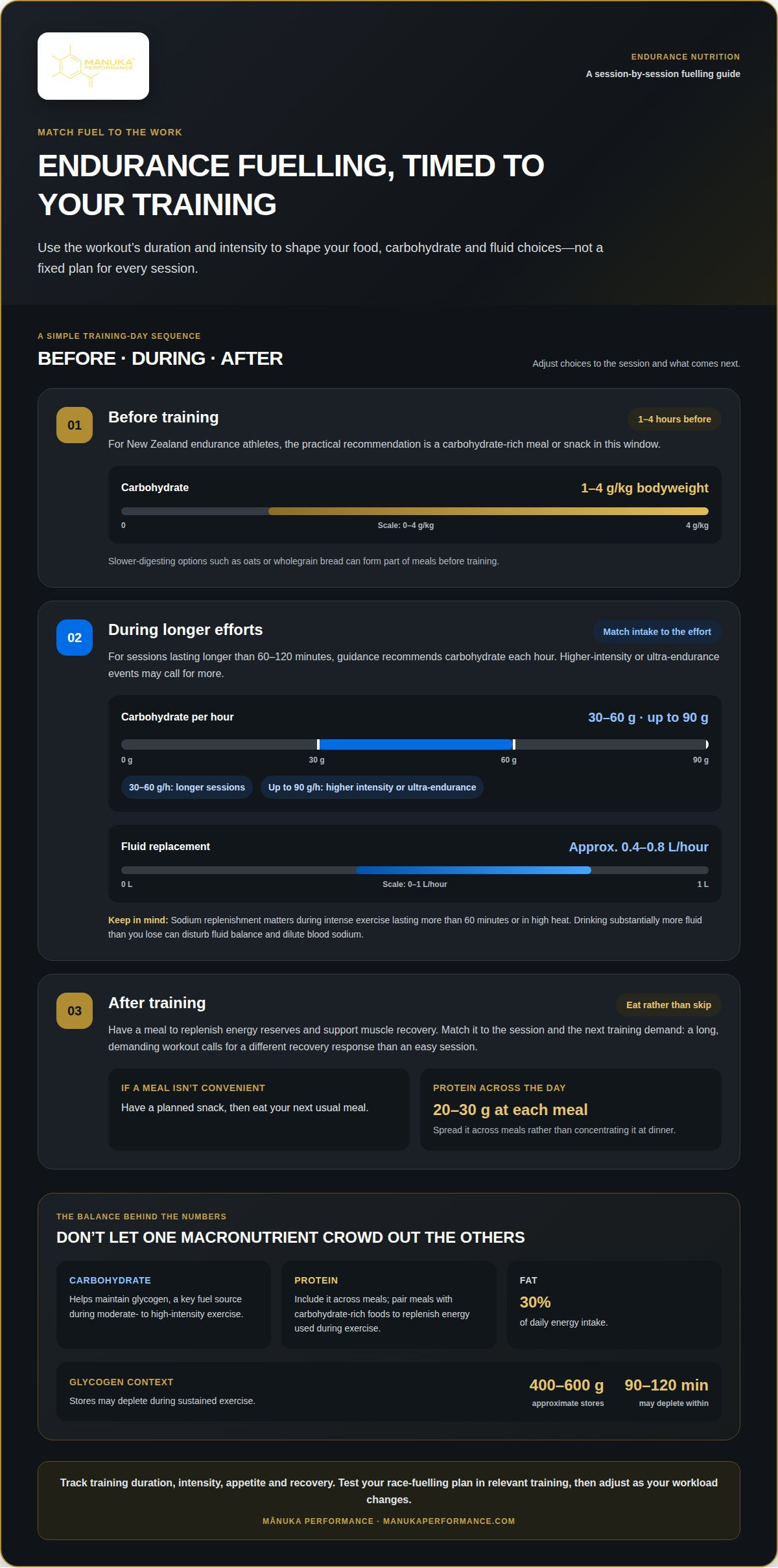
Meal timing is one practical part of that plan. A light, high-carbohydrate snack around 90 minutes to two hours before a workout can provide pre-session fuel. After training, eat rather than skipping food, so the body can replenish energy reserves and support muscle recovery. Match the meal to the session and the next training demand; a long, demanding workout calls for a different recovery response than an easy session.
Review your plan as training shifts between harder blocks and lighter periods. Persistent fatigue, poor recovery, hormonal changes or frequent injuries can signal low energy availability associated with RED-S. If you notice these signs, discuss them with a qualified sports nutrition professional to help guide changes to fuelling and recovery.
2. Avoiding skipped meals and overeating after workouts
Missing a meal before or after training can leave you unusually hungry later, making it harder to choose portions deliberately, especially after a demanding session. Instead of compensating with one large meal, plan regular eating opportunities around the day’s training. For example, prepare a meal or snack before leaving home so food is ready after your session.
Distribute protein across meals rather than concentrating it at dinner. A practical target in the guidance is 20-30 grams at each meal, supporting regular protein intake throughout the day. Include a protein source at breakfast, lunch and dinner, such as eggs at breakfast or beans with lunch. Pair these meals with carbohydrate-rich foods to replenish energy used during exercise.
The so-called 30-minute anabolic window isn’t the main priority. Total daily protein intake and its distribution across the day matter more than eating immediately after a workout. Still, skipping post-exercise food entirely can make it harder to replenish energy. If a full meal isn’t convenient, have a planned snack, then eat your next usual meal.
Hunger and energy levels can help guide portions, particularly in the off-season, when training volume may change. Use a low- or moderate-training Athlete’s Plate model as a starting point, then adjust meals according to appetite and how you feel. Eating at regular intervals can also help you avoid arriving at dinner excessively hungry. Keep your meal pattern consistent while adapting portions to training and recovery needs.
Try a simple check-in: note your hunger before training, after training and before your next meal. If you regularly feel depleted or overeat later, review whether earlier meals were adequate and whether your schedule left a long gap. Adjust one meal or snack at a time, then observe how your energy and appetite respond over subsequent training days. This repeatable process helps refine your eating without an all-or-nothing approach.
3. Balancing protein, fat and carbohydrates
Prioritising protein at every meal can crowd out carbohydrates and fats, weakening recovery after a workout. Carbohydrates help maintain glycogen, a key fuel source during moderate- to high-intensity exercise. Stores are approximately 400-600 grams and may deplete within 90-120 minutes. Include carbohydrate-rich foods alongside protein and fat, rather than treating any macronutrient as optional. Fat should provide 30 per cent of daily energy intake.
Choose carbohydrate sources to suit the timing and demands of exercise. Slower-digesting options, such as oats or wholegrain bread, can form part of meals before training. Faster-digesting choices, such as sports gels, can be more practical during a sustained effort. For sessions lasting longer than 60-120 minutes, guidance recommends 30-60 grams of carbohydrate per hour. During higher-intensity or ultra-endurance events, intake may reach 90 grams per hour.
For New Zealand endurance athletes, practical recommendations include 1-4 grams of carbohydrate per kilogram of bodyweight, eaten 1-4 hours before a session. During exercise lasting longer than 60-120 minutes, aim for 30-60 grams of carbohydrate hourly, with up to 90 grams hourly for higher-intensity or ultra-endurance events. Fluid replacement is approximately 0.4-0.8 litres per hour; sodium replenishment matters during intense exercise lasting more than 60 minutes or in high heat.
Drinking substantially more fluid than you lose can disturb fluid balance and dilute blood sodium, so don’t force yourself to drink beyond your needs. Estimate sweat loss by comparing your body weight before and after training, while accounting for fluids consumed. This can help you tailor fluid intake to the conditions and your own sweat rate.
Train your gut alongside your physical preparation. Introduce planned carbohydrate intake during training, then adjust the type, timing and amount according to your tolerance. A gut-challenge study tested repetitive practice over two weeks, reinforcing the value of structured rehearsal. If fuelling causes gastrointestinal symptoms, treat them as a signal to review your strategy rather than simply pushing through discomfort.
4. Combining glucose and fructose
Combining glucose and fructose can provide a more considered carbohydrate strategy during prolonged endurance exercise. The sugars use different transport pathways in the small intestine: glucose primarily uses SGLT1, while fructose uses GLUT5. Using both may increase the amount of carbohydrate absorbed compared with relying on glucose alone. The practical takeaway is to assess the carbohydrate sources together, not just the total grams on a label.
This distinction matters as exercise continues and carbohydrate needs rise. A single-source product may not suit your planned intake or tolerance, while mixed sources can support carbohydrate delivery through separate pathways. That doesn’t mean you should automatically consume more. Choose a combination that fits your fuelling plan, then consider session duration, intensity, body weight and your response.
Check the ingredients and carbohydrate information on the product label. Look for glucose-based and fructose-based ingredients rather than assuming a sweet taste means both are present. For example, compare two options, note their carbohydrate sources and trial your preferred option during training. This makes label reading a repeatable step, not a last-minute race-day guess.
Gut tolerance still matters. Introduce a combined source during training, use it in conditions resembling your target event, and record the timing, quantity and any discomfort. If nausea or other gastrointestinal symptoms appear, adjust one variable at a time, such as the serving schedule or product type. Changing several factors together makes it harder to identify the cause.
One common mistake is treating glucose and fructose as interchangeable, or switching to a combined product immediately before competition. A planned trial helps athletes assess tolerability and maintain a consistent fuelling routine, which may help reduce fatigue linked to inadequate intake. To explore an option for your training plan, review endurance fuelling options.
Mānuka Performance: Natural, clean label honey based sports energy gels
Mānuka Performance offers natural, clean label honey based sports energy gels for runners and endurance athletes seeking convenient carbohydrate fuel during training. Its flagship LiquidFuel 10-Pack Running Gel uses a New Zealand honey-based matrix, making it a practical option to trial within a planned fuelling routine.
As with any race fuel, test a gel during training and assess how it fits your carbohydrate plan and individual tolerance. Check the product information before using it in a session; don’t assume its carbohydrate sources or composition without reviewing the details.
For athletes considering honey-based sports energy gels as part of their endurance fuelling, contact Mānuka Performance to learn more about its offering.
Make your next training block more deliberate
Use your next training block to make nutrition decisions repeatable. Choose one change, such as testing a carbohydrate source during a key session, and record how it fits your plan. This gives you practical information to guide adjustments before competition, rather than changing several parts of your routine at once. Avoiding common endurance nutrition mistakes is less about finding a universal formula and more about building a strategy that reflects your training and your response.
Mānuka Performance offers natural, clean-label honey-based sports energy gels, CPG sports nutrition products and PolySure™ bioactive ingredients. Its analytical approach may also interest readers looking beyond an individual fuelling choice to the ingredients and product development behind sports nutrition.
For information about Mānuka Performance’s offerings, contact Mānuka Performance. Keep testing thoughtfully, and let each training session inform your next decision.
Frequently Asked Questions
What are the most common endurance nutrition mistakes?
Common endurance nutrition mistakes include under-fuelling demanding training, skipping meals, overemphasising protein and leaving carbohydrate intake too low. Another is treating every workout alike: a brief, easy session and a prolonged event have different fuelling demands. Review your planned meals alongside your training calendar. Repeated gaps around harder sessions can show where your routine needs adjustment.
How many grams of carbohydrates per hour should endurance athletes consume?
For exercise lasting longer than 60-120 minutes, the guidance is 30-60 grams of carbohydrate per hour. During higher-intensity or ultra-endurance events, athletes may consume up to 90 grams per hour. These are different targets, not a reason to immediately choose the highest amount. Practise the intended intake in training, and consider the event’s intensity and your tolerance when planning.
What should you eat before a long endurance event, and when?
A pre-event meal can provide 1-4 grams of carbohydrate per kilogram of bodyweight, eaten 1-4 hours before exercise. Choose familiar, carbohydrate-rich foods that fit the time available; for example, a larger meal further from the start or a lighter snack closer to it. Keep the choice consistent during training rehearsals, so event morning doesn’t introduce an unfamiliar food or timing pattern.
How should endurance athletes fuel during events lasting over 2.5 hours?
Use a planned carbohydrate intake during the event, with 30-60 grams per hour as a starting range for prolonged exercise. Higher-intensity or ultra-endurance events may call for up to 90 grams hourly. Athletes can combine glucose and fructose sources, then practise the intended products and schedule in training. Account for fluid needs as well, particularly in hot conditions or during intense efforts.
How can athletes avoid gastrointestinal problems from sports nutrition products?
Introduce sports nutrition products during training, not for the first time in competition. Trial one product or fuelling adjustment at a time, and record the timing, amount and any symptoms to make potential triggers easier to identify. Repetitive gut-challenge training was tested over two weeks. Persistent gastrointestinal problems can point to a deeper issue, so don’t dismiss recurring symptoms as an unavoidable part of endurance exercise.
How should you practise and test a race-day nutrition plan?
Build your plan around the event, then rehearse it in training sessions that resemble its duration and intensity. Record what you eat and drink, when you take it, and how your body responds, including any discomfort or changes in energy. Adjust one element at a time, such as the product or timing, and repeat the trial. Keep race day for a familiar, practised approach.