


A 2026 dose-response study has established a definitive linear relationship between carbohydrate intake and muscle glycogen concentrations, identifying that a targeted intake of 10 to 12 grams per kilogram of body mass is essential for achieving maximum physiological saturation. While the objective of glycogen supercompensation is well-understood within the high-performance athletic community, the practical execution often results in significant gastrointestinal distress or suboptimal storage due to imprecise nutrient ratios and outdated methodologies. This article provides a rigorous, bio-analytical carbohydrate loading plan for endurance athletes that prioritises both glycaemic efficiency and systemic resilience, ensuring you bypass the common experience of hitting the wall through the application of scientifically validated fueling protocols. We will examine the transition from obsolete seven-day depletion models to a streamlined, 48-hour framework that utilises high-performance honey-based matrices to maintain gut integrity while reaching peak metabolic capacity. By synchronising your intake with the latest research on glucose-fructose oxidation, you can secure the energetic reserves required for sustained, elite-level output without compromising your digestive comfort.
Key Takeaways
- Implement a precise 48-hour carbohydrate loading plan for endurance athletes by targeting a clinical intake of 10–12g of carbohydrate per kilogram of body mass to ensure maximum glycogen supercompensation.
- Leverage the dual-pathway absorption of a natural glucose-fructose matrix to bypass the saturation limits of the SGLT1 transporter and increase total oxidation rates.
- Protect gastrointestinal integrity during high-volume fueling by prioritising low-fibre, low-FODMAP selections that maintain gut motility and prevent systemic distress.
- Optimise physiological resilience through the inclusion of PolySure™ validated honey-based matrices that provide quantified polyphenols for superior oxidative management.
The Physiology of Glycogen Supercompensation in Endurance Sport
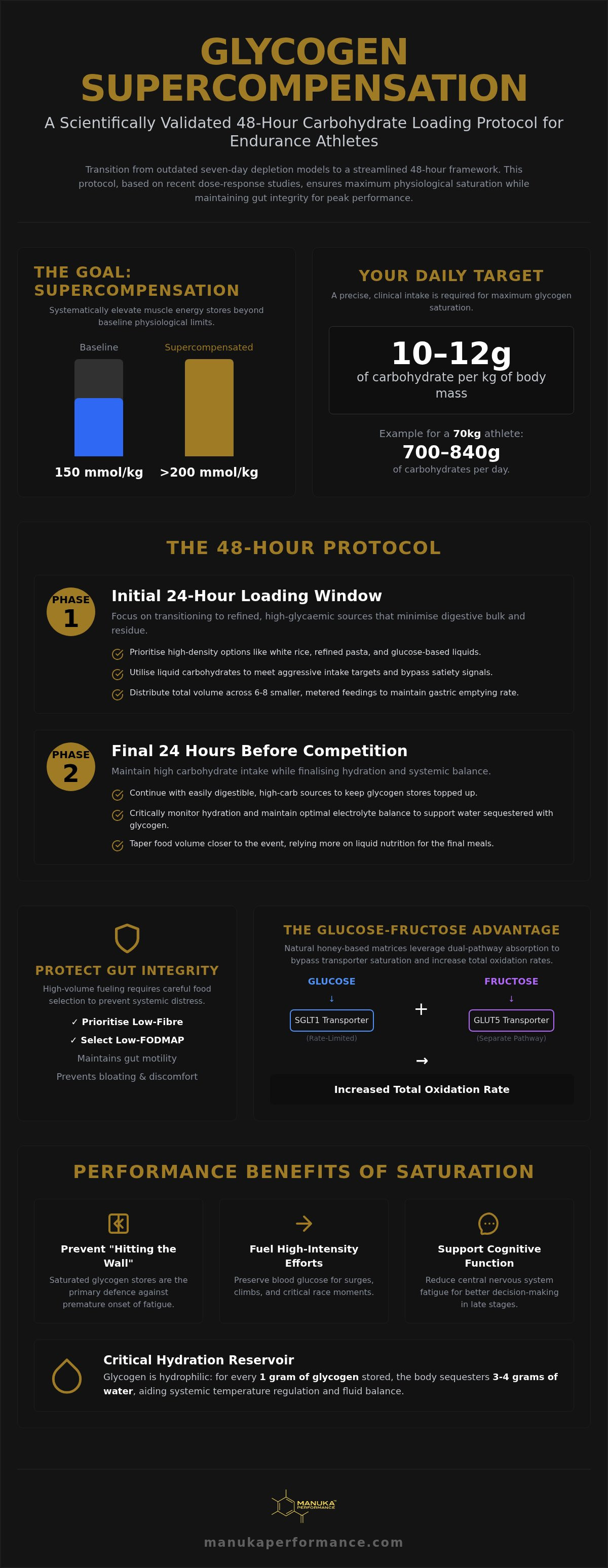
Glycogen supercompensation represents the systematic elevation of muscle energy stores beyond their baseline physiological limits. Modern research indicates that the traditional one-week depletion model, which often induced metabolic stress and psychological fatigue, is no longer the gold standard for elite performance. Instead, contemporary protocols focus on a 36 to 48-hour intensive window. This refined carbohydrate loading approach relies on the biological "sponge" effect created during the preceding training blocks. When athletes execute a structured taper, the reduction in exercise volume alongside high carbohydrate intake allows the body to overcompensate for previous depletion, leading to saturated glycogen levels. This transition is a critical component of any effective carbohydrate loading plan for endurance athletes seeking peak performance.
The Mechanism of Muscle Glycogen Storage
The biochemical process of storage is primarily mediated by insulin, which facilitates the translocation of glucose transporters to the myocyte surface. Once glucose enters the muscle cell, it's converted into glycogen for long-term storage. It's essential to recognise that glycogen is a hydrophilic molecule, sequestering approximately three to four grams of water for every gram of glucose stored. This intracellular hydration is often reflected as a marginal increase in body mass, yet it serves as a critical reservoir for systemic temperature regulation and fluid balance during exertion. Glycogen supercompensation is defined as the metabolic state where muscle glycogen concentrations increase from a baseline of approximately 150 mmol/kg to levels exceeding 200 mmol/kg through strategic dietary manipulation.
Performance Benefits of Saturated Glycogen Stores
Saturated energy stores are the primary defence against the premature onset of fatigue, often referred to as "hitting the wall". By ensuring that muscle glycogen is at its physiological ceiling, athletes can preserve blood glucose levels for the high-intensity efforts required during surges or technical climbs. This metabolic stability extends beyond physical output. In the later stages of ultra-endurance events, the brain's reliance on glucose becomes paramount. Maintaining glycogen saturation supports cognitive function and rapid decision-making, reducing the risk of central nervous system fatigue. A robust carbohydrate loading plan for endurance athletes prioritises this systemic resilience, ensuring that both the muscular and neural systems have the substrate required for sustained, elite-level competition.
Designing the Macro-Architecture: A 48-Hour Protocol
Constructing a precise carbohydrate loading plan for endurance athletes requires a departure from qualitative dietary habits toward rigorous quantitative analysis. Current bio-analytical standards for events exceeding 90 minutes dictate an intake of 10 to 12 grams of carbohydrate per kilogram of body mass per 24-hour period. For a 70kg athlete, this necessitates a daily consumption of 700 to 840 grams of targeted substrate. Achieving these aggressive targets without inducing significant gastrointestinal distress requires distributing the total volume across six to eight smaller, metered feedings. This methodical approach ensures that the rate of gastric emptying remains consistent while muscle glycogen synthesis is maintained at its maximal physiological rate. Monitoring hydration is equally critical. As muscle tissues sequester additional water alongside glycogen, maintaining an optimal electrolyte balance is essential to prevent systemic dehydration or plasma volume fluctuations.
Phase 1: The Initial 24-Hour Loading Window
The first 24 hours of the protocol focus on the transition from complex, high-fibre carbohydrates to refined, high-glycaemic sources that minimise digestive bulk. During this phase, athletes should prioritise high-density options such as white rice, refined pasta, and glucose-based liquids that provide maximum caloric density with minimal intestinal residue. Liquid carbohydrates are particularly effective for meeting aggressive intake targets, as they bypass the satiety signals associated with solid food consumption. Utilising a natural honey-based matrix during this window can provide a dual-source carbohydrate delivery system that enhances absorption efficiency while supporting systemic resilience through quantified bioactives.
Phase 2: The Final 24 Hours Before Competition
In the final 24-hour window, the objective shifts toward ensuring rapid gastric emptying and total glycogen saturation. Fibre and fat intake must be reduced to near-zero levels to prevent any residual intestinal load that could lead to discomfort during the event. This phase focuses on simple sugars and highly processed starches that require minimal metabolic effort to process. Fine-tuning electrolyte intake, specifically sodium and potassium, becomes paramount to support the fluid retention required for glycogen storage. The final pre-race meal should be consumed three to four hours prior to the start, consisting of 1 to 4 grams of carbohydrate per kilogram of body mass, ensuring that hepatic glycogen is topped up and blood glucose levels are stabilised for the initial stages of the competition.
The Glucose-Fructose Matrix vs. Synthetic Maltodextrin
The efficacy of a carbohydrate loading plan for endurance athletes is ultimately governed by the rate-limiting step of intestinal absorption. While traditional protocols relied heavily on maltodextrin, a synthetic glucose polymer derived from maize, current biochemical analysis reveals a significant physiological bottleneck. Glucose relies exclusively on the SGLT1 (sodium-glucose linked transporter 1) pathway, which saturates at approximately 60 grams per hour. By contrast, a dual-source matrix incorporating fructose utilises the independent GLUT5 (glucose transporter 5) pathway. This synergistic approach allows for total carbohydrate oxidation rates to reach 90 grams per hour, with emerging research from 2026 suggesting that elite-level absorption may even exceed 120 grams per hour when ratios are precisely managed. New Zealand honey-based matrices offer a natural, bioactive alternative to synthetic starches, providing a refined glucose-fructose profile that aligns with these multi-transport pathways while maintaining a more favourable osmolality than hypertonic synthetic gels.
Bioavailability and Absorption Efficiency
The natural composition of high-quality honey provides a molecular structure that mirrors the body's preferred uptake pathways, facilitating rapid translocation from the small intestine into the bloodstream. Unlike synthetic maltodextrin, which can lead to an accumulation of unabsorbed substrate in the colon, the dual-pathway delivery of honey-based matrices reduces the risk of carbohydrate fermentation and subsequent osmotic pressure. New Zealand honey-based matrices achieve oxidation rates significantly exceeding those of synthetic maltodextrin by engaging the GLUT5 pathway alongside SGLT1, effectively bypassing the 60-gram-per-hour saturation limit of single-source glucose. This efficiency is critical for maintaining systemic energy availability without the gastrointestinal distress often associated with high-volume synthetic supplementation.
Sustained Energy Release and Insulin Response
Relying solely on high-glycaemic glucose often results in a volatile insulin response, characterised by rapid spikes followed by reactive hypoglycaemia. The inclusion of fructose within a natural honey matrix provides a more stable glycaemic curve, as fructose requires hepatic processing before it enters systemic circulation as glucose. This metabolic pathway is particularly advantageous for restoring liver glycogen, a reservoir that is essential for maintaining blood glucose levels during the nocturnal fast and the early stages of competition. By integrating these natural matrices into a carbohydrate loading plan for endurance athletes, you can optimise metabolic flexibility and ensure a sustained release of substrate that supports both high-intensity surges and long-term endurance performance.
Managing Gastrointestinal Resilience During the Load
Achieving the ambitious targets within a carbohydrate loading plan for endurance athletes presents a substantial physiological challenge to the gastrointestinal tract. High-volume carbohydrate consumption increases intestinal osmotic pressure, which can lead to the sequestration of fluid into the lumen and subsequent discomfort. To mitigate these risks, athletes must prioritise gastrointestinal resilience and avoiding runner’s stomach issues through a structured, low-residue dietary approach. This strategy involves the temporary elimination of high-fibre foods and FODMAPs, which are prone to fermentation in the colon, leading to gas production and systemic bloating. Training the gut during the lead-up to the competition is equally vital. Exposing the digestive system to similar carbohydrate concentrations during training sessions up-regulates the necessary transport proteins and enzymatic pathways required for efficient substrate processing.
Low-Residue Nutrition for the Endurance Gut
Maintaining gut motility requires a deliberate shift toward low-residue nutrition. During the 48-hour loading window, you should prioritise peeled, cooked, and highly refined grains like white jasmine rice or sourdough bread over their wholefood counterparts. These choices minimise the mechanical load on the digestive system, allowing for more efficient nutrient translocation. Liquid carbohydrates play a decisive role here. They provide a method to meet aggressive targets without the gastric volume associated with solid meals. While some athletes find utility in supplemental digestive enzymes or specific probiotic strains to support motility, these should be validated during the training phase to ensure compatibility with individual gut flora.
Hydration and Electrolyte Synergy
Sodium is not merely an electrolyte for fluid balance; it is a fundamental co-transporter required for the SGLT1 pathway to function at peak capacity. Without adequate sodium, the transport of glucose across the intestinal epithelium is significantly impaired, potentially leading to carbohydrate accumulation and osmotic distress. Your fluid requirements must be calculated to account for the three to four grams of water sequestered with every gram of stored glycogen. If you experience signs of gastrointestinal overload, such as upper-abdominal pressure or nausea, the protocol should be adjusted by reducing solid food volume and increasing the reliance on isotonic, dual-source liquids. To optimise your metabolic preparation, explore our range of precision-engineered energy gels that support systemic resilience.
Integrating Bioactive Honey for Superior Performance
The final phase of a carbohydrate loading plan for endurance athletes should transcend simple caloric accumulation to address the systemic stress associated with high-intensity competition. While the previous sections established the necessity of glycogen saturation, the integration of bioactive honey-based matrices introduces a layer of phytochemical support that synthetic alternatives cannot replicate. By utilising a natural honey-based energy gels performance analysis, it's evident that the presence of quantified polyphenols plays a fundamental role in mitigating oxidative stress during the loading window and the subsequent event. This approach ensures that the athlete arrives at the start line with both saturated energy stores and a primed biological defence system.
The PolySure™ Advantage: Beyond Simple Sugars
The distinction between standard raw table honey and performance-led functional honey lies in the rigorous quantification and validation of bioactive compounds. Mānuka Performance utilises the PolySure™ analytical standard to validate seven naturally occurring polyphenols within the honey matrix, ensuring a consistent phytochemical profile that supports elite-level output. These compounds are not merely incidental; they represent a significant advancement in sports biotech, offering systemic resilience by modulating the inflammatory response to acute metabolic stress. Unlike corn-derived maltodextrin, which provides isolated glucose chains, these bioactive matrices offer a complex biological environment that supports cellular integrity while meeting the metabolic demands of intense endurance efforts.
Practical Implementation with LiquidFuel
Achieving the final 100 to 200 grams of a daily carbohydrate target often proves the most difficult aspect of a loading protocol due to increasing satiety and gastric volume. LiquidFuel energy gels provide a concentrated, bioavailable solution to this challenge, allowing athletes to supplement their solid food intake without additional digestive bulk. These gels should be integrated into the final 24 hours of the carbohydrate loading plan for endurance athletes to ensure that glycogen stores are topped up with a high-efficiency glucose-fructose matrix. This methodical approach ensures peak metabolic capacity is reached before the starting gun.
- Pre-Event Window: Consume one to two gels 45 minutes prior to the start to stabilise blood glucose and initiate the dual-pathway transport system.
- Systemic Support: Leverage the quantified bioactives to manage the oxidative load from the first kilometre.
- Personalisation: Adjust the frequency based on your previously established gut training data to maintain gastrointestinal comfort.
Personalising your endurance nutrition requires a move toward data-driven, research-led protocols. By prioritising bioactive purity and metabolic efficiency, you can transition from a standard loading phase to a sophisticated, bio-analytical preparation strategy. This ensures that every gram of carbohydrate consumed contributes directly to sustained, high-performance output.
Advancing Toward Physiological Peak Capacity
Refining the carbohydrate loading plan for endurance athletes from a generic dietary increase to a bio-analytical protocol ensures that every gram of substrate contributes to peak metabolic saturation. This strategic 48-hour window, supported by a natural glucose-fructose matrix, effectively bypasses the absorption bottlenecks inherent in synthetic single-source starches. By prioritising low-residue nutrition and quantified bioactives, you maintain gastrointestinal resilience while securing the energetic reserves necessary for elite-level output. Precision in preparation is the defining factor between simply finishing and achieving a performance breakthrough.
To support your protocol with a New Zealand honey-based matrix that's validated by the PolySure™ analytical standard for seven naturally occurring bioactives, Explore the PolySure™ Validated LiquidFuel Range. This research-led approach provides the systemic support required for sustained, high-intensity competition. Your path to a new personal best is built on a foundation of rigorous, data-driven fueling. We look forward to seeing your preparation translate into superior results on race day.
Frequently Asked Questions
How many grams of carbohydrates do I need for a marathon load?
You require approximately 10 to 12 grams of carbohydrate per kilogram of body mass per day during the 36 to 48 hours preceding your event. For a 70kg athlete, this equates to a daily intake of 700 to 840 grams of carbohydrates. This quantitative target ensures that muscle glycogen concentrations reach maximum physiological saturation, effectively preparing your metabolic systems for the sustained output required during a marathon or similar ultra-endurance effort.
Can I carb load using only natural honey-based energy gels?
While it's technically possible to meet your targets using liquid sources, we recommend integrating natural honey-based energy gels as a strategic supplement to low-fibre solid foods. LiquidFuel gels are particularly effective for reaching the final 100 to 200 grams of your daily requirement without increasing gastric volume. This dual-source glucose-fructose matrix facilitates rapid absorption through independent transport pathways, ensuring you meet your carbohydrate loading plan for endurance athletes targets with minimal digestive strain.
What are the best low-fibre carbohydrate sources for endurance athletes?
The most effective low-fibre sources include refined grains such as white jasmine rice, white pasta, and sourdough bread, alongside high-density liquid carbohydrates. These options minimise intestinal residue and reduce the risk of gastrointestinal distress during the loading phase. By selecting peeled and thoroughly cooked starches, you ensure that the body can prioritise nutrient translocation over complex digestion, allowing for efficient glycogen synthesis while maintaining gut motility and comfort before competition.
Is it possible to over-load on carbohydrates before a race?
Physiological storage of glycogen is finite, meaning that once your myocytes reach maximum saturation, additional carbohydrate consumption won't yield further performance benefits. Consuming quantities significantly beyond the recommended 12g/kg limit often results in acute gastrointestinal distress, bloating, or osmotic diarrhoea as unabsorbed substrate enters the colon. The objective is to achieve a state of supercompensation where stores are topped up, rather than exceeding the body's metabolic capacity for processing and storage.
Should I drink more water while carbohydrate loading?
Yes, you must increase your fluid intake to support the biochemical storage process. Glycogen is a hydrophilic molecule that sequesters approximately three to four grams of water for every gram of glucose stored within the muscle tissue. Failing to maintain adequate hydration during a carbohydrate loading plan for endurance athletes can lead to systemic dehydration as the body prioritises glycogen-bound water storage. Monitor your urine colour to ensure you remain in a state of optimal fluid balance.
How do I avoid bloating and weight gain during a carb load?
Moderate weight gain of one to two kilograms is a physiological marker of successful glycogen saturation and should be expected due to bound water storage. To avoid uncomfortable bloating, you must strictly limit fibre and high-FODMAP foods during the 48-hour protocol. Prioritising refined starches and bioactive honey-based matrices ensures that carbohydrates are rapidly absorbed in the small intestine, preventing the fermentation in the colon that typically causes gas production and abdominal pressure.
What is the role of sodium in a carbohydrate loading plan?
Sodium acts as a critical co-transporter for the SGLT1 pathway, which is the primary mechanism for glucose absorption in the small intestine. Without sufficient sodium concentrations, the translocation of glucose into the bloodstream is significantly impaired, regardless of the volume of carbohydrate consumed. Maintaining an optimal electrolyte balance ensures that your loading protocol is metabolically efficient and prevents the accumulation of unabsorbed carbohydrates that can lead to runner’s stomach and other gastrointestinal issues.
How do I know if my glycogen stores are fully saturated?
While muscle biopsies are the only definitive clinical measure, athletes can identify saturation through several physiological indicators. A noticeable increase in body mass of approximately one to two percent, combined with a significant reduction in hunger despite high activity levels, typically suggests successful supercompensation. Additionally, well-saturated muscles often feel "full" or slightly heavier during the final taper. Following a structured, research-led carbohydrate loading plan for endurance athletes provides the highest statistical probability of reaching full metabolic saturation.