


What if the primary constraint on your endurance performance is not your cardiovascular capacity, but the biochemical instability of the synthetic carbohydrate matrices currently powering your training? While many athletes accept gastrointestinal distress and rapid insulin spikes as inevitable trade-offs for high-intensity fuelling, the emergence of honey based energy gels NZ represents a significant shift toward analytical validation in sports nutrition. You likely recognise that consistent energy output requires more than just raw caloric intake; it demands a metabolic substrate that the human digestive system can process under physiological stress without triggering systemic inflammation or gut dysfunction.
This article provides a comprehensive scientific evaluation of New Zealand honey-based carbohydrate matrices and their distinct physiological advantages for the elite endurance athlete. We will examine the rigorous PolySure™ standard, which validates the presence of seven naturally occurring polyphenols, and explore how these bioactive compounds facilitate sustained power output and improved recovery. By moving beyond the simplistic sugar profiles of traditional supplements, we detail how specific glucose-fructose ratios and natural antioxidants work in synergy to optimise your performance and mitigate the energy crashes common in maltodextrin-heavy formulations.
Key Takeaways
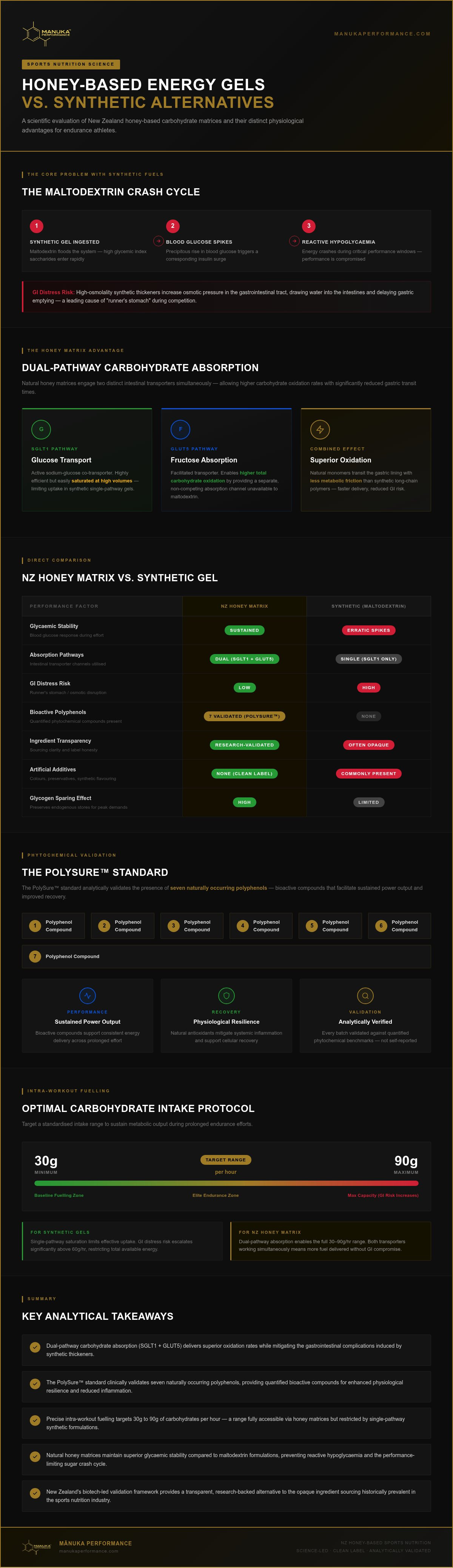
- Analyse the biochemical advantages of dual-pathway carbohydrate absorption, which facilitates superior oxidation rates while mitigating the gastrointestinal complications often induced by synthetic thickeners.
- Recognise the clinical distinction of honey based energy gels NZ through the PolySure™ standard, ensuring the presence of quantified bioactive polyphenols for enhanced physiological resilience.
- Implement precise intra-workout fuelling protocols, targeting a standardised intake of 30g to 90g of carbohydrates per hour to sustain metabolic output during prolonged endurance efforts.
- Evaluate the comparative glycemic stability of natural honey matrices against traditional maltodextrin formulations to prevent the performance-limiting effects of rapid insulin spikes.
- Understand how the analytical validation of New Zealand innovation provides a transparent, research-led alternative to the opaque ingredient sourcing prevalent in the sports nutrition industry.
The Evolution of Endurance Nutrition: Limitations of Synthetic Matrices
For decades, the sports nutrition industry has relied heavily on maltodextrin, a complex carbohydrate derived from the enzymatic hydrolysis of starch, as the primary substrate for endurance fuelling. While efficient at providing a rapid glucose supply, this reliance often overlooks the metabolic cost associated with high-glycemic index synthetic polymers. These low-quality carbohydrate sources frequently induce a "sugar-crash" cycle, where a precipitous rise in blood glucose triggers a corresponding insulin surge, ultimately leading to reactive hypoglycaemia during critical performance windows. The transition toward honey based energy gels NZ represents an analytical shift, prioritising metabolic stability over the erratic energy fluctuations inherent in synthetic formulations. This evolution is driven by a growing demand for substrates that respect the body's complex biochemical pathways rather than simply flooding them with isolated saccharides.
The Gastric Emptying Challenge
The physiological burden of traditional gels often manifests as "runners stomach," a condition frequently exacerbated by high-osmolality synthetic thickeners and artificial additives. These substances increase the osmotic pressure within the gastrointestinal tract, drawing water into the intestines and delaying gastric emptying. Unlike synthetic polymers that rely on a single SGLT1 transporter pathway, honey-based matrices utilise dual-pathway absorption:
- SGLT1 Pathway: Responsible for glucose transport but easily saturated at high volumes.
- GLUT5 Pathway: Facilitates fructose absorption, allowing for higher total carbohydrate oxidation.
- Transit Efficiency: Natural monomers move through the gastric lining with less metabolic friction than synthetic long-chain polymers.
By engaging both transporters, athletes can achieve higher carbohydrate oxidation rates with significantly reduced gastric transit times, mitigating the risk of intestinal distress during high-intensity exertion.
Identifying Clean Label Standards
Authentic clean-label sports nutrition is defined by a rigorous exclusion of artificial colours, preservatives, and synthetic flavouring agents that offer no physiological benefit to the athlete. For elite performers, the metabolic overhead required to process these non-functional additives can detract from cellular recovery and systemic efficiency. New Zealand has established itself as a global leader in functional food innovation by integrating biotech-led validation with pristine natural sources.
The development of honey based energy gels NZ exemplifies this commitment to transparent, research-backed nutritional profiles, where every component serves a validated functional purpose rather than a mere aesthetic requirement. This shift ensures that the fuelling strategy supports long-term health as much as immediate power output, providing a clinical alternative to the opaque ingredient sourcing that has historically characterised the supplement market.
While elite athletes focus on standardised bioactives, many also value the provenance of the honey they use in daily life. For those in the UK looking to support independent apiaries, you can visit Local Honey to browse a directory of local beekeepers and their unique products.
Biochemistry of the New Zealand Honey Matrix
The New Zealand honey matrix is a sophisticated, naturally occurring carbohydrate delivery system that transcends the simplistic profiles of conventional sweeteners. While standard supplements often rely on isolated, industrially processed polysaccharides, the biochemical structure of specific honey based energy gels NZ provides a synergistic blend of monosaccharides and bioactive compounds. This matrix isn't merely a sugar source; it's a complex substrate that facilitates sustained glycogen sparing by providing a steady exogenous energy supply. By maintaining blood glucose levels more effectively than high-glycemic synthetic alternatives, this natural matrix allows athletes to preserve endogenous glycogen stores for the most demanding phases of competition.
The Glucose-Fructose Ratio Explained
To achieve maximal carbohydrate oxidation during prolonged exertion, research indicates that a dual-pathway approach is essential. The human body possesses distinct intestinal transporters for different saccharides: the SGLT1 transporter for glucose and the GLUT5 transporter for fructose. When athletes consume pure glucose or maltodextrin, the SGLT1 pathway reaches a saturation point, typically around 60 grams per hour, which can lead to residual carbohydrates in the gut and subsequent distress. New Zealand honey naturally approximates a 1:0.8 glucose-to-fructose ratio, which aligns with elite endurance requirements for up to 90 grams of carbohydrate per hour. By engaging both transport pathways simultaneously, athletes can increase their total energy uptake without over-leveraging a single metabolic bottleneck.
Osmotic Pressure and Bioavailability
Bioavailability is determined by the rate at which nutrients transition from the gastrointestinal tract into the bloodstream. Many synthetic syrups possess a high osmolality, requiring significant water intake to facilitate digestion and prevent dehydration. In contrast, the natural enzymatic profile of honey-based fuel supports a more favourable osmotic balance. This means the gel is more easily assimilated, requiring less supplemental fluid to process the same caloric density. The result is a highly bioavailable energy source that enters the system rapidly but burns with metabolic stability.
The efficacy of this delivery system is further enhanced by the presence of quantified phytochemicals. These compounds, which are structurally integral to the honey matrix, support metabolic efficiency by mitigating oxidative stress at the cellular level during high-intensity training. For those seeking to integrate these biochemical advantages into their own protocols, exploring the validated nutritional profiles of LiquidFuel offers a precise starting point for performance optimisation. This analytical approach ensures that every gram of carbohydrate consumed is backed by the rigour of New Zealand biotech innovation.
Honey-Based Energy Gels vs. Synthetic Alternatives
The comparative analysis of honey based energy gels NZ against synthetic alternatives reveals a significant divergence in metabolic efficiency and systemic impact. While previous sections established the biochemical structure of the honey matrix, it's essential to understand how these properties translate into measurable performance advantages during high-exertion sessions. Synthetic gels, predominantly composed of maltodextrin or corn syrup, are engineered for rapid delivery but often lack the secondary metabolites required to support the body's physiological resilience under stress. In contrast, the integration of natural electrolytes and phytochemicals in honey-based formulations provides a multi-functional substrate that addresses both caloric requirements and cellular maintenance.
Glycemic Index and Insulin Regulation
Maintaining a stable blood glucose profile is a primary objective for any ultra-endurance athlete. Synthetic polymers often produce a sharp insulin response, which can lead to rapid fluctuations in energy levels and a subsequent decline in power output. Honey's complex carbohydrate profile, which includes small amounts of oligosaccharides alongside its primary monosaccharides, results in a more modulated glycemic response. This steady fuel release prevents the insulin spikes that frequently precede a performance "bonk." By ensuring a consistent delivery of glucose to the working muscles, athletes can sustain their intensity over multi-hour events without the metabolic volatility associated with low-quality sugar sources.
The Antioxidant Advantage
One of the most profound distinctions between natural and synthetic fuelling is the presence of quantified antioxidants. Performance-led honey contains a high density of bio-flavonoids and phenolic compounds that are entirely absent in industrially processed syrups. These phytochemicals play a critical role in reducing oxidative stress, a byproduct of intense muscular activity that can lead to systemic inflammation and delayed recovery.
- Oxidative Stress Mitigation: Natural bio-flavonoids neutralise free radicals produced during high-intensity training.
- Intra-Workout Resilience: Phytochemicals support cellular integrity, allowing for sustained output.
- Phytochemical Density: Honey based energy gels NZ provide a validated spectrum of compounds that synthetic options cannot replicate.
The palatability of these natural formulations also offers a distinct advantage. During high-exertion sessions, the "flavour fatigue" associated with sickly sweet synthetic gels can lead to under-fuelling. The complex, nuanced profile of a honey-based matrix is often better tolerated by the palate, ensuring that athletes remain compliant with their nutritional protocols throughout the duration of their event. When combined with natural salts to support hydration status, the result is a superior physiological outcome that synthetic alternatives simply don't match.
Optimising Performance: Intra-Workout Fuelling Protocols
Achieving peak physiological output requires more than just high-quality fuel; it demands a structured protocol that aligns exogenous carbohydrate intake with metabolic demand. Research suggests that for efforts exceeding two hours, athletes should target between 30g and 90g of carbohydrates per hour. This range accounts for variations in body mass and exertion levels. Utilising honey based energy gels NZ allows for a more precise titration of energy, as the natural matrix facilitates consistent absorption without the gastric distress common in synthetic alternatives. Integrating these gels into a "train the gut" philosophy ensures that the intestinal transporters are optimised for high-volume carbohydrate processing long before race day.
Pre-Race Priming and Loading
Establishing a robust glycogen baseline is critical before the starting gun. Consuming a natural carbohydrate source 15 to 30 minutes prior to exertion initiates metabolic activation, ensuring that the body's oxidative pathways are primed. Unlike synthetic gels that often contain fillers which contribute to a sensation of abdominal heaviness, the clean-label profile of honey-based fuel ensures rapid assimilation. This pre-race activation supports early-session intensity while preserving endogenous stores for the latter stages of the event. It's a clinical approach to priming that avoids the insulin volatility associated with processed sugars.
The Endurance Protocol: Hour by Hour
Maintaining an intake of 60g or more per hour requires a disciplined approach to fuelling. Using a product like LiquidFuel, athletes can strategically sequence their intake to match their heart rate zones and specific metabolic requirements. At higher intensities, where blood flow is diverted from the digestive system, the low osmotic load of honey is particularly advantageous. Managing hydration in conjunction with carbohydrate intake is a critical variable; high sweat rates increase the concentration of solutes in the gut, which can impede the absorption of energy. Pairing these gels with a structured fluid plan maintains the electrolyte balance necessary for cellular function.
- Hour 1: Baseline intake of 30-45g to stabilise blood glucose levels as the body transitions to exogenous fuel.
- Hour 2 and beyond: Scaling to 60-90g per hour as endogenous glycogen stores deplete and the reliance on external substrates increases.
- Hydration management: Accompanying each dose with 150-250ml of water to facilitate rapid nutrient transit and maintain gastric comfort.
- Corrective fuelling: Recognising the early markers of depletion, such as a decline in power output or cognitive focus, allows for immediate intervention with high-bioavailability honey.
For those ready to implement these research-led protocols in their next training block, you can purchase LiquidFuel 10-packs to begin your gut-training phase and ensure your system is prepared for the demands of competition.
The PolySure™ Standard: Validating Phytochemical Excellence
The clinical prestige of honey based energy gels NZ is established through rigorous analytical validation rather than anecdotal evidence. While the consumer market often relies on UMF or MGO ratings to determine honey quality, these metrics primarily quantify antibacterial properties relevant to wound care or general wellness. For the elite endurance athlete, these markers provide little insight into metabolic performance. Mānuka Performance has redefined this landscape by introducing the PolySure™ standard, a biotech-led benchmark that shifts the focus toward the phytochemical density required for physiological resilience and systemic recovery. This standard bridges the gap between raw natural sources and pharmaceutical-grade functional nutrition, ensuring that the honey matrix is optimised for the specific demands of high-intensity training.
Quantifying Seven Key Polyphenols
The efficacy of LiquidFuel is predicated on the consistent presence of seven naturally occurring polyphenols, which are structurally integral to the honey matrix. These bioactive compounds serve as the primary mechanism for reducing oxidative stress and supporting cellular integrity during prolonged exertion. By moving beyond simplistic sugar profiles, the PolySure™ standard ensures that every pouch in a LiquidFuel 10-pack contains a quantified spectrum of performance-relevant bioactives. This level of precision is essential for athletes who require predictable nutritional outcomes; it eliminates the natural variability often found in unstandardised honey products. Every batch undergoes rigorous testing to confirm that these phytochemical levels meet the strict thresholds required for elite-level athletic support.
WADA Compliance and Athlete Safety
Professional sporting environments demand an uncompromising approach to ingredient provenance and safety. To maintain this trust, every batch of LiquidFuel is processed through ISO 17025 standardised testing, providing a transparent audit trail from source to sachet. This rigorous validation process includes independent laboratory screening for WADA-prohibited substances, ensuring that honey based energy gels NZ meet the safety requirements of professional cycling teams, marathoners, and triathletes. The transparency of batch certificates and provenance data reinforces the brand's position as a scientific pioneer, prioritising the integrity of the athlete's career alongside their performance. By integrating this level of laboratory oversight, the validation process moves beyond mere quality control, becoming a cornerstone of the athlete's systemic innovation strategy. This commitment to clinical precision ensures that the pursuit of professional excellence is never compromised by opaque manufacturing standards or unverified materials.
Just as athletes require precision and strategic oversight to maintain their physical edge, organisations can explore IT Consultancy and Cyber GRC Platform Services to ensure their digital infrastructure matches this standard of professional integrity.
Advancing Athletic Potential Through Analytical Validation
The transition from synthetic carbohydrate matrices to a research-led honey matrix represents a significant advancement in functional sports nutrition. By prioritising the dual-pathway absorption of natural glucose and fructose, athletes can effectively mitigate the gastrointestinal distress and metabolic volatility associated with traditional maltodextrin formulations. This analysis has detailed how the integration of phytochemicals, validated by the PolySure™ standard, supports both immediate power output and systemic recovery. The emergence of honey based energy gels NZ provides a clinical alternative for those who demand transparent ingredient provenance and measurable biochemical efficacy.
Mānuka Performance bridges the gap between nature and biotechnology, offering a product that's New Zealand made and rigorously batch tested for WADA prohibited substances. This commitment to ISO 17025 standardised testing ensures that professional integrity is never compromised during the pursuit of excellence. We invite you to explore the science of LiquidFuel honey-based energy gels and experience a fuelling strategy rooted in biochemical precision. Your performance deserves a substrate that's as disciplined as your training. We look forward to supporting your next breakthrough.
Frequently Asked Questions
Are honey-based energy gels better for sensitive stomachs?
Yes, honey-based energy gels NZ are typically better tolerated due to their lower osmotic pressure and the absence of synthetic thickeners that often irritate the gastric lining. By utilising natural glucose and fructose, these gels engage dual intestinal transporters; this facilitates rapid absorption and reduces residual carbohydrate volume. It's a more efficient delivery system. This clinical approach ensures energy enters the bloodstream without the systemic friction associated with industrially processed maltodextrin.
How many carbohydrates are in a typical honey-based energy gel?
Each pouch of LiquidFuel provides a concentrated carbohydrate load designed to support the 30g to 90g per hour fuelling protocols required by elite athletes. These gels are engineered for high bioavailability, ensuring the honey matrix delivers a steady energy supply without excessive volume. It's a precise metabolic substrate. Using a 10-pack allows for rigorous planning during training blocks, ensuring every session is backed by a consistent and validated nutritional profile.
Can I use Mānuka honey energy gels for marathons and triathlons?
Mānuka Performance energy gels are specifically formulated for the high-metabolic demands of marathons and triathlons. Their natural glucose-fructose ratio allows for sustained power output across multi-hour events while maintaining glycemic stability. By integrating these gels into a structured intra-workout protocol, triathletes can optimise their glycogen sparing and ensure a steady exogenous energy supply. It's a research-led strategy for managing the physiological stress of long-distance competition.
What is the difference between raw honey and a performance energy gel?
Performance energy gels are analytically standardised to ensure a precise glucose-to-fructose ratio and optimal water content for rapid bioavailability. While raw table honey is a natural carbohydrate source, it lacks the electrolyte balance and consistent phytochemical density required for intra-workout efficiency. LiquidFuel is a biotech-led innovation that refines the natural honey matrix into a functional format; it's validated by the PolySure™ standard for athletic performance rather than general consumption.
Does the PolySure™ standard mean the product is batch-tested for athletes?
The PolySure™ standard validates the phytochemical density of the honey matrix, while separate ISO 17025 testing ensures batch safety. Every production run of LiquidFuel is independently screened for WADA prohibited substances, providing a transparent audit trail for professional athletes. This rigorous validation process ensures that the product meets the highest clinical standards for both performance bioactives and anti-doping compliance. It's a dual-layer approach to safety and efficacy.
How do honey-based gels compare to synthetic brands like Gu or SIS?
Honey-based gels offer a research-led alternative to the maltodextrin-heavy formulations found in synthetic brands. Unlike synthetic options that often rely on isolated sugars and artificial thickeners, honey based energy gels NZ provide a synergistic matrix of bioactives and natural electrolytes. This results in a more modulated glycemic response and superior palatability; this prevents the flavour fatigue and insulin spikes that can compromise performance during late-stage endurance efforts.
Is there a risk of a sugar crash when using honey for endurance?
There's a significantly lower risk of a sugar crash when using a honey-based matrix compared to low-quality carbohydrate sources. The natural balance of fructose and glucose ensures a steady energy release; this prevents the precipitous insulin surges that trigger reactive hypoglycaemia. It's about metabolic stability. This modulated response allows athletes to maintain a consistent power output over several hours, avoiding the erratic energy fluctuations inherent in supplements that flood the system with pure glucose.
How should I store my LiquidFuel 10-pack for maximum shelf life?
To maintain the integrity of the bioactive compounds and the stability of the carbohydrate matrix, store your LiquidFuel 10-pack in a cool, dry environment. Avoid prolonged exposure to direct sunlight or extreme temperature fluctuations, as these can affect the phytochemical density validated by the PolySure™ standard. While the gels are designed for durability during training, keeping them in a temperature-controlled setting ensures they retain their clinical efficacy until the moment of consumption.