


The traditional approach to endurance fuelling often prioritises volume over metabolic synchronicity, yet the physiological reality of the 42.2km distance demands a far more rigorous analytical framework. Many athletes find themselves trapped in the precarious balance between systemic glycogen depletion and the debilitating gastrointestinal distress frequently associated with synthetic formulations. You likely recognise that inconsistent energy levels are not merely a matter of stamina but a failure of carbohydrate flux management. Understanding exactly how often to take energy gels marathon requires a deep dive into the biochemistry of absorption and the specific glucose-to-fructose ratios that govern sustained performance. This guide provides a comprehensive examination of the precise timing required to maintain stable blood glucose levels while minimising the risk of gut-related setbacks. We'll detail an actionable fuelling schedule that bridges the gap between natural bioactive sources and elite physiological outcomes, ensuring your transition into post-race recovery is as efficient as your performance on the course.
Key Takeaways
- Learn the precise biochemical timing for carbohydrate intake and determine exactly how often to take energy gels marathon to maintain systemic glucose stability.
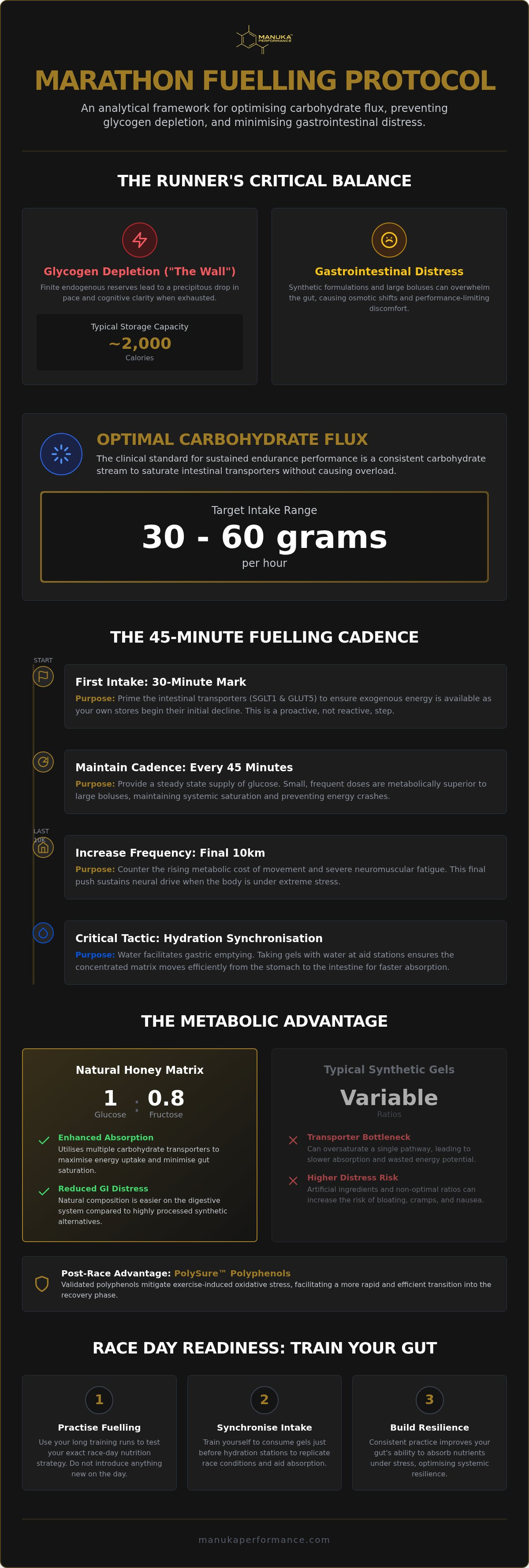
- Establish a 45-minute fuelling protocol to ensure a consistent carbohydrate flux of 30 to 60 grams per hour, preventing the premature onset of glycogen depletion.
- Understand the metabolic benefits of a natural 1:0.8 glucose-to-fructose ratio, which enhances absorption and reduces the risk of gastrointestinal distress compared to synthetic alternatives.
- Explore how PolySure™ validated polyphenols mitigate exercise-induced oxidative stress, facilitating a more rapid transition into the post-race recovery phase.
- Discover methodologies for training the gut during long-distance training runs to optimise nutrient absorption and systemic resilience on race day.
The Biochemistry of Glycogen Depletion in Marathon Running
Marathon performance is fundamentally governed by the availability of metabolic substrates. The phenomenon commonly described as "the wall" represents the point of physiological exhaustion where muscle and liver glycogen stores are depleted. The Biochemistry of Glycogen Depletion dictates that as exercise intensity increases toward marathon-specific heart rate zones, the body's reliance on carbohydrate oxidation becomes absolute. Endogenous reserves are finite. When these stores vanish, the central nervous system reduces motor unit recruitment to protect vital organs, leading to a precipitous drop in pace and cognitive clarity.
Systemic inflammation also plays a critical role in the latter stages of a 42.2km event. Prolonged physical exertion triggers a cytokine response that can alter the permeability of the gastrointestinal tract, often complicating nutrient absorption and making the timing of intake a vital variable. Maintaining bioavailable energy isn't just about muscular output; it's essential for sustaining the neural drive required to coordinate complex motor patterns under extreme fatigue.
Glycogen Storage Capacity and Running Economy
Most trained athletes possess a glycogen storage capacity of approximately 2,000 calories, which is rarely sufficient to cover the total energy expenditure of a full marathon. Your running economy, or the oxygen cost of maintaining a specific speed, determines the rate at which you consume these limited reserves. While pre-race carbohydrate loading can maximise initial stores, it doesn't eliminate the need for intra-race supplementation. The efficiency of your substrate utilisation directly informs how often to take energy gels marathon. Those with lower running economy will reach their metabolic ceiling significantly earlier than their more efficient counterparts.
Metabolic Flux and Energy Continuity
Achieving a steady state of metabolic flux requires a proactive rather than reactive approach to nutrition. Waiting for hunger cues or early signs of fatigue is a systemic failure of the fuelling protocol. The transit time from ingestion to cellular utilisation isn't instantaneous. To protect muscle tissue from catabolic processes and maintain blood glucose stability, a consistent stream of exogenous carbohydrate is mandatory. Determining how often to take energy gels marathon involves calculating the precise balance between your oxidation rate and your gut's absorption capacity. This ensures that energy continuity is never interrupted by a preventable deficit in blood sugar.
Calculating Optimal Carbohydrate Flux: The 45-Minute Protocol
The clinical standard for endurance performance dictates a carbohydrate intake range of 30 to 60 grams per hour. This range isn't arbitrary; it represents the maximum saturation point of the body's SGLT1 and GLUT5 transporters. When considering how often to take energy gels marathon, athletes must account for the specific carbohydrate density of their chosen sachet. While many competitors suggest a generic 45 to 60 minute window, this often fails to account for the physiological flux required to maintain glycogen continuity. Small, frequent doses are metabolically superior to large boluses, as they provide a steady state supply of glucose without overwhelming the digestive system or causing osmotic shifts that lead to distress.
The Step-by-Step Marathon Fuelling Schedule
Effective fuelling begins well before the onset of fatigue. Consuming the first gel at the 30 minute mark is essential to prime the intestinal transporters and ensure that exogenous energy is available as endogenous stores begin their initial decline. Following this, a strict 45 minute cadence should be maintained to ensure systemic saturation throughout the middle kilometres. As the race progresses into the final 10km, increasing the frequency may be necessary to counter the rising metabolic cost of movement and the neuro-muscular fatigue associated with prolonged exertion. This rigorous approach is supported by the marathon fuelling and hydration guide, which emphasises the necessity of consistent carbohydrate delivery.
Individual Pacing and Fuelling Synchronisation
Synchronising your intake with hydration stations is a critical tactical requirement. Water facilitates gastric emptying, allowing the concentrated honey-based matrix to move more efficiently from the stomach into the small intestine. The specific protocol for how often to take energy gels marathon will vary based on your expected finish time. A sub-3 hour athlete operates at a higher glycolytic rate and requires more aggressive fuelling compared to a 4+ hour finisher, whose total duration necessitates a longer, more sustainable strategy. You can review our marathon fuelling strategy honey for technical pacing data that aligns with these physiological demands. To support systemic resilience after such intense exertion, consider integrating a targeted physiological recovery protocol into your post-race routine.
The Metabolic Advantage of Natural Honey Matrices
The metabolic efficiency of synthetic maltodextrin is frequently compromised by the osmotic pressure it exerts on the gastrointestinal tract, leading to suboptimal nutrient delivery during prolonged exertion. In contrast, the natural honey-based matrices utilised in New Zealand made energy gels provide a superior alternative through a precise 1:0.8 glucose-to-fructose ratio. This specific configuration aligns with the human body's endogenous absorption capacity, facilitating a higher rate of carbohydrate oxidation without the systemic distress often associated with processed sugar polymers. By providing a more bioavailable substrate, these matrices allow for a more consistent energy flux throughout the 42.2km distance.
Dual-Source Carbohydrate Absorption
The intestinal absorption of carbohydrates is limited by the saturation of specific transport proteins, where glucose primarily utilises the SGLT1 transporter and fructose relies on the GLUT5 pathway. By employing a dual-source matrix, LiquidFuel 10-Pack sachets bypass the metabolic bottlenecking that occurs when a single pathway is overwhelmed. This clinical efficiency allows athletes to maintain a higher intake frequency without risking the gastrointestinal distress colloquially known as "gut rot." When calculating how often to take energy gels marathon, the use of a honey-based matrix ensures that exogenous fuel is rapidly converted into muscular work rather than accumulating in the digestive tract and causing osmotic shifts.
Polyphenols and Performance Resilience
Performance during a marathon is often hindered by exercise-induced oxidative stress, which can degrade metabolic pathways and accelerate muscular fatigue. The PolySure™ analytical standard validates the presence of seven naturally occurring polyphenols within the honey matrix, providing a level of phytochemical protection that synthetic formulations simply lack. These bioactive compounds assist in managing the systemic inflammatory response, preserving the integrity of the cellular environment during high-intensity exertion. For professional athletes, the quantification of these elements is essential for ensuring both efficacy and systemic safety. Understanding how often to take energy gels marathon must therefore include a consideration of the protective role these bioactive ingredients play in maintaining performance resilience across the entire race duration.
The gastrointestinal resilience of honey-based energy gels NZ is further enhanced by the presence of natural enzymes and the inherent purity of the Mānuka honey specialist matrix. Processed sugars often require significant metabolic intervention to be broken down into usable glucose, whereas the bioavailability of natural honey ensures a more seamless transition from ingestion to energy production. Optimising the absorption of these natural matrices during the race creates a superior physiological foundation for the subsequent recovery phase, which can be further supported by a validated post-competition restoration protocol.
Implementation Strategy: Training Your Gut for Race Day
The physiological adaptation of the gastrointestinal tract is a prerequisite for successful marathon performance. Training the gut involves more than merely testing flavours; it's a systematic process of increasing the density of intestinal transporters to handle higher carbohydrate loads under stress. Without this preparation, even the most advanced honey-based matrices may fail to be absorbed efficiently during the later stages of the race. The body's ability to process exogenous fuel is a trainable skill that must be developed alongside aerobic capacity.
The Gut Training Protocol
Athletes should utilise their Sunday long runs to determine exactly how often to take energy gels marathon. This process begins with a conservative intake and progresses toward the clinical standard of 60 grams per hour. Simulating race-pace intensity is vital because blood flow is diverted away from the digestive organs during high-effort running, which significantly alters absorption rates. By gradually increasing the carbohydrate flux in training, you can identify your individual tolerance threshold and prevent the gastrointestinal distress that frequently occurs when novel protocols are introduced on race day. This methodical approach ensures that your digestive system is as resilient as your musculature when you reach the 30km mark.
Hydration and Osmolality
Maintaining osmotic balance within the small intestine is a non-negotiable requirement for nutrient transport. When a concentrated gel is ingested, the body must provide sufficient water to dilute the solution to an isotonic state. If water is absent, the body may draw fluid from the bloodstream into the gut, leading to dehydration and cramping. This is why the frequency of your fuelling must be perfectly synchronised with your hydration programme. Integrating LiquidFuel pouches into your training allows you to practice this coordination, ensuring that the honey matrix remains bioavailable and doesn't create a hypertonic bottleneck. Refined data on how often to take energy gels marathon suggests that sodium-glucose co-transport is often the limiting factor in high-temperature environments.
The transport of glucose across the intestinal wall is also dependent on the presence of sodium. Electrolytes act as the functional engine for SGLT1 transporters, making them a critical component of your intra-race strategy. To ensure your system is prepared for the rigours of the 42.2km distance, you must validate your entire protocol through rigorous training. Once your race-day strategy is finalised, you can focus on the next phase of performance: optimising your physiological recovery and systemic wellbeing.
Selection Framework: Transitioning from Race Fuel to Recovery
The rate of physiological restoration following a marathon is intrinsically linked to the metabolic state maintained throughout the 42.2km distance. When an athlete fails to manage their carbohydrate flux effectively, the resulting systemic depletion triggers a profound catabolic response that extends the recovery timeline by several days. Understanding precisely how often to take energy gels marathon is therefore a critical factor in determining the speed of post-race restoration. By maintaining blood glucose stability through consistent exogenous intake, you minimise the depth of the glycogen deficit and facilitate a more efficient transition into the anabolic recovery phase.
Intra-Workout Excellence: LiquidFuel Gels
The LiquidFuel 10-Pack serves as the foundational tool for maintaining this essential carbohydrate flux during competition. During peak training blocks where both volume and intensity reach their zenith, the Liquidfuel Gel Super Pack provides the necessary inventory to sustain a rigorous and repeatable fuelling protocol. These formulations utilise a refined profile of real green apple and Mānuka honey to provide a substrate that is both palatable and clinically effective. The natural 1:0.8 glucose-to-fructose ratio ensures that intestinal transport pathways remain saturated without the risk of gastrointestinal distress, even as the frequency of intake increases to counter late-race fatigue.
Post-Race Restoration: Body Restore and Body Fuel
Acute post-marathon recovery necessitates the immediate replenishment of hepatic and muscular glycogen stores within the initial metabolic window. Body Restore, a 100% pure Mānuka honey specialist product, is engineered for this specific restorative purpose. Its high MGO levels (512+) provide essential systemic support during the period of heightened oxidative stress that inevitably follows a maximal endurance effort. To maintain baseline glycogen health and systemic wellbeing throughout the broader training cycle, Body Fuel should be integrated as a daily nutritional habit. This comprehensive approach ensures that the athlete's metabolic foundation remains resilient regardless of the cumulative training load.
The Athlete Recovery and Wellbeing Collection
For low-intensity sessions or daily physiological maintenance, the X68 Performance Drops offer a controlled delivery of bioactive honey-based ingredients. Elite athletes prioritise analytical validation in their recovery jars, seeking the clinical certainty provided by the PolySure™ standard. Curating a professional-grade nutrition arsenal requires a systemic perspective that encompasses the entire marathon cycle, from the first training run to the final recovery phase. To ensure your physiological outcomes are supported by the highest standards of biotechnological innovation, explore the Athlete Recovery and Wellbeing collection.
Mastering Systemic Resilience for Elite Endurance Outcomes
Beyond your nutritional toolkit, ensuring you arrive at your race location feeling refreshed is a key part of your preparation. For athletes travelling to a destination event, learn more about Kapture Travel to find the right supplies for a comfortable journey.
Achieving peak performance over the 42.2km distance requires a transition from intuitive fuelling to a rigorous, analytically validated protocol. We've established that the precise timing of carbohydrate intake, specifically understanding how often to take energy gels marathon, is the primary determinant of metabolic continuity. By adopting a 45-minute cadence and utilising a natural glucose-fructose matrix, you bypass the intestinal bottlenecks and systemic inflammation that often derail performance. This approach doesn't just protect your race-day split; it provides the biochemical foundation for a more efficient transition into the restoration phase.
Mānuka Performance offerings are scientifically engineered for endurance, providing the clinical certainty required by professional athletes. Every batch undergoes PolySure™ analytical validation to ensure the presence of bioactive compounds that support systemic health. To complete your performance cycle and ensure your body returns to homeostasis as rapidly as possible, you should optimise your marathon recovery with our Athlete Recovery and Wellbeing collection. Your commitment to precise fuelling today defines your capacity for excellence tomorrow.
Frequently Asked Questions
How many energy gels should I take for a 4-hour marathon?
A 4-hour marathon typically requires between five and six energy gels to maintain the clinical standard of 30 to 60 grams of carbohydrate per hour. Following the established 45-minute protocol, the first intake should occur at the 30-minute mark, with subsequent doses at 75, 120, 165, and 210 minutes. This frequency ensures that systemic glucose levels remain stable without overwhelming the intestinal transporters or causing significant osmotic shifts.
What happens if I take energy gels too frequently during a race?
Excessive frequency can lead to a carbohydrate bottleneck within the small intestine, triggering gastrointestinal distress and osmotic imbalances. When the saturation point of SGLT1 and GLUT5 transporters is exceeded, unabsorbed sugars remain in the gut, drawing water from the bloodstream. This process often results in bloating, cramping, and acute nausea. Precision in determining how often to take energy gels marathon is essential to avoid these preventable physiological setbacks during high-intensity exertion.
Can I take energy gels without water while running?
Consuming energy gels without water is medically inadvisable due to the resulting hypertonic environment in the stomach. Water is a physiological requirement for facilitating gastric emptying and diluting concentrated honey-based matrices to an isotonic state. Without adequate hydration, the absorption of glucose and fructose is significantly delayed, increasing the risk of gastrointestinal irritation and systemic dehydration as fluid is diverted from the vascular system to the gut.
Why do some energy gels cause stomach cramps and nausea?
Stomach cramps and nausea are frequently caused by the high osmotic pressure of synthetic maltodextrin and artificial sweeteners found in standard formulations. These ingredients can irritate the intestinal lining and disrupt the delicate balance of the gut microbiome during stress. In contrast, natural honey-based matrices with a 1:0.8 glucose-to-fructose ratio are typically gentler on the digestive system; if you still encounter issues, check out Enterosgel for a drug-free way to manage intestinal distress and urgency.
Recovery nutrition should ideally commence within the initial 30 to 60-minute metabolic window following race completion. This period is characterised by heightened insulin sensitivity and increased blood flow to the muscles, making it the optimal time for glycogen resynthesis. Utilising a high-MGO Mānuka honey specialist product like Body Restore during this phase assists in managing oxidative stress and initiates the systemic transition from a catabolic to an anabolic state.
Is Mānuka honey better than synthetic gels for marathon performance?
Mānuka honey offers several metabolic advantages over synthetic alternatives, including a naturally occurring 1:0.8 glucose-to-fructose ratio that enhances carbohydrate oxidation. The presence of seven naturally occurring polyphenols, validated by the PolySure™ standard, provides phytochemical protection against exercise-induced oxidative stress. These bioactive properties, combined with the superior bioavailability of natural enzymes, ensure a more stable energy flux while significantly reducing the risk of gastrointestinal distress during prolonged events.
Should I take a gel before the marathon start line?
Taking a single energy gel approximately 15 to 30 minutes before the start line is a common clinical recommendation to prime the intestinal transporters. This initial dose ensures that exogenous glucose is available from the first kilometre, protecting endogenous glycogen stores during the early stages of the race. It's essential to coordinate this intake with a small volume of water to ensure the matrix is ready for immediate absorption as intensity rises.
How do I know if I am hitting the wall or just tired?
Hitting the wall is characterised by a precipitous drop in pace and a significant loss of cognitive focus, whereas general fatigue is usually more gradual. When glycogen stores are depleted, the central nervous system reduces motor unit recruitment to protect vital organs, leading to a profound sensation of heaviness in the limbs. Monitoring how often to take energy gels marathon throughout the race is the most effective method for preventing this total systemic shutdown.