


The traditional approach to endurance nutrition often fails because it treats the human gastrointestinal tract as a simple vessel rather than a complex bio-analytical interface. Many athletes accept the inevitability of "hitting the wall" or enduring debilitating gastric distress as a standard tax on high-intensity performance. However, achieving peak physiological output requires a shift from arbitrary supplementation to a rigorous protocol of intra workout carbohydrate fueling. By acknowledging that the primary constraint in endurance is the rate of exogenous substrate oxidation rather than purely cardiovascular capacity, we can begin to address the systemic inefficiencies that lead to glycogen depletion.
This article provides a comprehensive, evidence-based framework for mastering the bio-analytical principles of mid-session nutrition. You'll learn how to implement a sophisticated fueling strategy that utilises natural glucose-fructose matrices to sustain power output without the common complications of synthetic additives. We'll examine the clinical validation provided by the PolySure™ analytical standard and explore how specific bioactive compounds support systemic resilience during prolonged exertion. From calculating precise absorption rates to selecting the optimal carbohydrate structure, this guide establishes a definitive protocol for athletes seeking to optimise their metabolic efficiency and eliminate performance-limiting gut issues.
Key Takeaways
- Mastery of intra workout carbohydrate fueling requires a precise understanding of exogenous substrate oxidation rates to prevent glycogen depletion during high-intensity exertion.
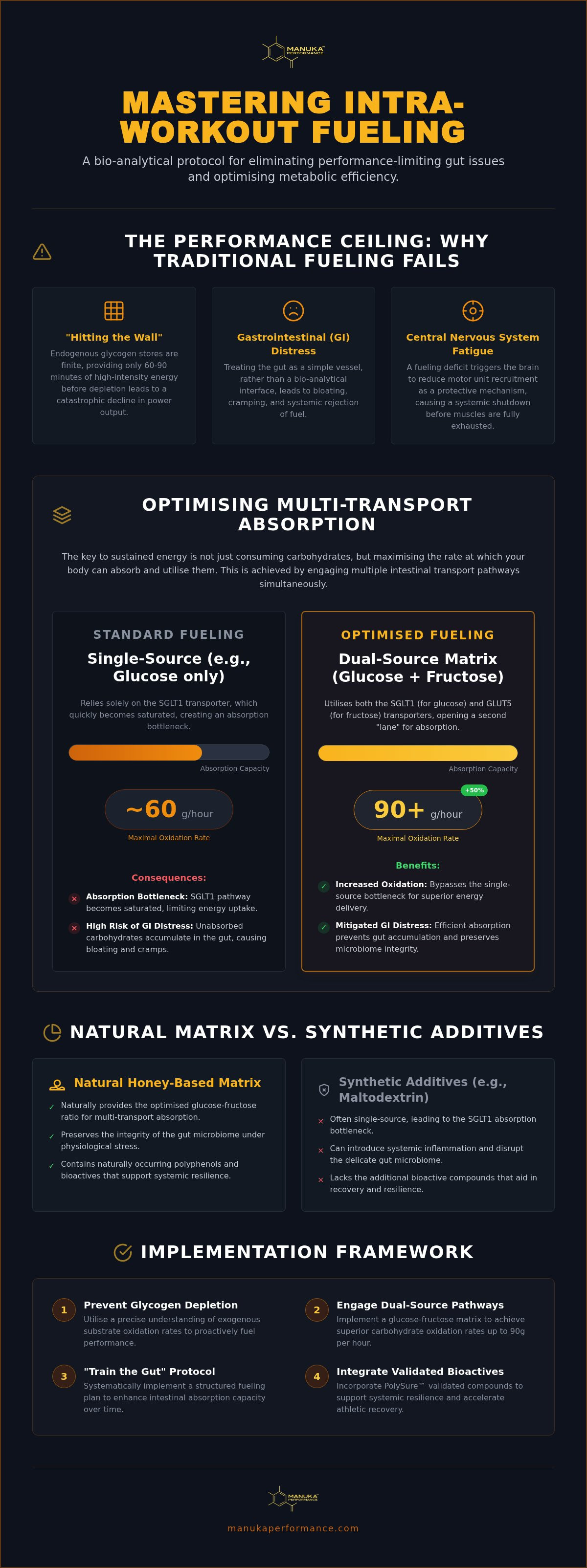
- Utilising a dual-source glucose-fructose matrix engages both SGLT1 and GLUT5 transport pathways, allowing for superior carbohydrate oxidation rates of up to 90 grams per hour.
- Transitioning from synthetic additives to natural, honey-based matrices mitigates the risk of gastrointestinal distress by preserving the integrity of the gut microbiome under physiological stress.
- Implementing a structured "Training the Gut" protocol enhances intestinal absorption capacity, ensuring that higher carbohydrate loads are processed efficiently without systemic rejection.
- Incorporating PolySure™ validated bioactives provides a quantifiable method for supporting systemic resilience and athletic recovery through the strategic use of naturally occurring polyphenols.
The Bio-Mechanics of Intra-Workout Carbohydrate Fueling
Intra-workout carbohydrate fueling represents the systematic, exogenous administration of saccharides during physical exertion to maintain physiological homeostasis and preserve endogenous energy stores. This process is critical because the body's ability to sustain high-output performance is fundamentally limited by the availability of circulating glucose once muscle glycogen begins to diminish. Understanding The Bio-Mechanics of Intra-Workout Carbohydrate Fueling allows athletes to transition from reactive nutrition to a proactive metabolic strategy. The primary constraint on human endurance isn't merely cardiovascular capacity; it's the maximal rate of carbohydrate oxidation that the system can support without inducing gastrointestinal distress. When athletes master the principles of intra workout carbohydrate fueling, they bypass the biological bottlenecks that typically lead to premature exhaustion.
Glycogen Depletion and ATP Production
The human body prioritises substrate utilisation based on the metabolic demands of the session's intensity. During low-intensity efforts, lipid oxidation provides a significant portion of the required Adenosine Triphosphate (ATP), but as intensity increases toward the aerobic threshold, the reliance on glycolytic pathways becomes absolute. Endogenous glycogen stores, located in the liver and skeletal muscles, are finite, typically providing enough energy for only 60 to 90 minutes of high-intensity work before depletion occurs. Once these stores fall below a critical threshold, ATP production through oxidative phosphorylation slows, leading to a catastrophic decline in power output commonly referred to as "hitting the wall." Glycogen is the primary currency of high-intensity endurance.
The Consequences of Fueling Deficits
When an athlete fails to maintain adequate blood glucose levels, the physiological consequences extend beyond simple muscular fatigue. A fueling deficit triggers central nervous system fatigue, where the brain reduces the frequency of motor unit recruitment as a protective mechanism against perceived energy bankruptcy. This systemic downregulation often precedes a shift toward catabolic states, where the body begins muscle protein breakdown to secure gluconeogenic precursors for emergency energy production. To mitigate these risks, the implementation of a natural glucose fructose matrix is essential for providing a steady stream of exogenous energy. This approach ensures that the metabolic cost of high-intensity training doesn't result in long-term structural damage or neurological exhaustion, allowing for sustained performance and faster systemic recovery.
The Glucose-Fructose Matrix: Optimising Multi-Transport Absorption
The efficacy of intra workout carbohydrate fueling is dictated by the physiological constraints of intestinal transport. Single-source carbohydrate solutions, predominantly those relying on synthetic maltodextrin, are restricted by the saturation of the Sodium-Glucose Linked Transporter 1 (SGLT1). Once this pathway reaches its capacity, additional glucose can't be absorbed, leading to accumulation in the gut and subsequent gastrointestinal distress. This biological bottleneck represents the primary failure point for many standard endurance protocols.
By integrating a dual-source matrix that includes fructose, athletes can leverage the GLUT5 transporter pathway. This secondary channel operates independently of SGLT1, allowing the total exogenous carbohydrate oxidation rate to increase from approximately 60 grams per hour to upwards of 90 grams per hour. New Zealand honey naturally provides this optimised multi-transport ratio, offering a sophisticated alternative to synthetic formulations that often lack the precise biochemical balance required for peak absorption. Utilising these natural matrices ensures that the system remains fueled without the systemic inflammation often associated with highly processed sugars.
Saturation Limits and Transporter Efficiency
Clinical research indicates that glucose transporters saturate at approximately 60 grams per hour. When fueling demands exceed this threshold, the inclusion of fructose is necessary to increase total uptake without overloading a single pathway. Current bio-analytical evidence supports ratios of 2:1 or even 1:0.8 for ultra-endurance events, as these proportions maximise caloric delivery while minimising the osmotic pressure that triggers gut issues. Athletes who don't account for these saturation limits often experience a significant drop in power output as their endogenous stores diminish and exogenous supplies remain trapped in the digestive tract.
Bioavailable Energy for Endurance
Achieving high levels of bioavailable energy for runners requires a delivery system that prioritises rapid gastric emptying. The liquid matrix of honey-based gels facilitates a faster transit time from the stomach to the small intestine compared to dense, synthetic pastes. This efficiency is largely due to the specific osmolarity of the solution, which influences how water and nutrients move across the intestinal lining. When the osmolarity is correctly balanced, the body absorbs nutrients more effectively, reducing the risk of dehydration and metabolic stalling. For those seeking to refine their protocol, exploring advanced honey-based nutrition provides a data-driven path to superior intra workout carbohydrate fueling.
Natural vs. Synthetic Matrices: Navigating Gastrointestinal Resilience
The prevalence of "runners’ stomach" among endurance athletes is frequently a direct consequence of suboptimal intra workout carbohydrate fueling strategies that rely on synthetic additives. Synthetic gels often contain artificial sweeteners, preservatives, and thickeners that can disrupt the gut microbiome, especially when the body is under significant physiological stress. These additives, while shelf-stable, present a high metabolic cost that the digestive system often cannot meet during intense exertion. Natural honey-based matrices, by contrast, offer a sophisticated biochemical profile that aligns with human digestive capacity, ensuring that energy delivery doesn't come at the expense of systemic comfort.
The Mechanism of Gut Distress
During high-intensity exercise, the body undergoes a significant redistribution of cardiac output, where splanchnic blood flow is reduced by as much as 80% to prioritise the requirements of skeletal muscles and thermoregulation. This localised ischaemia compromises the intestinal barrier and reduces the efficiency of nutrient transporters. When undigested carbohydrates reach the colon, they trigger osmotic shifts that draw excessive water into the intestinal lumen, resulting in the acute distress often experienced by athletes. Clean-label ingredients are essential in this context, as they minimise the presence of non-functional solutes that exacerbate these osmotic imbalances. Athletes who prioritise purity in their fueling protocols find they can tolerate higher caloric loads without the typical symptoms of gastric rejection.
Phytochemical Advantage of Honey
Natural honey-based gels provide a superior level of gastrointestinal resilience due to their inherent enzymatic content and balanced pH levels. Unlike synthetic fuels that are often highly acidic or chemically neutralised, natural honey contains organic acids and enzymes like diastase and glucose oxidase that facilitate the initial stages of carbohydrate breakdown. This enzymatic support reduces the metabolic load on the compromised digestive tract during exertion. The presence of naturally occurring phytochemicals further supports a stable gastric environment, ensuring that the transition from ingestion to oxidation is seamless. By choosing performance-led natural ingredients over synthetic alternatives, athletes can leverage a delivery system that works in synergy with their physiology rather than against it.
Establishing a Precision Intra-Workout Fueling Protocol
Effective intra workout carbohydrate fueling isn't a matter of athletic intuition but a calculated physiological intervention designed to maintain a metabolic steady-state. To prevent the oscillating blood glucose levels that lead to performance decrements, ingestion should occur at regular, predetermined intervals, typically every 20 to 30 minutes. This consistency ensures that the rate of exogenous substrate delivery matches the rate of oxidation, preventing the systemic "lags" that often precede glycogen depletion. Furthermore, the transport of these saccharides across the intestinal lumen is an osmotic process that requires concomitant fluid and electrolyte intake. Without adequate hydration, the concentration of carbohydrates in the gut can become too high, slowing gastric emptying and increasing the risk of gastrointestinal distress.
Dosage by Duration and Intensity
The requirements for exogenous fueling are directly proportional to the duration and metabolic intensity of the session. Precision in dosage prevents both energy deficits and the unnecessary accumulation of unabsorbed substrates in the digestive tract. The following guidelines establish a baseline for various endurance profiles:
- Sessions under 60 minutes: Minimal exogenous fuel is required if pre-workout glycogen stores were adequately saturated, as endogenous reserves are sufficient for this duration.
- Sessions between 1 and 2.5 hours: Athletes should target a delivery of 30 to 60 grams of multi-transport carbohydrates per hour to preserve muscle glycogen.
- Sessions exceeding 2.5 hours: For ultra-endurance efforts, the target increases to 60 to 90 grams per hour, utilising a validated glucose-fructose matrix to maximise absorption capacity.
Training the Gut for Absorption
Intestinal absorption is a plastic physiological trait that can be enhanced through a structured "Training the Gut" protocol. This involves progressively increasing carbohydrate intake during training sessions to upregulate the expression of SGLT1 and GLUT5 transporters. Over a period of several weeks, the digestive system adapts to handle higher concentrations of fuel under the stress of exertion, effectively raising the athlete's individual ceiling for energy intake. This adaptation is critical for those aiming to reach the upper limits of the 90 grams per hour recommendation without triggering systemic rejection.
Implementation Logistics for Athletes
Practical application involves more than just theoretical dosage; it requires logistical precision in the field. Testing the protocol during specific training blocks is non-negotiable for identifying individual tolerance thresholds and refining the delivery method. Athletes should organise their kit to ensure fuel is accessible during peak exertion, reducing the cognitive load required for nutritional maintenance during high-intensity intervals or technical terrain. For those seeking to implement these principles with clinical precision, the range of honey-based sports nutrition offers a data-driven solution for superior intra workout carbohydrate fueling.
Integrating PolySure™ Validated Bioactives for Performance
The evolution of sports nutrition has progressed beyond the simple replenishment of glucose toward the integration of validated bioactive compounds that support physiological resilience. While the primary objective of intra workout carbohydrate fueling remains the maintenance of blood glucose levels, the inclusion of specific phytochemicals provides a secondary layer of protection against the systemic stress of high-intensity exertion. This synergistic approach ensures that the metabolic machinery is not only fueled but also protected from the oxidative consequences of prolonged athletic output. The data is clear. By combining a multi-transport carbohydrate matrix with specific secondary metabolites, athletes can achieve a superior state of metabolic efficiency that synthetic alternatives cannot replicate.
The Science of PolySure™ Validation
The PolySure™ analytical standard represents a significant advancement in how natural ingredients are quantified for professional athletic application. Rather than relying on the vague descriptors common in the retail sector, this standard utilises advanced laboratory techniques to measure the precise concentration of seven naturally occurring polyphenols within the honey matrix. This rigorous process ensures that every batch meets a specific bioactive threshold, providing a level of quantification that is essential for elite athletes who require predictable outcomes. The analytical rigor behind this standard involves a detailed mapping of the phytochemical profile, ensuring that the provenance of the material is matched by its functional efficacy. Mānuka Performance maintains a commitment to this scientific rigor, prioritising empirical biotech research over the hyperbole often found in standard sports marketing. This approach allows for the development of a fueling substrate that is both naturally sourced and clinically validated.
LiquidFuel: The Professional Standard
The LiquidFuel 10-Pack Running Gel serves as a practical implementation of this bio-analytical framework, offering a clean-label solution that combines a natural glucose-fructose matrix with validated bioactives. Unlike synthetic alternatives that focus solely on caloric density, this formulation recognises the importance of polyphenols for athletic recovery in maintaining systemic equilibrium during and after a session. This synergy is essential. The liquid matrix facilitates rapid gastric emptying while the polyphenols support the body's natural response to exercise-induced stress. Serious athletes require a fueling strategy that respects the complexity of human physiology, moving away from artificial additives toward a standard rooted in clinical research and biotechnology. To achieve superior results in high-stakes environments and ensure optimal intra workout carbohydrate fueling, it's essential to Explore the PolySure™ validated range of endurance fuels at Mānuka Performance.
Advancing Beyond the Metabolic Threshold
Mastering a precise protocol for intra workout carbohydrate fueling requires a transition from generic supplementation to a data-driven biochemical strategy. By leveraging the dual-transport efficiency of a glucose-fructose matrix and prioritising natural, enzymatically active substrates, athletes can effectively bypass the physiological bottlenecks that lead to glycogen depletion. The clinical validation of these protocols ensures that power output remains stable even during the most demanding ultra-endurance efforts.
Trusted by elite endurance athletes globally, the New Zealand honey-based matrix provides a sophisticated solution for those seeking to eliminate gastrointestinal distress. You'll find that LiquidFuel offers a superior delivery system for PolySure™ validated bioactive content. You can optimise your performance with PolySure™ validated LiquidFuel to ensure your nutritional strategy matches the rigor of your physical preparation.
With the correct bio-analytical framework in place, your capacity to sustain high-intensity exertion isn't limited by your fuel, but only by your commitment to precision. Your potential is ready to be realised.
Frequently Asked Questions
How many grams of carbohydrates should I consume per hour during a marathon?
For a marathon, athletes should generally target between 60 and 90 grams of carbohydrates per hour to maintain optimal oxidation rates. This volume ensures muscle glycogen is preserved while providing a steady stream of exogenous energy for the central nervous system. Precise requirements vary based on intensity and individual absorption capacity, but staying within this range is the standard for high-performance intra workout carbohydrate fueling during prolonged endurance events.
Can I use honey as a natural alternative to synthetic energy gels?
Performance-led honey matrices serve as a sophisticated alternative to synthetic energy gels by providing a natural glucose-fructose ratio. Unlike raw table honey, which lacks clinical validation for sports application, clean-label honey gels are engineered for rapid gastric emptying. These products utilise the inherent phytochemical profile of New Zealand honey to deliver bioavailable energy without the artificial sweeteners and preservatives that often trigger gastrointestinal distress in endurance athletes.
What is the difference between glucose and fructose in intra-workout fueling?
Glucose and fructose utilise distinct intestinal transport pathways, specifically the SGLT1 and GLUT5 transporters respectively. Relying solely on glucose limits absorption to approximately 60 grams per hour due to transporter saturation. By integrating fructose, athletes can increase their total carbohydrate uptake toward 90 grams per hour. This dual-source approach reduces the osmotic load on the gut, facilitating higher oxidation rates and more efficient intra workout carbohydrate fueling.
How do I prevent stomach cramps when consuming carbohydrates during training?
Preventing gastrointestinal distress requires a combination of multi-transport carbohydrate matrices and adequate fluid intake to manage intestinal osmolarity. Cramps often occur when undigested saccharides draw excessive water into the colon or when splanchnic blood flow is severely restricted. Athletes should avoid synthetic additives and ensure they're consuming electrolytes alongside their fuel. Gradually increasing intake during training sessions helps the digestive system adapt to the metabolic demands of high-intensity exertion.
What are the benefits of polyphenols for endurance athletes?
Polyphenols provide endurance athletes with a layer of systemic resilience by supporting the body's natural response to oxidative stress and exercise-induced inflammation. These bioactive compounds, when validated by standards like PolySure™, ensure that the fueling matrix offers more than just caloric density. By integrating quantified phytochemicals into a nutritional protocol, athletes can support their recovery processes and maintain physiological equilibrium during the most demanding training blocks and competitions.
Is it possible to "train the gut" to absorb more carbohydrates?
It's entirely possible to "train the gut" by progressively increasing carbohydrate intake during specific training sessions over several weeks. This physiological adaptation upregulates the expression of SGLT1 and GLUT5 transporters, effectively raising the ceiling for nutrient absorption. By deliberately exposing the digestive tract to higher fuel loads under exertion, athletes can improve their gastric emptying rates and reduce the likelihood of rejection when competing at high intensities.
Why is a liquid gel matrix preferred over solid food during high-intensity sessions?
A liquid gel matrix is preferred over solid food because it facilitates significantly faster gastric emptying and nutrient absorption during high-intensity sessions. Solid foods require substantial digestive effort and blood flow, which are redirected to skeletal muscles during exertion. Liquid matrices reduce this metabolic cost, providing immediate bioavailable energy without the transit delays that lead to bloating. This efficiency is critical for maintaining steady-state glucose levels without compromising systemic comfort.
What does the PolySure™ analytical standard actually measure?
The PolySure™ analytical standard measures and validates the precise concentration of seven specific naturally occurring polyphenols within a honey-based matrix. This biotech innovation moves beyond generic marketing claims by providing quantifiable data on the phytochemical profile of the finished product. By using advanced laboratory analysis, PolySure™ ensures that athletes receive a functional, performance-led fuel with consistent bioactive levels, prioritising scientific rigor and provenance over standard retail enthusiasm.