


Your endurance performance is not limited by the total number of calories you consume, but by the precise molecular architecture of the fuel your system can actually process under physiological stress. Many dedicated athletes adhere to standard fuelling protocols only to be sidelined by debilitating gastrointestinal distress or inconsistent power output during high-intensity efforts. This persistent disconnect often stems from a failure to prioritise bioavailable energy for runners, where an emphasis on gross caloric volume neglects the intricate requirements of intestinal absorption and metabolic utilisation.
You likely understand the frustration of following traditional advice only to experience the dreaded "runner's stomach" as your body rejects synthetic formulations. This article provides a clinical distinction between mere caloric ingestion and true bioavailability, promising a strategy to optimise your endurance capacity and gastrointestinal resilience. We will examine the bio-analytical evidence supporting natural glucose-fructose matrices and the role of the PolySure™ standard in validating the bioactive compounds necessary for peak metabolic efficiency during long-distance events.
Key Takeaways
- Distinguish between gross caloric intake and the specific fraction of nutrients that reach systemic circulation to ensure sustained endurance performance.
- Utilise dual-pathway absorption via glucose-fructose matrices to provide superior bioavailable energy for runners while preventing transporter saturation in the small intestine.
- Mitigate gastrointestinal distress by prioritising natural fuel matrices with lower osmolality compared to traditional synthetic maltodextrin-based formulations.
- Leverage quantified bioactive compounds, such as polyphenols validated by the PolySure™ analytical standard, to modulate oxidative stress and enhance metabolic efficiency.
- Implement structured fuelling and hydration protocols tailored to the physiological demands of half-marathon and marathon distances for consistent energy delivery.
Understanding Bioavailable Energy in Endurance Running
Bioavailable energy for runners refers to the specific proportion of ingested nutrients that successfully bypasses initial metabolic processing to reach systemic circulation and the intended target tissues. While traditional sports nutrition focuses on caloric density, true performance is dictated by biological efficacy under the physiological stress of high-intensity efforts. The small intestine acts as a critical bottleneck during endurance events, where the rate of nutrient transport often fails to meet the metabolic demands of the musculoskeletal system. Consequently, the distinction between what is swallowed and what is actually utilised by the mitochondria determines the threshold between peak performance and physiological decline.
Caloric Intake vs. Metabolic Utilisation
The assumption that consuming a specific caloric value, such as 300 calories, yields an equivalent volume of usable energy is fundamentally flawed due to the energetic cost of digestion and the complexities of the biochemistry of carbohydrate metabolism. When an athlete ingests highly processed synthetic gels, the body must divert significant physiological resources to break down these complex structures, which can negatively impact running economy. A New Zealand honey-based matrix facilitates smoother energy transitions by providing a naturally occurring glucose-fructose ratio that requires less intensive processing before entering the bloodstream. Metabolic utilisation serves as the definitive metric for performance fuelling, as it accounts for the actual energy available at the cellular level rather than the gross volume of material entering the digestive tract.
The Physiological Limits of Intestinal Absorption
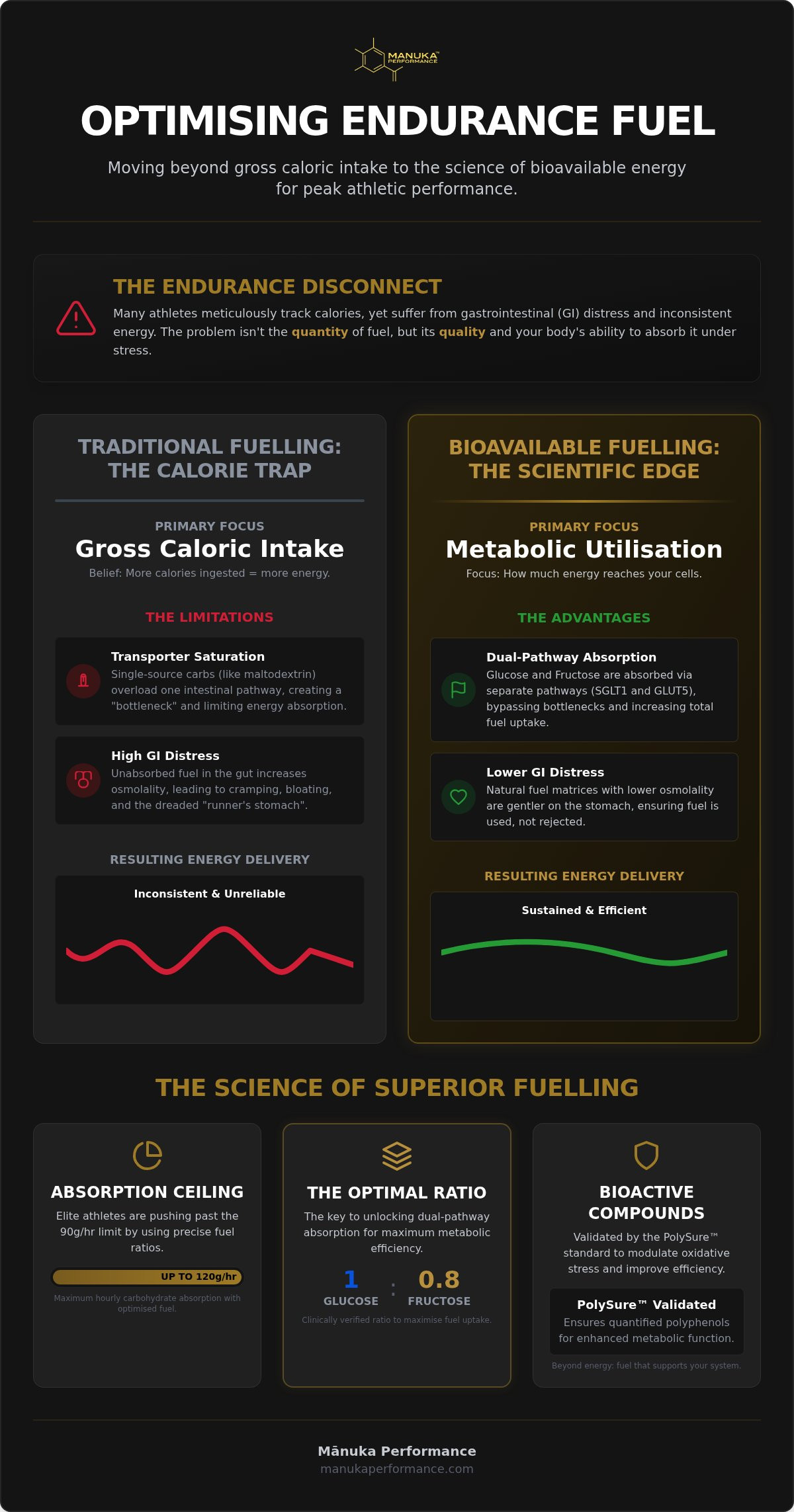
Endurance capacity is frequently constrained by the hourly carbohydrate absorption ceiling, which typically limits advanced athletes to approximately 90 grams of carbohydrate per hour, though elite performers in 2026 are increasingly targeting up to 120 grams per hour through specific glucose-to-fructose ratios. The phenomenon commonly described as "hitting the wall" is frequently not a consequence of insufficient fuel stores, but rather a systemic failure of the absorption mechanisms to transport ingested sugars into the bloodstream. Bioavailability in endurance athletics represents the efficiency with which an ingested nutrient matrix is absorbed across the intestinal barrier and converted into substrate for muscular contraction. By understanding these physiological boundaries, athletes can transition from a strategy of maximum ingestion to one of optimised bioavailable energy for runners, ensuring that every gram of fuel contributes directly to performance rather than remaining sequestered in the gut where it causes osmotic distress.
The Biochemistry of Carbohydrate Absorption and Transport
The intestinal epithelium serves as the primary gateway for exogenous energy, yet its capacity is strictly regulated by specific protein transporters that dictate the rate of nutrient entry into the bloodstream. While glucose relies upon the sodium-dependent SGLT1 transporter, fructose utilises the independent GLUT5 pathway, meaning that a single-source carbohydrate strategy inevitably leads to transporter saturation and subsequent gastric accumulation. By deploying a dual-pathway approach, athletes can bypass these physiological bottlenecks, facilitating a higher total rate of carbohydrate oxidation without exceeding the capacity of any single transport mechanism. This scientific framework is essential for maintaining Bioavailable Energy for Runners during high-intensity efforts where metabolic demand often outpaces supply.
Dual-Transport Mechanisms: Glucose and Fructose Pathways
Precision fuelling requires a sophisticated understanding of how different saccharides interact with the gut wall. When SGLT1 transporters reach their peak capacity, any additional glucose remains in the intestinal lumen, increasing osmotic pressure and causing distress. However, because GLUT5 operates independently, the simultaneous ingestion of fructose allows for a significant increase in the total volume of absorbed fuel. Research verified in 2026 indicates that elite athletes targeting 90 to 120 grams of carbohydrate per hour must utilise a glucose-to-fructose ratio of approximately 1:0.8 to achieve maximum metabolic flux. This balanced ratio ensures that both transport pathways are optimally utilised, providing a consistent stream of bioavailable energy for runners that synthetic, single-sugar formulations cannot replicate. The system saturates quickly. Proper ratios prevent this failure.
The Honey Matrix: A Natural Solution for Optimal Uptake
The natural carbohydrate profile of New Zealand honey provides a complex, inherently balanced matrix that supports superior gastrointestinal transit compared to isolated synthetic sugars. Unlike maltodextrin-based gels that require intensive enzymatic breakdown, the honey-based matrix offers a high-performance fuel source that is readily accessible for systemic transport. This functional purity is further enhanced by the presence of naturally occurring enzymes and phytochemicals that assist in the stabilisation of the glycaemic response, preventing the sharp insulin spikes and subsequent crashes associated with highly processed sports nutrition. The provenance of these materials is critical, as the rigorous environment of New Zealand produces honey with a unique biochemical density. To experience the benefits of this validated nutrition, athletes often transition to a clean-label energy gel that prioritises biological efficacy over industrial convenience. This approach ensures that the fuel consumed is converted into kinetic energy with minimal physiological friction.
Overcoming Gastrointestinal Distress: Natural vs. Synthetic Matrices
The incidence of "Runner’s Stomach" is frequently a direct consequence of osmotic imbalance within the intestinal lumen rather than a simple failure of the digestive system. When an athlete ingests a substance with an osmolality significantly higher than that of human plasma, the body initiates a corrective fluid shift, drawing water from the bloodstream into the gut to dilute the concentrated mass. This process not only induces acute dehydration but also leads to the bloating, cramping, and urgent distress that can terminate a competitive effort. Achieving consistent bioavailable energy for runners requires a fuel matrix that respects these osmotic boundaries, ensuring that nutrients move efficiently into circulation without triggering a secondary fluid crisis.
The Osmotic Load of Synthetic Maltodextrin
Synthetic maltodextrin is a polysaccharide frequently utilised in sports nutrition due to its rapid conversion to glucose, yet its application in concentrated gels often presents significant physiological challenges. These formulations typically rely on high concentrations of synthetic additives and preservatives, such as potassium sorbate or sodium benzoate, which have been implicated in increased intestinal permeability during prolonged exercise. This "leaky gut" phenomenon allows undigested particles and pathogens to cross the epithelial barrier, triggering a systemic inflammatory response. For many athletes, particularly those in ultra-endurance events, the cumulative effect of these synthetic ingredients makes them increasingly difficult to tolerate as the race progresses, leading to a total rejection of exogenous fuel. The gut simply cannot maintain its integrity when bombarded with high-osmolality synthetic compounds under heat and exertion.
Why Natural Honey Formulations Minimise GI Distress
In contrast to synthetic alternatives, natural honey formulations offer a lower osmotic pressure that aligns more closely with the body’s internal environment. The complex biochemical structure of honey allows for a high density of bioavailable energy for runners while maintaining a profile that is gentler on the gastric lining. Honey contains naturally occurring enzymes that facilitate the initial stages of carbohydrate breakdown, reducing the physiological burden on the digestive tract. The presence of specific bioactive compounds provides a soothing effect on the mucosal surface, which helps to preserve the integrity of the gut barrier under stress.
Transitioning from synthetic to natural fuel sources should be approached with clinical precision to build gastrointestinal resilience. We suggest a phased introduction, replacing one synthetic gel per training session with a honey-based matrix to allow the gut microbiota to adapt to the change in substrate. This methodical protocol ensures that the body can fully leverage the dual-pathway absorption benefits of honey without the risk of acute metabolic shock, ultimately leading to a more stable and resilient fuelling strategy that eliminates the variables of digestive failure.
Optimising Energy Delivery Through Phytochemical Synergy
While the focus of sports nutrition has historically remained fixed on carbohydrate ratios, the next evolution in endurance performance lies in the quantification of bioactive compounds that modulate the internal environment. Bioavailable energy for runners is not solely a product of sugar transport; it is also dependent on the body's ability to maintain mitochondrial health and manage the oxidative stress that accumulates during prolonged exertion. By integrating specific phytochemicals into the fuel matrix, athletes can achieve a level of metabolic efficiency that transcends the limitations of simple caloric ingestion. This synergy ensures that the cellular machinery operates at peak capacity even as systemic fatigue begins to mount.
The Role of Polyphenols in Metabolic Efficiency
Polyphenols serve as critical modulators of physiological function, particularly in the context of vascular health and nutrient delivery. Specific honey-derived polyphenols have been shown to support nitric oxide bioavailability, which facilitates vasodilation and ensures that oxygenated blood reaches the working musculature more effectively. This systemic support is vital for reducing inflammation and maintaining performance during the final, most demanding stages of a race. The inclusion of these compounds provides a secondary layer of protection for the mitochondria, the cellular engines responsible for energy production. For a deeper analysis of these mechanisms, athletes should review the data on polyphenols for athletic recovery to understand how bio-analytical fuel comparisons favour complex natural matrices over isolated synthetics. These compounds are essential for sustained output.
Quantifying Bioactives: The PolySure™ Analytical Standard
The efficacy of a performance gel cannot be determined by generic marketing terms or irrelevant metrics such as Methylglyoxal (MGO) levels. While MGO is a valid measure of antibacterial activity, it holds no clinical significance for the immediate energy demands of an endurance runner. Instead, the PolySure™ analytical standard provides a rigorous framework for validating the presence of seven naturally occurring polyphenols that are directly relevant to athletic performance. This standard ensures that every batch of fuel meets a specific threshold of bioactive density, providing a level of consistency and purity that is often absent in mass-produced sports nutrition. By prioritising quantified bioactives, runners can ensure they are consuming a biotech solution rather than just another sugar supplement. To ensure your fuelling strategy is backed by this level of scientific rigour, we recommend transitioning to PolySure™ validated bioactive gels for your next high-intensity effort. Precision in quantification leads to precision in performance.
Strategic Fueling Protocols for New Zealand Endurance Athletes
Translating bio-analytical theory into a competitive advantage requires a structured protocol that accounts for the precise timing of substrate delivery and the maintenance of osmotic equilibrium. For New Zealand athletes operating in variable maritime climates or demanding alpine terrain, the window for effective nutrient absorption is narrow and demands a meticulous approach to maintain bioavailable energy for runners. A successful strategy begins with pre-workout priming, where consuming a single unit of fuel 15 to 30 minutes before the commencement of effort ensures that blood glucose levels are elevated and the dual-transport pathways are activated. This proactive measure prevents the initial metabolic deficit that often occurs during the transition from rest to high-intensity exertion.
Hydration serves as the critical facilitator for carbohydrate transport, as water is the essential solvent required to move solutes across the intestinal barrier. Without adequate fluid intake, even the most sophisticated fuel matrix can remain sequestered in the gut, leading to the gastric accumulation discussed in previous sections. You should aim for a consistent intake of fluids that matches your sweat rate, ensuring that the glucose and fructose molecules in your fuel are sufficiently diluted to pass through the SGLT1 and GLUT5 transporters without triggering an osmotic shift. This synergy between fluid and fuel is what ultimately dictates the rate of metabolic utilisation during a marathon or half-marathon.
Intra-Workout Timing for Sustained Glycogen Levels
Maintaining sustained glycogen levels requires an "early and often" approach to fuelling, where the goal is to provide a constant stream of exogenous energy before endogenous stores are depleted. We recommend a structured frequency of one honey-based gel every 30 to 45 minutes, depending on your individual metabolic rate and the intensity of the effort. This consistent administration prevents the sharp fluctuations in blood sugar that lead to the "hitting the wall" phenomenon. During long-distance events in the NZ backcountry or coastal regions, you must adjust your intake based on environmental stress; as core temperatures rise, the body's ability to process complex carbohydrates diminishes, making the high bioavailability of a honey-based matrix even more critical for sustained performance. Consistency in timing is the foundation of metabolic stability.
Integrating LiquidFuel into Your Competition Strategy
The LiquidFuel 10-Pack Running Gel is engineered for the rigours of competition, providing a clean-label solution that is easily carried and consumed under physiological stress. Unlike thicker synthetic gels that often require excessive water to swallow, the liquid consistency of this formulation facilitates rapid ingestion without disrupting your breathing rhythm or pace. When competing in New Zealand endurance events, the convenience of a validated, bioactive fuel source allows you to focus on your split times rather than managing gastrointestinal symptoms. It's essential to practice your fuelling timeline during long training runs to calibrate your gut's response to the dual-pathway matrix. Optimise your performance with the bioavailable energy of LiquidFuel to ensure your metabolic capacity matches your athletic ambition.
Advancing Beyond Traditional Fuelling Metrics
The transition from a focus on gross caloric volume to a strategy prioritising biological efficacy represents a fundamental shift in endurance performance. By understanding the dual-transport mechanisms of the small intestine and the critical importance of osmotic balance, athletes can move beyond the limitations of synthetic nutrition. True bioavailable energy for runners is achieved through a precise integration of glucose-fructose ratios and quantified bioactive compounds that support metabolic efficiency under physiological stress. This clinical approach ensures that every gram of fuel ingested contributes directly to kinetic output rather than becoming a source of gastrointestinal friction.
Utilising a natural New Zealand honey-based matrix validated by the PolySure™ analytical standard provides a level of functional purity that synthetic alternatives cannot replicate. This methodology prioritises gastrointestinal resilience and systemic health; it allows you to maintain peak intensity without the risk of metabolic failure. You have the capacity to redefine your performance boundaries through research-driven nutrition. Explore the LiquidFuel range for scientifically validated endurance nutrition and experience the difference that bio-analytical precision makes to your next high-intensity effort. Your journey towards optimised endurance begins with fuel that respects your physiology.
Frequently Asked Questions
What exactly is bioavailable energy and why does it matter for runners?
Bioavailable energy for runners represents the specific proportion of ingested nutrients that successfully bypasses initial enzymatic degradation to enter systemic circulation and reach the active musculoskeletal tissues. This metric is critical because endurance performance is governed by cellular uptake rather than gross caloric volume. When an athlete prioritises bioavailability, they ensure that the fuel consumed is effectively converted into kinetic energy, thereby reducing the risk of metabolic deficit during high-intensity efforts.
Why do synthetic energy gels often cause stomach issues like bloating or cramps?
Synthetic energy gels frequently induce gastrointestinal distress due to their high osmolality, which triggers a significant fluid shift from the bloodstream into the intestinal lumen to dilute the concentrated mass. This process leads to acute bloating, cramping, and systemic dehydration. Additionally, synthetic preservatives and artificial sweeteners can compromise intestinal permeability, allowing undigested solutes to irritate the gastric lining and trigger an inflammatory response that terminates performance during prolonged endurance events.
Is honey a better source of energy for runners than maltodextrin?
Natural honey provides a superior fuel matrix compared to maltodextrin because it inherently utilises a dual-pathway absorption mechanism involving both SGLT1 and GLUT5 transporters. While maltodextrin is a complex glucose polymer that can saturate the SGLT1 pathway, the balanced glucose-fructose profile of honey allows for higher total carbohydrate oxidation rates. This synergy facilitates more efficient energy delivery and reduces the likelihood of the gastric accumulation often associated with single-source synthetic sugars.
How many energy gels should I consume during a marathon for optimal performance?
Optimal marathon fuelling typically requires the ingestion of one bioactive gel every 30 to 45 minutes to maintain stable glycogen levels throughout the event. Advanced athletes in 2026 are increasingly targeting carbohydrate oxidation rates of 90 to 120 grams per hour, which necessitates a structured protocol starting from the first 30 minutes of effort. Consuming fuel early and often prevents the precipitous decline in blood glucose that leads to the physiological phenomenon of "hitting the wall."
What are the benefits of polyphenols for endurance athletes?
Polyphenols serve as essential modulators of oxidative stress, helping to mitigate the systemic inflammation that accumulates during high-intensity endurance efforts. These bioactive compounds support vascular function by enhancing nitric oxide bioavailability, which ensures that oxygenated blood is efficiently delivered to the working muscles. By integrating quantified polyphenols into a fuelling strategy, runners can improve their metabolic efficiency and support mitochondrial health, ultimately leading to enhanced resilience during the late stages of a race.
How does the PolySure™ standard differ from regular honey testing?
The PolySure™ analytical standard represents a sophisticated advancement over traditional honey testing, which often focuses on irrelevant metrics like Methylglyoxal (MGO) levels. While MGO relates to antibacterial properties, PolySure™ quantifies seven naturally occurring polyphenols that are directly relevant to athletic performance and metabolic regulation. This rigorous bio-analytical framework ensures that every batch of fuel meets a specific threshold of functional purity, providing athletes with a validated biotech solution rather than a generic food product.
Can I use honey-based gels if I have a sensitive stomach?
Honey-based gels are particularly suitable for athletes with sensitive gastrointestinal systems because they possess a lower osmotic load that aligns more closely with human plasma. The natural enzymes present in a New Zealand honey-based matrix facilitate the initial stages of carbohydrate breakdown, reducing the physiological burden on the digestive tract. This clinical profile helps to preserve the integrity of the gut barrier, making it an ideal choice for those who struggle with the inflammatory potential of synthetic formulations.
How does hydration affect the bioavailability of energy gels?
Hydration is the primary facilitator for nutrient transport, as water acts as the essential solvent required to move carbohydrate molecules across the intestinal epithelium. Insufficient fluid intake increases the osmolality of the gastric contents, which can trap bioavailable energy for runners within the gut and lead to malabsorption. Maintaining a consistent fluid intake that matches your sweat rate ensures that the fuel matrix is properly diluted for rapid entry into systemic circulation and metabolic utilisation.