


The prevailing paradigm in sports nutrition suggests that isolated, synthetic sugar ratios represent the pinnacle of ergogenic efficiency, yet the high incidence of gastrointestinal distress among endurance athletes suggests a fundamental misalignment between these inputs and human physiology. You've likely experienced the frustration of meticulous fueling plans resulting in systemic rejection or premature glycogen depletion despite a high caloric intake. This article provides a comprehensive bio-analytical reference for the natural glucose fructose matrix, illustrating how these complex, honey-based structures optimise nutrient absorption and fortify systemic resilience in high-performance environments.
By moving beyond simplistic carbohydrate counts, we'll investigate the critical role of the PolySure™ analytical standard in quantifying the specific phytochemicals that modulate metabolic pathways. We'll examine how LiquidFuel serves as a practical application of this research, offering a mechanism for consistent energy delivery that bypasses the volatility of ultra-processed alternatives. This analysis establishes a new benchmark for understanding how bioactive nutrient matrices facilitate superior gut resilience and sustained athletic output without the inflammatory markers associated with synthetic energy gels.
Key Takeaways
- Understand the bio-analytical distinction between isolated synthetic sugars and the natural glucose fructose matrix, which utilises complex structural networks to facilitate superior nutrient delivery.
- Discover how dual-transport carbohydrate absorption via SGLT1 and GLUT5 pathways prevents the intestinal 'bottleneck' effect that frequently leads to gastrointestinal distress during high-intensity efforts.
- Learn how naturally occurring polyphenols and bioactive compounds modulate glycemic response, ensuring a sustained release of energy rather than volatile insulin spikes.
- Evaluate the practical implementation of honey-based fueling protocols through LiquidFuel, a research-driven evolution designed for optimal bioavailability and systemic resilience.
- Refine your intra-workout fueling strategy by synchronising carbohydrate delivery with metabolic demand to maintain peak performance without compromising gut integrity.
Defining the Natural Glucose Fructose Matrix
In the discipline of sports biochemistry, a carbohydrate matrix is defined as a complex structural network where macronutrients are intrinsically bound with bioactive compounds, rather than existing as isolated molecules. Traditional sports nutrition often relies on "free" sugars, which are refined monosaccharides or disaccharides stripped of their original biological context. While these provide rapid energy, they lack the structural integrity required to modulate absorption. The natural glucose fructose matrix represents a departure from this reductive approach, utilising the sophisticated architecture of whole-food sources to facilitate a more controlled metabolic transit.
New Zealand honey serves as the primary reference point for this performance-led matrix. It isn't merely a sweetener; it's a bioactive delivery system where sugars are part of a larger physiological ensemble. The term "matrix" is critical because it describes how the physical and chemical properties of a food influence the bioavailability of its nutrients. When an athlete consumes a carbohydrate within a natural matrix, the body processes the energy alongside enzymes and phytochemicals, which changes the rate of gastric emptying and subsequent intestinal uptake. This structural complexity is what distinguishes a research-driven fuel from a simple sugar solution.
Molecular Composition of Performance Honey
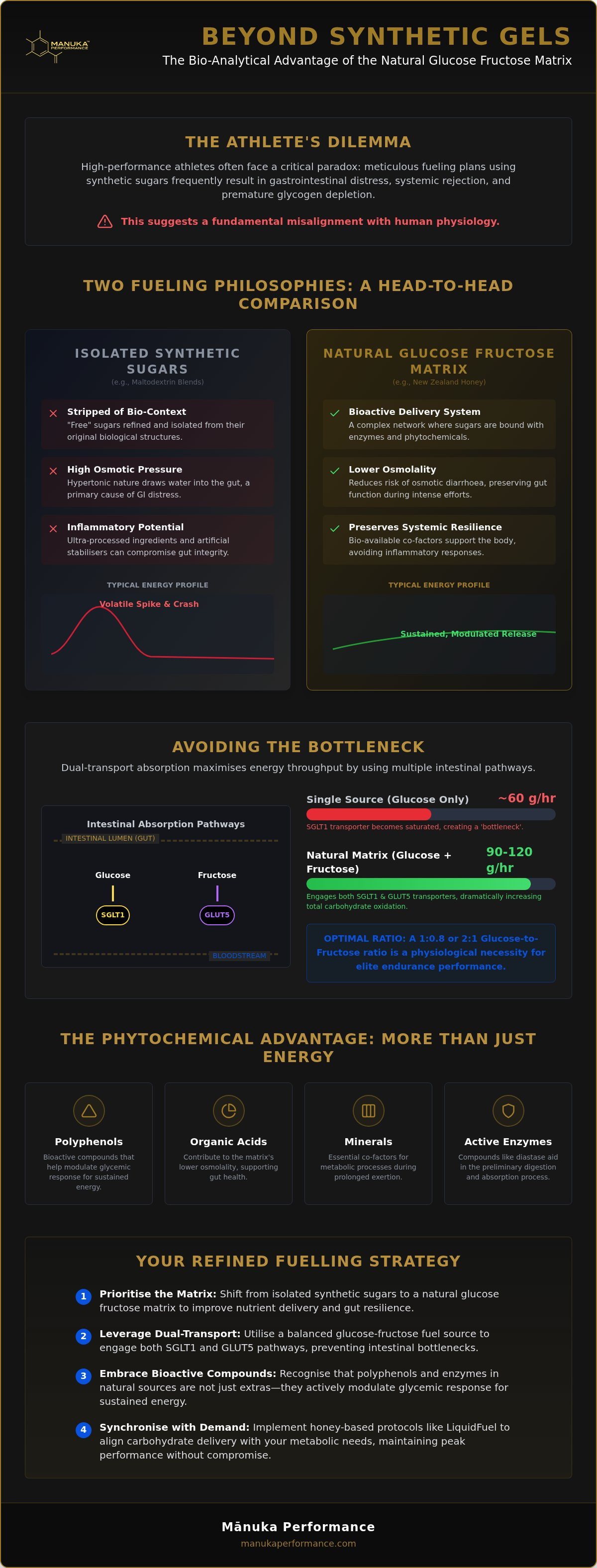
The efficacy of New Zealand honey in an endurance context is derived from its specific ratio of monosaccharides, typically favouring a higher concentration of fructose relative to glucose. This inherent balance is supplemented by a high density of secondary metabolites, including organic acids, minerals, and active enzymes like diastase and glucose oxidase. These components collectively influence the osmotic pressure within the gastrointestinal tract. By maintaining a lower osmolality compared to hypertonic synthetic gels, the honey matrix reduces the risk of osmotic diarrhoea, a common cause of gastrointestinal distress during high-intensity efforts.
Natural vs. Isolated Carbohydrate Structures
The chemical distinction between a honey-based matrix and a synthetic maltodextrin-fructose blend lies in the bond complexity and the presence of co-factors. Synthetic blends are engineered for rapid oxidation but often ignore the systemic stress caused by ultra-processed ingredients. Clean label standards aren't just a marketing preference; they're a bio-analytical prerequisite for ensuring that the fuel doesn't introduce inflammatory markers or artificial stabilizers that compromise gut integrity. The natural glucose fructose matrix is a bio-available carbohydrate system validated by phytochemical presence. By prioritising these naturally occurring structures, athletes can achieve high carbohydrate oxidation rates while preserving systemic resilience. This clinical approach to fueling ensures that energy delivery is consistent, measurable, and physiologically harmonious.
Mechanisms of Dual-Transport Carbohydrate Absorption
The physiological ceiling for carbohydrate absorption is dictated by the saturation of specific intestinal transporters. SGLT1, the sodium-dependent glucose transporter, possesses a finite capacity for glucose translocation, reaching saturation at approximately 60 grams per hour. When athletes rely on single-source carbohydrate fueling, any intake exceeding this threshold creates a metabolic bottleneck, where unabsorbed sugars remain in the intestinal lumen. By utilising a natural glucose fructose matrix, athletes can engage the GLUT5 transporter, which operates independently to facilitate fructose absorption. This parallel processing allows for a significant increase in total carbohydrate oxidation, often reaching levels of 90 to 120 grams per hour, which is essential for maintaining intensity during prolonged endurance efforts.
Achieving a 1:0.8 or 2:1 ratio of glucose to fructose is a physiological necessity for elite endurance performance. This specific balance ensures that neither transporter is overwhelmed while the other remains under-utilised. By synchronising the delivery of these monosaccharides, the system maximises exogenous energy throughput, which reduces the reliance on endogenous glycogen stores. The transporter system doesn't just provide energy; it dictates the efficiency of the entire metabolic engine during exertion.
Optimising Total Carbohydrate Oxidation
Exceeding the standard 60g/hour limit requires a sophisticated approach to nutrient delivery. Dual-transport systems allow for up to 90-120g/hour of carbohydrate oxidation, directly impacting muscle glycogen sparing and delaying the onset of fatigue. Clinical evidence supports honey-based matrices as a superior vehicle for maintaining consistent blood glucose levels. These natural structures provide a steady flux of energy that synthetic maltodextrin blends often fail to replicate without causing systemic volatility or insulin spikes that compromise performance.
Gastrointestinal Resilience and Osmolality
The relationship between high-osmolality synthetic gels and "Runner's Stomach" is well-documented in clinical literature. These concentrated, isolated sugar solutions can cause intestinal "pooling," where water is drawn into the gut to dilute the excessive solute load, leading to cramping and distress. In contrast, the natural glucose fructose matrix found in New Zealand honey maintains a more harmonious relationship with intestinal osmotic pressure. This reduction in osmotic stress is a cornerstone of Gastrointestinal Resilience: A Scientific Guide to Avoiding Runner's Stomach Issues, providing a clinical pathway for athletes to increase their caloric intake without compromising gut integrity. For those seeking a practical application of these dual-transport mechanisms, LiquidFuel offers a bio-analytical solution designed for elite endurance demands.
The Phytochemical Advantage: Beyond Simple Energy
The physiological utility of a carbohydrate source is not merely a function of its caloric density; it's heavily influenced by the presence of secondary metabolites that dictate metabolic transit. This phenomenon, often termed the "Matrix Effect," describes how non-sugar components within the natural glucose fructose matrix modulate the systemic glycemic response. While synthetic energy gels provide isolated molecules that enter the bloodstream with little regulation, the complex architecture of a natural matrix ensures a more controlled energy release. Polyphenols act as primary metabolic regulators, effectively slowing the enzymatic breakdown of sugars to provide a sustained delivery of fuel that avoids the volatility of insulin spikes.
Mānuka honey's antioxidant profile offers a distinct advantage in mitigating exercise-induced oxidative stress. During high-intensity efforts, the body generates reactive oxygen species that can lead to systemic inflammation and premature fatigue. The presence of quantified bioactives in performance-led functional nutrition provides a mechanism for cellular protection while simultaneously supplying energy. This dual-functionality is a prerequisite for athletes who prioritise long-term systemic resilience alongside immediate performance outcomes.
Polyphenols and Carbohydrate Metabolism
Specific polyphenols found in the honey matrix interact directly with alpha-glucosidase enzymes, which are the catalysts for carbohydrate digestion in the small intestine. By modulating the activity of these enzymes, polyphenols effectively extend the absorption window, ensuring a steady flux of glucose rather than a disruptive surge. This enzymatic interaction provides a significant ergogenic benefit by stabilising blood glucose levels over extended periods. Athletes can explore these systemic benefits in greater depth by reviewing our guide on Polyphenols for Athletic Recovery: A Bio-Analytical Comparison of Endurance Fuels, which examines how these compounds facilitate faster physiological restoration post-exertion.
The PolySure™ Analytical Standard
The transition from raw table honey to a bioactive performance ingredient requires rigorous quantification. The PolySure™ analytical standard serves as the clinical benchmark for this process, validating the presence of seven naturally occurring polyphenols within the natural glucose fructose matrix. This analytical rigour differentiates performance-grade honey from standard table honey, which often lacks the necessary bioactive density for elite sport. PolySure™ focuses on:
- Quantifying specific phenolic compounds that modulate glycemic response.
- Validating the purity and provenance of the New Zealand honey matrix.
- Ensuring consistent metabolic outcomes across different production batches.
This data-driven validation confirms that the fuel meets specific biochemical standards for purity and metabolic efficacy. This transition to quantified bioactives reflects a broader shift toward biotechnology in sports nutrition, where every component is selected for its measurable impact on human physiology rather than just its caloric value.
Strategic Implementation for Endurance Athletes
Implementing a protocol based on the natural glucose fructose matrix requires a methodical approach to intra-workout timing to ensure metabolic pathways remain saturated without overwhelming intestinal capacity. In long-duration events like marathons, triathlons, and ultra-endurance races, the primary objective is to maintain a steady exogenous carbohydrate flux to preserve endogenous glycogen. Athletes are increasingly transitioning from synthetic energy sources to natural matrices because these complex structures facilitate higher oxidation rates with a lower risk of systemic rejection. By synchronising intake with the body's absorption limits, you can avoid the metabolic volatility that often occurs when relying on isolated sugar compounds.
Strategic fueling isn't just about the volume of carbohydrates; it's about the precision of the delivery system. The natural matrix ensures that the glucose and fructose components are processed through their respective transporters in a way that respects human physiology. This transition to a bio-analytical fueling model allows for a more predictable performance profile, where energy availability matches the intensity of the effort without the inflammatory responses associated with ultra-processed ingredients.
Fueling for Intensity and Duration
A robust fueling protocol typically targets between 60 and 90 grams of carbohydrate per hour, though elite athletes may increase this to 120 grams as gut tolerance improves. To optimise gastric emptying, the matrix should be consumed in conjunction with structured hydration, as water is required to facilitate the translocation of nutrients across the intestinal wall. This synergy is explored in detail within our technical brief on Bioavailable Energy: Bio-Analytical Fuelling for Runners, which provides a framework for integrating these nutrients into a high-performance regimen. For those seeking to execute this strategy with clinical precision, LiquidFuel offers the practical application of this research-driven matrix.
Mitigating the Glycemic Crash
Isolated maltodextrin and high-GI synthetic sugars often trigger a rapid insulin response, leading to a subsequent drop in blood glucose that can manifest as a "bonk" or sudden loss of power. The honey-based carbohydrate matrix offers a steady-state energy profile because its bioactive components modulate the rate of sugar release into the bloodstream. The natural matrix provides a more stable blood-glucose curve than high-GI synthetics. This stability ensures that the athlete avoids the insulin spike-and-crash cycle, maintaining a consistent level of performance throughout the duration of the event. By prioritising a natural matrix, you're not just fueling the muscles; you're protecting the endocrine system from the stress of erratic glucose fluctuations.
LiquidFuel: The Evolution of the Honey Matrix
LiquidFuel represents the clinical culmination of research into the natural glucose fructose matrix, transitioning theoretical biochemistry into a functional format for the elite athlete. While raw honey possesses the ideal carbohydrate ratio, its inherent viscosity and variable density present significant challenges for intra-workout consumption. Mānuka Performance has addressed these logistical barriers through a rigorous technical development process, resulting in a liquid-state gel that maintains the structural integrity of the honey matrix without compromising convenience. This development isn't merely about texture; it's a bio-analytical achievement that ensures the bioactive compounds remain stable and bioavailable throughout the product's shelf life.
The intersection of New Zealand biotechnology and sports nutrition is most evident in the batch-to-batch consistency of LiquidFuel. Unlike standard table honey, which varies significantly based on seasonal factors, our research-driven solutions utilise advanced filtration and stabilisation techniques to guarantee a precise nutrient profile. This level of quantification is essential for athletes who require predictable metabolic responses during high-stakes competition. By prioritising a bio-analytical approach, we've transitioned the category beyond 'raw ingredients' to precise bioactive performance ingredients. This data-driven methodology ensures that every sachet delivers the exact metabolic support required for elite physiological demands.
Precision Engineering for Athletes
The formulation of LiquidFuel focuses on the preservation of the intrinsic 1:0.8 glucose-to-fructose ratio, which we've established as the optimal balance for dual-transport absorption. By avoiding synthetic thickeners such as xanthan gum or carboxymethyl cellulose, the gel maintains a lower osmolality, facilitating faster gastric emptying. The provenance of the New Zealand honey is central to this engineering; the unique phytochemical markers found in native flora provide the functional foundation for our bioactive ingredients. This commitment to purity ensures that the athlete receives a clean label fuel that doesn't introduce unnecessary systemic stress or inflammatory markers often found in ultra-processed alternatives.
Performance Outcomes and Trust
The shift toward 'clean energy' reflects a growing skepticism among professionals toward ultra-processed synthetic gels. In a competitive landscape where marginal gains are paramount, the PolySure™ seal serves as the ultimate trust signal, providing analytical validation of the seven naturally occurring polyphenols within the natural glucose fructose matrix. This certification confirms that every sachet meets a clinical standard of efficacy, moving beyond the vague claims of 'natural energy' to provide a data-backed performance solution. Professional endurance competitors can rely on this standard to ensure their fueling strategy is as rigorous as their training. Explore the science behind LiquidFuel and the PolySure™ standard.
Advancing Your Endurance Strategy Through Bio-Analytical Fueling
The transition from reductive synthetic sugar ratios to a natural glucose fructose matrix represents a fundamental shift toward physiologically harmonious fueling. Our analysis has demonstrated how dual-transport pathways and phytochemical modulation facilitate superior oxidation rates while preserving gastrointestinal integrity under extreme metabolic stress. By integrating New Zealand made phytochemical innovation and clinically-led functional nutrition, athletes don't have to settle for the inherent volatility of isolated maltodextrin blends. The PolySure™ standard provides the clinical validation necessary to ensure that your bioactive intake is precisely quantified and metabolically effective; it's this stability that protects your performance from the endocrine stress of erratic glycaemic curves. We invite you to optimise your endurance fueling with the PolySure™ validated LiquidFuel matrix as you pursue your next professional milestone. Your dedication to rigorous testing and systemic resilience remains the foundation of athletic excellence.
Frequently Asked Questions
What exactly is a natural glucose fructose matrix in sports nutrition?
A natural glucose fructose matrix is a complex structural network where monosaccharides are intrinsically bound with bioactive compounds like enzymes and minerals. Unlike synthetic gels that rely on isolated, "free" sugars, this matrix utilises the biological architecture of whole-food sources to regulate metabolic transit. This structure is critical for ensuring that energy delivery is governed by the food’s physical properties, facilitating a more controlled absorption process compared to reductive, ultra-processed alternatives.
How does the glucose-fructose ratio in honey compare to synthetic energy gels?
The glucose-fructose ratio in performance honey naturally aligns with the 1:0.8 or 2:1 clinical standards required for dual-transport absorption. Synthetic energy gels must be engineered to reach these ratios using isolated maltodextrin and fructose powders. By contrast, the natural glucose fructose matrix provides these ratios in a bio-available form, ensuring that both SGLT1 and GLUT5 transporters are saturated efficiently without the metabolic volatility associated with highly refined, synthetic sugar blends.
Can a natural matrix really prevent Runner's Stomach issues?
A natural matrix significantly reduces the risk of Runner's Stomach by maintaining lower osmotic pressure within the gastrointestinal tract. Synthetic gels are often hypertonic, drawing water into the gut and causing the "pooling" effect that leads to cramping and distress. Because honey-based matrices are more physiologically harmonious, they facilitate faster gastric emptying. This allows athletes to maintain high carbohydrate oxidation rates while preserving gut integrity during high-intensity efforts or long-duration events.
Why are polyphenols important in a carbohydrate gel for athletes?
Polyphenols serve as essential metabolic regulators that modulate the glycemic response by interacting with alpha-glucosidase enzymes. This interaction effectively slows the rate of sugar release, providing a sustained flux of energy rather than a disruptive insulin spike. Beyond energy delivery, these bioactive compounds offer antioxidant properties that mitigate exercise-induced oxidative stress. Quantifying these polyphenols ensures that the fuel supports systemic resilience and cellular protection alongside immediate ergogenic requirements.
Is the sugar in honey different from the sugar in a sports drink?
While the chemical formulas for glucose and fructose remain constant, their physiological impact differs based on their structural context. Sugars in sports drinks are typically isolated molecules that enter the bloodstream rapidly and with little regulation. In contrast, the sugars within a natural glucose fructose matrix are integrated with secondary metabolites that change their bioavailability. This "Matrix Effect" ensures a more stable blood-glucose curve and reduces the systemic inflammation often triggered by ultra-processed sugar sources.
How much carbohydrate should I consume per hour using a natural matrix gel?
Athletes should generally target between 60 and 90 grams of carbohydrate per hour when using a natural matrix gel, though elite competitors often exceed 100 grams. Because the dual-transport mechanism bypasses the 60g/hour limit of single-source glucose, higher intakes are possible without gastrointestinal rejection. It's vital to synchronise this intake with structured hydration to facilitate nutrient translocation. Individual requirements will vary based on body mass, exercise intensity, and specific metabolic efficiency.
What is the PolySure™ standard and why does it matter for my performance?
The PolySure™ standard is a bio-analytical benchmark that validates the presence and concentration of seven naturally occurring polyphenols within the matrix. It matters for performance because it guarantees batch-to-batch consistency and metabolic efficacy, which are often lacking in standard table honey. This analytical rigour ensures that the athlete is consuming a bioactive performance ingredient rather than a simple sweetener. It provides the necessary data-driven trust signal for professional endurance competitors.
Does the natural matrix provide enough energy for a full marathon?
The natural matrix provides more than sufficient energy for a full marathon by maximising exogenous carbohydrate oxidation and sparing endogenous muscle glycogen. By engaging both intestinal transporters, the system ensures a steady supply of fuel throughout the 42.2-kilometre distance. The sustained release profile helps prevent the "bonking" associated with glycogen depletion. When combined with a disciplined fueling protocol, this matrix supports the high-intensity output required for competitive marathon finishing times.