


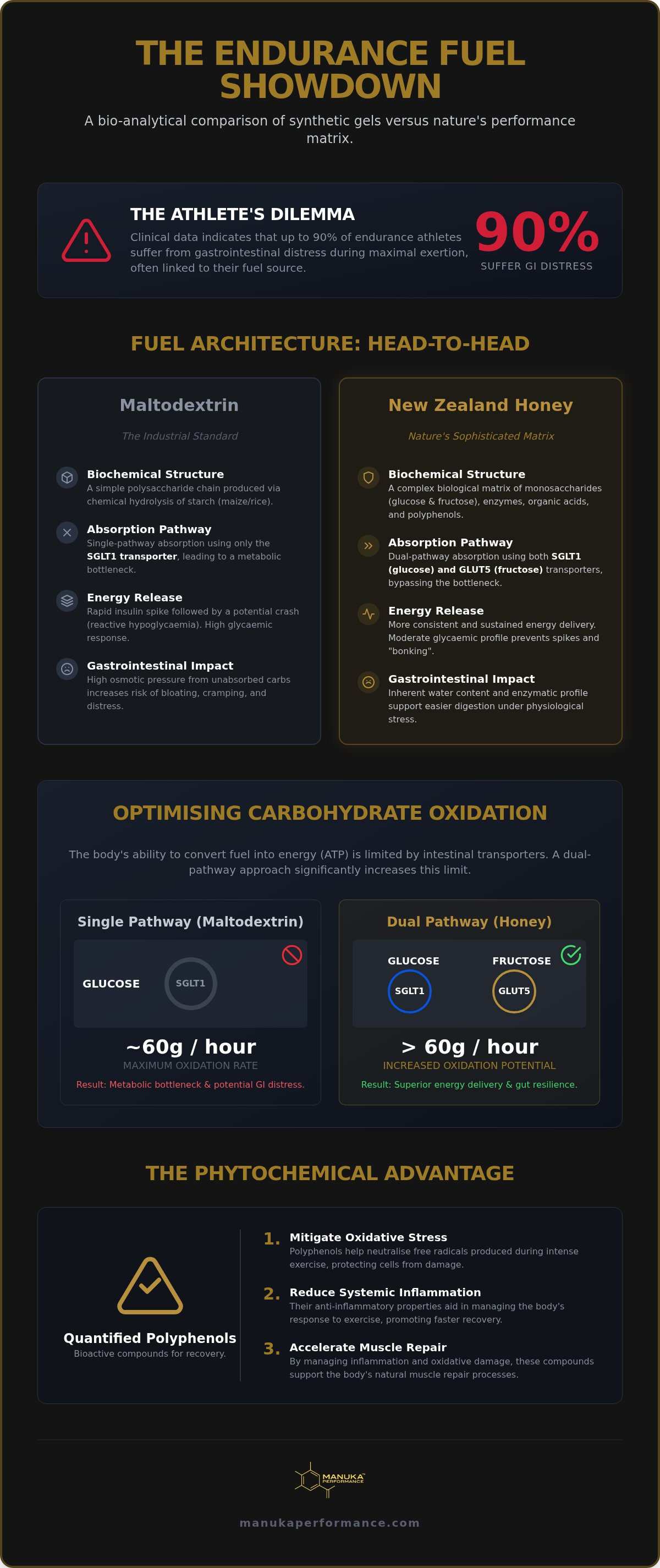
With clinical data indicating that up to 90% of endurance athletes suffer from gastrointestinal distress during maximal exertion, the prevailing reliance on monolithic synthetic carbohydrates warrants a rigorous re-evaluation. Beyond the mere provision of glycogen, the integration of quantified polyphenols for athletic recovery represents a pivotal advancement in mitigating exercise-induced oxidative stress and systemic inflammation. By utilising analytical standards to identify specific phytochemical profiles, researchers are now able to bridge the gap between natural provenance and measurable physiological outcomes.
You understand the limitations of conventional fueling protocols, where slow recovery times and persistent palate fatigue often compromise subsequent training blocks. This analysis promises a comprehensive exploration of how dual-pathway carbohydrate matrices and validated bioactive compounds facilitate accelerated muscle repair and sustained power output. We shall examine the biochemical superiority of a honey-based matrix over standard maltodextrin, providing a data-driven framework for athletes seeking to optimise their functional recovery through precise, bio-analytical quantification.
Key Takeaways
- Discern the biochemical distinctions between starch-derived maltodextrin and the complex, enzyme-rich biological matrix found in New Zealand honey.
- Optimise carbohydrate oxidation rates by leveraging dual-pathway absorption mechanisms that utilise both SGLT1 and GLUT5 transporters for superior energy delivery.
- Mitigate the physiological triggers of gastrointestinal distress by understanding how fuel osmolality and fluid shift dynamics influence endurance performance.
- Evaluate the efficacy of quantified polyphenols for athletic recovery through the PolySure™ analytical standard to manage exercise-induced oxidative stress effectively.
- Implement a sophisticated fueling protocol using LiquidFuel to transition from synthetic gels to a research-backed, performance-led functional nutrition strategy.
The Biochemical Architecture of Endurance Fuel: Maltodextrin vs Honey
The efficacy of endurance fueling depends heavily upon the structural complexity of the carbohydrate source and its subsequent metabolic pathway within the human body. While industrial standards have long favoured starch-derived polysaccharides for their cost-efficiency, recent bio-analytical comparisons highlight the stark physiological differences between synthetic isolates and integrated biological matrices. Understanding these architectural variances is essential for athletes seeking to optimise performance and leverage quantified polyphenols for athletic recovery through natural, research-backed nutrition.
Maltodextrin: The Industrial Standard for Rapid Glucose
Maltodextrin is produced through the chemical hydrolysis of starch, typically derived from maize or rice, resulting in a polysaccharide chain that is easily broken down into glucose. This industrial process creates a substance with a high molecular weight but a simplified metabolic profile, prioritising rapid absorption over sustained energy delivery. While this facilitates a quick increase in blood glucose levels, the resulting high glycaemic response can induce a significant insulin spike, which often leads to the sudden depletion of energy known as reactive hypoglycaemia. Maltodextrin is a high-density, low-complexity carbohydrate source for immediate oxidation. Because it relies exclusively on the SGLT1 intestinal transporter, it is subject to a physiological bottleneck that prevents the body from processing higher volumes of fuel during intense competition, often resulting in unabsorbed carbohydrates that contribute to gastrointestinal distress.
The Honey Matrix: Natures Sophisticated Carbohydrate Blend
In contrast to the linear structure of synthetic gels, New Zealand honey functions as a sophisticated biological matrix rather than a simple sugar solution, containing a synergistic blend of monosaccharides and bioactive compounds. The natural ratio of glucose to fructose in high-performance honey varieties enables dual-pathway absorption, circumventing the limitations of single-transporter carbohydrate sources. This matrix is further enriched by enzymatic activity and organic acids that facilitate metabolic pathways, alongside a spectrum of Polyphenols that are integral to modern recovery protocols. The presence of these phytochemicals is a critical component in the application of polyphenols for athletic recovery, as they assist in the systematic management of exercise-induced oxidative damage at a cellular level.
The specific floral provenance of the honey dictates the concentration of these phytochemicals, establishing a foundation where energy delivery is coupled with systemic protection. By maintaining a moderate glycaemic profile, this natural fuel source provides a more consistent release of energy, which is essential for maintaining power output across extended training durations. This steady delivery helps prevent the rapid spikes and subsequent "bonking" associated with maltodextrin, while the inherent water content and enzymatic profile support easier digestion under physiological stress.
Carbohydrate Oxidation and Dual-Pathway Absorption Mechanisms
The efficacy of an endurance fuel is ultimately dictated by its oxidation rate, which is the speed at which the body can convert exogenous carbohydrates into usable adenosine triphosphate (ATP). Clinical research establishes that the maximum oxidation rate for a single carbohydrate source, such as the glucose found in maltodextrin, is approximately 1.0 to 1.2 grams per minute. This limitation creates a physiological ceiling of roughly 60 grams per hour, beyond which the intestinal transporters become saturated. For elite athletes pushing the boundaries of human performance, exceeding this threshold requires a more sophisticated approach than simply increasing the volume of synthetic gels.
Saturating the SGLT1 Transporter with Synthetic Gels
When runners rely exclusively on glucose-heavy maltodextrin, they frequently encounter a metabolic bottleneck at the SGLT1 (sodium-glucose linked transporter 1) site. Once these transporters reach their functional capacity, any additional glucose remains unabsorbed within the small intestine, increasing osmotic pressure and drawing water into the gut. This accumulation is a primary catalyst for gastrointestinal distress. Clinical settings demonstrate that while single-source fuels max out at 60 grams per hour, attempting to force higher concentrations often results in a precipitous drop in efficiency and an increase in systemic inflammation. Integrating Polyphenols and post-exercise muscle damage research into this framework suggests that the oxidative stress caused by such physiological strain can be mitigated through the presence of specific bioactive compounds.
Leveraging the GLUT5 Pathway for Enhanced Performance
The honey matrix provides a distinct metabolic advantage by utilising a natural glucose-fructose ratio that engages both the SGLT1 and GLUT5 transporters simultaneously. Because fructose is absorbed via the independent GLUT5 pathway, it does not compete with glucose for transport, allowing for total carbohydrate oxidation rates to reach 1.5 to 1.75 grams per minute. This dual-fuel approach enables athletes to successfully process 90 grams or more per hour without saturating the digestive system. This increased throughput is critical for maintaining high power output during the final kilometres of a race, where glycogen sparing becomes the deciding factor in performance.
Fructose also plays a specialised role in replenishing liver glycogen, a process that is often overlooked in traditional maltodextrin-based protocols. By supporting both muscle and liver glycogen stores, the honey matrix ensures a more comprehensive energetic recovery. This systemic efficiency is further enhanced when the fuel source includes quantified polyphenols for athletic recovery, which help protect cellular integrity during these high-intensity efforts. Athletes looking to transition to this more efficient model can explore the research-backed solutions at Mānuka Performance to optimise their dual-pathway absorption. This transition from synthetic isolates to a complex biological matrix represents a significant shift towards a more bio-analytical fueling strategy.
Gastrointestinal Resilience: Mitigating the Mechanism of Runners Stomach
During high-intensity efforts, the human body prioritises skeletal muscle perfusion by shunting up to 80% of blood flow away from the digestive tract. This physiological shift significantly impairs gastrointestinal motility and reduces the capacity for nutrient absorption. When athletes introduce highly concentrated synthetic fuels into this compromised environment, they often trigger a cascade of osmotic imbalances that manifest as acute distress. Implementing a fueling strategy that includes quantified polyphenols for athletic recovery requires a stable gastrointestinal foundation to ensure these bioactive compounds are successfully metabolised rather than excreted due to gut irritation.
The Osmotic Pressure Problem in Synthetic Formulations
Osmolality refers to the concentration of particles in a solution and is a critical metric in determining how a fuel interacts with the intestinal lining. Synthetic gels are frequently hypertonic; their particle concentration is significantly higher than that of human blood. This gradient forces a rapid fluid shift, drawing water from the vascular system into the intestinal lumen to dilute the concentrated syrup. The resulting distension and unabsorbed glucose molecules are direct precursors to osmotic diarrhoea and cramping. Synthetic additives such as artificial preservatives and thickeners can further exacerbate gut inflammation, leading to a breakdown in barrier function. Athletes should be vigilant for the following harsh ingredients in their endurance products:
- High-concentration thickeners like xanthan gum or cellulose gum.
- Synthetic flavouring agents and artificial dyes.
- Artificial preservatives such as sodium benzoate or potassium sorbate.
- Maltodextrin-only carbohydrate profiles lacking secondary transport pathways.
Honey as a Bio-Compatible Fuel for Sensitive Guts
Honey-based matrices offer a distinct advantage due to their lower osmotic pressure and natural enzymatic profile. These enzymes, including diastase and invertase, assist in the breakdown of complex elements, facilitating a more efficient gastric emptying rate compared to concentrated synthetic syrups. By maintaining a more isotonic balance, honey-based fuel supports gut integrity even during periods of reduced blood flow. This bio-compatibility is essential for the systematic absorption of polyphenols for athletic recovery, as a compromised gut lining cannot effectively transport these large phytochemical molecules into the systemic circulation.
The inclusion of validated bioactive compounds within a honey-based matrix provides a secondary layer of protection by modulating the inflammatory response within the intestinal lining. This bio-analytical approach to fueling is detailed further in our Gastrointestinal Resilience: A Scientific Guide to Avoiding Runner’s Stomach Issues. By leveraging a natural glucose-fructose ratio, athletes can maintain a high caloric intake while minimising the mechanical and osmotic stress that typically leads to performance-ending gastrointestinal failure.
The Phytochemical Advantage: Quantifying Polyphenols for Athletic Recovery
The strategic use of polyphenols for athletic recovery represents a paradigm shift from viewing endurance fuel as a simple caloric delivery system to recognising it as a vehicle for systemic protection. During high-intensity training blocks, the body's endogenous antioxidant systems are frequently overwhelmed by the volume of reactive oxygen species (ROS) generated through aerobic metabolism. By integrating quantified phytochemicals into the fueling protocol, athletes can provide the necessary substrates to maintain cellular integrity and support immune function under physiological strain. This transition ensures that the energy consumed during a race also functions as a proactive recovery tool.
PolySure™: The Analytical Standard for Functional Nutrition
While the New Zealand honey industry has historically focused on MGO (methylglyoxal) ratings to denote antibacterial potency, this metric is insufficient for evaluating the performance-led requirements of an elite athlete. The PolySure™ standard was developed to address this gap, utilising advanced chromatography to validate the presence and concentration of seven specific, naturally occurring polyphenols. This analytical rigour ensures that every batch of LiquidFuel provides a consistent bioactive profile; it is a level of precision that raw supermarket honey cannot match. Standard retail honey lacks the quantification of these phytochemicals and often undergoes heat treatments that degrade the very enzymes and organic acids required for metabolic efficiency. By applying pharmaceutical-grade testing to natural sources, Mānuka Performance provides a verifiable foundation for those utilising polyphenols for athletic recovery.
Polyphenols and the Mitigation of Oxidative Stress
The primary mechanism of action for these phytochemicals involves the direct neutralisation of free radicals, which prevents the lipid peroxidation and protein damage that typically lead to delayed onset muscle soreness. Unlike synthetic maltodextrin, which provides "empty" glucose chains with no inherent protective capacity, the honey matrix acts as a biological shield. This real-time mitigation of oxidative stress during the effort allows for a more rapid return to baseline homeostasis, facilitating higher training frequencies without the risk of systemic overreach. The long-term benefits of this phytochemical-rich approach include enhanced athlete longevity and a more resilient inflammatory response across a competitive season. For endurance competitors seeking to move beyond the limitations of industrial starch, the validated bioactive profile of LiquidFuel offers a research-backed solution that integrates energy delivery with advanced physiological protection.
Implementing a Bio-Analytical Fueling Protocol with LiquidFuel
Transitioning from synthetic gels to a honey-based matrix requires more than a simple substitution; it involves a fundamental shift toward a bio-analytical framework that prioritises physiological compatibility. For New Zealand runners accustomed to the cloying, overly synthetic texture of maltodextrin, the LiquidFuel honey-based matrix offers a sophisticated alternative that leverages natural provenance and scientific validation. This approach ensures that the integration of polyphenols for athletic recovery is not merely a secondary benefit but a core component of a structured fueling strategy. By adopting a protocol rooted in biochemical precision, athletes can move beyond the limitations of industrial starch and embrace a more resilient metabolic state.
The LiquidFuel Matrix: Engineering a Superior Running Gel
The LiquidFuel 10-Pack Running Gel represents a significant advancement in performance-led functional nutrition, specifically engineered to provide rapid yet sustained energy delivery. Unlike mass-market formulations, this matrix is developed without synthetic thickeners or artificial preservatives, maintaining a clean-label profile that reduces the risk of gastrointestinal inflammation during maximal efforts. The specific viscosity of the honey-based matrix facilitates easier ingestion under physiological stress, addressing the common pain point of palate fatigue. The 10-pack format is specifically designed for the rigorous demands of marathon and ultra-marathon preparation, providing a consistent and portable energy source that utilises the dual-pathway absorption of New Zealand honey. This innovation is explored in detail in our analysis of Natural Honey-Based Energy Gels: A Performance Analysis of NZ Innovation.
Protocol for High-Performance Endurance Fueling
Achieving maximum metabolic efficiency requires a disciplined intake schedule that aligns with the body's capacity for carbohydrate oxidation. To maintain optimal energy levels and avoid the "bonk" associated with singular glucose spikes, athletes should aim to consume one gel every 30 to 45 minutes during sustained efforts. This timing ensures a steady supply of both glucose and fructose, utilising both the SGLT1 and GLUT5 transporters to achieve higher total carbohydrate throughput without saturating the digestive system. It's essential to train the gut with this bio-analytical fuel during high-volume training blocks to adapt the intestinal lining to the increased nutrient density. By incorporating polyphenols for athletic recovery into every session, runners can proactively mitigate the cumulative effects of oxidative stress long before race day arrives. Explore the LiquidFuel range and the science of PolySure™ at Mānuka Performance to integrate these analytical standards into your own high-performance regime.
Advancing Endurance Performance Through Bio-Analytical Precision
The transition from synthetic carbohydrate isolates to a complex biological matrix represents a fundamental evolution in endurance nutrition strategy. By prioritising dual-pathway absorption through a natural glucose-fructose ratio, athletes can effectively bypass the physiological bottlenecks that frequently lead to gastrointestinal failure during high-intensity efforts. This shift facilitates higher exogenous oxidation rates while simultaneously providing the quantified polyphenols for athletic recovery necessary to manage exercise-induced oxidative stress and systemic inflammation during peak training volumes. Establishing this biochemical foundation is essential for athletes who require sustained power without the metabolic cost of industrial additives.
Embracing a protocol rooted in analytical rigour ensures that every caloric unit contributes to both immediate power output and long-term systemic protection. The integration of seven bioactive compounds, validated by the PolySure™ standard, offers a level of precision that traditional sports gels cannot replicate. We invite you to optimise your performance with LiquidFuel honey-based gels, a solution engineered for elite gastrointestinal resilience and utilising a natural New Zealand honey-based matrix. Refine your fueling strategy with the quiet confidence that comes from rigorous scientific validation and professional-grade research. Your pursuit of excellence deserves a fuel source that is as disciplined and data-driven as your training.
Frequently Asked Questions
Is honey actually better than maltodextrin for endurance runners?
Honey provides a complex biological matrix that facilitates dual-pathway absorption, whereas maltodextrin is a singular glucose source. By engaging both SGLT1 and GLUT5 transporters, the honey matrix enables a higher total carbohydrate oxidation rate of up to 1.75 grams per minute. This architectural complexity prevents the metabolic bottlenecks associated with starch-derived polysaccharides, offering a more sustained energy release without the sharp insulin spikes and subsequent reactive hypoglycaemia common in synthetic formulations.
How do polyphenols for athletic recovery actually work during a race?
During intense exertion, the use of polyphenols for athletic recovery works by neutralising reactive oxygen species in real time. These bioactive compounds act as secondary antioxidants, mitigating the oxidative damage to cellular membranes and proteins before systemic inflammation takes hold. By providing this phytochemical shield during the effort, athletes can maintain better cellular homeostasis, which facilitates a more rapid return to baseline physiological function once the training block or race concludes.
Does the fructose in honey cause stomach issues during high-intensity runs?
Fructose typically causes distress only when it's consumed as an isolated concentrate or in disproportionate ratios to glucose. In a natural honey matrix, the glucose-fructose ratio is balanced to utilise the independent GLUT5 transporter effectively. This dual-fuel approach actually reduces the osmotic pressure in the small intestine compared to high-concentration glucose gels, as it prevents the accumulation of unabsorbed carbohydrates that often triggers osmotic diarrhoea and cramping during maximal efforts.
Can I replace all my synthetic energy gels with honey-based alternatives?
Transitioning entirely to honey-based alternatives is recommended for athletes seeking a cleaner, more bio-analytical fueling protocol. Products like LiquidFuel are engineered specifically to provide the necessary carbohydrate density required for elite performance without the synthetic thickeners found in industrial gels. Because honey utilises dual-pathway absorption, it can fulfil all energy requirements for efforts exceeding 150 minutes, provided the intake is managed at 30 to 45 minute intervals to match oxidation rates.
What is the glycaemic index of honey compared to maltodextrin?
Honey generally possesses a moderate glycaemic index, typically ranging between 50 and 60 depending on the floral source, while maltodextrin has a very high index of approximately 105 to 110. This moderate profile is advantageous for endurance sports, as it provides a more stable blood glucose response. The presence of natural enzymes and organic acids in the honey matrix further modulates the metabolic rate, preventing the rapid energy fluctuations seen with starch hydrolysates.
How does the PolySure™ standard benefit my athletic performance?
The PolySure™ standard ensures that your fuel contains a quantified, performance-led profile of seven specific phytochemicals. This analytical validation guarantees that you aren't consuming empty calories but are instead receiving a consistent dose of bioactives designed to support systemic resilience. By ensuring batch-to-batch purity, PolySure™ provides the rigorous data necessary for elite athletes to integrate polyphenols for athletic recovery into a precise, research-backed training regime with predictable physiological outcomes.
Will using honey-based gels prevent hitting the wall in a marathon?
While hitting the wall is a multifactorial event, honey-based gels significantly reduce the risk by optimising glycogen sparing through dual-pathway absorption. By allowing for a higher exogenous carbohydrate oxidation rate of 90 grams per hour, these gels preserve endogenous muscle and liver glycogen for the final stages of the race. The consistent energy delivery from a moderate glycaemic source prevents the rapid depletion of blood glucose that often precedes a total performance collapse.
Are honey-based energy gels suitable for runners with sensitive stomachs?
Honey-based gels are specifically indicated for runners with sensitive stomachs due to their lower osmotic pressure and natural bio-compatibility. Unlike synthetic syrups that draw water into the gut and cause distension, the honey matrix is more isotonic and easier for the intestinal lining to process during blood-flow shunting. The absence of artificial preservatives and synthetic gums further minimises the chemical triggers that typically lead to the condition commonly referred to as runner's stomach.