


The systemic failure experienced at the 18-kilometre mark is rarely a deficit of will; it's instead a predictable consequence of metabolic depletion and gastrointestinal compromise. While many runners accept gastric distress as an inevitable byproduct of synthetic energy gels, this physiological burden often indicates a fundamental misalignment between the athlete's nutritional intake and their biological requirements. You've likely felt the precision of your training plan undermined by the erratic performance of standard glucose polymers, which is why mastering athlete nutrition for half marathon distances requires a shift toward scientifically validated, bioactive-rich sources.
This guide establishes a sophisticated bio-analytical protocol for endurance performance, moving beyond generic advice to focus on the efficacy of natural carbohydrate matrices. By integrating the PolySure™ analytical standard to quantify bioactive polyphenols, we'll demonstrate how a natural honey-based matrix can optimise energy delivery without the typical inflammatory response of synthetic alternatives. We'll provide a comprehensive framework to enhance your gastrointestinal resilience, ensure consistent glycogen availability, and accelerate recovery through high-value bioactive ingredients.
Key Takeaways
- Quantify the specific metabolic demands of the 21.1km distance to prevent glycogen depletion by implementing a scientifically validated approach to athlete nutrition for half marathon success.
- Utilise the dual-transport carbohydrate mechanism through a glucose-fructose matrix to maximise oxidation rates and sustain high-intensity aerobic performance.
- Mitigate gastrointestinal distress and intestinal inflammation by replacing synthetic thickeners and preservatives with natural, honey-based carbohydrate delivery systems.
- Establish a personalised fueling protocol targeting 30 to 60 grams of carbohydrate per hour, integrated into training through a rigorous "train the gut" methodology.
- Enhance systemic recovery and manage oxidative stress by incorporating PolySure™ validated bioactives with quantified polyphenol concentrations.
Understanding the Metabolic Demands of the 21.1km Distance
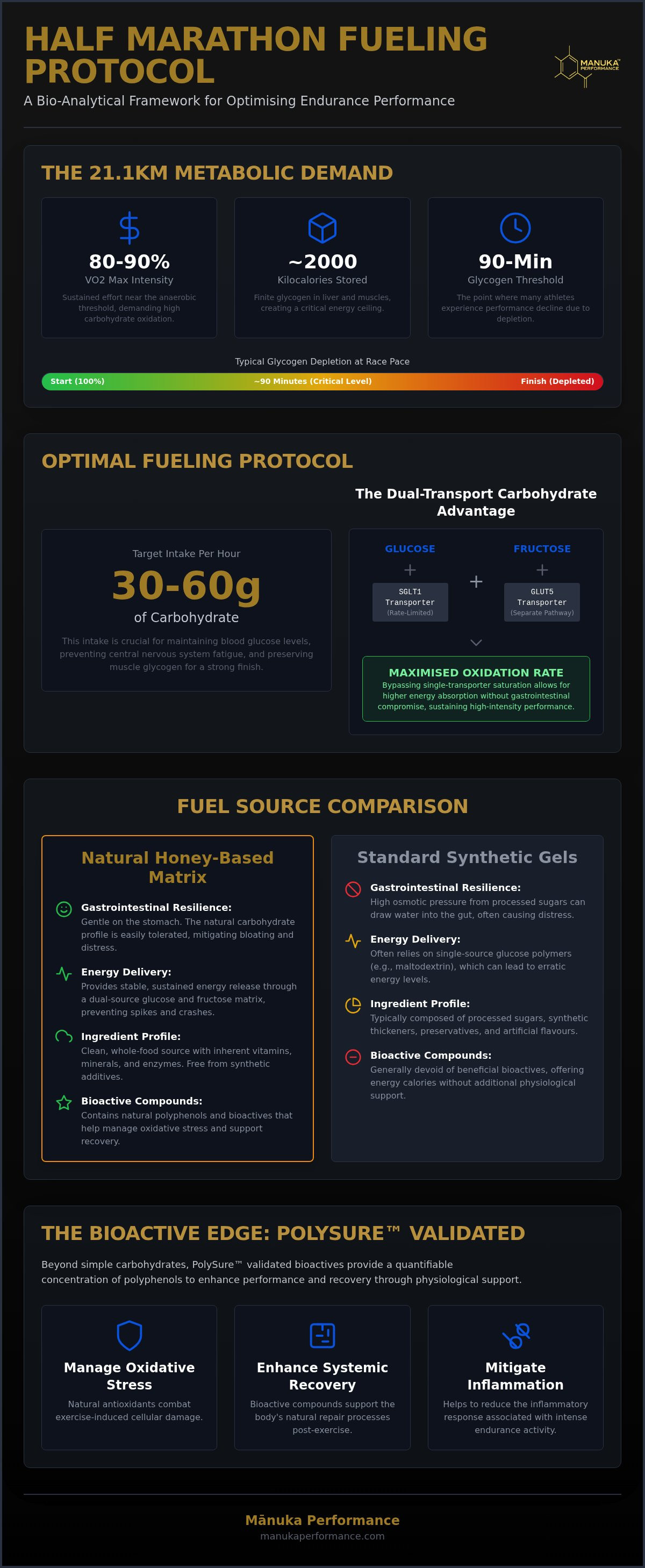
The half marathon occupies a specific physiological space that differs significantly from both the 10km sprint and the full marathon. At this distance, athletes typically maintain an intensity between 80% and 90% of their VO2 max, a pace that sits precariously near the anaerobic threshold. This sustained high-output effort demands a heavy reliance on carbohydrate oxidation, as the body can't metabolise fats quickly enough to sustain such velocity. Understanding the intricacies of athlete nutrition for half marathon performance requires a precise analysis of how these metabolic pathways interact over the course of approximately 21.1 kilometres.
Glycogen Storage and the 90-Minute Threshold
The human body possesses a finite capacity for endogenous energy storage. An average adult male athlete carries approximately 2000 kilocalories of glycogen within the liver and skeletal muscles. While this sounds sufficient, it's often depleted faster than athletes realise at race intensity. Many runners encounter a profound physiological crisis around the 90-minute mark, a phenomenon often characterised as a sudden, systemic shutdown of performance. To understand the biochemical reality of this sensation, one must examine what does hitting the wall feel like running from a bio-analytical perspective. This threshold exists because muscle glycogen levels have dropped below a critical concentration; the body then downregulates intensity to preserve vital organ function. Consequently, an intra-race fueling strategy becomes a metabolic necessity for anyone targeting a finish time beyond 75 to 90 minutes.
Metabolic Efficiency at Race Intensity
Applying rigorous athlete nutrition for half marathon events ensures that the relationship between carbohydrate oxidation and pace maintenance remains stable. Modern sports nutrition principles emphasise that exogenous carbohydrate ingestion acts as a buffer against central nervous system fatigue. When blood glucose levels remain stable, the brain continues to send robust signals to the working muscles, preventing the cognitive fog and perceived exertion spikes that characterise the final five kilometres. Metabolic efficiency in this context is defined as the body's ability to maximise the oxidation of exogenous carbohydrates while simultaneously preserving endogenous glycogen for the final high-intensity surge. By providing a steady stream of bioavailable fuel, athletes can maintain their anaerobic threshold for longer durations, effectively delaying the onset of metabolic acidosis and systemic fatigue.
The Biochemistry of Glycogen Synthesis and Carbohydrate Matrices
Precision in athlete nutrition for half marathon performance requires a deep understanding of intestinal absorption pathways and the dual-transport carbohydrate mechanism. The human gut utilizes distinct protein transporters to move sugars from the intestinal lumen into the bloodstream; SGLT1 facilitates glucose absorption, while GLUT5 is dedicated to fructose. By employing a multi-source carbohydrate matrix, athletes can bypass the saturation limits of a single transporter, which typically restricts glucose oxidation to approximately 60 grams per hour. Research into nutrition for the athlete confirms that utilizing both pathways simultaneously allows for higher total oxidation rates, effectively fueling the high-intensity aerobic demands of the 21.1km distance.
Synthetic formulations often rely on isolated maltodextrin, which can create a significant osmotic pressure within the gastrointestinal tract. This "osmotic pull" draws water from the vascular system into the intestines, frequently resulting in the bloating and urgency that runners find debilitating. Conversely, natural honey-based matrices provide a sophisticated, bioavailable carbohydrate profile that is more easily tolerated. The physical structure of the fuel also dictates the rate of nutrient delivery; liquid or semi-liquid gels facilitate faster gastric emptying compared to solid foods, ensuring that blood glucose levels remain stable without taxing the digestive system during peak exertion.
Optimising the Glucose-Fructose Ratio
The efficacy of a carbohydrate matrix is largely determined by its specific ratio. While a 2:1 glucose-to-fructose ratio has long been the industry standard, emerging data suggests that ratios closer to 1:0.8 can further increase exogenous carbohydrate oxidation and reduce the risk of residual unabsorbed sugars. Natural New Zealand honey inherently provides a balanced saccharide profile that aligns with these metabolic requirements. By selecting a honey-based delivery system like LiquidFuel 10-Pack Running Gel, athletes can access a validated matrix that supports high-intensity output while maintaining systemic hydration and gut comfort.
Pre-Race Preparation: A Bio-Analytical Protocol
Success on race day is predicated on the physiological state of the athlete 48 hours prior to the event. Implementing a structured carbohydrate loading plan for endurance athletes is essential to ensure that muscle and liver glycogen stores are fully saturated. This protocol typically requires an intake of 7 to 10 grams of carbohydrate per kilogram of body mass per day. During this window, it's vital to prioritise low-fibre, high-carbohydrate sources. Reducing intestinal bulk minimises the risk of mid-race distress while ensuring the body remains light and metabolically primed for the specific rigours of the half marathon pace.
Evaluating Gastrointestinal Resilience: Natural vs. Synthetic Fueling
Gastrointestinal resilience is frequently the deciding factor in endurance outcomes, as the mechanical stress of running combined with splanchnic hypoperfusion significantly reduces the gut's capacity to process nutrients. When blood flow is diverted to the skeletal muscles to meet oxygen demands, the digestive system becomes hypersensitive to chemical irritants and high-osmolar loads. This vulnerability makes the choice of athlete nutrition for half marathon efforts critical; many conventional products inadvertently exacerbate the very issues they aim to solve. Transitioning toward a bio-analytical understanding of gut health allows runners to maintain metabolic output without the systemic compromise often caused by low-quality formulations.
Synthetic Additives and Intestinal Permeability
Standard energy gels frequently contain synthetic thickeners, preservatives, and artificial sweeteners that can disrupt the intestinal barrier during periods of acute physiological stress. Maltodextrin, while common, can alter the gut microbiome and increase intestinal permeability, a condition that leads to local inflammation and systemic fatigue. Identifying "red flag" ingredients such as potassium sorbate, sodium benzoate, or sucralose is essential for athletes who experience gastric urgency. A clean label approach isn't merely a lifestyle preference; it's a performance necessity that reduces the exogenous chemical load on a compromised digestive tract. By incorporating clean label choices like leanercreamer.com into your morning routine and eliminating these irritants, you can ensure that the body's resources remain focused on locomotion rather than managing intestinal distress.
Natural New Zealand honey offers a complex biochemical solution for avoiding runners stomach issues. Unlike isolated synthetic sugars, honey contains endogenous enzymes such as diastase and glucose oxidase that facilitate the systematic breakdown and absorption of saccharides. These bioactive components, alongside a naturally balanced pH and specific organic acids, provide a soothing effect on the gastric lining, which helps to mitigate the risk of nausea and reflux during high-intensity efforts. LiquidFuel supports gastrointestinal resilience during peak exertion by providing a low-osmolality environment that ensures rapid nutrient transit without triggering an inflammatory response. This natural synergy between enzyme activity and carbohydrate delivery ensures that athlete nutrition for half marathon performance remains consistent from the starting line to the final kilometre.
Developing a Strategic Half Marathon Nutrition Protocol
Creating a robust framework for athlete nutrition for half marathon success requires a transition from generic advice to a quantified, personalised strategy. Most runners require a carbohydrate ingestion rate between 30 and 60 grams per hour to maintain blood glucose stability and preserve endogenous glycogen. However, the upper limit of this range is only achievable through the "Train the Gut" methodology. This process involves integrating your specific race-day nutrition into long training runs for at least six to eight weeks prior to the event, which upregulates the density of glucose transporters in the intestinal wall and improves gastric emptying rates under stress.
The efficacy of your effort depends on the precision of your half marathon fueling strategy honey protocol. By utilizing a natural, bioactive matrix, you can maintain a higher oxidation rate with a lower risk of the osmotic imbalances discussed previously. This strategic approach ensures that the energy consumed is actually absorbed and utilised by the working muscles rather than remaining sequestered in the digestive tract.
The Race-Day Timeline
A bio-analytical protocol begins long before the starting gun. Three hours prior to the race, athletes should consume a final metabolic top-up focusing on low-glycaemic index carbohydrates to ensure a sustained release of energy without triggering a premature insulin spike. Fifteen minutes before the start, a "priming" dose of bioactive carbohydrates provides immediate glucose availability for the initial kilometres. During the race, consistent micro-dosing every 20 to 30 minutes is superior to large bolus ingestions, as it maintains steady-state glucose levels and prevents the "peak and trough" energy cycles that can lead to early fatigue.
Electrolytes and Hydration Synergy
Hydration is not merely about fluid replacement; it's a critical co-factor for nutrient transport. Sodium plays a pivotal role in facilitating glucose absorption via the SGLT1 transporter, effectively acting as the key that unlocks the cellular door for carbohydrate entry. Athletes must calculate their fluid requirements based on individual sweat rates and ambient temperatures, as over-hydration carries the significant risk of hyponatremia. Maintaining an electrolyte balance ensures that the carbohydrate matrix remains bioavailable and that cellular communication remains uninterrupted throughout the 21.1km distance. To implement this protocol with clinical precision, athletes should utilise a validated delivery system like the LiquidFuel 10-Pack Running Gel to ensure consistent dosage and optimal absorption.
Optimising Performance via PolySure™ Validated Bioactives
While the primary focus of athlete nutrition for half marathon performance traditionally centres on carbohydrate titration, elite outcomes require a more nuanced approach that addresses the systemic oxidative stress generated during 21.1 kilometres of high-intensity locomotion. Intense aerobic effort accelerates the production of reactive oxygen species, which can overwhelm the body's endogenous antioxidant defences and lead to prolonged muscle soreness and cellular damage. Integrating quantified bioactives into a fueling regime allows athletes to mitigate this oxidative burden in real-time, while science-led formulations from Everbright Labs help bridge the gap between basic caloric intake and sophisticated functional performance.
The transition from "natural" ingredients to "validated" bioactives represents a significant advancement in sports nutrition. While raw table honey is often cited for its general health properties, it lacks the consistency and concentration required for professional athletic applications. The PolySure™ analytical standard addresses this deficit by providing a rigorous quantification of seven specific polyphenols within the New Zealand honey matrix. This level of analytical testing ensures that every batch of LiquidFuel 10-Pack Running Gel contains a precise concentration of bioactive compounds, moving the product from a simple carbohydrate source to a performance-led bioactive matrix. Provenance is critical here; the unique New Zealand ecosystem produces a phytochemical profile that's systematically validated to support the physiological demands of endurance racing.
Strategic Recovery and Post-Race Nutrition
The metabolic window following a half marathon is a critical period for initiating systemic repair and replenishing depleted glycogen stores. Within the first 30 minutes post-exertion, insulin sensitivity is heightened, making it the optimal time for nutrient uptake. Leveraging the anti-inflammatory properties of quantified polyphenols during this window can significantly reduce post-race downtime by modulating the inflammatory response and accelerating the clearance of metabolic waste. By consistently integrating PolySure™ validated ingredients into both the race-day protocol and the recovery phase, athletes can achieve a superior state of physiological resilience. To refine your performance protocol, you can explore the LiquidFuel range and the science of PolySure™ to understand how quantified bioactives redefine athlete nutrition for half marathon excellence.
Advancing Beyond Conventional Endurance Fueling
The transition from rudimentary fueling to a bio-analytical protocol is the catalyst for breaking through the 18-kilometre threshold. By prioritising a dual-transport carbohydrate matrix and eliminating synthetic irritants, you effectively align your nutritional strategy with your body's metabolic architecture. Mastering athlete nutrition for half marathon performance requires this level of clinical precision; it's about moving beyond simple caloric replacement to embrace the systemic benefits of quantified bioactives. PolySure™ remains the only analytical standard that validates the functional efficacy of performance honey, ensuring that your gastrointestinal resilience and recovery are supported by rigorous scientific data. This sophisticated approach is already the benchmark for competitive endurance athletes across Australia and New Zealand who refuse to let unvalidated nutrition dictate their race results. The LiquidFuel 10-Pack Running Gel represents the clinical choice for those seeking to maintain intensity without compromise.
Optimise your performance with the PolySure™ validated LiquidFuel 10-Pack
With your metabolic requirements systematically addressed, you're prepared to execute your race plan with absolute confidence.
Frequently Asked Questions
How many carbohydrates should I consume during a half marathon?
Athletes should target an intake of 30 to 60 grams of carbohydrate per hour to maintain blood glucose stability throughout the 21.1-kilometre distance. This range ensures that exogenous fuel effectively spares endogenous glycogen stores, which are typically depleted after 90 minutes of high-intensity effort. Individual requirements vary based on body mass and metabolic efficiency, so it's essential to calibrate this dosage during training to optimise athlete nutrition for half marathon success.
Can I use honey as a natural alternative to synthetic energy gels?
Bioactive honey serves as a superior natural alternative to synthetic gels because it provides a balanced glucose-fructose matrix that utilises dual absorption pathways. Unlike raw table honey, performance-led products like LiquidFuel are formulated to ensure rapid gastric emptying and consistent nutrient delivery. This natural carbohydrate source avoids the inflammatory response often triggered by synthetic glucose polymers, making it a sophisticated choice for athletes seeking both efficacy and gastrointestinal resilience.
What is the best breakfast to eat on the morning of a half marathon?
The optimal pre-race meal consists of low-glycaemic index carbohydrates consumed approximately three hours before the starting gun to ensure sustained energy release. Common choices include porridge or sourdough with honey, which provide the necessary glucose without causing a premature insulin spike. It's critical to avoid high-fibre or high-fat foods during this window to minimise the risk of intestinal distress while the body is under the physiological stress of race-pace intensity.
How do I prevent stomach cramps and nausea when using energy gels?
Preventing gastrointestinal distress requires the elimination of synthetic thickeners, preservatives, and artificial sweeteners that increase intestinal permeability. Transitioning to a clean-label, honey-based matrix reduces the osmotic load in the gut, which is a primary cause of nausea and urgency. Additionally, implementing a "train the gut" protocol during long runs ensures that your digestive system is physiologically adapted to processing carbohydrates while maintaining a high-intensity aerobic output.
Is carbohydrate loading necessary for a 21.1km race?
Carbohydrate loading is a necessary protocol for the half marathon to ensure that muscle and liver glycogen stores are fully saturated before the event. Athletes should aim for 7 to 10 grams of carbohydrate per kilogram of body mass in the 48 hours leading up to the race. This strategic preparation prevents the "wall" effect and provides a metabolic buffer that allows for sustained pace maintenance during the final five kilometres of the distance.
What are the benefits of polyphenols for endurance runners?
Polyphenols act as potent bioactive compounds that help mitigate the oxidative stress and systemic inflammation generated during prolonged endurance efforts. By modulating the body's inflammatory response, these phytochemicals support faster cellular repair and reduce the downtime required between high-intensity sessions. Integrating quantified polyphenols into your athlete nutrition for half marathon training facilitates superior physiological resilience, allowing for more consistent performance and a more efficient recovery phase post-race.
How does the PolySure™ standard ensure the quality of sports nutrition?
The PolySure™ standard provides a rigorous analytical framework that quantifies seven specific naturally occurring polyphenols within the honey-based matrix. This ensures that every batch of sports nutrition meets a clinical benchmark for bioactive concentration, moving beyond the variability of raw natural products. For the elite athlete, this validation offers a guarantee of functional efficacy and purity, ensuring that the nutritional intake provides measurable support for metabolic and recovery processes.
When should I take my first energy gel during the race?
A "priming" dose should be ingested approximately 15 minutes before the start to ensure immediate glucose availability as you reach race intensity. Following this, the first intra-race gel should typically be consumed within the first 30 to 45 minutes of the event. Establishing a consistent micro-dosing schedule thereafter prevents the energy fluctuations associated with delayed fueling, ensuring that blood glucose levels remain stable through the critical 18-kilometre mark.