


The conventional reliance on synthetic, maltodextrin-heavy gels is often the primary catalyst for physiological failure during endurance events rather than the definitive solution to metabolic depletion. You've likely encountered that systemic shutdown known as "the bonk" around the three-hour mark, or perhaps you've struggled with the gastrointestinal distress that frequently compromises performance when using substandard fuel sources. Achieving peak efficiency requires a more sophisticated approach to cycling nutrition for long rides than simply consuming generic sugars. It demands a rigorous understanding of how specific carbohydrate matrices and bioactive compounds interact with your unique physiology under sustained stress.
By mastering the science of dual-transport carbohydrate absorption and the role of quantified bioactive polyphenols, you can effectively eliminate energy troughs and optimise your endurance capacity. This article provides a scientifically validated fuelling protocol based on the PolySure™ analytical standard, ensuring your power output remains consistent from the first kilometre to the final ascent. We will examine the ideal glucose-to-fructose ratios and the phytochemical support necessary for rapid post-ride recovery, moving beyond anecdotal advice toward a bio-analytical framework for professional excellence.
Key Takeaways
- Comprehend the physiological drivers of metabolic exhaustion to implement a proactive strategy against glycogen depletion and central nervous system fatigue.
- Enhance your cycling nutrition for long rides by adopting a dual-transport carbohydrate matrix that utilises both SGLT1 and GLUT5 pathways to achieve superior absorption rates.
- Eliminate gastrointestinal distress by replacing synthetic, high-osmolality gels with clean-label, honey-based alternatives that facilitate efficient gastric emptying and systemic bioavailability.
- Establish a quantified fuelling protocol that maintains steady-state blood glucose levels through a disciplined "little and often" intake strategy adjusted for specific power outputs.
- Incorporate quantified bioactive polyphenols validated by the PolySure™ standard to mitigate oxidative stress and support critical vascular function throughout the duration of your endurance effort.
The Bio-Energetics of Long-Distance Cycling and Glycogen Management
The human body's capacity to sustain high-intensity aerobic effort is fundamentally limited by its endogenous glycogen reserves, which are stored primarily within the skeletal muscles and the liver. During the initial phases of endurance exercise, the body relies heavily on these stored polysaccharides to fuel muscular contraction. However, as the duration of the effort extends, the rate of glycogenolysis often outpaces the body's ability to maintain metabolic homeostasis. This physiological decline is the primary reason why The Bio-Energetics of Cycling requires a sophisticated approach to exogenous substrate delivery. For athletes refining their cycling nutrition for long rides, understanding the glycaemic ceiling is vital. Once exercise exceeds approximately 90 minutes, the depletion of hepatic and muscular glycogen becomes critical, necessitating a constant influx of external carbohydrates to maintain power output and prevent systemic failure.
In clinical terms, the "bonk" represents more than mere fatigue; it's a state of profound metabolic exhaustion coupled with central nervous system fatigue. When blood glucose levels plummet, the brain, which is an obligate glucose consumer, initiates a protective shutdown to preserve vital functions. This manifests as a sharp reduction in motor unit recruitment, impaired coordination, and a significant increase in the perceived rate of exertion. Consistent exogenous carbohydrate delivery is mandatory to spare endogenous stores, effectively delaying this inevitable threshold and allowing for sustained performance beyond the natural limits of glycogen availability.
Understanding the Metabolic Shift
During sustained efforts, the body constantly modulates its reliance on lipid and carbohydrate oxidation. While fat oxidation provides a vast energy reservoir for low-intensity zones, high-intensity surges and sustained threshold efforts demand the rapid ATP production that only glucose can provide. Maintaining elevated blood glucose levels ensures these metabolic pathways remain saturated. To prepare for this demand, athletes should implement Strategic Carbohydrate Loading: A Bio-Analytical Protocol to maximise pre-ride substrate availability and optimise the body's metabolic readiness.
The Consequences of Sub-Optimal Fuelling
Hypoglycaemia doesn't just affect the legs; it significantly impairs cognitive function and technical bike handling. As the brain's primary fuel source diminishes, reaction times slow and decision-making becomes erratic, which increases the risk of accidents during technical descents. Chasing a calorie deficit mid-ride creates immense systemic stress because the gut's absorption rate is finite. A reactive approach often leads to over-consumption and subsequent gastrointestinal distress. A proactive strategy—which might include a refined morning ritual with a quality brew from Bambi Nonno Coffee—remains the only way to maintain a steady-state physiological profile, which is the cornerstone of effective cycling nutrition for long rides.
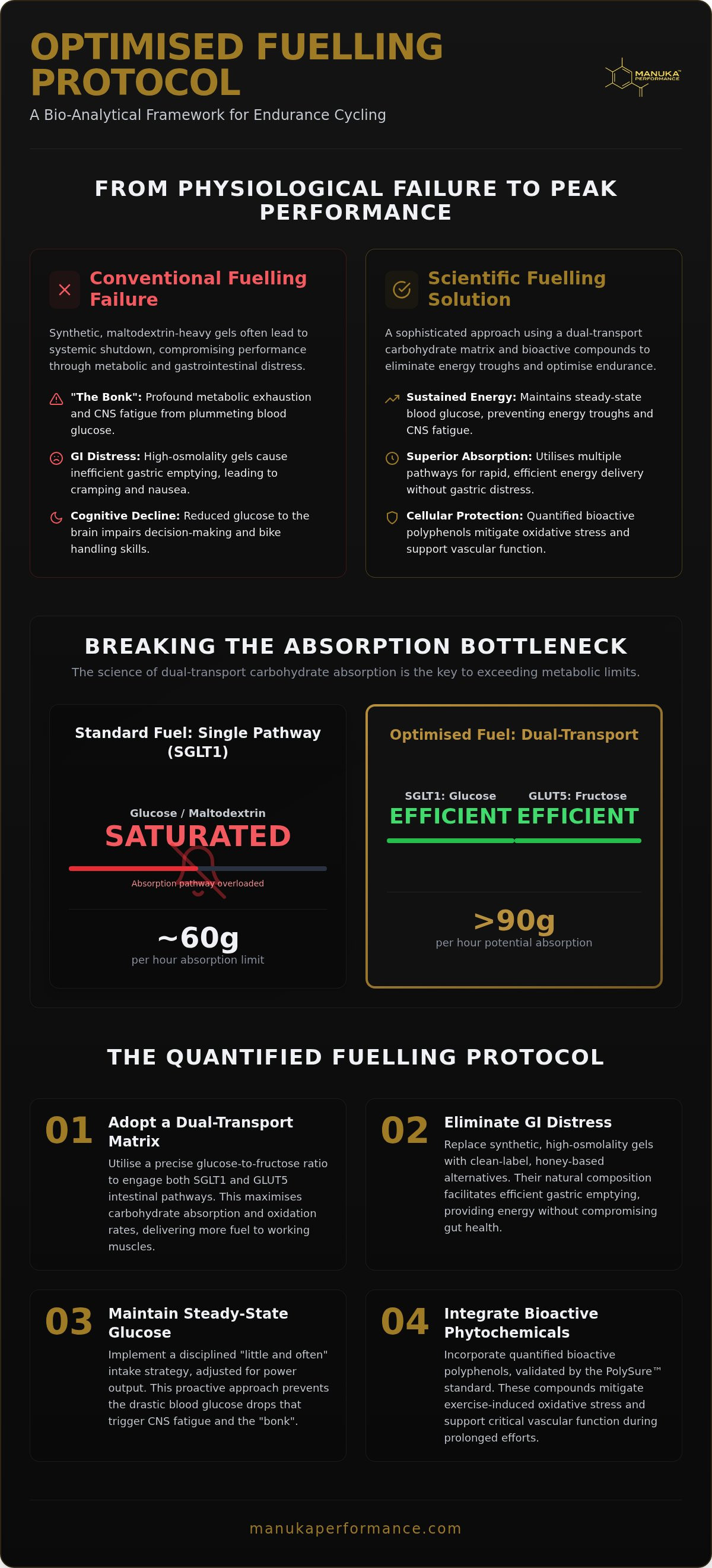
The efficacy of cycling nutrition for long rides is fundamentally governed by the rate of intestinal carbohydrate absorption, which serves as the primary physiological bottleneck during high-intensity endurance efforts. Glucose is transported across the intestinal wall via the Sodium-Glucose Linked Transporter 1 (SGLT1), a pathway that typically reaches saturation at approximately 60 grams per hour. To exceed this metabolic limit, athletes must utilise the Glucose Transporter 5 (GLUT5) pathway, which is reserved specifically for fructose. Dual-transport carbohydrates are the simultaneous utilisation of multiple intestinal pathways to increase total oxidation rates. By leveraging both transporters, cyclists can effectively increase their exogenous energy supply, providing the substrate necessary for sustained power output when endogenous glycogen levels begin to decline.
Isolated synthetic maltodextrin formulations often lack the structural complexity required for optimal gastric clearance, frequently leading to residual unabsorbed sugars that contribute to systemic distress. In contrast, a honey-based matrix provides a naturally occurring ratio of glucose and fructose that is structurally integrated with organic acids and enzymes. This bio-analytical advantage ensures that the delivery of fuel is synchronised with the body's transport capacity. For those refining their approach to endurance fuelling, adopting a validated honey-based matrix ensures maximum substrate delivery without the systemic costs of synthetic additives.
The Science of the Glucose-Fructose Ratio
Traditional endurance protocols have long advocated for a 2:1 glucose-to-fructose ratio, yet modern clinical research suggests that ratios approaching 1:0.8 may further enhance total carbohydrate oxidation and reduce gastrointestinal symptoms. Mānuka Performance leverages the natural phytochemical composition of New Zealand honey to achieve high levels of bioavailability that synthetic alternatives struggle to replicate. This natural synergy is detailed extensively in the Bioavailability of Honey-Based Carbohydrate Gels, which examines how complex natural matrices outperform simplified lab-grown sugars in real-world performance settings.
Overcoming the 60g Per Hour Barrier
Exceeding the 60g per hour barrier is critical for elite performance during events exceeding three hours, where total energy expenditure often outpaces absorption capacity. Utilising dual-transport paths allows athletes to target 90g or even 120g of carbohydrate per hour without saturating the SGLT1 transporters. This reduces the osmotic pressure in the gut, which is the primary cause of the bloating and "gut rot" associated with high-concentration synthetic gels. A liquid-honey matrix, such as that found in LiquidFuel, is more readily processed by the digestive system under physiological stress, facilitating rapid gastric emptying and immediate systemic availability during the most demanding phases of a ride.
Mitigating Gastrointestinal Distress Through Natural Bioavailability
The biochemical efficacy of cycling nutrition for long rides is frequently compromised by the incidence of gastrointestinal (GI) distress, a phenomenon typically driven by high osmolality and suboptimal gastric clearance. Synthetic gels, which often utilise isolated maltodextrin and complex thickening agents, create a hypertonic environment within the small intestine. This osmotic gradient draws water from the vascular system into the gut lumen, resulting in the bloating, cramping, and discomfort often colloquially termed "gut rot". In contrast, clean-label honey-based matrices exhibit a more favourable osmotic profile, facilitating superior GI resilience during sustained physiological stress by allowing for more efficient nutrient transport without the systemic rejection associated with industrial formulations.
The Problem with Synthetic Additives
Artificial sweeteners and thickeners such as xanthan gum or carboxymethylcellulose are common in industrial sports nutrition, yet they can significantly disrupt the delicate balance of the gut microbiome during intense exercise. These additives often delay gastric emptying, forcing the stomach to retain undigested material while blood flow is diverted to the working muscles. This delay increases the risk of fermentation and gas production, leading to acute abdominal pressure. For a comprehensive analysis of these mechanisms and strategies to maintain intestinal integrity, consult Gastrointestinal Resilience: A Scientific Guide.
Bioavailability and Gastric Emptying
Bioavailability in the intra-workout context refers to the speed and efficiency with which a carbohydrate substrate is absorbed and utilised by the systemic circulation. LiquidFuel's honey-based matrix remains in a naturally fluid state, which significantly reduces the mechanical work required by the stomach compared to solid bars or highly viscous synthetic pastes. This liquid state facilitates faster gastric emptying, ensuring that glucose and fructose reach the small intestine's transporters rapidly. By utilising a clean-label approach, athletes can reduce the systemic inflammatory load that often accompanies the ingestion of preservatives, thereby preserving performance during the final stages of an endurance event.
While "gut training" is a necessary component of a professional performance strategy, the presence of natural bioactives in honey-based nutrition supports the intestinal lining by mitigating local oxidative stress. LiquidFuel is specifically engineered as a sophisticated solution for athletes who have previously experienced the debilitating effects of "runner’s stomach" symptoms while cycling. It provides a bio-analytical path to consistent fuelling, ensuring that your cycling nutrition for long rides remains a performance multiplier rather than a physiological liability.
Developing a Quantified Fuelling Protocol for Endurance Rides
Transitioning from theoretical biochemistry to practical application requires a disciplined, step-by-step framework that accounts for varying metabolic demands. Establishing a precise protocol for cycling nutrition for long rides begins with quantifying your specific carbohydrate requirements based on intensity and duration. For low-intensity efforts in Zone 1 or 2, a baseline of 30g of carbohydrate per hour is generally sufficient to maintain homeostasis. However, as intensity scales to moderate Zone 3 efforts, this requirement increases to 60g per hour. For competitive events or rides exceeding 2.5 hours, targets of 90g to 120g per hour are necessary to prevent glycogen depletion and ensure consistent power output across the entire duration of the effort.
Maintaining steady-state blood glucose levels necessitates a "little and often" cadence rather than large, infrequent doses. Ingesting smaller amounts every 20 to 30 minutes prevents the significant glycaemic fluctuations that can lead to insulin spikes and subsequent energy crashes. This cadence also supports gastrointestinal resilience by ensuring the intestinal transporters are consistently occupied without being overwhelmed. It's essential to integrate this protocol with a structured hydration strategy and validate it during training. Gut training, conducted over a 6 to 10 week period, allows the digestive system to adapt to increased carbohydrate flux and prevents acute distress on race day.
The Hourly Carbohydrate Roadmap
The requirements of a social century differ fundamentally from those of a competitive Gran Fondo or a high-intensity road race. While a steady endurance pace may only require two LiquidFuel sachets per hour to meet a 60g target, a competitive event demands a more aggressive approach, often requiring three to four sachets to reach the 90g+ threshold. Timing is equally critical for performance optimisation. Consuming a sachet approximately 15 to 20 minutes before significant climbs or high-intensity segments ensures that peak glucose availability coincides with the increased muscular demand, providing the necessary substrate for threshold surges. You can optimise your performance with LiquidFuel by integrating these quantified doses into your specific ride profile.
Hydration and Electrolyte Synergy
Effective nutrient transport is heavily dependent on electrolyte balance, specifically the presence of sodium. Sodium acts as a vital co-transporter for glucose via the SGLT1 pathway in the small intestine; without adequate sodium levels, the absorption of exogenous carbohydrates is significantly impaired, regardless of the quantity consumed. In the demanding conditions of a New Zealand summer, high sweat rates can lead to rapid electrolyte depletion, which compromises both thermoregulation and nutrient uptake. Cyclists often don't account for the precise balance required between fluid intake and carbohydrate concentration. Maintaining a fluid intake of 500ml to 750ml per hour, adjusted for sweat rate, helps maintain the correct osmolality within the gut. This balance ensures that the carbohydrate matrix remains bioavailable and moves efficiently from the stomach to the bloodstream without causing the gastric delay associated with dehydration.
Integrating Bioactive Phytochemicals via PolySure™ Technology
The final frontier in cycling nutrition for long rides moves beyond simple caloric intake toward the precise delivery of secondary metabolites that support systemic resilience. While generic honey contains trace elements of various phytochemicals, it lacks the quantified consistency required for elite athletic outcomes. Mānuka Performance addresses this gap through the PolySure™ analytical standard, a rigorous testing protocol that validates the presence and concentration of seven specific naturally occurring polyphenols. This level of precision positions the brand at the intersection of advanced apicultural science and athletic biotechnology, ensuring that every sachet provides a standardised dose of bioactive support rather than an unquantified natural byproduct.
Standard honey, often sourced without rigorous analytical oversight, varies significantly in its chemical composition based on floral source and processing methods. For the endurance athlete, this variability introduces an unacceptable margin of error in a performance protocol. By utilising PolySure™ technology, the bio-energetic matrix is stabilised, providing a reliable substrate that supports physiological function under the extreme stress of multi-hour efforts. This move toward bioactive-validated matrices represents a shift from traditional food sources to engineered natural solutions designed specifically for the demands of high-performance cycling.
The Role of Polyphenols in Endurance
Polyphenols function as critical modulators of the body's response to the physiological strain of prolonged exercise. During high-intensity efforts, the production of reactive oxygen species increases significantly, leading to oxidative stress that can impair muscular function and delay recovery. Bioactive polyphenols assist in mitigating this damage by supporting cellular antioxidant defences and promoting vascular health through the modulation of nitric oxide pathways, which enhances blood flow and oxygen delivery to working tissues. This transition from basic energy delivery to biological precision is detailed in The Evolution of Sports Nutrition Biotechnology, which explores the shift from synthetic sugars to sophisticated phytochemical matrices.
LiquidFuel: The Sophisticated Cyclist’s Choice
LiquidFuel represents the culmination of this bio-analytical approach, combining a natural glucose-to-fructose ratio with a validated profile of bioactive compounds. This dual-action delivery system ensures that the athlete receives both the immediate fuel necessary for performance and the phytochemical support required for systemic integrity. The gel format is specifically engineered for the high-pressure environment of the peloton, allowing for rapid, one-handed operation that does not compromise bike handling or focus during critical race moments. Transitioning to a scientifically validated, natural fuelling strategy allows cyclists to move away from the compromises of synthetic gels and toward a protocol defined by clinical rigor and measurable efficacy.
Achieving Peak Metabolic Efficiency
To source professional-grade nutrition and technical equipment for your next event, check out Fastgear Australia and explore their curated range of high-performance endurance products.
Transitioning from generic energy intake to a bio-analytical framework is essential for maintaining metabolic homeostasis during prolonged aerobic efforts. You've explored how dual-transport carbohydrate absorption and the quantification of bioactive polyphenols via the PolySure™ standard provide a measurable advantage over synthetic alternatives. By implementing a disciplined, quantified protocol, you ensure that your cycling nutrition for long rides supports both immediate power output and long-term systemic resilience.
Achieving peak performance requires a commitment to scientific rigor and the use of materials that respect human physiology. LiquidFuel provides a natural dual-transport carbohydrate matrix that remains gentle on the stomach while delivering PolySure™ validated bioactive content to mitigate oxidative stress. It's time to refine your approach and secure your competitive edge through biotechnological precision. Optimise your endurance with LiquidFuel honey-based gels and experience the difference that rigorous validation makes to your performance. Your journey toward professional excellence is supported by data, research, and the pursuit of biological purity.
Frequently Asked Questions
How many grams of carbohydrates do I need per hour for a 100km ride?
For a 100km ride, you should target between 30g and 90g of carbohydrates per hour, depending on your average power output and the total duration of the effort. Competitive cyclists riding at higher intensities should aim for the upper end of this range to maintain blood glucose levels. Implementing a precise strategy for cycling nutrition for long rides ensures that exogenous fuel delivery matches your metabolic expenditure, effectively sparing endogenous glycogen stores for the final stages of the event.
Can I use honey as a natural alternative to commercial energy gels?
While raw table honey contains glucose and fructose, it lacks the standardised bioactive profile and viscosity required for reliable athletic performance. Mānuka Performance LiquidFuel uses a specific honey-based matrix that is filtered and validated for consistency. Unlike standard honey, this performance-led formulation is engineered for rapid gastric emptying and systemic bioavailability, ensuring that the carbohydrate delivery remains predictable throughout the duration of your training or competitive event.
What is the best way to prevent stomach cramps while cycling long distances?
Preventing gastrointestinal distress requires managing the osmolality of your intake and avoiding synthetic thickeners found in industrial gels. These additives often draw water into the gut, leading to the bloating and cramping associated with "gut rot". Utilising a clean-label, honey-based matrix reduces this osmotic pressure. Maintaining a disciplined "little and often" fuelling cadence, rather than large bolus doses, further supports intestinal integrity and ensures steady nutrient transport into the bloodstream.
Is a 2:1 glucose to fructose ratio better than synthetic maltodextrin?
A naturally occurring glucose-to-fructose ratio is significantly more effective than isolated synthetic maltodextrin because it utilises two separate intestinal pathways. Single-source carbohydrates saturate the SGLT1 transporter at 60g per hour, creating a metabolic ceiling. By incorporating fructose via a honey-based matrix, you engage the GLUT5 transporter. This dual-transport mechanism allows for total carbohydrate oxidation rates to reach 90g or even 120g per hour, providing a superior energy supply for high-intensity efforts.
How does the PolySure™ standard benefit my athletic performance?
The PolySure™ standard provides a clinical level of certainty by quantifying seven specific polyphenols within the fuel matrix. These bioactive phytochemicals are essential for mitigating the oxidative stress that accumulates during prolonged aerobic exercise. By ensuring a standardised concentration of these compounds, PolySure™ supports vascular function and cellular health. This analytical rigor transforms a natural ingredient into a sophisticated biotechnological tool, allowing athletes to achieve consistent outcomes that generic, unvalidated nutrition products cannot replicate.
What should I eat before a long bike ride to maximise my glycogen stores?
To maximise glycogen stores, you should consume a high-carbohydrate, low-fibre meal approximately two to three hours before departure. This timing allows for adequate gastric emptying while ensuring blood glucose levels are stabilised. Focus on easily digestible polysaccharides that don't cause gastrointestinal residue. Pre-ride preparation is a critical component of cycling nutrition for long rides, as it establishes the initial metabolic state required to sustain high-power outputs before you transition to intra-workout exogenous fuelling.
How do I avoid the "bonk" if I have a sensitive stomach?
Avoiding metabolic exhaustion when you have a sensitive stomach requires the use of bioavailable, clean-label substrates that minimise systemic inflammatory load. The "bonk" often occurs when athletes reduce their intake to avoid GI distress, leading to a caloric deficit. LiquidFuel solves this by providing a honey-based matrix that is highly resilient in the gut. Its natural composition bypasses the need for artificial preservatives and thickeners, allowing you to hit high carbohydrate targets without compromising your digestive comfort.
Should I rely on real food or energy gels for a four-hour ride?
While real food is suitable for low-intensity recovery rides, energy gels are superior for four-hour endurance efforts due to their higher bioavailability and faster gastric emptying. Solid food requires significant blood flow for mechanical digestion, which is often diverted to the working skeletal muscles during sustained cycling. LiquidFuel gels provide a concentrated, easily processed carbohydrate source that maintains steady-state energy levels without the digestive burden or the technical difficulty of consuming solid food in a peloton.