


The prevailing assumption that marathon failure stems from a mere deficit of calories is a fundamental misunderstanding of high-performance physiology; in reality, most performance plateaus are the result of compromised carbohydrate bioavailability and a lack of phytochemical resilience. You've likely experienced the profound frustration of systemic glycogen depletion or acute gastrointestinal distress even when adhering to conventional pacing and nutrition strategies. By identifying and rectifying the common marathon fueling mistakes 2026 often presents, you can transition from speculative intake to a precise, bio-analytical approach that prioritises gut comfort and metabolic efficiency.
This article provides an authoritative framework to optimise elite endurance, focusing on the transition from synthetic substrates to natural, honey-based matrices that facilitate dual-pathway absorption. We will examine how the PolySure™ analytical standard ensures the presence of critical bioactives, such as specific polyphenols, which are essential for maintaining metabolic stability during the final 10km of a race. You'll receive a comprehensive checklist designed to enhance your gastrointestinal resilience and ensure that your nutritional strategy supports, rather than hinders, your physiological potential.
Key Takeaways
- Reframe 'the wall' as a complex metabolic failure of the central nervous system and understand the biochemical requirements for maintaining performance during the final 10km.
- Identify how synthetic ingredients like maltodextrin disrupt gastrointestinal resilience and why natural honey-based matrices offer a superior alternative for elite endurance.
- Rectify common marathon fueling mistakes 2026 by adopting a chronological checklist that prioritises carbohydrate priming and quantified bioactive intake.
- Discover the significance of the PolySure™ analytical standard in validating the polyphenols required for systemic metabolic resilience under physiological stress.
- Master the precise glucose-to-fructose ratios necessary to bypass intestinal transport bottlenecks and maintain an optimal energy flux throughout the race.
Beyond the Wall: The Biochemical Reality of Fuelling Failures
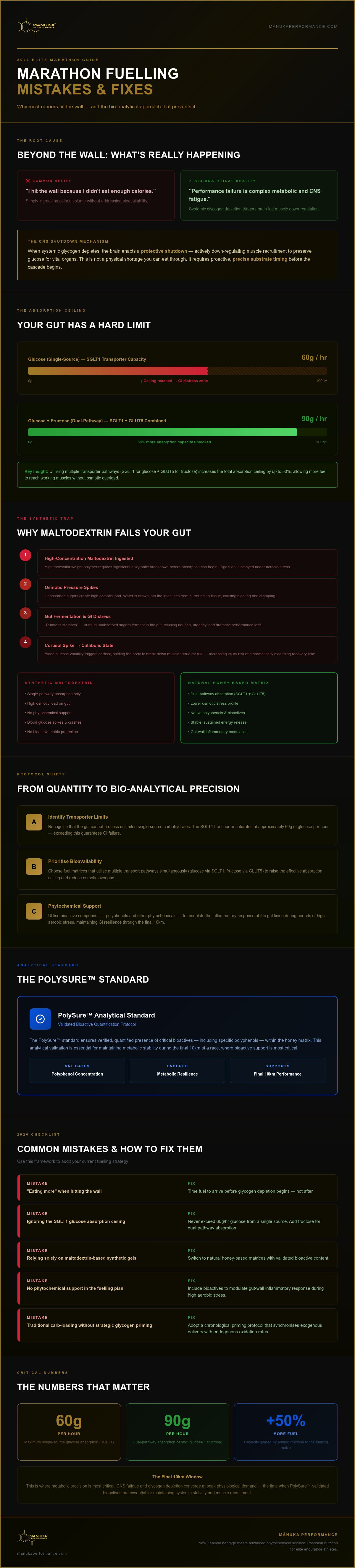
The phenomenon colloquially known as 'the wall' is frequently misinterpreted as a simple depletion of caloric reserves, yet a bio-analytical perspective reveals it's a complex metabolic failure. When runners reach the final 10km, the primary driver of performance degradation is often central nervous system fatigue triggered by systemic glycogen depletion. This isn't just a physical shortage; it's a protective mechanism where the brain down-regulates muscle recruitment to preserve essential glucose for vital organs. One of the most common marathon fueling mistakes 2026 athletes make is attempting to overcome this physiological barrier by simply increasing the volume of carbohydrate intake without considering the biological limits of the intestinal lining. This approach ignores the 'absorption ceiling', a hard limit on how many grams of glucose the body can process per hour, leading to a surplus of unabsorbed sugars that ferment in the gut.
The Metabolic Cost of Inefficient Fuelling
Why Traditional Protocols Often Fail
Many standard marathon nutrition guides rely on a 'quantity over quality' fallacy, suggesting that more calories automatically equate to more energy. However, the human gut has a finite capacity for processing exogenous carbohydrates, typically capping at approximately 60g of glucose per hour due to the saturation of SGLT1 transporters. When this limit is exceeded, the resulting osmotic pressure draws water into the intestines, causing the 'runner's stomach' that ruins many podium attempts. Transitioning from simple caloric density to bio-analytical precision involves several key shifts:
- Identifying transporter limits: Recognising that the gut cannot process unlimited single-source carbohydrates.
- Prioritising bioavailability: Choosing matrices that utilise multiple transport pathways, such as glucose and fructose, to increase the total absorption ceiling.
- Phytochemical support: Utilising bioactives to modulate the inflammatory response of the gut during periods of high aerobic stress.
By moving away from outdated loading protocols and focusing on the molecular structure of the fuel source, elite runners can avoid the common marathon fueling mistakes 2026 that compromise systemic performance. The goal is no longer just to eat, but to ensure every gram of carbohydrate is successfully translocated from the gut to the working muscles.
The Synthetic Trap: Why Maltodextrin Compromises Gastrointestinal Resilience
The reliance on industrial-grade maltodextrin as a primary caloric source remains one of the most pervasive and common marathon fueling mistakes 2026 competitors encounter. While synthetic polymers are favoured by manufacturers for their low cost and predictable texture, they often fail to account for the complex biochemical environment of the human digestive tract under aerobic stress. Unlike natural carbohydrate matrices, synthetic glucose chains can impose a significant osmotic load, compromising gastrointestinal resilience at the very moment systemic demand reaches its peak. This mismatch between industrial design and human biology is a primary catalyst for performance failure.
Osmotic Pressure and Intestinal Distress
Synthetic gels often utilise high concentrations of maltodextrin to achieve caloric density, yet this high molecular weight polymer requires significant enzymatic breakdown before absorption can occur. This process increases the osmotic pressure within the intestinal lumen, effectively drawing water from the vascular system into the gut. The result is acute bloating, cramping, and the sudden onset of 'runner's stomach' that can terminate a race prematurely. In contrast, a honey-based matrix provides a natural glucose-fructose blend that enters the bloodstream via dual-pathway transporters. This reduces the duration carbohydrates spend in the digestive tract and significantly lowers osmotic stress, allowing for higher absorption rates without the associated distress.
The Clean Label Advantage in 2026
The 2026 elite landscape is increasingly defined by a shift toward bio-analytical purity, as athletes recognise that artificial preservatives, thickeners, and synthetic flavourings are not biologically inert. These additives can disrupt the gut microbiome and trigger systemic inflammatory responses that extend beyond the race duration, often hindering the subsequent recovery cycle. By prioritising 'clean' energy sources, runners reduce the metabolic burden of processing non-nutritive chemicals during high-intensity efforts. Detailed research in the Science of Natural vs. Synthetic Sports Gels demonstrates that natural matrices not only improve gut comfort but also support faster physiological restoration. Transitioning to a natural honey-based solution ensures that your fuelling strategy aligns with your body's evolutionary biology rather than industrial convenience, providing a more stable energy flux when it matters most.
Strategic Glycogen Priming vs. Traditional Carb-Loading
One of the most pervasive and common marathon fueling mistakes 2026 participants commit is the reliance on traditional, high-volume carbohydrate loading protocols that prioritise caloric mass over metabolic utility. This outdated approach often results in excessive water retention and intestinal residue, which can compromise power-to-weight ratios and lead to early-onset lethargy. Transitioning to a strategic carbohydrate loading plan focuses on glycogen priming, a process that ensures hepatic and muscular stores are saturated via highly bioavailable substrates rather than crude starch ingestion. By selecting carbohydrates based on their molecular structure, athletes can achieve optimal glycogen density without the systemic inflammation associated with overconsumption.
Optimising the Glucose-Fructose Matrix
The intestinal absorption of carbohydrates is strictly governed by specific protein transporters, namely SGLT1 for glucose and GLUT5 for fructose. Because these pathways operate independently, a singular focus on glucose-heavy synthetic polymers often leads to transporter saturation and subsequent gastric distress. Natural honey provides an evolutionary-aligned ratio of these sugars, allowing for simultaneous uptake and a significantly higher total energy flux. Honey-based energy gels NZ offer a superior matrix for intra-workout fuelling by leveraging this dual-pathway synchronisation. This biological alignment ensures that the absorption ceiling is raised, allowing for a more consistent delivery of energy to the working muscles during high-intensity efforts.
Bioavailable Priming Protocols
Effective priming requires a deliberate reduction in dietary fibre and systemic residue during the 48 hours preceding the event. This strategic shift minimises the metabolic energy diverted to digestion and reduces the risk of mid-race gastrointestinal interruptions. Beyond caloric density, the inclusion of bioactive-rich carbohydrates can influence the rate of carbohydrate oxidation, potentially sparing glycogen for the critical final stages of the effort. Liquid fuels play a dual role in this protocol, maintaining cellular hydration while delivering precise glycogen precursors without the mechanical stress of solid food. This methodical approach ensures the metabolic system is primed for peak efficiency, allowing the runner to maintain a higher intensity for a longer duration.
- Fibre Reduction: Transitioning to low-residue sources 48 hours before the starting gun to optimise gut comfort.
- Transport Synchronisation: Using 2:1 glucose-to-fructose ratios to bypass intestinal bottlenecks.
- Bioactive Integration: Leveraging phytochemicals to support metabolic resilience under physiological stress.
- Hydration Synergy: Utilising liquid-based carbohydrates to support fluid balance and glycogen storage simultaneously.
The 2026 High-Performance Marathon Fuelling Checklist
Transitioning from theoretical biochemistry to race-day application requires a meticulous, chronological framework that eliminates the margin for error. One of the most prevalent and common marathon fueling mistakes 2026 athletes encounter is the failure to establish a rigid delivery rhythm, which often leads to energy troughs that are impossible to rectify mid-effort. High-performance standards now dictate a target intake of 60 to 90 grams of carbohydrates per hour, facilitated through bioavailable matrices that include natural electrolytes to maintain cellular fluid balance and metabolic flux.
Pre-Race and Early Race Milestones
The 15 minute window preceding the starting gun is a critical junction for the 'surge' fuel. Administering a concentrated, low-osmotic gel at this stage provides immediate substrate availability without triggering the rebound hypoglycaemia often associated with earlier ingestion. Once the race commences, establishing a fuelling rhythm every 20 to 30 minutes is essential to prevent the saturation of intestinal transporters. The 'Sip and Gel' method coordinates fluid intake with carbohydrate delivery to ensure optimal gastric emptying and intestinal transit. This proactive approach ensures that the systemic energy supply remains constant, rather than reacting to the physiological signals of hunger or fatigue that indicate a state of depletion has already begun.
- T-minus 72 hours: Initiate a low-residue diet and begin bioactive priming to saturate glycogen stores.
- T-minus 15 minutes: Consume 20 to 30 grams of honey-based fuel to provide an immediate glucose-fructose surge.
- 0km to 30km: Maintain a consistent delivery of 60 to 90 grams of carbohydrates per hour, integrated with natural electrolytes.
- 32km onwards: Prioritise bioactive-rich matrices to mitigate the increasing oxidative burden on the central nervous system.
- Post-race (0-30 mins): Immediate ingestion of liquid glycogen precursors to facilitate systemic restoration and manage inflammation.
Late-Race Resilience and Recovery
As the race progresses into the final 12 kilometres, many athletes succumb to 'flavour fatigue', a sensory rejection of cloying, synthetic gels that results in a cessation of fuelling exactly when demand is highest. Utilising a natural honey matrix bypasses this issue by providing a palatable, clean-label energy source that the body continues to accept under extreme stress. The integration of quantified bioactives, such as those measured by the PolySure™ standard, helps to mitigate late-stage oxidative stress that can compromise muscle recruitment. To implement this protocol with validated bioactive precision, explore the LiquidFuel range developed for elite endurance standards. The immediate post-race protocol is equally vital; re-establishing glycogen levels within the first 30 minutes is the primary determinant of the speed and efficacy of the subsequent recovery cycle.
Leveraging Bioactive Matrices: The Mānuka Performance Protocol
The final evolution in rectifying common marathon fueling mistakes 2026 involves a transition from simple caloric replacement to the strategic deployment of bioactive matrices. LiquidFuel represents a significant advancement in this field, utilising a New Zealand honey-based matrix that prioritises biochemical precision over industrial convenience. By moving beyond the limitations of synthetic substrates, elite runners can leverage a delivery system that aligns with human evolutionary biology while providing the quantified performance markers required for high-intensity efforts. This shift marks a critical turning point in sports nutrition biotechnology, where the focus moves from crude energy density to the molecular efficacy of the fuel source.
The PolySure™ Analytical Advantage
The efficacy of a honey-based matrix is not merely anecdotal; it's grounded in the rigorous PolySure™ analytical standard, which validates the presence and concentration of seven naturally occurring polyphenols. These bioactives are essential for maintaining metabolic efficiency and systemic resilience when the body is under extreme physiological load. Unlike raw table honey, which lacks standardised bioactive quantification, LiquidFuel is engineered as a performance-led matrix that ensures consistent delivery of these functional compounds. Measured polyphenols support the body's ability to manage oxidative stress and maintain cellular integrity during the final stages of a marathon, providing a level of metabolic support that synthetic glucose polymers cannot replicate.
Implementation Strategy for Competitive Runners
Integrating a bioactive protocol into your existing training organisation requires a methodical approach that begins well before race day. Transitioning from synthetic gels to a natural honey matrix should be conducted over a 12 week training block to allow the gastrointestinal system to adapt to higher absorption rates. This period is critical for customising your intake based on individual oxidation rates and the specific intensity of your target pacing. Because LiquidFuel utilises dual-pathway transporters, many athletes find they can successfully process higher carbohydrate volumes than previously possible with single-source synthetics. To begin your transition to a clinically validated fuelling strategy, Explore the LiquidFuel 10-Pack for your next marathon block and establish your baseline for gastrointestinal resilience.
Adopting this bio-analytical approach ensures that you aren't just consuming calories, but are actively supporting the biochemical pathways required for elite endurance. By addressing the common marathon fueling mistakes 2026 through the lens of bioactive precision, you secure a decisive advantage in both gut comfort and late-race metabolic stability.
Beyond the physiological, many endurance athletes look to cultural hubs like KITAthletic to stay informed on the latest in mindful performance and high-performance running equipment.
Mastering the Bio-Analytical Edge for 2026
The transition from speculative caloric intake to a precise, bio-analytical protocol is the defining characteristic of the modern elite runner. By addressing the common marathon fueling mistakes 2026 athletes often repeat, such as the reliance on high-osmotic synthetic polymers and the neglect of dual-pathway absorption, you'll ensure your metabolic system remains resilient under maximum physiological load. The integration of a clinically researched honey-based matrix, validated by the PolySure™ standard, provides the necessary polyphenols to support metabolic efficiency and gastrointestinal comfort during the critical final 10km. This methodology, currently used by elite New Zealand endurance athletes, represents the intersection of natural provenance and advanced biotechnology. You're now equipped to move beyond the limitations of traditional protocols and achieve a state of systemic performance that is both stable and sustainable. Success on race day is no longer a matter of chance; it's a result of rigorous nutritional validation.
Optimise your 2026 marathon performance with PolySure™ validated LiquidFuel
Frequently Asked Questions
What are the most common marathon fuelling mistakes in 2026?
Identifying the most common marathon fueling mistakes 2026 participants encounter involves recognising three primary errors: the saturation of single-pathway transporters with synthetic maltodextrin, the neglect of gastrointestinal osmotic pressure, and a failure to utilise quantified bioactive compounds. Many athletes prioritise caloric volume over biochemical bioavailability, which often results in systemic energy troughs. Transitioning to a natural, honey-based matrix allows for simultaneous glucose and fructose absorption, effectively raising the intestinal absorption ceiling while maintaining gut comfort.
Is honey a better alternative to synthetic energy gels for runners?
A natural honey-based matrix offers significant physiological advantages over synthetic alternatives by providing an evolutionary-aligned ratio of glucose and fructose. Unlike industrial polymers, honey facilitates dual-pathway absorption through SGLT1 and GLUT5 transporters, which reduces the duration carbohydrates spend in the digestive tract. This clinical precision minimises the risk of gastrointestinal distress and provides a more stable energy flux, making it a superior substrate for high-intensity endurance efforts during a competitive marathon.
How many grams of carbs per hour should I aim for during a marathon?
Elite endurance standards for 2026 recommend an intake of 60 to 90 grams of carbohydrates per hour to sustain high-intensity aerobic output. Achieving this volume requires a sophisticated approach to bioavailability, as the gut cannot process such high quantities of a single carbohydrate source without reaching a transporter bottleneck. Utilising a natural glucose-fructose matrix ensures that both primary transport pathways are engaged, allowing the athlete to maintain peak glycogen oxidation rates without triggering gastric rejection.
Why do energy gels cause stomach cramps and how can I avoid them?
Stomach cramps are frequently caused by the high osmotic pressure of synthetic gels, which draw water into the intestinal lumen and cause acute bloating. This issue is often exacerbated by artificial thickeners and preservatives that disrupt the gut microbiome during periods of physiological stress. You can avoid these complications by selecting clean-label, honey-based fuels that exert lower osmotic stress and are more readily translocated into the bloodstream via dual-pathway absorption, ensuring superior gastrointestinal resilience.
What is the PolySure™ standard and why does it matter for athletes?
The PolySure™ standard is a proprietary analytical framework that validates the presence and concentration of seven naturally occurring polyphenols in New Zealand honey. For athletes, this standard is critical because it ensures the fuel source contains measured bioactive compounds that support metabolic resilience and manage oxidative stress. While raw table honey lacks this quantification, products validated by PolySure™ provide the clinical precision necessary for elite performance and systemic restoration during and after intense competition.
Can I use honey-based energy gels if I have a sensitive stomach?
Honey-based energy gels are particularly suitable for athletes with sensitive stomachs because they lack the synthetic additives and industrial polymers found in traditional products. The natural carbohydrate matrix is more bioavailable and requires less enzymatic breakdown, which significantly reduces the metabolic burden on the digestive system. By choosing a clean-label solution, runners can maintain their fuelling rhythm without the systemic inflammation or intestinal residue associated with maltodextrin-heavy alternatives that often compromise race-day performance.
How do I train my gut to handle more carbohydrates during a race?
Training the gut requires a methodical 12-week protocol where carbohydrate intake is incrementally increased during high-intensity training sessions. This process up-regulates the expression of intestinal transporters, allowing the body to process up to 90 grams of carbohydrates per hour. It's essential to use the same bioactive-rich matrices during training that you intend to use on race day to ensure the digestive system is accustomed to the specific molecular structure and osmotic profile of the fuel.
What should I eat in the 48 hours before a marathon to avoid hitting the wall?
In the 48 hours preceding a marathon, you should prioritise low-residue, high-bioavailability carbohydrates to saturate glycogen stores while minimising intestinal residue. Reducing dietary fibre and complex starches prevents the metabolic energy drain associated with heavy digestion and reduces the risk of mid-race interruptions. Incorporating liquid fuels and bioactive-rich carbohydrates during this priming phase ensures that your metabolic system is saturated and ready for sustained high-intensity output, effectively preventing the onset of premature glycogen depletion.