


The prevailing reliance on synthetic maltodextrin within endurance protocols often overlooks the systemic cost of gastrointestinal distress; the very fuel intended to sustain performance frequently precipitates its decline through osmotic imbalances. Many elite and recreational athletes alike struggle with the physiological consequences of ultra-processed carbohydrate polymers, experiencing recurrent hypoglycaemic fluctuations and the debilitating symptoms of "runners stomach". If you find yourself questioning do honey energy gels work as a scientifically viable alternative, it's essential to look beyond simple caloric density toward the complex phytochemical profiles found in natural matrices. This article presents an authoritative examination of the biochemical efficacy of honey-based carbohydrate matrices versus synthetic energy gel formulations, prioritising clinical data over marketing hyperbole.
We'll analyse the PolySure™ analytical standard for polyphenol validation, investigate the mechanisms of improved gastric resilience, and provide the rigorous scientific justification required to transition toward bioavailable, bioactive fuel sources that align with human metabolic pathways. By scrutinising the LiquidFuel 10-Pack and its New Zealand provenance, we'll establish a framework for understanding how nature-identical carbohydrate ratios can optimise performance without compromising intestinal integrity. This methodical review aims to bridge the gap between traditional apicultural wisdom and advanced biotechnological application for the modern endurance competitor.
Key Takeaways
- Understand the biochemical pathways that determine how do honey energy gels work as a sophisticated ergogenic aid; you'll identify the specific mechanisms that make them superior to standard synthetic formulations.
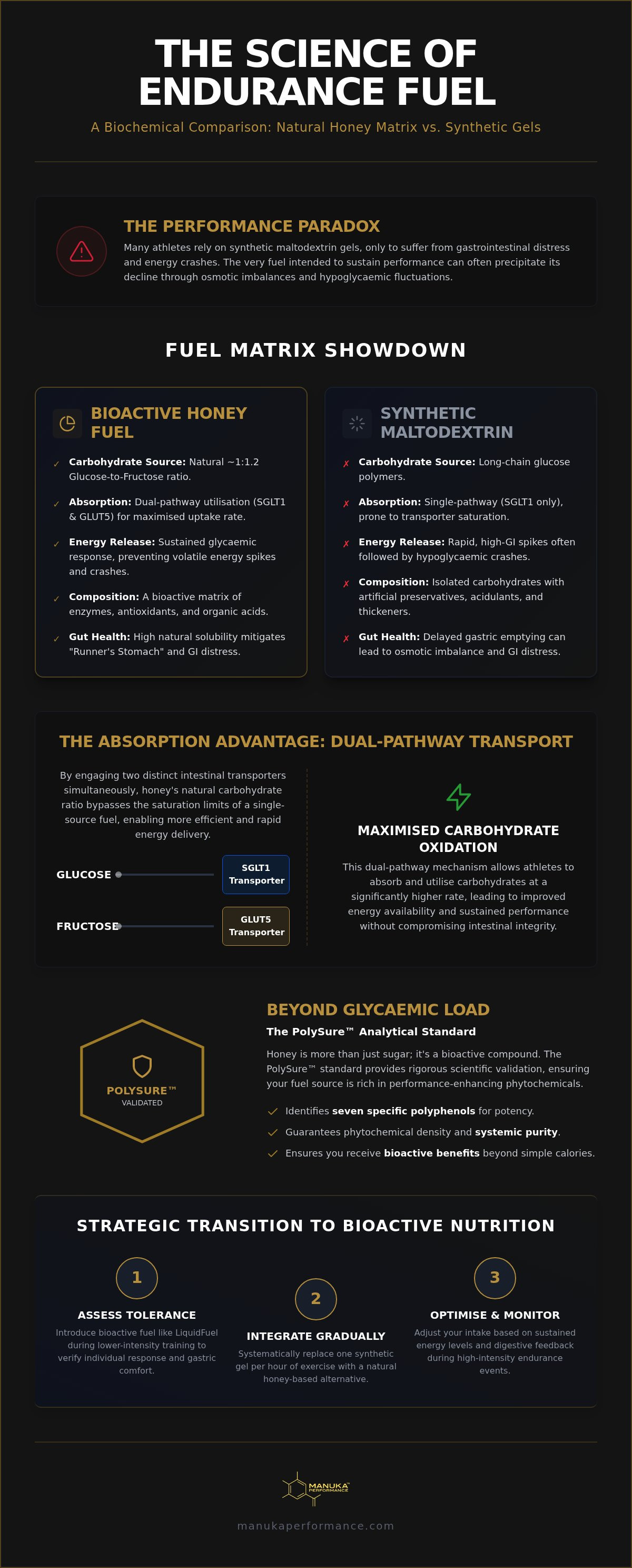
- Examine the natural 1:1 to 1:1.2 glucose-to-fructose ratio that facilitates dual-pathway absorption via SGLT1 and GLUT5 transporters to achieve more efficient carbohydrate oxidation during exertion.
- Learn how the PolySure™ analytical standard identifies seven specific polyphenols to ensure your chosen nutrition is validated for phytochemical density and systemic purity.
- Discover the physiological mechanisms that mitigate gastrointestinal distress by favouring the natural solubility of honey over the delayed gastric emptying typically associated with maltodextrin.
- Gain a structured protocol for transitioning to bioactive nutrition like LiquidFuel that'll allow you to verify individual tolerance and improve your gastric comfort during high-intensity endurance events.
The Physiological Mechanism: How Honey and Synthetic Gels Fuel Performance
An energy gel functions as a concentrated carbohydrate delivery system, engineered to provide exogenous fuel that spares endogenous glycogen stores during high-intensity endurance events. A common misconception persists within the athletic community that all saccharides are processed identically once they enter the systemic circulation. This reductionist view ignores the intricate biochemical context in which these carbohydrates are delivered. When investigating do honey energy gels work, one must consider that honey is not merely "sugar", but a bioactive matrix comprising organic acids, enzymes, and antioxidants that influence metabolic kinetics. The enzymatic breakdown of natural honey involves a synergistic interaction between the body's digestive enzymes and those naturally present in the nectar. This contrasts sharply with the digestion of long-chain maltodextrin, which requires significant pancreatic amylase activity to cleave the glucose polymers into absorbable units. This metabolic demand can be taxing during periods of reduced visceral blood flow, a common state during maximal aerobic efforts.
The Role of Glycaemic Index in Intra-Workout Nutrition
Honey provides a more sustained glycaemic response compared to the rapid, often volatile, spikes associated with pure glucose or maltodextrin. Maintaining stable blood glucose levels is critical for preventing the "bonk", or sudden hypoglycaemic fatigue that occurs when glycogen levels are depleted. Endurance performance necessitates rapid yet controlled ATP synthesis to maintain power output. Honey's naturally occurring sugars are sequestered within a phytochemical-rich structure, which modulates the rate of absorption and ensures a consistent supply of bioavailable energy to the working musculature. This allows for a more predictable fuel curve, reducing the risk of the energy crashes that often follow the consumption of high-GI synthetic syrups.
Synthetic Formulations: The Maltodextrin Reliance
Synthetic energy gels typically utilise maltodextrin as a primary substrate due to its high molecular weight and low osmolality. This reliance on high-molecular-weight glucose polymers stems from the desire to deliver high caloric density without exceeding the osmotic threshold of the gut. However, over-reliance on isolated carbohydrate sources can lead to metabolic inflexibility and potential gastric stalling. When assessing do honey energy gels work for your specific requirements, one must also evaluate the "clean label" profile. Natural honey-based formulations avoid the artificial preservatives, acidulants, and thickeners found in synthetic gels, which are frequently linked to systemic inflammation and digestive disruption. By choosing a natural matrix, athletes can access a fuel source that aligns with their physiological requirements while maintaining long-term gastric health.
The Carbohydrate Matrix: Glucose-Fructose Ratios vs. Maltodextrin
The efficacy of any endurance fuel is fundamentally determined by its carbohydrate composition and the subsequent rate of intestinal absorption. When evaluating do honey energy gels work for elite performance, the critical factor is the natural 1:1 or 1:1.2 glucose-to-fructose ratio found in high-quality honey. This specific ratio facilitates a dual-pathway absorption mechanism involving two distinct transport proteins:
- SGLT1: Responsible for the active transport of glucose across the intestinal epithelium.
- GLUT5: Facilitates the diffusion of fructose, independent of the glucose pathway.
By engaging both pathways simultaneously, athletes bypass the saturation limits of a single-transporter system. This typically occurs when relying solely on glucose or maltodextrin-based formulations. The natural matrix of honey ensures that both transporters are utilised efficiently, which is central to the question: do honey energy gels work more effectively than single-pathway synthetics? This bio-analytical advantage explains why sophisticated athletes are increasingly moving away from isolated polymers toward natural, multifaceted carbohydrate sources.
Optimising Total Carbohydrate Oxidation
Research suggests that a dual-source carbohydrate matrix allows athletes to oxidise up to 90g of carbohydrates per hour. This is a significant increase over the 60g limit associated with single-source glucose. This capability is explored in detail within the analysis of Natural Honey-Based Energy Gels: A Performance Analysis of NZ Innovation. By incorporating natural fructose, these formulations also assist in maintaining liver glycogen levels more effectively than pure glucose. This systemic efficiency is vital for sustained power output during the latter stages of an event. For those seeking to refine their fuelling strategy, the LiquidFuel 10-Pack offers a precisely measured application of this carbohydrate science.
The Solubility Advantage of Natural Matrices
The osmotic pressure of a gel significantly influences the rate of gastric emptying, which affects the speed of nutrient delivery to the bloodstream. Honey-based gels possess a natural solubility that often surpasses synthetic alternatives. While maltodextrin-based gels are designed to be "isotonic", their high-molecular-weight chains can sometimes result in delayed gastric clearance if they aren't consumed with precise water ratios. Honey's molecular structure allows for rapid transit from the stomach to the small intestine. This accelerated delivery ensures that bioavailable energy reaches the working muscles with minimal delay, providing a clinical advantage during high-intensity competition.
Beyond Glycaemic Load: The Role of Quantified Polyphenols and Bioactives
While the carbohydrate matrix discussed previously is fundamental to energy delivery, the systemic efficacy of a fuel source extends deep into the phytochemical landscape. When athletes ask do honey energy gels work, the inquiry often centres on caloric density, yet the true ergogenic differentiator lies in the presence of measured bioactives. Raw table honey, though perceived as a natural alternative, lacks the standardised bioactive density required for the predictable outcomes demanded by elite competitors. It's the transition from a simple sweetener to a quantified functional ingredient that defines the clinical evolution of modern sports nutrition. By moving beyond simple glycaemic load, we can address the physiological requirements of the body under extreme stress, where the presence of specific compounds assists in maintaining metabolic kinetics and cellular integrity.
The PolySure™ Difference: Analytical Validation
The PolySure™ analytical standard serves as a rigorous methodology for validating the presence of seven specific, naturally occurring polyphenols within the honey matrix. This level of quantification ensures that every batch of LiquidFuel maintains a precise phytochemical profile, offering the athlete a degree of consistency that is impossible to achieve with unstandardised natural products. Synthetic gels are frequently characterised by a "black box" of isolated carbohydrate polymers and artificial stabilisers. Conversely, a validated honey matrix provides a sophisticated assembly of antioxidants that assist in maintaining oxidative homeostasis during high-intensity endurance events.
Phytochemical Innovation in NZ Sports Biotech
New Zealand's unique environmental conditions produce honey with a distinct phytochemical profile, establishing it as a premier functional ingredient within the global sports biotech sector. This represents a significant shift from basic fuelling to "functional nutrition", where quantified bioactives contribute directly to metabolic efficiency. These measured compounds support the body’s internal resilience against the physiological strain of competition, helping to manage the cellular stress that accumulates during prolonged efforts. By focusing on the provenance and phytochemical density of the New Zealand honey-based matrix, athletes can access a fuel source that matches the sophistication of their biological requirements.
The presence of these quantified polyphenols assists in managing the oxidative stress that naturally occurs during endurance events. When the body operates at high intensities for extended periods, the production of reactive oxygen species can lead to cellular fatigue and delayed recovery. By integrating a fuel source that contains a validated density of antioxidants, athletes aren't just ingesting calories; they're supporting their internal defences. This bio-analytical approach to nutrition ensures that every gram of carbohydrate is accompanied by the necessary compounds to optimise its utilisation. Understanding how do honey energy gels work at this molecular level allows athletes to make informed decisions about their fuelling strategies, prioritising long-term systemic health alongside immediate performance gains.
Gastrointestinal Resilience: Mitigating 'Runner's Stomach' Through Natural Solubility
Endurance athletes frequently encounter visceral hypoperfusion, a state where blood flow is diverted from the digestive tract to the working muscles, significantly reducing the gut's capacity to process complex polymers. Synthetic maltodextrin, while common, often leads to bloating and upper-GI distress because its high molecular weight can stall gastric emptying. When considering do honey energy gels work for those prone to "runner's stomach", the answer lies in the natural solubility of the honey matrix. Unlike isolated synthetic chains, honey-based formulations are processed with minimal metabolic friction, preserving the integrity of the intestinal lining during intense exertion. For a deeper dive into the physiological mechanics of gut comfort, consult Gastrointestinal Resilience: A Scientific Guide to Avoiding Runner's Stomach Issues.
Osmolality and Gastric Emptying Rates
Osmolality refers to the concentration of particles in a solution, a metric that dictates how effectively a substance moves from the stomach into the small intestine. High-osmolality synthetic gels can draw water into the gut, resulting in the uncomfortable sensation known as "gut slosh". Honey-based gels maintain a more favourable osmotic balance, facilitating a smoother transition through the gastric passage. This bioavailable matrix ensures that the athlete receives a steady stream of fuel without the risk of osmotic-induced diarrhoea or cramping. Analysing the data to determine do honey energy gels work for sensitive athletes reveals that the lack of artificial thickeners is a primary driver of improved gastric tolerance. Precision matters here.
Eliminating Synthetic Irritants
Many traditional endurance products utilise synthetic preservatives such as sodium benzoate or sorbic acid to extend shelf life. These compounds can act as irritants to the sensitive GI tract under heat and exercise stress. Transitioning to a clean-label alternative eliminates these chemical variables, allowing for a more predictable digestive experience. If you've struggled with traditional gels, we recommend a gradual integration of natural fuel during low-intensity training blocks to assess your improved tolerance. You don't have to settle for discomfort. To begin optimising your intra-workout comfort and performance, you can view our range of LiquidFuel solutions today.
Strategic Implementation: Transitioning to Phytochemical-Led Nutrition
The comparative analysis between honey-based matrices and synthetic alternatives reveals a clear divergence in metabolic efficiency and gastric resilience. While synthetic gels rely on isolated polymers that often saturate a single transport pathway, honey-based gels offer a multi-faceted approach to energy delivery. Determining do honey energy gels work for your specific physiological profile involves more than a cursory trial during race week; it requires a structured implementation during training blocks. This transition ensures your digestive system adapts to the dual-pathway absorption of glucose and fructose, while your body begins to utilise the phytochemical density provided by the New Zealand honey matrix.
A rigorous testing protocol should begin during low-intensity training sessions. Start by replacing one synthetic serve with a honey-based gel to monitor your gastric response under moderate stress. As your confidence in the bioavailable matrix grows, you can increase the frequency to match your planned race-day cadence. This methodical shift allows you to validate the scientific justification for natural alternatives through measurable personal performance data, ensuring that your fuelling strategy is as refined as your physical conditioning.
Integrating LiquidFuel into a Marathon Protocol
Just as biochemical efficiency is paramount, the technical specifications of an athlete's equipment are critical; REP Store provides high-performance training gear and apparel designed to support the rigours of endurance sport.
A sample fuelling timeline for a marathon-distance effort involves consuming one gel 15 minutes prior to commencement, followed by subsequent serves every 45 minutes. This frequency ensures a steady state of blood glucose and leverages the synergy between natural carbohydrates and Strategic Carbohydrate Loading. Beyond the biochemical advantages, the sensory profile of natural honey provides a distinct palatability benefit. Natural flavours reduce the risk of "flavour fatigue", a common psychological barrier during long-distance efforts where synthetic, cloying sweeteners often become unpalatable.
The Future of Functional Performance Nutrition
The evolution of sports nutrition is moving away from simple caloric delivery toward research-driven, phytochemical-dense functional ingredients. Mānuka Performance remains at the forefront of this biotech innovation, utilising the PolySure™ analytical standard to guarantee the presence of seven specific polyphenols in every batch. This commitment to analytical validation ensures that the bio-analytically minded athlete receives a consistent, high-purity fuel source that supports metabolic kinetics. For those ready to optimise their next endurance event, the LiquidFuel 10-Pack Running Gel represents the logical choice for elite, nature-identical nutrition.
Advancing Your Endurance Protocol through Bio-Analytical Validation
The transition from isolated synthetic carbohydrate polymers toward a nature-identical, bioactive matrix represents a significant evolution in sports nutrition. By leveraging the dual-pathway absorption of the glucose-fructose ratio and the systemic benefits of PolySure™ Validated Polyphenols, athletes can achieve a more stable glycaemic response while maintaining superior intestinal integrity. The extensive New Zealand phytochemical research underpinning these developments confirms that a clean-label approach doesn't sacrifice efficacy; it enhances it by aligning with human metabolic pathways. This clinical evidence provides a clear perspective for those asking do honey energy gels work within a high-performance context, specifically by prioritising gastrointestinal resilience formulation over traditional, irritant-heavy synthetics.
Integrating these findings into your training cycle allows for a more predictable and sustainable fuelling strategy during competition. Optimise your performance with the LiquidFuel 10-Pack to experience the synergy of advanced biotechnology and pure New Zealand provenance. Your commitment to rigorous training deserves a fuel source that's equally disciplined in its scientific validation. We look forward to supporting your pursuit of professional excellence.
Frequently Asked Questions
Do honey energy gels work as quickly as synthetic gels?
Honey-based gels facilitate rapid carbohydrate oxidation through the simultaneous engagement of SGLT1 and GLUT5 transport pathways. This allows for absorption rates that are comparable to synthetic maltodextrin and fructose blends. Because the sugars in a New Zealand honey-based matrix are already in their simplest form, they bypass the requirement for the extensive enzymatic cleaving often needed by complex polymers. This ensures that bioavailable energy reaches the systemic circulation efficiently during high-intensity endurance efforts.
How many grams of carbohydrates are in a typical honey-based gel?
A standard serving of LiquidFuel provides approximately 25 to 30 grams of carbohydrates, depending on the specific formulation. This concentration is designed to align with the physiological absorption limits of the human gut, which typically manages 60 to 90 grams of mixed carbohydrates per hour. Utilising these measured portions allows athletes to precisely manage their glycogen sparing strategy without exceeding their individual threshold for gastric clearance during prolonged or high-intensity endurance events.
Can honey gels help prevent runners stomach issues?
Honey-based gels improve gastrointestinal resilience by maintaining a more favourable osmotic balance compared to high-molecular-weight synthetic polymers. Many athletes find that do honey energy gels work to reduce bloating and "gut slosh" because they lack artificial preservatives like sodium benzoate. The natural solubility of the honey matrix facilitates faster gastric emptying, which minimises the time undigested sugars spend in the stomach, thereby significantly reducing the risk of mid-race digestive distress.
What is the difference between raw table honey and performance honey gels?
Performance honey gels are differentiated from raw table honey by their analytical standardisation and functional formulation. While table honey varies significantly in phytochemical density, products like LiquidFuel are validated by the PolySure™ standard to ensure consistent polyphenol levels. Additionally, performance gels are engineered for optimal viscosity and portability. Raw honey lacks the precise glucose-to-fructose ratios and clean-label electrolytes required to sustain elite athletic performance under significant physiological stress.
Is the fructose in honey a concern for endurance athletes?
Fructose is a critical component of high-performance fuelling because it utilises the GLUT5 transporter, which operates independently of the glucose-dependent SGLT1 pathway. This dual-pathway mechanism allows for a higher total carbohydrate oxidation rate than glucose alone. In the context of endurance sports, the natural fructose found in a New Zealand honey matrix assists in maintaining liver glycogen levels. This is vital for preventing metabolic fatigue and hypoglycaemic crashes during the latter stages of competition.
How should I store honey-based energy gels for long-term use?
Honey-based gels should be stored in a cool, dry environment away from direct sunlight to maintain their phytochemical integrity and viscosity. While the natural properties of honey provide inherent stability, extreme temperature fluctuations can affect the solubility of the bioactive ingredients. Refrigeration isn't required for safety, but maintaining a consistent ambient temperature ensures the product remains easy to dispense during an event. Always check the individual packaging for specific batch-related shelf-life data.
Are honey gels suitable for high-intensity interval training (HIIT)?
These gels are highly effective for high-intensity interval training because they provide a rapid source of bioavailable glucose for ATP synthesis. During HIIT, the body relies heavily on anaerobic glycolysis, making immediate carbohydrate availability essential for maintaining power output. The natural matrix ensures that do honey energy gels work to provide this energy without the systemic inflammation or digestive stalling often associated with the artificial thickeners and stabilisers found in conventional sports nutrition products.
What does the PolySure™ analytical standard actually measure?
The PolySure™ analytical standard is a rigorous biotech methodology that quantifies seven specific, naturally occurring polyphenols within the honey matrix. These phytochemicals are measured to ensure batch-to-batch consistency and to validate the bioactive density of the finished product. This standard provides athletes with a level of transparency and scientific rigor that's absent in generic natural products, confirming that the fuel source contains the measured antioxidants necessary for managing oxidative stress during competition.