


Relying on a single isolated chemical compound to determine the biological potency of honey is an exercise in biochemical reductionism. If you've grown sceptical of commercial marketing that routinely conflates uncalibrated table honey with laboratory-validated matrices, your hesitation is scientifically sound. Contemporary bioactive honey research demonstrates that authentic functional efficacy isn't governed by solitary marketing markers, but by reproducible, multi-polyphenol profiles acting in physiological synergy. Disentangling natural agricultural variance from precise, standardised chemistry has therefore become an essential prerequisite for targeted athletic application.
This review examines the latest empirical literature surrounding bioactive honey mechanisms, analytical quantification standards, and functional nutrition applications. You'll gain a thorough understanding of the chromatographic validation methods that separate commercial rhetoric from quantifiable chemical reality, while discovering how intact polyphenolic complexes modulate cellular redox homeostasis. Finally, we analyse the clinical evidence connecting dual-pathway carbohydrate kinetics and verified phytochemical matrices directly to sustained metabolic resilience during high-intensity endurance performance.
Key Takeaways
- Current bioactive honey research demonstrates that functional biological potency is driven by multi-component phytochemical profiles rather than isolated singular chemical markers.
- Advanced chromatographic profiling and mass spectrometry provide the definitive analytical standards required to separate verified bioactive matrices from uncalibrated commercial supplies.
- Intact honey polyphenols act as cellular signalling modulators, activating the Nrf2-ARE pathway to upregulate endogenous antioxidant enzymes under metabolic stress.
- The naturally occurring glucose-to-fructose ratio aligns with physiological dual-transporter intestinal kinetics, supporting high exogenous carbohydrate oxidation rates during endurance exertion.
- Standardised analytical validation protocols eliminate agricultural variability, transforming natural botanical inputs into reproducible, clinical-grade nutritional solutions.
Deconstructing Bioactive Honey Research: Molecular Taxonomy and Key Compounds
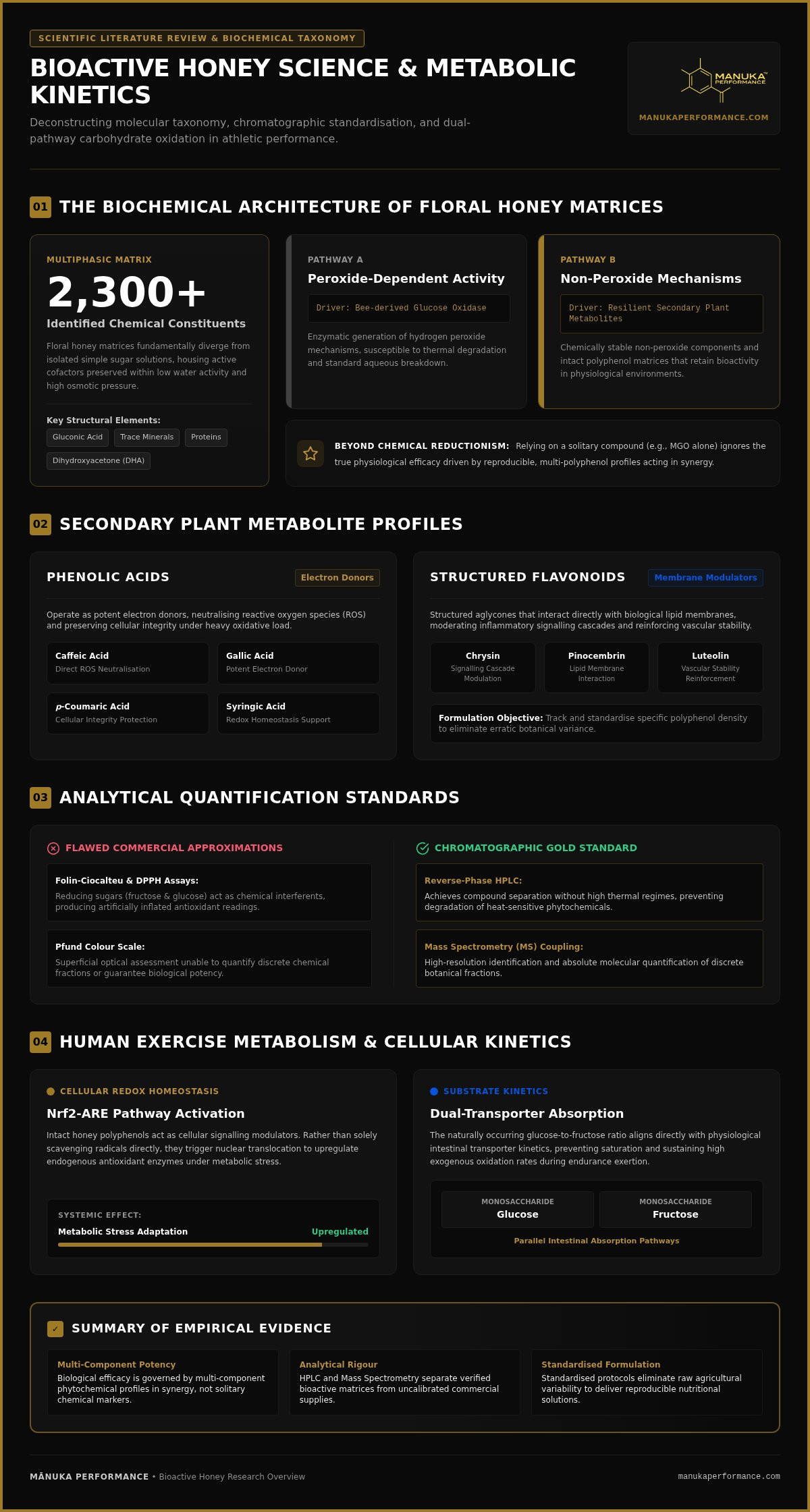
Rigorous bioactive honey research treats unrefined floral nectar not as an arbitrary sweetener, but as a dense, multiphasic biological matrix containing over 2,300 identified chemical constituents. Peer-reviewed investigations systematically categorise this activity into two distinct pathways: peroxide-dependent mechanisms driven by the bee-derived enzyme glucose oxidase, and non-peroxide mechanisms governed by resilient secondary plant metabolites. Historically, analytical science relied on crude total antioxidant assays such as DPPH or Folin-Ciocalteu assays to estimate efficacy. Today, metabolomic profiling and high-resolution separation techniques reveal that true physiological activity depends entirely on specific, quantifiable phytochemical structures working in chemical concert.
The Biochemical Architecture of Floral Honey Matrices
Floral honey matrices fundamentally diverge from isolated sugar solutions. In unadulterated systems, simple monosaccharides exist within a complex, low water activity environment alongside trace minerals, proteins, and organic acids like gluconic acid. This high osmotic pressure establishes structural stability for suspended secondary metabolites. When examining standardized mānuka honey metrics, researchers evaluate precise markers such as dihydroxyacetone (DHA) alongside non-peroxide components. The physiological relevance of this intact matrix lies in its molecular organisation, which preserves delicate cofactors that would otherwise degrade rapidly in standard aqueous preparations.
Beyond Methylglyoxal: The Significance of Phenolic Profiles
Commercial marketing disproportionately isolates methylglyoxal (MGO) as the singular determinant of honey potency. However, advancing bioactive honey research confirms that MGO constitutes merely one variable within a broader therapeutic continuum. Isolated active markers cannot replicate the biological resilience conferred by an intact, diverse polyphenol spectrum. These secondary plant metabolites serve critical antioxidant and anti-inflammatory functions across human tissue:
- Phenolic Acids: Naturally occurring compounds such as caffeic, gallic, p-coumaric, and syringic acids operate as potent electron donors, neutralising reactive oxygen species and preserving cellular integrity under oxidative load.
- Flavonoids: Structured aglycones including chrysin, pinocembrin, and luteolin interact directly with biological lipid membranes, moderating inflammatory signalling cascades and reinforcing vascular stability.
Translating these compounds into functional nutrition demands analytical standardisation. Relying on raw agricultural variance yields inconsistent chemical density. Through dedicated chromatography, specific polyphenol targets can be systematically tracked and preserved, ensuring that finished formulations deliver laboratory-validated bioactive density rather than uncalibrated botanical approximations.
Analytical Methodologies: How Modern Science Validates Honey Bioactivity
Empirical bioactive honey research requires rigorous quantitative instrumentation rather than superficial optical evaluations such as the Pfund colour scale. For decades, commercial suppliers relied on non-specific colorimetric assays, notably the Folin-Ciocalteu method, to approximate total phenolic content. High concentrations of endogenous reducing sugars, specifically fructose and glucose, routinely act as reducing interferents in these assays, producing artificially inflated readings. Establishing verifiable chemical thresholds separates clinical-grade functional inputs from unstable agricultural produce.
Chromographic Separation and Mass Spectrometry Techniques
High-Performance Liquid Chromatography (HPLC) coupled with mass spectrometry provides the analytical benchmark for isolating discrete botanical fractions. Reverse-phase HPLC matrices achieve high-resolution compound separation without requiring high thermal regimes that risk denaturing heat-sensitive phytochemicals. When coupled with electrospray ionisation mass spectrometry (ESI-MS/MS), this instrumentation measures exact mass-to-charge ratios, establishing unambiguous chemical fingerprints against pure analytical standards. Peer-reviewed investigations cataloguing phenolic compounds and antioxidant mechanisms in honey rely on these definitive retention times to distinguish functional bioactive fractions from inert botanical residues.
Standardisation Versus Natural Agricultural Variation
Raw apicultural extracts exhibit severe batch-to-batch volatility. Fluctuations in seasonal rainfall, microclimates, and regional floral density alter secondary plant metabolite yields significantly. Standardising raw nectar requires an analytical architecture that evaluates complex botanical matrices rather than relying on a solitary compound. The scientific objective is reproducible active density:
- Targeted Marker Panels: Evaluating a multi-compound signature prevents the blind spots created when relying solely on isolated parameters like methylglyoxal.
- Validation Protocols: The proprietary PolySure™ analytical standard validates seven specific naturally occurring polyphenols, ensuring uniform functional density across finished production cycles.
- Active Density Preservation: Standardised stability testing guarantees that volatile flavonoids and organic acids retain their biochemical integrity throughout product shelf-life.
Eliminating agricultural variance is the baseline for functional nutrition. Through applied biotechnology and rigorous testing, organisations such as Mānuka Performance translate variable botanical matrices into precise, laboratory-validated functional formulations that deliver predictable biochemical outcomes.
Cellular Mechanisms and Oxidative Stress Modulation in Laboratory Models
Empirical literature demonstrates that honey polyphenols act as dynamic modulators of intracellular signalling pathways rather than passive chemical scavengers. While raw radical absorption metrics dominate commercial conversation, current bioactive honey research reveals a more sophisticated biological paradigm. Intact phytochemical arrays interact directly with stress-responsive regulatory pathways in mammalian cells. By modifying specific cysteine thiols on the Kelch-like ECH-associated protein 1 (Keap1), these secondary plant metabolites permit uninhibited translocation of Nuclear factor erythroid 2-related factor 2 (Nrf2) into the nucleus, binding to the Antioxidant Response Element (ARE). This transcriptional activation triggers the synthesis of endogenous cytoprotective enzymes, reinforcing the cellular matrix against lipid peroxidation without blunting the physiological reactive oxygen species necessary for athletic training adaptations.
Modulation of Reactive Oxygen Species and Endogenous Enzymes
The therapeutic function of honey polyphenols relies on a dual-phase mechanism. Hydroxyl functional groups on phenolic rings furnish rapid electron donation to neutralise extracellular free radicals. Concurrently, intracellular signalling cascades induce enzymatic expression of Superoxide Dismutase (SOD), Catalase (CAT), and Glutathione Peroxidase (GPx). Research in clinical research on honey supplementation and exercise metabolism highlights how maintaining this delicate redox equilibrium shields cell membranes from lipid peroxidation during prolonged physical exertion.
Preserving Bioactive Integrity Against Thermal Degradation
Industrial thermal processing remains the most severe compromise to honey bioactivity. Exposure to standard commercial pasteurisation regimes rapidly destabilises heat-labile phenolic bonds, denatures endogenous glucose oxidase, and degrades delicate flavonoid structures. Analytical laboratories monitor this destructive kinetic cascade by measuring Hydroxymethylfurfural (HMF):
- HMF Accumulation: High HMF values (exceeding standard regulatory thresholds of 40 mg/kg) confirm excessive heat exposure and the thermal degradation of native hexose sugars.
- Enzymatic Inactivation: Inactivation of sensitive diatase and glucose oxidase enzymes directly correlates with the loss of non-peroxide secondary metabolite synergy.
- Low-Temperature Extraction: Regulated low-temperature processing protocols safeguard phenolic integrity, ensuring finished functional formulations maintain the native chemical architecture identified in analytical assays.
Preserving these delicate structures requires precise thermal control from extraction through to encapsulation. Uncalibrated heating turns a biologically active phytochemical matrix into a simple carbohydrate syrup, negating the complex cellular signalling capacities documented in laboratory models.
Translational Science: Bioactive Honey in Human Exercise Metabolism
Translating laboratory biochemistry into applied endurance physiology requires rigorous metabolic validation. While previous sections detailed how standardised polyphenols regulate cellular oxidative stress, contemporary bioactive honey research demonstrates equally profound implications for systemic substrate kinetics. Functional sports nutrition has historically relied on synthetic, ultra-processed carbohydrate blends to sustain prolonged energy output. In contrast, unrefined floral nectar provides an authentic, high-density matrix that natively matches the physiological transport mechanisms governing human intestinal absorption.
Dual-Pathway Carbohydrate Transport Dynamics
Exogenous carbohydrate oxidation during endurance exertion is strictly limited by mucosal enterocyte transport capacity. Ingesting single-source carbohydrates saturates the apical sodium-glucose linked transporter 1 (SGLT1) at approximately 60 grams per hour, creating an absorption bottleneck. Bioactive floral matrices naturally exhibit an approximate 1:1 glucose-to-fructose ratio, engaging both SGLT1 and the facilitative fructose transporter GLUT5 in parallel:
- Parallel Transporter Clearance: Concurrently utilising both intestinal routes circumvents single-transporter saturation, enabling total carbohydrate oxidation rates to reach 1.2 to 1.5 grams per minute.
- Substrate Efficiency: Clinical trials confirm that high-dose honey ingestion yields steady-state total carbohydrate oxidation equivalent to traditional commercial maltodextrin formulations without elevating systemic distress markers.
Consult our analysis of natural honey-based energy gels for comprehensive physiological trial metrics.
Mitigating Gastrointestinal Osmotic Flux Under Exertion
Exercise-induced gastrointestinal syndrome represents a major limiting factor in endurance events, caused primarily by hypertonic synthetic energy solutions drawing excessive fluid into the intestinal lumen. Natural honey matrices circumvent this osmotic crisis. Co-ingested trace organic acids and natural colloidal properties promote smooth gastric emptying and optimal mucosal absorption. Honey's native non-digestible oligosaccharides concurrently support the gut microbiome, reinforcing epithelial barrier integrity against splanchnic hypoperfusion.
Athletes seeking systematic mitigation strategies can explore evidence-based protocols for avoiding runner stomach issues during competition.
By transforming raw apicultural chemistry into calibrated sports fuelling solutions, athletes no longer need to choose between synthetic convenience and digestive comfort. Discover how our clean-label sports nutrition formulations leverage this dual-pathway mechanism by visiting Mānuka Performance.
The Future of Functional Nutrition: Standardised Phytochemical Formulations
The modern functional nutrition frontier demands an evolution from uncalibrated apiculture to pharmaceutical-grade chemical precision. Historically, high-performance athletes had to choose between synthetic sports supplements formulated with artificial additives or whole-food alternatives that suffered from unpredictable agricultural variance. Current bioactive honey research addresses this division directly. By employing advanced analytical standards, applied biotechnology bridges the gap between natural botanical sources and verifiable physiological outcomes, establishing a new paradigm for metabolic fuelling.
The Paradigm Shift from Crude Honey to Calibrated Biotech
Raw, unstandardised honey fluctuates wildly in secondary metabolite concentration across geographic harvest zones and flowering cycles. For competitive endurance athletes calculating precise intake strategies, that level of instability is unacceptable. Sports biotechnology relies on reproducible inputs to drive predictable metabolic adaptations. Rather than treating honey as an arbitrary bulk commodity, advanced processing isolates and preserves discrete botanical fractions. The convergence of high-throughput metabolomics and sports science allows researchers to establish rigorous phytochemical baselines. This represents a fundamental shift in sports nutrition biotechnology, moving the category away from synthetic syrups toward laboratory-verified natural compounds.
Implementing Validated Matrices in Performance Fuelling
Operationalising these scientific insights requires durable delivery formats suited to prolonged physical strain. Validated polyphenol profiles must maintain biochemical activity within portable, shelf-stable configurations without requiring artificial preservatives or synthetic thickeners:
- Targeted Standardisation: Formulations engineered under the proprietary PolySure™ analytical standard validate seven discrete, naturally occurring polyphenols to eliminate raw agricultural variability.
- Clean-Label Architecture: Endurance formats like the flagship LiquidFuel running gel deliver functional honey matrices designed specifically to match intestinal transport requirements during competitive running.
- Reproducible Bioactive Yield: Routine chromatographic verification ensures that every single sachet contains the exact chemical profile required to support cellular resilience.
Athletes evaluating practical field results can review detailed bio-analytical evaluations examining do honey energy gels work under extreme exertion. Translating rigorous bioactive honey research into standardised functional nutrition ensures that endurance athletes receive the dual benefits of natural carbohydrate kinetics and verified phytochemical potency with absolute consistency.
Translating Bioactive Standards into Applied Athletic Excellence
Contemporary bioactive honey research confirms that biological potency cannot be reduced to singular commercial markers. True functional efficacy is governed by intact, multi-component phenolic arrays operating in chemical synergy. By applying rigorous chromatographic methodologies to natural floral matrices, sports biotechnology effectively eliminates the batch volatility historically tied to raw apiculture. When coupled with a physiologically aligned glucose-to-fructose ratio, this validated architecture facilitates simultaneous SGLT1 and GLUT5 transporter saturation, delivering sustained cellular resilience and optimal carbohydrate oxidation during exhaustive exertion.
Bridging the division between natural chemistry and clinical performance requires uncompromising analytical validation. Standardised under the rigorous PolySure™ analytical testing protocol validating seven specific naturally occurring polyphenols, these formulations resolve raw agricultural variability to deliver uniform functional density across every batch. Formulated specifically for high-performance endurance fuelling using native New Zealand honey matrices, clean-label biotechnology empowers athletes to achieve reproducible metabolic outcomes without digestive compromise. Explore PolySure™ validated sports nutrition solutions at Mānuka Performance and elevate your athletic potential with laboratory-verified precision.
Frequently Asked Questions
What scientific criteria define honey as genuinely bioactive in peer-reviewed literature?
In academic literature, genuine bioactivity is defined by quantifiable biochemical markers that demonstrate measurable cellular or physiological activity, rather than visual colour grades. Peer-reviewed bioactive honey research categorises this activity through non-peroxide mechanisms, enzymatic stability, and verified concentrations of secondary plant metabolites. A matrix qualifies as functional only when discrete compounds, such as specific flavonoids and phenolic acids, are analytically authenticated to exert reproducible antioxidant signalling or antimicrobial effects.
How does methylglyoxal differ from phenolic acids in functional honey research?
Methylglyoxal (MGO) is an isolated 1,2-dicarbonyl compound formed from the non-enzymatic dehydration of dihydroxyacetone, primarily known for non-peroxide antibacterial properties in Leptospermum species. Conversely, phenolic acids, such as caffeic, gallic, and syringic acids, are complex aromatic secondary metabolites. While MGO represents a singular antibacterial metric, phenolic profiles govern broader biological efficacy, acting as cellular antioxidants and modulating endogenous Nrf2 cytoprotective signalling pathways in mammalian tissues.
Can commercial heat processing permanently degrade the bioactive compounds in honey?
Industrial thermal processing severely damages honey's bioactive architecture. Exposure to standard pasteurisation temperatures destabilises thermolabile phenolic bonds, inactivates endogenous enzymes such as glucose oxidase, and degrades heat-sensitive flavonoids. Laboratories track this thermal breakdown by measuring hydroxymethylfurfural (HMF) accumulation, where elevated levels indicate structural degradation. Maintaining functional potency requires low-temperature extraction and gentle concentration techniques that preserve delicate secondary metabolites in their native configuration.
Why is an analytical standard like PolySure™ necessary when sourcing functional honey?
Agricultural botanical harvests naturally exhibit pronounced chemical variability caused by climate fluctuations, rainfall patterns, and regional floral distribution. The PolySure™ standard eliminates this commercial unpredictability by validating seven specific naturally occurring polyphenols across finished batches. For functional sports nutrition developers, this chromatographic verification guarantees consistent active ingredient density. It ensures the matrix delivers reproducible metabolic support rather than the erratic phytochemical profiles common to uncalibrated raw agricultural supply.
How does the carbohydrate matrix of natural honey behave compared with synthetic maltodextrin?
Synthetic maltodextrin consists of pure glucose polymers that rely exclusively on apical SGLT1 intestinal transporters, reaching absorption saturation at approximately 60 grams per hour. In contrast, natural floral honey delivers an approximate 1:1 glucose-to-fructose ratio. This native distribution recruits both SGLT1 and facilitative GLUT5 transporters simultaneously. As shown in bioactive honey research, this parallel pathway increases exogenous oxidation rates above 1.2 grams per minute while reducing luminal carbohydrate stagnation.
Does consuming bioactive honey cause gastrointestinal distress during high-intensity endurance running?
Empirical exercise trials demonstrate that calibrated honey matrices cause significantly less gastrointestinal distress than hypertonic synthetic gels. Because honey naturally pairs glucose with fructose, it doesn't trigger the hyperosmotic fluid shifts into the intestinal lumen that cause nausea and cramping. Additionally, native trace organic acids and prebiotic oligosaccharides promote smooth gastric clearance. This dual-transporter mechanism ensures rapid enterocyte absorption even under severe splanchnic hypoperfusion during competition.
What analytical methods are considered the gold standard for quantifying honey polyphenols?
High-Performance Liquid Chromatography coupled with Electrospray Ionisation Mass Spectrometry (HPLC-ESI-MS/MS) represents the definitive gold standard. Unlike crude Folin-Ciocalteu assays, which produce false positives due to reducing sugar interference, reverse-phase HPLC isolates individual molecular structures without thermal stress. Mass spectrometry subsequently establishes exact molecular weights and fragmentation patterns, matching target retention times against purified reference standards to quantify discrete polyphenols with absolute analytical certainty.