


Beyond Synthetic Formulations: The Rise of New Zealand Functional Nutrition
The paradigm of endurance fuelling is undergoing a significant transformation, evolving from rudimentary sugar solutions to highly sophisticated, bioactive nutritional systems. For decades, the market has been dominated by synthetic gels, primarily formulated with maltodextrin and artificial additives. While effective for basic carbohydrate delivery, these conventional options frequently present challenges for elite athletes, including gastrointestinal distress and inconsistent energy release. In response to these limitations, a new frontier in sports science is emerging, with New Zealand positioned as a global hub for phytochemical innovation and the development of high-integrity functional nutrition.
This shift is driven by a demand for clean-label products that offer more than just caloric value. Competitive athletes now seek quantifiable bioactives and fuelling strategies that support physiological resilience without compromising on gut comfort or performance. The "New Zealand Made" advantage, therefore, is not merely a statement of origin; it represents a commitment to functional integrity, where the inherent biological complexity of native flora is standardised into precision-engineered fuel for high-performance applications. This approach directly addresses the shortcomings of traditional gels, offering a scientifically validated alternative for athletes pushing the boundaries of human endurance. This same standard of excellence in New Zealand design and manufacturing can be found in other functional sectors, such as the high-quality modular housing and container homes developed by Smart Spaces NZ.
The Problem with Conventional Synthetic Gels
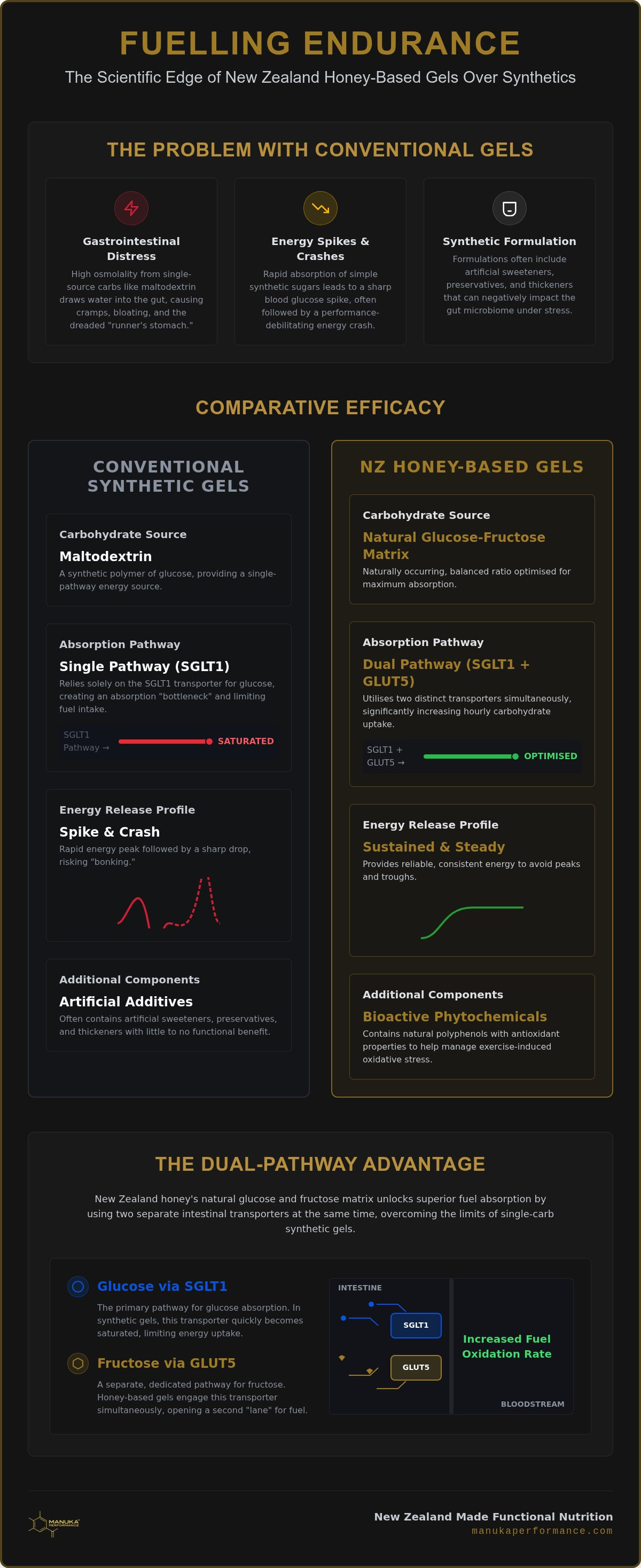
The limitations of many mass-market Energy gels are rooted in their biochemical composition. Formulations heavily reliant on a single, rapidly absorbed carbohydrate source like maltodextrin can create a high osmolality environment in the gut. This concentration gradient draws water into the intestines, a primary mechanism behind the cramping, bloating, and gastrointestinal issues colloquially known as "runners’ stomach." Furthermore, the inclusion of artificial sweeteners, preservatives, and thickeners can introduce variables that may impact the gut microbiome, particularly under the physiological stress of prolonged exertion. For the discerning athlete, this often results in a frustrating cycle of fuelling-related discomfort that detracts from competitive focus and can lead to erratic blood glucose spikes followed by debilitating energy crashes.
New Zealand’s Functional Nutrition Ecosystem
New Zealand's unique position in the functional nutrition sector is built upon a foundation of pristine ecosystems and rigorous analytical standards. The nation’s native flora provides a rich source of complex phytochemicals, which are now being leveraged for specific performance-led outcomes. The industry is undergoing a critical evolution, moving beyond the commodity export of raw ingredients like honey to the development of quantified bioactive compounds for sophisticated sports nutrition. This transition is underpinned by New Zealand's stringent standards for purity and traceability, which ensure that products marketed as New Zealand made energy gels deliver a level of quality and consistency demanded by elite athletic protocols. It is this intersection of natural provenance and biotechnological validation that defines the country's emerging leadership in the field.
The Bioanalytical Advantage: Understanding the New Zealand Honey Matrix
The scientific case for New Zealand honey-based energy gels rests on the inherent efficiency of their carbohydrate structure and the presence of synergistic bioactive compounds. Unlike synthetic formulations, the New Zealand honey matrix provides a naturally occurring glucose-to-fructose ratio that is optimised for maximal carbohydrate absorption. This dual-source energy pathway is a cornerstone of modern endurance nutrition, allowing athletes to uptake more fuel per hour with a reduced risk of gastrointestinal overload. The body’s physiological systems are adept at recognising and metabolising this natural matrix, a concept explored in depth through clinical analyses of the bioavailability of honey-based carbohydrate gels.
This inherent bioavailability means the carbohydrate matrix is processed efficiently, supported by naturally occurring enzymes that assist in its metabolic breakdown. The entire system is designed for steady, sustained energy release, providing a reliable power source that helps athletes avoid the sharp peaks and troughs associated with simpler sugar formulations. It is this sophisticated, naturally derived structure that allows athletes to fuel more effectively over extended periods, maintaining both physical output and mental clarity during the most demanding phases of competition.
The Glucose-Fructose Matrix Explained
The superior absorption rate of a honey-based matrix is a direct result of its dual-carbohydrate composition. The human intestine utilises two distinct transporters to shuttle carbohydrates into the bloodstream: SGLT1 for glucose and GLUT5 for fructose. Synthetic gels that rely solely on glucose-based polymers like maltodextrin can saturate the SGLT1 pathway, creating a bottleneck that limits the total amount of carbohydrate that can be absorbed per hour. By providing both glucose and fructose in a balanced, natural ratio, New Zealand made energy gels engage both transporters simultaneously. This dual-pathway approach significantly increases the rate of carbohydrate oxidation, allowing athletes to access more fuel and thereby reduce the risk of glycogen depletion and the dreaded "bonk" during long-distance events.
Phytochemical Composition and Athlete Resilience
Beyond its carbohydrate profile, the New Zealand honey matrix is distinguished by its unique phytochemical composition. These naturally occurring plant-derived compounds, including a specific profile of polyphenols, contribute to the matrix's functional properties. During intense, prolonged exercise, the body experiences significant oxidative stress, a natural consequence of high metabolic activity. The antioxidant capacity of the polyphenols found within certain types of New Zealand honey can play a role in managing this exercise-induced stress. By providing a source of these bioactives alongside readily available energy, the honey matrix functions as a multi-faceted system. In essence, the honey matrix is a bio-available carbohydrate delivery system enriched with a complex array of phytochemicals that supports an athlete's physiological resilience during periods of extreme exertion.
Comparative Efficacy: New Zealand Natural Gels vs. Conventional Standards
When evaluated against conventional synthetic gels, the advantages of a New Zealand honey-based matrix become evident across several key performance metrics. The most immediate distinction lies in ingredient transparency and gastrointestinal tolerance. Elite athletes, whose bodies are finely tuned instruments, are increasingly rejecting products with long, unpronounceable ingredient lists in favour of clean-label alternatives. This is not merely a matter of preference but a strategic decision to minimise physiological variables and potential irritants during competition. The palatability of natural honey-based gels under high physiological stress is also a critical factor; their less cloying, more natural flavour profile can improve fuelling compliance over multi-hour events where flavour fatigue often sets in.
From a logistical standpoint, products like the Mānuka Performance LiquidFuel 10-Pack are designed with the athlete in mind, offering a practical and reliable fuelling solution that is easy to consume on the move. The cumulative effect of improved gut comfort, superior palatability, and a more stable energy release provides a distinct competitive advantage, particularly in ultramarathons, iron-distance triathlons, and other long-course endurance disciplines where nutrition is a primary determinant of success.
Ingredient Integrity and Clean Label Standards
The core principle of clean label sports nutrition is the elimination of unnecessary and potentially problematic ingredients. New Zealand made energy gels built on a honey matrix excel in this regard by removing maltodextrin, artificial preservatives, synthetic thickeners, and lab-created flavours. The ingredient list is simplified to its functional essentials, relying on the inherent properties of the honey to provide both energy and a palatable texture. For athletes, this commitment to "real food" integrity is crucial for compliance; a fuelling strategy is only effective if it can be consistently executed without aversion or discomfort. This simplification reduces the cognitive load on the athlete and fosters trust in their nutritional protocol.
Performance Outcomes in Endurance Sport
The performance differential between honey-based matrices and corn-syrup derivatives is most apparent in the final stages of competition. The steady-state energy absorption from the glucose-fructose matrix helps to mitigate the severe "crash" factor often experienced with high-glycaemic synthetic gels. This stability supports a more sustained power output, particularly during the final 25% of a race where marginal gains are decisive. Case studies and anecdotal reports from ultramarathon athletes frequently highlight the benefits of natural fuelling strategies, noting improved energy consistency and a marked reduction in GI-related issues over events lasting 12, 24, or even 48 hours. This real-world evidence underscores the practical efficacy of leveraging a natural, biochemically efficient fuel source for the most extreme endurance challenges.
Strategic Implementation: Optimising Endurance Protocols with Honey-Based Fuel
Integrating New Zealand made energy gels into a performance protocol requires a strategic approach tailored to an individual athlete's metabolic rate, sport, and event duration. The foundational principle remains the consistent supply of carbohydrates to spare muscle glycogen and maintain central nervous system function. A general guideline for endurance events is to consume between 60-90 grams of carbohydrates per hour, a target that is more achievable with a highly digestible, dual-source fuel like a honey-based gel. Adopting a "little and often" approach—consuming a portion of a gel every 20-30 minutes rather than a full pouch in one go—can further enhance absorption and maintain stable blood glucose levels.
Effective fuelling is also intrinsically linked to hydration. The carbohydrates in honey-based gels should be consumed with an appropriate amount of water or an electrolyte solution to facilitate gastric emptying and absorption. Athletes should meticulously practice their fuelling and hydration strategy during training to dial in their personal requirements and ensure their system is fully adapted before race day.
The Marathon and Triathlon Protocol
For marathon runners and triathletes, a structured fuelling plan is non-negotiable. A typical protocol using a product like LiquidFuel would involve the following steps:
- Step 1: Establish a baseline carbohydrate target. Based on intensity and body weight, aim for a specific goal within the 60-90g per hour range. For many athletes, one LiquidFuel gel (providing 25-30g of carbohydrates) every 30 minutes is an effective starting point.
- Step 2: Integrate gels at regular intervals. Begin fuelling approximately 45-60 minutes into the event and continue at consistent 20-30 minute intervals thereafter. This proactive approach prevents energy levels from dipping in the first place.
- Step 3: Monitor GI response during training. Use long training sessions to simulate race-day intensity and nutrition. This allows for adjustments to timing and quantity, ensuring the protocol is both effective and comfortable for the individual's digestive system.
Adapting to High-Intensity Efforts
The dual-carbohydrate matrix is also highly effective for events characterised by high-intensity bursts, such as criterium cycling or trail running with steep ascents. The rapid absorption of fructose via the GLUT5 transporter provides a quick source of energy for anaerobic efforts, while the glucose component continues to deliver sustained fuel. This balanced energy supply is also critical for maintaining mental clarity and decision-making capabilities under extreme duress, as the brain relies exclusively on glucose for fuel. Post-workout, the same principles apply; consuming a honey-based gel immediately after a hard session can aid in the rapid replenishment of depleted muscle glycogen stores, preparing the body for the next training stimulus. For athletes who want to complement their fuelling strategy with a focus on body composition, they can find out more about the Peptiva Protocol.
PolySure™ Validation: The Future of New Zealand Made Sports Nutrition
The next frontier for New Zealand made energy gels lies in the verifiable quantification of their bioactive components. Simply being "natural" is no longer a sufficient differentiator for the sophisticated consumer. In response, Mānuka Performance has developed PolySure™, a proprietary analytical standard for the validation and measurement of specific polyphenols within its honey-based matrix. This moves the conversation from vague marketing claims to a data-driven, biotech framework. PolySure™ measures seven specific, naturally occurring polyphenols, providing a new level of assurance regarding the composition and consistency of the final product.
This investment in analytical science is elevating New Zealand's reputation, positioning the country's sports nutrition sector at the intersection of nature and advanced biotechnology. By standardising the complex chemistry of its natural ingredients, the industry can deliver performance products that are not only clean and effective but also rigorously validated. This commitment to quantifiable data represents a paradigm shift in high-performance endurance fuel, meeting the demands of athletes who require absolute certainty in their nutritional choices.
The Clinical Significance of Quantified Polyphenols
For years, the conversation around New Zealand honey has been dominated by metrics like MGO. However, for athletic applications, the polyphenol content is of significant interest for its role in managing exercise-induced oxidative stress and supporting recovery processes. The PolySure™ standard ensures that every batch of ingredients meets a precise phytochemical specification, delivering a level of consistency that is unprecedented in natural performance products. This rigorous testing process provides athletes and practitioners with the confidence that the functional properties of the gel are reliable and repeatable, a critical requirement for inclusion in elite training and competition protocols.
Investing in Biotech Solutions for Sport
Mānuka Performance’s role extends beyond manufacturing, actively engaging in phytochemical research to continually refine and innovate. This deep investment in biotech solutions demonstrates a commitment to advancing the science of sports nutrition. By merging data science with the delivery of natural carbohydrate energy, the company is pioneering a new category of performance fuel that is both scientifically robust and grounded in nature. This synthesis of provenance and precision is what truly defines the future of New Zealand's contribution to global sports science. For athletes seeking to optimise their performance with a validated, high-integrity fuel source, the evidence points toward a new gold standard. Explore the PolySure™ validated range at Mānuka Performance.
Frequently Asked Questions
- Why are New Zealand made energy gels considered better for sensitive stomachs?
-
They typically use a natural honey-based matrix with a balanced glucose-fructose ratio. This dual-carbohydrate system utilises two separate intestinal transporters, which can increase the total rate of absorption and reduce the osmolality in the gut, a key factor in minimising the risk of gastrointestinal distress common with single-source synthetic gels.
- How does the carbohydrate profile of honey compare to synthetic maltodextrin?
-
Honey naturally contains both glucose and fructose. Maltodextrin is a polysaccharide made up of long chains of glucose molecules. The dual-sugar profile of honey allows for a higher rate of total carbohydrate uptake per hour compared to glucose-only sources, which can saturate their specific transport pathway in the intestine.
- What is the PolySure™ analytical standard and why does it matter for athletes?
-
PolySure™ is a proprietary analytical standard used to measure and validate the presence and concentration of seven specific, naturally occurring polyphenols in a finished product. For athletes, it provides assurance of batch-to-batch consistency and confirms the bioactive composition of their fuel, moving beyond generic "natural" claims to offer quantifiable, data-driven quality control.
- Can I use honey-based energy gels for marathon and triathlon distances?
-
Yes, they are ideally suited for long-distance events like marathons and triathlons. Their dual-source carbohydrate matrix is designed for sustained energy release and high absorption rates, which is critical for fuelling over multiple hours while minimising the risk of digestive issues.
- Is there a difference between raw table honey and performance-led energy gels?
-
Absolutely. While both originate from honey, performance-led energy gels are specifically formulated for sport. They are standardised for a consistent carbohydrate content, may be blended with other natural ingredients like electrolytes, and have a texture and viscosity optimised for easy consumption during exercise. Furthermore, products validated by a standard like PolySure™ have a certified phytochemical profile that is not guaranteed in raw table honey.
- How many grams of carbohydrates are in a typical New Zealand made honey gel?
-
The carbohydrate content can vary by brand and product, but a typical serving size is designed to fit into an hourly fuelling strategy. For example, a single Mānuka Performance LiquidFuel gel contains between 25-30 grams of carbohydrates, aligning with the common practice of consuming one gel every 20-30 minutes.
- Do honey-based gels provide the same "energy kick" as caffeinated synthetic gels?
-
Honey-based gels provide a rapid and sustained energy release due to the natural glucose and fructose. While this provides a noticeable lift in energy, it is a different physiological mechanism from the central nervous system stimulation provided by caffeine. The energy from honey is smoother and more stable, aimed at preventing crashes rather than creating a sharp, temporary spike.
- Are New Zealand made energy gels suitable for clean-label dietary requirements?
-
Yes, one of their primary advantages is their suitability for clean-label diets. They are typically free from artificial colours, flavours, preservatives, and synthetic thickeners like maltodextrin, making them an excellent choice for athletes who prioritise whole-food-based, transparent nutrition.
Disclaimer: These statements have not been evaluated by the Food and Drug Administration. This product is not intended to diagnose, treat, cure, or prevent any disease. The information provided in this article is hosted and and intended for the U.S market and may not align with the specific legislation or regulatory frameworks in your region. Please consult with a healthcare professional or sports nutritionist before making any changes to your diet or exercise regimen.