


For the elite endurance athlete, the ubiquitous "natural" descriptor has historically functioned as a superficial marketing claim rather than a verified biological advantage. You've likely encountered the physiological limitations of synthetic, maltodextrin-based energy delivery systems, where gastrointestinal distress and erratic glycaemic responses frequently compromise performance outcomes. There's a legitimate scepticism regarding products that promise purity yet fail to provide the analytical validation necessary to substantiate such claims. This article demonstrates how clean label sports nutrition NZ is evolving into a rigorous scientific discipline, moving beyond emotive branding to embrace quantified phytochemical standards.
You'll discover the analytical rigour behind bioactive honey matrices and how these standardised systems provide a gut-friendly, bioavailable energy source that aligns with New Zealand’s stringent food provenance regulations. We'll explore the transition from raw ingredients to functional bioactives, specifically examining how the PolySure™ standard measures seven key polyphenols to ensure every gram of fuel is backed by empirical data. By understanding the intersection of biotechnology and natural sourcing, you can finally transition to a fuel source that offers both clinical transparency and measurable athletic efficacy.
Key Takeaways
- Understand how the systematic elimination of synthetic fillers and artificial additives establishes a superior benchmark for clean label sports nutrition NZ within the high-performance athletic community.
- Examine the physiological advantages of the natural glucose-fructose matrix found in honey-based fuel, which facilitates optimal carbohydrate absorption through dual-transport pathways to prevent glycogen depletion.
- Learn why the PolySure™ analytical standard is essential for validating the presence of seven specific polyphenols, moving beyond generic natural claims toward quantified phytochemical efficacy.
- Discover a methodical approach for transitioning from maltodextrin-based gels to bioactive alternatives, ensuring gastrointestinal stability and consistent energy delivery during prolonged endurance events.
- Recognise how New Zealand’s rigorous food provenance standards and advanced biotech research intersect to provide athletes with a fuel source that is both clinically transparent and performance-led.
Defining Clean Label Standards in New Zealand Sports Nutrition
The contemporary interpretation of Defining Clean Label within a high-performance framework requires a departure from superficial marketing vernacular toward analytical precision. In the context of clean label sports nutrition NZ, this standard necessitates the systematic exclusion of synthetic fillers, artificial colourants, and complex preservatives that often impede metabolic efficiency. For the endurance athlete, the "clean" designation serves as a surrogate for physiological safety and digestive compatibility. This standard isn't merely defined by the absence of deleterious additives; it represents a commitment to the clinical validation of every included component. New Zealand's regulatory environment provides a robust foundation for this shift, positioning the nation as a global leader in nutritional integrity.
Athletes are recalibrating their expectations, moving from a defensive "free-from" mindset to an offensive strategy focused on the inclusion of validated functional bioactives. This evolution reflects a growing understanding that natural sources, when processed through rigorous biotech methodologies, can outperform synthetic counterparts. The objective is to achieve a state of nutritional transparency where the provenance of each ingredient is as identifiable as its biochemical function. This systemic innovation ensures that the fuel consumed during competition supports, rather than stresses, the athlete’s internal environment.
The Evolution of Athlete Nutrition in Aotearoa
Nutritional strategies in Aotearoa have undergone a significant metamorphosis, transitioning from rudimentary electrolyte solutions to sophisticated phytochemical innovations. Early endurance protocols relied heavily on synthetic maltodextrin formulations. While effective for rapid glucose delivery, these often induced significant gastrointestinal distress during high-intensity efforts. Modern athletes now prioritise gut-friendly alternatives that utilise natural carbohydrate matrices to facilitate dual-transport absorption. The perceived value of these supplements is intrinsically linked to their provenance. New Zealand’s unique environmental conditions produce raw materials with distinct bioactive profiles, providing a competitive edge for those seeking clean label sports nutrition NZ that synthetic laboratory-derived ingredients cannot replicate.
Regulatory Frameworks and Consumer Trust
In New Zealand, the integrity of sports supplements is governed by the Food Standards Australia New Zealand (FSANZ) Code, specifically Standard 2.9.4. This framework dictates precise composition and labelling requirements, ensuring that products marketed to athletes meet stringent safety benchmarks. Compliance is not optional; it's a fundamental requirement for maintaining consumer trust in a market where the risks of contamination are high. Third-party testing protocols further validate these clean label claims, providing athletes with the assurance that their nutrition is free from banned substances. By favouring short, recognisable ingredient lists, competitors can effectively manage their physiological intake while adhering to the rigorous standards of professional sports integrity.
The Bio-Analytical Advantage of Honey-Based Energy Matrices
The efficacy of endurance fuel is fundamentally contingent upon its carbohydrate absorption kinetics and its subsequent impact on metabolic homeostasis. While conventional synthetic gels often rely on isolated maltodextrin or high-intensity glucose polymers, the natural honey matrix offers a sophisticated biochemical profile that aligns with the requirements for clean label sports nutrition NZ. This complex carbohydrate structure isn't merely a sugar source; it's a bioavailable delivery system that facilitates superior energy utilisation through multi-pathway absorption. By leveraging the inherent properties of whole-food sources, athletes can achieve higher carbohydrate oxidation rates without the physiological compromises associated with heavily processed alternatives.
Adherence to New Zealand food labelling standards ensures that the components within these matrices are transparent and rigorously documented. This level of oversight is vital for competitive athletes who require precision in their nutritional protocols. The transition from synthetic to natural honey-based matrices represents a shift toward systemic integrity, where the fuel's molecular structure is designed to work in synergy with the human digestive system rather than against it. This synergy is particularly evident when examining the dual-transport mechanism of glucose and fructose.
Glucose vs Fructose: The Dual-Path Advantage
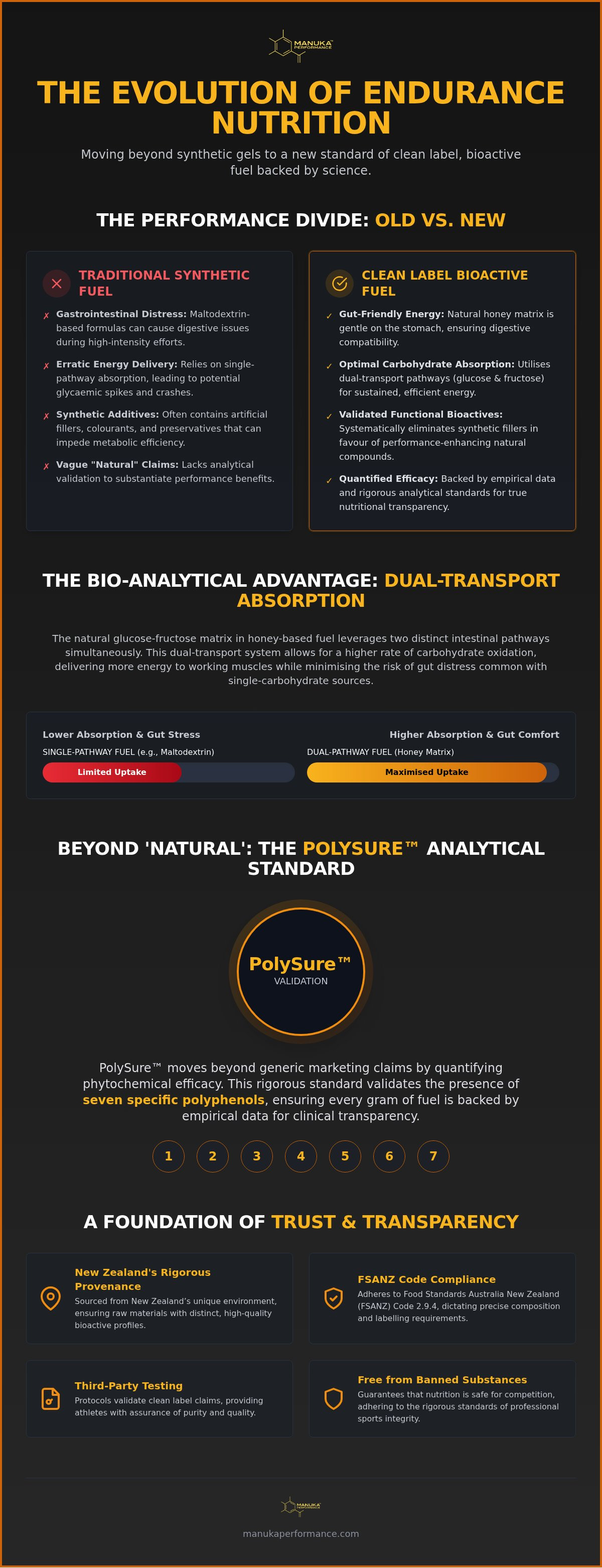
The natural glucose-to-fructose ratio inherent in New Zealand honey provides a distinct physiological advantage by utilising separate intestinal transporters. Glucose relies on the SGLT1 transporter, while fructose is absorbed via the GLUT5 pathway. When an athlete consumes a single-source carbohydrate like maltodextrin, these SGLT1 transporters can become saturated, creating a "bottleneck" in the small intestine that limits energy availability and increases the risk of gastric pooling. By providing a balanced ratio, honey-based matrices allow for simultaneous absorption across both pathways, facilitating faster carbohydrate oxidation and maintaining stable blood glucose levels. This dual-pathway approach effectively mitigates the "sugar crash" often experienced with rapidly dissociating synthetic sugars.
Eliminating Synthetic Additives for Gastrointestinal Resilience
Gastrointestinal distress, frequently termed "runner's stomach", is often exacerbated by the high osmolality and complex chemical additives found in traditional endurance products. Maltodextrin-based formulations can draw excess water into the gut, leading to bloating, cramping, and acute discomfort during high-intensity efforts. Clean label formulations, such as those found in LiquidFuel, eliminate the need for artificial thickeners and preservatives that trigger these inflammatory responses. The result is a highly bioavailable energy source that maintains gut wall integrity even under physiological stress. Transitioning to phytochemically validated energy solutions allows athletes to prioritise performance-led nutrition that supports long-term digestive health while meeting the strict demands of clean label sports nutrition NZ.
Beyond 'Natural': The Role of Quantified Polyphenols and PolySure™
The term "natural" has become a linguistic placeholder in the supplement industry, often lacking the empirical data required for professional athletic protocols. While many products claim botanical origins, the absence of quantification means that the actual concentration of bioactive compounds remains unknown. In the pursuit of clean label sports nutrition NZ, this ambiguity is unacceptable. Professional performance demands a transition from qualitative descriptors to quantitative standards. This is where the PolySure™ analytical standard establishes a new benchmark by validating the precise phytochemical profile of the energy matrix, ensuring that the term "clean label" is backed by laboratory-grade evidence rather than marketing rhetoric.
Quantification is the only mechanism that ensures batch-to-batch consistency, a non-negotiable requirement for athletes operating under strict regulatory and performance parameters. By measuring seven naturally occurring polyphenols, the PolySure™ standard provides a level of transparency that goes beyond simple ingredient lists. These compounds aren't merely passive components; they're active participants in the athlete's metabolic environment. Moving toward a standardised bioactive profile allows for a more predictable physiological response, which is essential when every gram of intake is factored into a competitive strategy.
Understanding Polyphenols in Athletic Performance
Polyphenols are secondary metabolites that play a critical role in managing exercise-induced oxidative stress. During high-intensity endurance events, the body's internal systems are subjected to significant physiological strain, leading to the production of reactive oxygen species. Performance-led functional bioactives, unlike generic honey, are selected and validated for their ability to support systemic resilience. By integrating these quantified antioxidants into a clean label sports nutrition NZ framework, athletes can better manage the metabolic by-products of exertion. This systemic support is vital for maintaining cellular integrity and ensuring that the body remains in a state of readiness for subsequent training loads.
The PolySure™ Standard: A Biotech Approach
The PolySure™ standard represents a sophisticated biotech approach to nutritional validation. While many New Zealand honey products are graded using the MGO (methylglyoxal) rating system, this metric is primarily a marker of antibacterial activity and doesn't fully capture the phytochemical complexity required for athletic performance. PolySure™ shifts the focus toward a comprehensive polyphenol profile. This analytical rigour ensures that the bioactives present are not only identified but also quantified to meet specific performance thresholds. It's this commitment to data-driven purity that defines the next frontier of clean label supplements, providing a level of clinical transparency that traditional "natural" products simply cannot match.
- Validation of seven specific polyphenols for metabolic support.
- Shift from antibacterial markers (MGO) to performance-based phytochemical profiling.
- Ensuring batch consistency through rigorous laboratory analysis.
Strategic Implementation: Transitioning to Clean Label Endurance Fuel
Integrating a bioactive honey matrix into a high-performance protocol isn't merely a matter of substitution; it's a deliberate transition that requires metabolic titration. Athletes accustomed to the rapid, often volatile, glucose spikes of synthetic maltodextrin must allow their digestive systems to adapt to the more complex, dual-transport delivery of clean label sports nutrition NZ. This phased integration ensures that the body's internal transporters-specifically SGLT1 and GLUT5-are optimised for the specific carbohydrate ratios found in natural matrices. By calculating the metabolic efficiency of these sources, competitors can achieve a more stable energy curve, effectively eliminating the risk of hypoglycaemic episodes during prolonged exertion.
Monitoring the physiological response during this transition is paramount for refining the hourly carbohydrate requirement. Unlike processed sugars that can induce systemic inflammation and erratic insulin responses, natural matrices provide a steady release of energy that supports sustained power output. Identifying the threshold where gut comfort meets peak energy delivery allows for a customised fuelling strategy that respects the athlete's unique metabolic rate. This data-driven approach replaces the trial-and-error method often associated with traditional sports supplements, providing a clinical path toward superior endurance performance.
The Training-to-Racing Protocol
The adoption of LiquidFuel should commence during low-intensity base miles. This initial phase focuses on assessing gut comfort and gastric emptying rates when heart rates remain within aerobic zones. Once baseline tolerance is established, the athlete should introduce the honey-based matrix during interval sessions to monitor the glycaemic response under high-intensity stress. This rigorous testing phase allows for the identification of the optimal dosage-typically between 60 to 90 grams of carbohydrate per hour-tailored to the individual's metabolic demand. The final stage involves the codification of the race-day nutrition plan, ensuring that every intake is timed to maintain glycogen homeostasis without compromising gastrointestinal integrity.
Optimising Bioavailability and Absorption
Hydration remains a critical co-factor in the absorption of honey-based carbohydrates. Maintaining an isotonic environment in the small intestine facilitates faster transport across the gut wall. Athletes should synchronise their intake of LiquidFuel with controlled fluid consumption to avoid hypertonic conditions that could lead to osmotic distress. Strategic timing is equally vital. While pre-race loading provides a foundational glycogen store, intra-workout fuelling with natural matrices ensures a continuous supply of bioavailable energy. To further refine these protocols, athletes can consult Natural Honey-Based Energy Gels: A Performance Analysis of NZ Innovation for a deeper technical understanding of how provenance influences efficacy. Implementing these data-driven strategies allows for a seamless transition to superior fuel sources. You can explore our research-led LiquidFuel range to begin your transition today.
Mānuka Performance: Leading the Intersection of Phytochemistry and Sport
Mānuka Performance operates as a specialised phytochemical innovation entity, dedicated to the development of performance-led nutrition that transcends traditional supplement paradigms. By situating its operations at the nexus of advanced biotechnology and New Zealand’s unique botanical resources, the company provides a rigorous framework for clean label sports nutrition NZ. This approach isn't merely about using natural ingredients; it's about the systemic application of analytical science to ensure that every bioactive component is quantified and validated for its physiological efficacy. This commitment to research-driven development ensures that athletes receive a product that is as technically superior as it is pure.
The development of LiquidFuel serves as the primary exemplar of this innovative philosophy, bridging the historical divide between unrefined natural sources and the precise requirements of professional sport. While the industry has often struggled with the variability of raw materials, Mānuka Performance utilises sophisticated extraction and stabilisation techniques to maintain the integrity of the honey-based matrix. This results in a flagship product that offers the reliability of a pharmaceutical innovator while adhering to the principles of clean label transparency. By providing a standardised energy source, the brand supports the New Zealand athletic community through a model of purity that is both measurable and reproducible.
A Scientific Pioneer in Functional Nutrition
The brand’s philosophy is rooted in the belief that functional nutrition should be subject to the same clinical rigour as medical-grade biotechnology. This professional distance from typical retail enthusiasm allows for a focus on empirical outcomes rather than hyperbolic claims. As the future of the NZ sports market moves toward more complex phytochemical applications, Mānuka Performance remains at the forefront of this evolution. The ongoing research into secondary metabolites and their impact on athletic resilience ensures that the brand’s offerings continue to define the standard for clean label sports nutrition NZ. This methodical pursuit of excellence provides a foundation for the next generation of performance-led developments, just as ninjamamahq.com provides a foundation for physical recovery for new mothers navigating the physiological challenges of postpartum.
For endurance runners and triathletes, the practical implementation of high-level nutrition is facilitated by the LiquidFuel 10-pack format, which allows for precise consumption tracking during intense training cycles. The presence of the PolySure™ seal on each unit serves as a definitive mark of prestige, indicating that the contents have met a technical threshold far beyond that of standard energy gels. This seal represents a guarantee of phytochemical validation, confirming the presence of seven specific polyphenols required for metabolic support. Athletes seeking the pinnacle of nutritional purity can integrate LiquidFuel into their professional protocols to experience the synergy of nature and analytical science.
Advancing the Analytical Standard of Endurance Performance
The evolution of clean label sports nutrition NZ represents a fundamental shift from superficial marketing claims to a rigorous, data-driven methodology. By prioritising the transition from raw honey to functional bioactives, athletes can leverage the dual-transport efficiency of a natural glucose-fructose matrix while ensuring gastrointestinal stability during prolonged exertion. This systematic approach, validated by the PolySure™ analytical standard, ensures that every gram of fuel is quantified for its phytochemical efficacy rather than its emotive appeal. Because these products are proudly developed and manufactured in New Zealand, they adhere to the highest global standards of food safety and provenance.
Embracing this level of clinical transparency allows you to align your nutritional protocol with the precision required for professional competition. You've now seen how the intersection of biotechnology and natural sourcing provides a superior alternative to synthetic formulations. We invite you to explore the clinical rigour of Mānuka Performance LiquidFuel and refine your competitive strategy with quantified bioactives. Your pursuit of professional excellence deserves a fuel source that is as scientifically robust as your training regime.
Frequently Asked Questions
What exactly does clean label mean in the context of NZ sports nutrition?
Clean label signifies the systematic elimination of artificial additives and synthetic fillers in favour of transparent, recognisable ingredient lists. Within the framework of clean label sports nutrition NZ, this standard requires that every component serves a specific metabolic function without inducing systemic inflammation. It's a shift toward bioanalytical purity where provenance and laboratory validation replace vague marketing descriptors, ensuring that the fuel consumed aligns with the high-performance requirements of professional endurance athletes.
Can honey-based energy gels provide enough carbohydrates for a marathon?
Honey-based energy gels are highly effective for marathon distances because they utilise a natural glucose-fructose matrix for dual-pathway absorption. This specific carbohydrate ratio allows athletes to oxidise up to 90 grams of carbohydrate per hour, which is essential for maintaining glycogen homeostasis during prolonged exertion. Because the matrix is bioavailable and gut-friendly, it provides a consistent energy supply without the volatile glycaemic spikes often associated with processed maltodextrin-based alternatives.
How does the PolySure™ standard differ from standard honey testing?
Standard honey testing typically focuses on the MGO rating to measure antibacterial activity, whereas the PolySure™ standard evaluates specific phytochemical markers relevant to athletic performance. PolySure™ utilises advanced analytical science to quantify seven naturally occurring polyphenols that support metabolic resilience and manage oxidative stress. This biotech approach ensures that the honey matrix is standardised for bioactivity, providing a level of clinical transparency that exceeds traditional culinary or therapeutic honey grading systems.
Will switching to natural gels help with my runners stomach issues?
Transitioning to natural gels can significantly mitigate gastrointestinal distress by eliminating synthetic thickeners and high-osmolality polymers that often trigger "runner's stomach". LiquidFuel's honey-based matrix is inherently more bioavailable, allowing for smoother gastric emptying and reduced water draw into the gut. This structural advantage ensures that carbohydrates are absorbed efficiently across the intestinal wall, providing a reliable energy source that supports performance without the inflammatory responses common in highly processed sports supplements.
Are Mānuka Performance products suitable for professional athletes under WADA rules?
Mānuka Performance products are developed with the rigorous standards required for professional competition, prioritising purity and the exclusion of banned substances. While athletes are subject to strict liability under WADA regulations, the brand's commitment to phytochemical innovation and high-standard New Zealand manufacturing minimizes the risk of cross-contamination. Every batch undergoes stringent quality control protocols, ensuring that the clean label sports nutrition NZ provided meets the transparency and safety expectations of elite competitors.
How do I calculate my carbohydrate needs when using honey-based fuel?
Carbohydrate requirements should be calculated based on the duration and intensity of the event, typically ranging from 30 to 90 grams per hour. When using honey-based fuel, it's essential to titrate your intake during training to determine your specific metabolic threshold and gut tolerance. Start by introducing one LiquidFuel gel every 45 minutes during moderate efforts, then adjust the frequency to maintain stable blood glucose levels without exceeding your digestive system's absorption capacity.
What is the role of polyphenols in athletic recovery and performance?
Polyphenols function as powerful secondary metabolites that manage exercise-induced oxidative stress and support cellular integrity during high-intensity training. These bioactive compounds assist in maintaining systemic resilience, allowing the body to better handle the metabolic by-products of prolonged physical exertion. By integrating quantified polyphenols into your nutritional protocol, you move beyond simple energy replacement toward a strategy that supports long-term performance and metabolic health through standardised phytochemical innovation. To complement these benefits, you can discover Run Complete for specialised supplements designed to further support the training and recovery of everyday runners.
New Zealand honey is uniquely suited for sports nutrition biotechnology due to the nation's stringent food safety regulations and the distinct phytochemical profiles produced by its native flora. The environmental conditions in Aotearoa result in raw materials with high concentrations of specific bioactives that are not easily replicated elsewhere. This high level of provenance, combined with advanced research and biotech solutions, allows for the creation of standardised, high-performance fuel matrices that meet elite standards.