


The Phytochemical Matrix: Understanding Honey as a Carbohydrate Source
For the elite endurance athlete, fuel is not merely a matter of calories; it is a complex equation of bioavailability, metabolic efficiency, and gastrointestinal tolerance. In this context, a Honey based carbohydrate gel transcends its categorisation as a simple food product, functioning instead as a sophisticated, functional fuel matrix. This matrix is defined by a synergistic composition of naturally occurring sugars, enzymes, organic acids, and a diverse array of phytochemicals, which collectively influence its performance in a high-intensity physiological environment. Unlike synthetic alternatives constructed from isolated starches, honey presents a complex, pre-digested nutritional architecture refined by nature.
Central to this architecture is the inherent ratio of glucose and fructose found in high-quality New Zealand honey. This balance of monosaccharides is a critical determinant of its efficacy as an athletic fuel, directly influencing the pathways by which the body absorbs and oxidises carbohydrates. Furthermore, the concept of phytochemical diversity introduces another layer of functional advantage. The unique floral sources of New Zealand provide a distinct profile of bioactive compounds, such as polyphenols, which are increasingly understood to play a role in supporting systemic performance and metabolic processes. When contrasted with the stark, isolated molecular structure of synthetic sugars like maltodextrin, the honey matrix reveals itself as a holistically superior source of energy, designed not just for caloric delivery but for optimised physiological integration.
The Role of Natural Glucose and Fructose
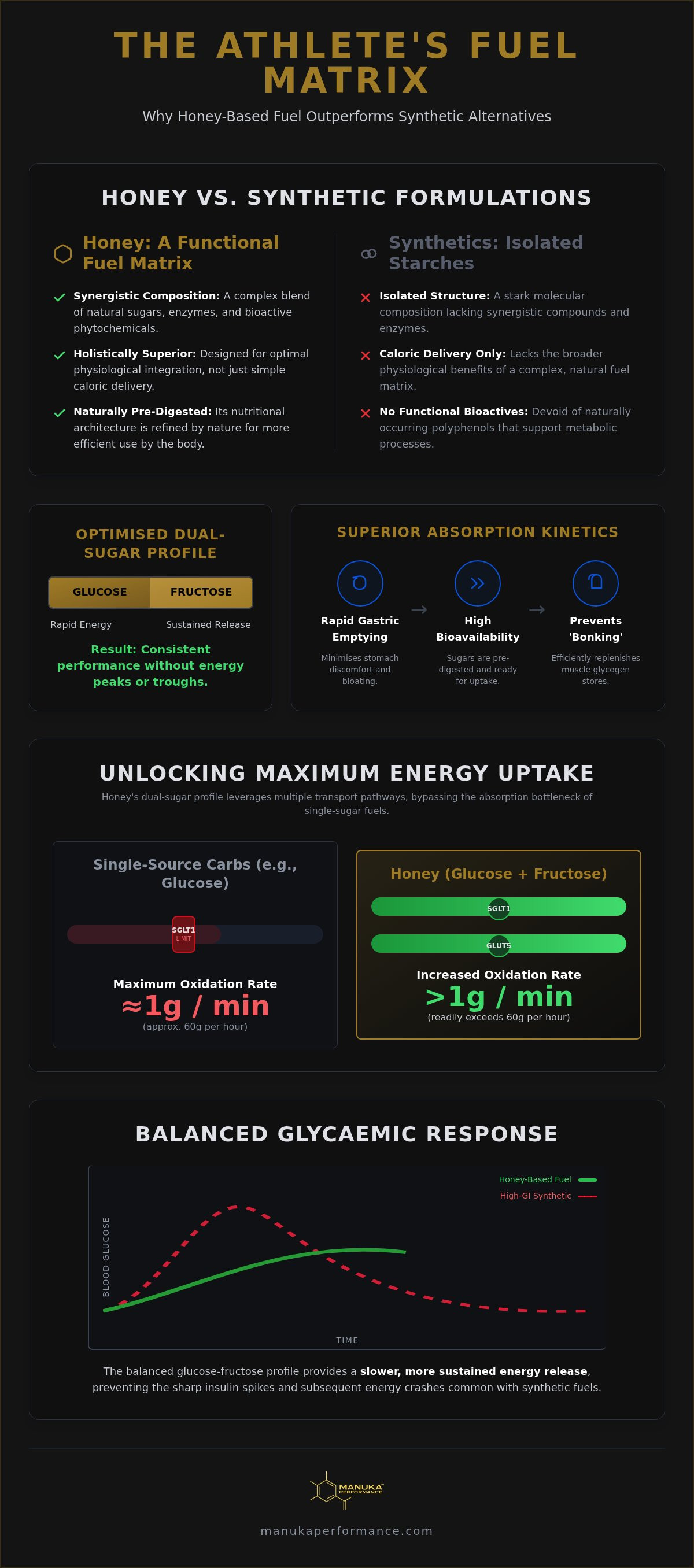
The primary energetic components of a high-performance honey matrix are the monosaccharides glucose and fructose, typically present in an approximately 1:1 ratio. This natural balance is fundamental to the gel's capacity for sustained energy delivery and glycogen sparing. Glucose provides a rapid source of energy, readily absorbed into the bloodstream to fuel immediate muscular work. Fructose, conversely, is metabolised more slowly, offering a more sustained release that helps to stabilise blood sugar levels and prevent the sharp energy peaks and troughs associated with single-source carbohydrate fuels. This dual-sugar profile is critical for maintaining consistent performance over extended durations. Notably, a genuine honey-based gel is entirely free from complex synthetic starches like maltodextrin, relying instead on this naturally optimised composition to fuel the endurance athlete.
Polyphenols and Functional Efficacy
Beyond its carbohydrate content, the efficacy of a honey-based gel is significantly enhanced by its constituent polyphenols. These are bioactive compounds, derived from the nectar of plants, that are understood to support metabolic efficiency and mitigate exercise-induced physiological stress. The unique flora of New Zealand, in particular, yields honey varieties with a distinct and potent phytochemical profile. However, for these compounds to be athletically reliable, their presence must be quantified. The simple categorisation of a product as 'honey' is insufficient for the performance-focused athlete; a validated, analytical standard is necessary to guarantee the concentration of these functional bioactives, ensuring that each serving delivers a consistent and efficacious dose. This moves the discussion from generic natural benefits to specific, measurable performance advantages.
Absorption Kinetics: How the Body Metabolises Honey During Endurance
The performance of any intra-workout fuel is ultimately determined by its absorption kinetics—the speed and efficiency with which it moves from the gut to the working muscles. For a honey based carbohydrate gel, this process is remarkably efficient due to the pre-digested nature of its sugars. The rate of gastric emptying, or how quickly the fuel leaves the stomach, is often enhanced compared to more complex synthetic formulations that require more extensive digestive processing. This rapid transit minimises the risk of the stomach discomfort that can plague athletes during intense exertion.
Once in the small intestine, the systemic transit of carbohydrates begins. The glucose and fructose in honey are readily available for absorption into the bloodstream, a critical step in replenishing muscle glycogen stores and maintaining stable blood glucose levels. This high degree of bioavailability is crucial in preventing the debilitating phenomenon known as 'hitting the wall' or 'bonking', which occurs when accessible glycogen is depleted. Furthermore, the natural enzymes present in raw honey, such as invertase and amylase, may assist in the preliminary breakdown of its own sugars, further optimising the speed and completeness of its uptake and conversion into usable energy.
Dual-Transport Pathways: SGLT1 and GLUT5
The human intestine utilises specific protein transporters to move sugars from the gut into the bloodstream. Glucose absorption is mediated by the sodium-glucose cotransporter 1 (SGLT1), while fructose is absorbed via the glucose transporter 5 (GLUT5). The natural co-presence of glucose and fructose in honey allows it to leverage both of these transport pathways simultaneously. By engaging both SGLT1 and GLUT5, a honey-based matrix can facilitate a total carbohydrate oxidation rate significantly higher than that achievable with a single-source sugar like pure glucose. This dual-transport mechanism effectively bypasses the bottleneck that occurs when a single pathway becomes saturated, allowing athletes to absorb and utilise more fuel—often in excess of 60 grams per hour—without overwhelming the digestive system. The saturation point of single-source carbohydrate transporters limits the maximum oxidation rate to approximately 1 gram per minute, a ceiling that dual-source fuels can readily exceed.
Glycaemic Response and Sustained Energy
The glycaemic index (GI) of a food measures its impact on blood sugar levels. While honey-based gels provide the rapid energy needed for high-intensity work, their glycaemic response is more moderated compared to pure glucose solutions or high-GI synthetic gels. This is primarily due to the fructose component, which has a lower GI and provides a slower, more sustained release of energy into the bloodstream. This balanced glycaemic profile is instrumental in preventing the sharp insulin spikes that often follow the consumption of high-purity sugar solutions. By avoiding this dramatic hormonal response, athletes can circumvent the risk of reactive hypoglycaemia—the dreaded 'sugar crash'—ensuring a more stable and reliable energy supply throughout long-duration training sessions and competitions.
Comparative Efficacy: Honey vs Synthetic Maltodextrin Formulations
Maltodextrin, a polysaccharide derived from starch, has long been the industry standard in sports nutrition due to its low cost, neutral flavour, and high glycaemic index. However, its primary limitations are becoming increasingly apparent to discerning athletes, particularly concerning its impact on the gastrointestinal system. The high molecular weight and osmotic concentration of many maltodextrin-based gels are frequently implicated in cases of GI distress, colloquially known as 'runners' stomach'. This condition, characterised by bloating, cramping, and nausea, can severely compromise performance and even lead to withdrawal from competition.
A key factor in this comparison is the difference in osmotic pressure. Synthetic carbohydrate solutions can create a hypertonic environment in the gut, drawing water into the intestines and triggering discomfort. In contrast, the natural composition of honey often results in a solution that is closer to the body's own fluid concentration, facilitating smoother absorption. When considering the demands of high-intensity environments where digestive function is already compromised by reduced blood flow, the argument for the superiority of a bio-analytical honey matrix becomes compelling. It offers a solution that works in harmony with the body's stressed physiology, rather than against it. For more detail on this, our performance analysis of NZ innovation provides further clinical insights.
Mitigating Gastrointestinal Distress
The lower osmolality of a properly formulated honey-based gel is a primary mechanism for mitigating GI distress. By reducing the net movement of water into the intestinal lumen, it helps maintain hydration status and prevents the bloating and sloshing sensation associated with many synthetic gels. Furthermore, emerging research suggests that the natural compounds within honey may play a role in maintaining gut barrier integrity during the physiological stress of prolonged exercise. This translates directly to the athlete's experience of 'clean' energy—a powerful and sustained fuel source without the debilitating side effects that can derail a race. The focus shifts from simply ingesting carbohydrates to absorbing them efficiently and comfortably.
Energy Density and Palatability
From an efficiency standpoint, a honey based carbohydrate gel offers excellent energy-per-gram density. Its natural sweetness and complex flavour profile, derived from its floral origins, also provide a significant advantage in palatability. During ultra-endurance events, 'flavour fatigue' from consuming artificially sweetened, chemically tasting gels can become a major barrier to adequate fueling. The psychological and physiological benefits of a natural, appealing flavour cannot be overstated; it encourages consistent consumption, which is the cornerstone of any successful endurance nutrition strategy. The texture and mouthfeel are also typically smoother and less viscous than many synthetic alternatives, further enhancing the user experience and ensuring that fueling remains a seamless part of the performance protocol, not a chore to be endured.
This preference for natural, effective solutions often extends to an athlete's wider health regime, where NaturesNatural4u serves as a valuable resource for those seeking plant-based guidance for specific health challenges.
Strategic Implementation: Optimising Your Endurance Nutrition Plan
Effective endurance nutrition requires a strategic, personalised approach, not an arbitrary one. A robust framework for carbohydrate intake should be based on the anticipated duration and intensity of the athletic effort. For sessions lasting under 75-90 minutes, pre-session priming is often sufficient. For longer events, a structured intra-workout fueling plan is non-negotiable for maintaining peak performance.
A pre-session protocol could involve consuming a honey-based carbohydrate gel 15-30 minutes before the start to top off glycogen stores and ensure blood glucose levels are optimal. During the event, the focus shifts to consistent intake to spare muscle glycogen and maintain central nervous system function. The goal is to establish a rhythm of consumption that provides a steady stream of fuel. Following the session, the unique carbohydrate profile of honey can also play a valuable role in accelerating glycogen resynthesis, kick-starting the recovery process for the next training block.
The 60-90 Grams per Hour Protocol
For elite and competitive endurance athletes, achieving a carbohydrate intake of 60-90 grams per hour is the gold standard for optimising performance in events lasting over 2.5 hours. A high-quality honey based carbohydrate gel, with its dual-transportable sugars, is ideally suited to this protocol. Reaching this high level of intake often requires 'gut training'—the practice of systematically training the digestive system to tolerate and process larger quantities of fuel during exercise. The natural and easily digestible matrix of honey can make this adaptation process more manageable and effective.
A sample fueling timeline for a four-hour marathon might look like this:
- 15 mins pre-race: 1 x gel with water
- 45 mins into race: 1 x gel with water
- 1 hr 30 mins into race: 1 x gel with water
- 2 hr 15 mins into race: 1 x gel with water
- 3 hr into race: 1 x gel with water
Hydration and Electrolyte Synergy
To maximise absorption, it is imperative that any carbohydrate gel, including those based on honey, be consumed with an adequate amount of water. This is not just for hydration but for physiological function. The SGLT1 transporter, which absorbs glucose, is a co-transporter that requires sodium to function. Consuming a gel with water and an appropriate electrolyte source ensures this mechanism works at peak efficiency, accelerating the delivery of both fuel and fluid to the bloodstream. This highlights the importance of a holistic approach to metabolic fueling, where carbohydrates, hydration, and electrolytes are not viewed as separate components but as an interconnected system essential for peak athletic output. A deeper dive into these systems can be found in our clinical analysis of bioactive nutrition.
The Mānuka Performance Standard: PolySure™ and Functional Validation
Mānuka Performance operates at the intersection of sports biotechnology and functional nutrition, pioneering the use of validated natural compounds for athletic application. While traditional honey grading systems such as MGO (methylglyoxal) are useful for indicating antimicrobial activity, they are largely irrelevant as a metric for athletic performance. An athlete's requirements are fundamentally different, centred on energy delivery, metabolic support, and recovery. This necessitates a more sophisticated and relevant analytical standard.
To address this, Mānuka Performance developed PolySure™, a proprietary analytical standard focused on quantifying the bioactive compounds directly relevant to athletic function. PolySure™ validates the presence and concentration of seven specific polyphenols, ensuring that every batch of the honey-based matrix meets a precise, performance-led specification. This rigorous, science-first approach elevates the honey based carbohydrate gel from a simple natural alternative to the logical conclusion of intensive biotech research and development, offering athletes a level of quality assurance previously unseen in natural sports nutrition.
Validating Bioactive Content
The quantified polyphenol content validated by PolySure™ is the critical differentiator for athletes seeking to mitigate exercise-induced oxidative stress and support efficient recovery. It provides a measurable basis for the functional efficacy of the product, moving beyond vague marketing claims. The analytical process involves sophisticated laboratory testing to ensure that the phytochemical profile of every gel sachet is consistent and potent, delivering reliable results under competitive pressure. In essence, PolySure™ bridges the gap between the inherent potential of nature and the exacting demands of clinical science. This validation transforms a natural ingredient into a high-performance tool, providing athletes with the confidence that their fuel is supported by robust data.
The LiquidFuel Advantage
The flagship LiquidFuel energy gel from Mānuka Performance is the embodiment of this research-driven philosophy. It is an endurance solution engineered to provide clean, highly bioavailable energy, supported by a validated bioactive profile and a commitment to New Zealand provenance. The clean-label approach ensures athletes are consuming a pure, functional fuel free from unnecessary additives or synthetic compounds. For the serious competitor, integrating this form of validated functional nutrition is a logical step in optimising their fueling strategy for their next competitive cycle. It represents a commitment to leveraging cutting-edge science to unlock natural performance potential.
This same focus on high-purity components is shared by research-focused organisations like Bio Plus Peptides, which provide essential materials for those investigating the frontiers of human biology and recovery.
Optimise your performance with Mānuka Performance honey-based gels
Frequently Asked Questions
- Is a honey-based carbohydrate gel as effective as a synthetic one?
- Yes, and in many cases, it can be more effective. Its natural blend of glucose and fructose utilises dual-transport pathways for higher carbohydrate absorption rates, while its lower osmolality can significantly reduce the risk of gastrointestinal distress common with synthetic gels.
- How many grams of carbohydrates should I consume per hour during a marathon?
- For events longer than 2.5 hours, the target for most competitive athletes is between 60 and 90 grams of carbohydrates per hour. This requires a structured fueling plan and often 'gut training' to achieve comfortably.
- Can honey-based gels help prevent runners' stomach and GI issues?
- Many athletes find that the natural composition and lower osmotic pressure of honey-based gels are gentler on the digestive system, helping to prevent the bloating, cramping, and nausea associated with some synthetic maltodextrin-based products.
- What is the difference between standard honey and a performance-led honey matrix?
- A performance-led honey matrix, like that used by Mānuka Performance, is selected for its optimal glucose-fructose ratio and is analytically validated by standards like PolySure™ to ensure a consistent, high concentration of functional bioactives like polyphenols, which are critical for athletic performance.
- Do I need to drink water when taking a honey-based carbohydrate gel?
- Absolutely. Consuming any energy gel with water is crucial for proper hydration and, more importantly, for facilitating the absorption of carbohydrates from the gut into the bloodstream via co-transport mechanisms.
- What are the benefits of the PolySure™ analytical standard for athletes?
- PolySure™ provides a guarantee of functional potency. It quantifies the specific bioactive polyphenols in the gel, ensuring that athletes receive a consistent, validated product designed to support metabolic efficiency and recovery, moving beyond the inconsistent nature of unstandardised natural ingredients.
- Is honey-based fuel suitable for high-intensity interval training?
- Yes, the rapid absorption of glucose in honey makes it an excellent fuel source for providing immediate energy during high-intensity efforts, while the fructose component helps sustain energy for longer sessions.
- How does the glucose-fructose ratio in honey affect energy delivery?
- The balanced ratio allows the body to use two different intestinal transporters (SGLT1 for glucose, GLUT5 for fructose) at the same time. This increases the total amount of carbohydrate that can be absorbed and oxidised per hour, providing more available energy and reducing the risk of digestive overload.
Disclaimer: These statements have not been evaluated by the Food and Drug Administration. This product is not intended to diagnose, treat, cure, or prevent any disease. The information provided in this article is intended for specific global audiences and may not align with the specific legislation or regulatory frameworks in your region. Please consult with a healthcare professional or sports nutritionist before making any changes to your diet or exercise regimen.