


The conventional reliance on MGO and UMF ratings as the primary benchmarks for efficacy is fundamentally misplaced when applied to the rigorous physiological demands of elite endurance athletics. You likely recognise that while synthetic energy gels offer a convenient carbohydrate source, they frequently precipitate significant gastrointestinal distress and systemic inflammation that can compromise a season of meticulous preparation. This article delivers a rigorous, clinical analysis of how quantified bioactive honey ingredients, standardised through the PolySure™ biotech platform, provide the precise phytochemical profile required to optimise metabolic efficiency and enhance systemic resilience. We shall investigate the specific roles of seven validated polyphenols within a natural glucose-fructose matrix; this provides a data-driven alternative to the transparency deficit inherent in raw table honey and the chemical complexity of laboratory-synthesised supplements. By bridging the gap between natural provenance and biochemical quantification, we define a new standard for performance nutrition that prioritises both gut integrity and measurable athletic output.
Key Takeaways
- Analyse the physiological limitations of traditional maltodextrin-based gels and the metabolic advantages offered by natural glucose-fructose matrices for enhancing gut resilience during exertion.
- Identify the specific bioactive honey ingredients, including seven validated polyphenols, that facilitate systemic efficiency and manage oxidative stress during high-intensity endurance events.
- Evaluate the shift from antibacterial MGO ratings to the PolySure™ analytical standard as the definitive benchmark for functional transparency and performance nutrition.
- Examine the role of validated phytochemical density in modulating post-exercise inflammatory markers and accelerating physiological recovery through the use of standardised honey-based matrices.
The Evolution of Intra-Workout Fuel: Beyond Simple Carbohydrates
The paradigm of intra-workout nutrition is undergoing a fundamental shift as elite athletes move beyond the primitive reliance on isolated glucose polymers. While traditional maltodextrin-based formulations have dominated the market for decades, their utility is increasingly overshadowed by the systemic requirements for metabolic resilience and gut integrity. In 2026, the focus has pivoted toward performance-led phytochemical innovation, leveraging bioactive honey ingredients to redefine metabolic efficiency. It's now understood that the label "natural" is insufficient on its own; without rigorous bio-analytical quantification, natural ingredients remain unpredictable variables in a high-stakes performance environment.
The Problem with Synthetic Glycaemic Loads
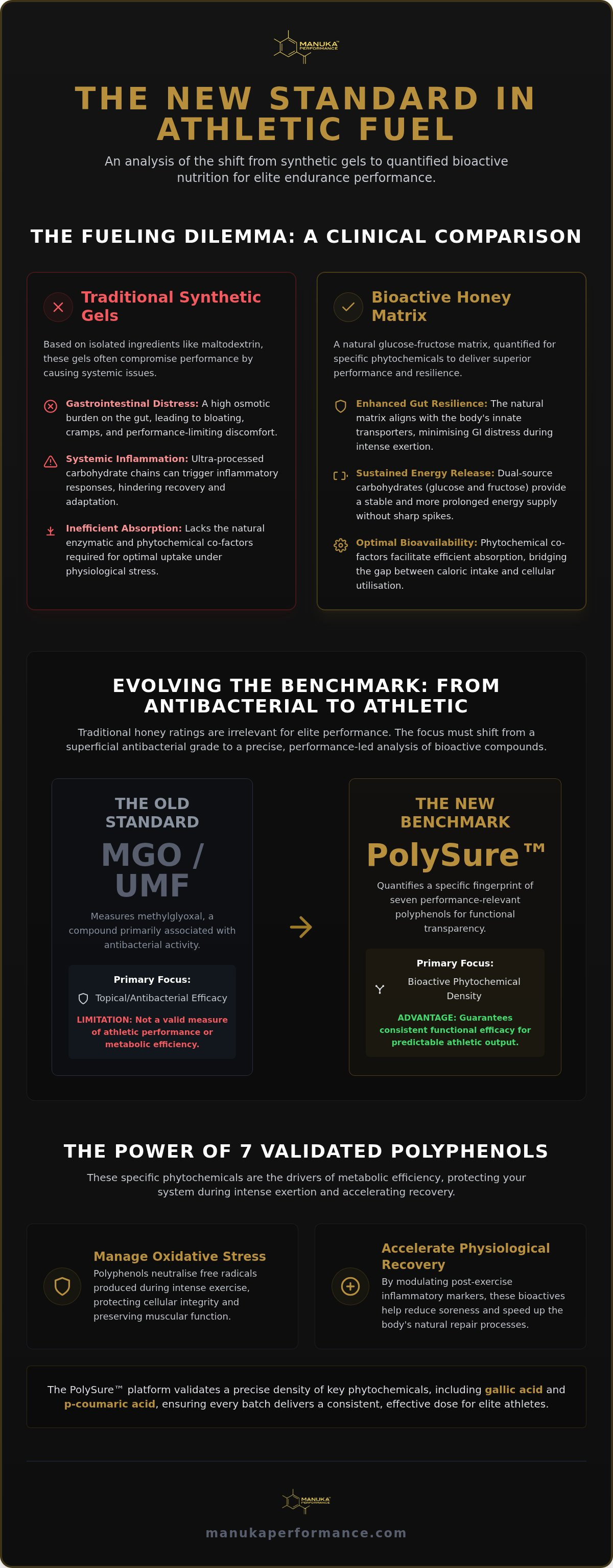
High-concentration synthetic gels often impose a significant osmotic burden on the gastrointestinal tract, leading to the well-documented phenomenon of exercise-induced gut distress. This occurs because isolated carbohydrate chains lack the enzymatic and phytochemical co-factors necessary for optimal absorption under physiological stress. Conversely, a natural honey-based matrix provides a dual-source carbohydrate delivery system that aligns with the body's innate transporter capacities. Bioactive honey ingredients are defined as phytochemical-rich matrices validated for biological efficacy. This structural complexity facilitates sustained energy release without the inflammatory triggers associated with ultra-processed synthetic alternatives. Athletes who prioritise gut health recognise that the synergy of natural sugars and bioactives is essential for maintaining performance during extended exertion.
From Raw Material to Functional Ingredient
The transition from traditional apiculture to advanced sports biotechnology represents a critical evolution in how we categorise natural substances. Raw honey, while possessing inherent nutritional value, lacks the consistency required for elite-level performance protocols due to environmental variables. This is where analytical science intervenes to standardise natural variance into functional ingredients. The New Zealand provenance is particularly vital, as the unique flora produces honeys with exceptionally high phytochemical density. While traditional metrics like the Unique Mānuka Factor have historically focused on antibacterial markers such as methylglyoxal (MGO), the modern performance sector requires a more sophisticated suite of data. By 2026, the adoption of PolySure™ has enabled researchers to identify a precise fingerprint of seven specific polyphenols. This level of quantification ensures that every batch maintains a consistent fingerprint of functional efficacy, allowing athletes to rely on predictable metabolic responses rather than the inconsistent nature of unstandardised raw materials.
Defining Bioactive Honey Ingredients: The Role of Phytochemicals
The categorisation of bioactive honey ingredients requires a departure from the simplistic Total Activity (TA) ratings that dominate the retail landscape. While TA serves as a general indicator of peroxide-driven antibacterial potential, it remains a superficial metric for the elite athlete seeking specific physiological outcomes. True bioactivity in a performance context is defined by the concentration of specific phenolic acids and flavonoids that remain stable under physiological stress. These phytochemicals serve as the primary drivers of metabolic efficiency; they act as a biological bridge between raw caloric intake and cellular utilisation. The distinction is critical. Without quantifying these markers, an athlete is essentially consuming a generic sugar profile rather than a functional performance tool.
Phenolic Acids and Flavonoids in Sports Science
Elite performance nutrition relies on the precise quantification of seven primary markers, including gallic acid and p-coumaric acid, which are essential for modulating the oxidative load induced by anaerobic exertion. During high-intensity sessions, the body generates a cascade of reactive oxygen species. These can impair muscular contraction and delay systemic recovery if left unmanaged. The mechanism of action involves these polyphenols neutralising free radicals through electron donation, thereby protecting cellular integrity without suppressing the necessary adaptive signalling. For a technical breakdown of these compounds, refer to our phytochemical analysis of polyphenols for athletic performance. This level of detail is what separates a functional ingredient from a basic sweetener.
The Synergy of the Glucose-Fructose Matrix
The natural sugar profile of honey provides a physiological advantage that synthetic gels struggle to replicate. By maintaining a specific glucose-to-fructose ratio, honey utilises both the SGLT1 and GLUT5 intestinal transporters simultaneously. This dual-pathway absorption increases the total carbohydrate oxidation rate and significantly reduces the risk of gastrointestinal distress, commonly known as "runners stomach". The presence of indigenous enzymes like diastase and glucose oxidase ensures the stability of these bioactive honey ingredients, preventing the degradation of phytochemicals before they reach the small intestine. Integrating these validated matrices into your protocol allows for higher carbohydrate intake with lower systemic friction. Athletes seeking to refine their approach can explore advanced functional nutrition options that prioritise these quantified markers.
Case Study: PolySure™ vs. Conventional MGO Ratings
The prevailing reliance on Methylglyoxal (MGO) as a proxy for quality in functional nutrition is a significant oversight that ignores the biochemical requirements of the endurance athlete. While MGO is a valid marker for antibacterial potency, it doesn't correlate with the modulation of oxidative stress or the enhancement of metabolic resilience during high-intensity exertion. Performance nutrition requires a shift from antibacterial metrics to the quantification of bioactive honey ingredients that directly influence physiological output. Comparative analyses demonstrate that honey standardised for performance often contains a vastly different phytochemical profile than those graded solely for MGO, as the latter prioritises a single compound over a synergistic suite of polyphenols. This distinction is vital.
Limitations of the Antibacterial Paradigm
The conventional industry focus on the Unique Mānuka Factor (UMF) and MGO ratings originates from a therapeutic, wound-care context rather than a performance-based one. High MGO concentrations don't inherently improve carbohydrate oxidation or systemic recovery; they simply indicate a higher level of antibacterial activity. Relying solely on these markers ignores the non-peroxide activity and the broader suite of phytochemicals essential for managing the inflammatory response post-exercise. PolySure™ provides a multi-dimensional analysis that MGO alone cannot achieve. It allows for the identification of specific phenolic compounds that facilitate cellular efficiency, ensuring that the honey matrix serves as a functional tool rather than just a caloric source. This ensures metabolic stability.
The PolySure™ Analytical Framework
The PolySure™ platform represents a sophisticated evolution in sports biotechnology by standardising the inherent variables of natural honey harvests. This methodology validates the presence and concentration of seven specific polyphenols, creating a consistent fingerprint of functional efficacy regardless of seasonal fluctuations in nectar supply. Adhering to rigorous analytical standards for honey in professional sport is paramount for maintaining integrity and predictable results. By quantifying these bioactive honey ingredients in the finished sports gel, researchers can ensure that the phytochemical integrity is preserved from the hive to the point of consumption. This data-driven approach eliminates the ambiguity of raw materials, providing elite athletes with a validated matrix that supports sustained metabolic performance and precise recovery protocols. Results from this quantification process confirm that consistent athletic outcomes are only achievable when the bioactive profile is verified at a molecular level.
Bioavailability and the Honey Matrix: Optimising Athletic Recovery
The efficacy of performance nutrition is determined not merely by ingestion, but by the systemic bioavailability of the substrate. In a honey-based matrix, the co-existence of indigenous enzymes, natural sugars, and bioactive honey ingredients creates a sophisticated delivery system that enhances the uptake of phytochemicals. Unlike isolated synthetic supplements, which often suffer from poor cellular integration and rapid excretion, the honey matrix facilitates a controlled release of nutrients that aligns with the metabolic demands of high-intensity training. This section explores how to leverage this matrix to maintain physiological equilibrium during and after exertion, ensuring that the delivered compounds reach their intended biological targets.
Intra-Workout Metabolic Resilience
Maintaining the integrity of the gut barrier is a primary concern for endurance athletes, as prolonged exertion often leads to increased intestinal permeability and systemic inflammation. The presence of quantified honey bioactives provides the necessary support to mitigate these inflammatory triggers while ensuring sustained power output. For marathon and triathlon distances, a fueling protocol should involve the consistent administration of standardised honey matrices every 45 minutes to maintain glycaemic stability. This strategy exploits the dual-carbohydrate transporter system while the polyphenols assist in managing the oxidative burden in real-time. Case study observations indicate that this approach contributes to significant glycogen sparing, as the body more efficiently utilises the delivered glucose-fructose blend, thereby delaying the onset of metabolic fatigue.
Post-Performance Recovery Acceleration
Recovery is a complex physiological process that depends on the rapid attenuation of muscle damage markers and the restoration of cellular homeostasis. The specific phenolic acids found in high-grade bioactive honey ingredients have been shown to reduce delayed onset muscle soreness (DOMS) by modulating the inflammatory cascade without blunting the necessary adaptive signalling. When compared to synthetic antioxidant supplements, which can sometimes interfere with mitochondrial biogenesis, the natural polyphenols in honey offer a more nuanced and supportive regulatory effect. Optimising the timing of intake is essential; consuming phytochemical-rich honey within the thirty-minute post-exercise window maximises absorption during the period of heightened insulin sensitivity. Long-term adherence to a phytochemical-rich nutrition plan results in improved systemic resilience and a faster return to baseline performance levels. To implement these research-driven strategies into your training programme, you can explore our range of validated functional nutrition products.
Future-Proofing Performance: The PolySure™ Bioactive Platform
The future of endurance nutrition is not found in the discovery of new synthetic stimulants but in the precise quantification of existing natural secondary metabolites. The convergence of apiculture, data science, and athletic performance has birthed a new paradigm where the hive serves as a biological laboratory. By leveraging bioactive honey ingredients, we move beyond the limitations of raw materials toward a standardised platform of functional efficacy. This ensures systemic integrity. This evolution is driven by the necessity for transparency and the pursuit of marginal gains that do not compromise systemic health or regulatory compliance. It represents the next logical step in the sophistication of sports biochemistry.
Biotech Solutions for Functional Nutrition
Mānuka Performance operates at the vanguard of this phytochemical innovation sector, focusing on the research and development of secondary metabolites indigenous to New Zealand honey. Unlike traditional distributors, the focus here is on the proprietary analytical standards that drive systemic product development. This biotech approach ensures that every formulation is rooted in clinical evidence. It positions the brand as a scientific pioneer. The ongoing investigation into the seven validated polyphenols reveals how these compounds interact with cellular pathways to enhance metabolic resilience, providing a level of detail previously absent from the sports nutrition market. This research-driven foundation allows for the creation of clean-label products that meet the rigorous demands of professional competition.
Conclusion: The Logical Choice for the Elite Athlete
For the elite and drug-tested athlete, the transition from synthetic carbohydrate gels to quantified bioactive matrices represents a logical progression in professional standards. The clean-label transparency provided by the PolySure™ standard eliminates the risks associated with unverified additives and inconsistent raw honey profiles. We've established that the clinical advantages of these bioactive honey ingredients extend from gut barrier protection to accelerated recovery kinetics. This validates the methodology. It's time to abandon the archaic reliance on simple sugars and embrace a nutrition protocol founded on rigorous bio-analytical validation. Readers seeking a deeper understanding of these applications should consult the performance analysis of NZ innovation to see how these biotech solutions translate into competitive advantages on the field.
Optimising the Future of Endurance Nutrition
The transition toward a data-driven nutrition protocol is essential for athletes who demand physiological precision and gut resilience. We've established that conventional antibacterial ratings are insufficient for athletic performance; instead, the future lies in the rigorous quantification of seven specific polyphenols through the PolySure™ standard. By integrating bioactive honey ingredients into your endurance strategy, you're leveraging New Zealand biotech innovation to maintain metabolic stability and accelerate recovery kinetics. This analytical validation ensures that every phytochemical research-driven formulation provides a consistent fingerprint of efficacy without the gastrointestinal friction typically associated with synthetic alternatives. It's time to align your fueling strategy with the latest advancements in sports biotechnology to secure a measurable competitive advantage on the field. You've now seen the evidence supporting a shift from raw table honey to standardised functional matrices. Explore the PolySure™ Bioactive Ingredient Range to refine your performance today. We look forward to supporting your pursuit of professional excellence as you push the boundaries of your physical potential.
Frequently Asked Questions
What exactly makes honey "bioactive" in a sports nutrition context?
Bioactivity refers to the presence of specific phytochemicals, primarily polyphenols, that interact with biological systems to modulate oxidative stress and support metabolic resilience. In sports nutrition, this means moving beyond simple caloric value to include compounds that protect cellular integrity during high-intensity exertion. These bioactive honey ingredients are quantified markers that provide functional benefits beyond basic energy provision, ensuring that the substrate serves a systemic purpose during training.
How does the PolySure™ standard differ from UMF or MGO ratings?
UMF and MGO ratings primarily measure antibacterial potency, which is relevant for therapeutic applications but less significant for athletic performance. PolySure™ is a proprietary analytical standard that validates a suite of seven specific polyphenols linked to antioxidant and anti-inflammatory effects. This shift from antibacterial to bioactive validation ensures that the honey matrix is optimised for physiological output rather than just wound care or general wellness protocols.
Can bioactive honey ingredients prevent gastrointestinal issues during running?
The natural glucose-fructose matrix in honey utilises multiple intestinal transporters, which reduces the osmotic load that often causes "runners stomach". Unlike synthetic maltodextrin gels, bioactive honey ingredients contain enzymes and phytochemicals that support the gut barrier during prolonged exertion. This synergy facilitates higher carbohydrate absorption rates with significantly less risk of the gastrointestinal distress that frequently compromises endurance performance in professional and amateur athletes alike.
Is there clinical evidence that polyphenols in honey improve athletic recovery?
Current research indicates that the specific phenolic acids and flavonoids found in honey modulate the post-exercise inflammatory response. By neutralising reactive oxygen species without suppressing adaptive signalling, these compounds help reduce markers of muscle damage and delayed onset muscle soreness. This provides a more balanced recovery profile than isolated synthetic antioxidants, which can sometimes interfere with the body's natural training adaptations and mitochondrial biogenesis.
Why is the glucose-fructose ratio in honey better than maltodextrin?
Honey naturally contains a balanced ratio of glucose and fructose, allowing for simultaneous uptake via the SGLT1 and GLUT5 transporters. Maltodextrin relies heavily on a single pathway, which can lead to saturation and subsequent gastric pooling during intense exercise. The dual-pathway delivery in honey increases total carbohydrate oxidation rates, providing a steadier energy supply while maintaining superior gastrointestinal comfort compared to laboratory-synthesised polysaccharides used in traditional gels.
Are Mānuka Performance products suitable for drug-tested professional athletes?
Mānuka Performance prioritises clean-label transparency and utilises biotech-driven formulations that are inherently free from synthetic stimulants or banned substances. Each batch is produced under rigorous quality control standards to ensure the integrity of the natural ingredients. While athletes should always consult their specific sporting body's regulations, our focus on phytochemical innovation and natural provenance aligns with the strict requirements of professional, drug-tested competitive environments.
How should I time the intake of bioactive honey gels during a marathon?
For optimal metabolic stability, we recommend consuming one gel approximately 15 minutes before the start, followed by consistent administration every 45 minutes throughout the event. This timing ensures a steady supply of dual-source carbohydrates and maintains a protective concentration of polyphenols in the bloodstream. Consuming a final serving immediately post-race can also assist in the early stages of the systemic recovery process by replenishing glycogen stores efficiently.
What are the specific seven polyphenols measured by the PolySure™ standard?
The PolySure™ standard validates a precise suite of phytochemicals, including gallic acid, p-coumaric acid, and syringic acid, which are critical for managing oxidative stress. The analysis also quantifies specific flavonoids and phenolic markers that define the functional fingerprint of the honey matrix. By measuring these seven distinct compounds, the platform ensures a consistent level of bioactivity that raw table honey cannot guarantee, providing a reliable tool for elite performance protocols.