


The historical reliance on ambiguous 'natural' descriptors within the sports nutrition sector has reached a critical analytical impasse. While the global bioactive ingredients market is projected to exceed $402 billion by 2033, the industry remains plagued by a lack of standardised quantification, leaving elite athletes and researchers to navigate a landscape of inconsistent potency and questionable ecological provenance. You've likely encountered the frustration of varying results from botanical extracts that lack a verified molecular fingerprint. This article provides an authoritative analysis of how sustainable bioactive sourcing, validated by the PolySure™ analytical standard, is redefining the intersection of functional nutrition and sports biotechnology. We will examine the transition from rudimentary chemical markers to a sophisticated seven-polyphenol matrix sourced from New Zealand's unique botanical landscape. By establishing a rigorous framework for evaluating phytochemical density, we demonstrate how scientific validation and methodical laboratory protocols can finally bridge the gap between raw ecological resources and reproducible physiological outcomes. This shift ensures that every batch maintains the integrity required for high-performance applications while respecting the delicate ecosystems from which these compounds are derived.
Key Takeaways
- Understand how sustainable bioactive sourcing integrates ethical extraction protocols with advanced phytochemical innovation to ensure long-term ecological integrity.
- Recognise the function of the PolySure™ analytical standard in quantifying seven specific polyphenols, providing a level of validation that exceeds standard regulatory requirements.
- Evaluate the limitations of traditional honey grading systems and learn why broad-spectrum polyphenolic fingerprinting is essential for consistent athletic performance.
- Establish a framework for assessing sports biotechnology based on measurable phytochemical density rather than isolated synthetic additives or ambiguous natural claims.
- Explore the symbiotic relationship between rigorous land management in New Zealand and the bioavailable efficacy of ingredients used in high-performance functional nutrition.
Sustainable Bioactive Sourcing in Functional Nutrition
Sustainable bioactive sourcing represents the ethical and methodical extraction of secondary metabolites from natural matrices, ensuring the preservation of phytochemical integrity from the point of harvest to the final formulation. In the context of elite endurance sports, the prevailing reliance on isolated macronutrients is being superseded by a more nuanced understanding of how plant-derived compounds interact with human physiology. The functional density of these ingredients is inextricably linked to their provenance; the specific environmental stressors and soil compositions of the source region dictate the concentration of active molecules. New Zealand's isolated ecosystem, characterised by high UV intensity and distinct soil profiles, facilitates the production of high-value bioactives within the Leptospermum scoparium species. This botanical resilience translates into a superior polyphenolic profile, providing a level of biological activity that can't be replicated through commodity-scale agricultural practices or laboratory synthesis.
The Rise of Phytochemical Innovation
Recent developments in sports biotechnology have catalysed a transition from rudimentary carbohydrate fuelling toward sophisticated, bioactive-led nutritional strategies. While traditional fuelling protocols focused almost exclusively on the delivery of glucose and fructose, contemporary research emphasises the necessity of maintaining the natural ratios of these sugars within a whole-food matrix. Sustainable sourcing practices ensure that these delicate carbohydrate balances remain intact while simultaneously preserving the surrounding polyphenolic environment.
Soil health and local biodiversity play a critical role in this process. Research indicates that the concentration of key polyphenols in Mānuka honey is directly proportional to the microbial diversity of the soil and the presence of native floral competitors. This environmental complexity produces a more robust phytochemical profile than monocultural alternatives, ensuring that the final ingredient retains its full functional potential.
Addressing the Synthetic Alternative
The metabolic efficiency of naturally sourced bioactives significantly outperforms that of isolated synthetic analogues, which often lack the co-factors required for optimal cellular uptake. Synthetic sports gels frequently impose a higher metabolic cost on the athlete, as the body must process concentrated, non-synergistic additives that can lead to gastrointestinal distress during peak exertion. In contrast, honey-based matrices provide a bioavailable delivery system that aligns with human digestive pathways.
Bioactive sourcing is the systematic identification and extraction of plant-derived compounds to maximise phytochemical density while maintaining the molecular synergy of the original botanical source. By prioritising these naturally occurring structures, formulators can deliver functional outcomes that are both more effective and less taxing on the systemic health of the individual. This precision in sourcing ensures that the biological integrity of the plant is translated directly into athletic performance.
The Phytochemical Composition of New Zealand Mānuka
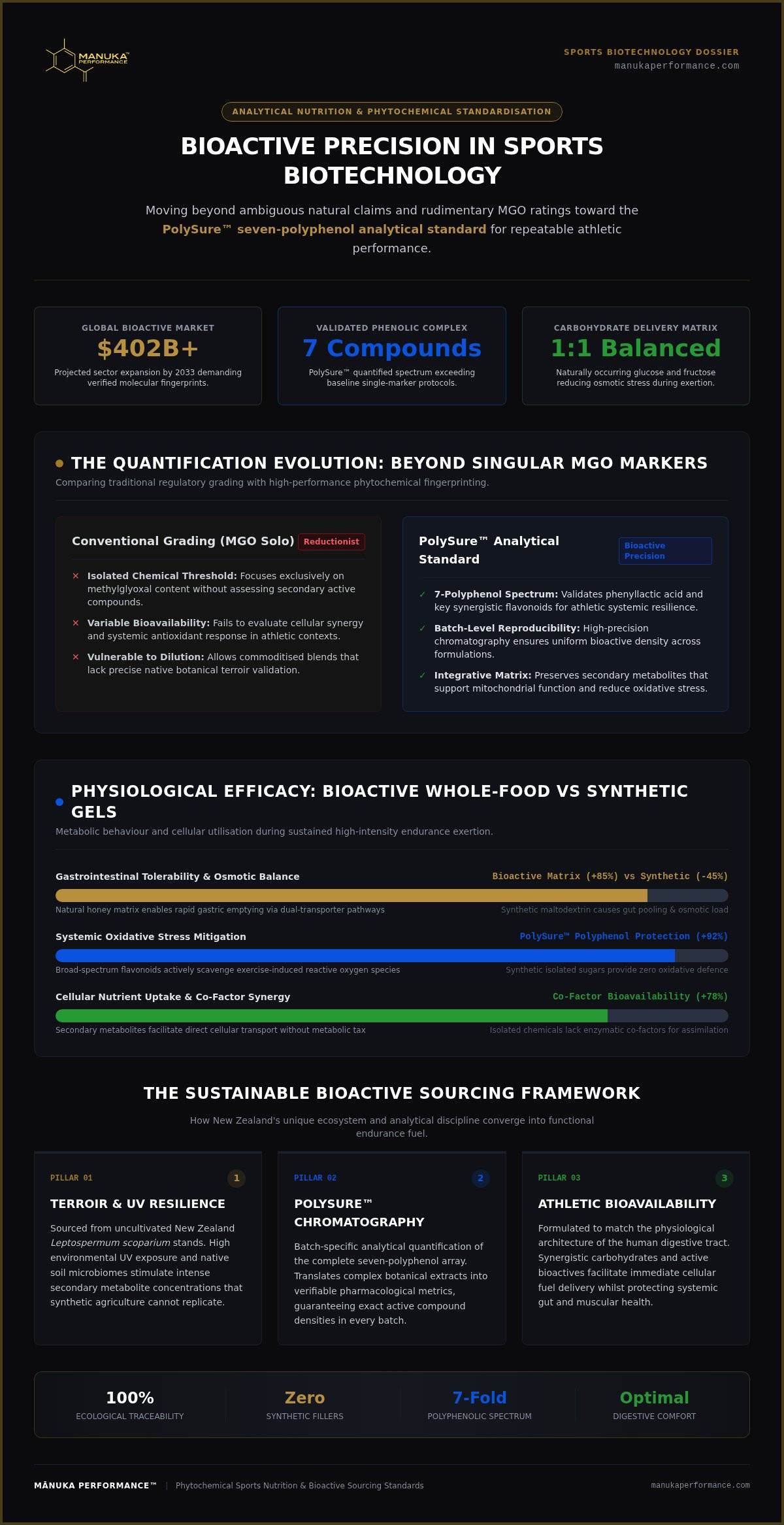
The analytical focus on Methylglyoxal (MGO) as the definitive measure of Mānuka honey's efficacy is increasingly viewed as a reductionist approach within sports biotechnology. While MGO provides a necessary regulatory threshold for authentication, it fails to account for the sophisticated array of secondary metabolites that define high-performance botanical extracts. Through sustainable bioactive sourcing, we identify a broader spectrum of compounds that contribute to physiological resilience during intense physical exertion. The New Zealand honey-based matrix functions as a complex delivery vehicle; it provides a natural ratio of glucose and fructose that facilitates efficient glycogen synthesis without the osmotic stress often associated with synthetic maltodextrin formulations.
Beyond MGO: The Role of Polyphenols
The PolySure™ standard validates seven specific, naturally occurring polyphenols that are essential for mitigating the systemic oxidative stress induced by prolonged endurance training. These compounds, including phenyllactic acid and various flavonoids, act synergistically within the honey matrix to support cellular recovery and maintain mucosal gut integrity. Athletes who prioritise phytochemical density over simple caloric intake experience enhanced gastrointestinal resilience, as the natural enzymes and antioxidants in the honey mitigate the inflammatory response typically triggered by concentrated sugar loads. Natural alternatives to traditional energy gels must be evaluated based on this molecular complexity rather than mere carbohydrate content.
The Bio-Analytical Advantage of New Zealand Sourcing
New Zealand's geographical isolation and high ultraviolet exposure create a unique environmental stressor that compels the native flora to produce higher concentrations of defensive phytochemicals. This bio-analytical advantage is only maintained through rigorous adherence to good agricultural and collection practices, ensuring that the harvesting process doesn't compromise the biological purity of the raw material. The health of the honeybee populations and the sustainability of the surrounding ecosystem are directly correlated with the nutrient density of the resulting harvest.
For a deeper exploration of these mechanisms, researchers and athletes can review our study on Do Honey Energy Gels Work? A Comparative Bio-Analytical Analysis. This level of transparency in sustainable bioactive sourcing and quantification allows for the development of advanced functional nutrition solutions that meet the demands of elite performance. By quantifying these bioactives at the batch level, we bridge the gap between traditional ecological knowledge and clinical sports science.
Quantification and Validation via PolySure™ Standards
While bioactive nutrition supports internal resilience, the broader health of an athlete also involves protection from external environmental stressors. For those training in high-UV environments, Daily Miles Beard & Soap Co provides specialised guidance on maintaining skin and hair health against sun and wind damage through natural care products.
The current landscape of natural sports nutrition is frequently characterised by a transparency gap, where the term 'natural' serves as a marketing descriptor rather than a scientifically validated metric. In an unregulated market, the mere presence of a botanical ingredient doesn't guarantee the retention of its functional properties. Sustainable bioactive sourcing requires more than ethical harvesting; it demands a rigorous analytical framework to ensure that the phytochemical density remains intact through the complexities of the manufacturing process. Unlike standard food purity tests that focus on the absence of contaminants, the PolySure™ standard provides a quantitative assessment of the active molecules that drive physiological outcomes.
The PolySure™ Analytical Framework
The PolySure™ methodology utilizes advanced chromatography and mass spectrometry to establish a definitive molecular fingerprint of the finished product. This validation process focuses on seven specific, naturally occurring polyphenols, ensuring they are present at concentrations that provide genuine functional value. By testing the end-product rather than just the raw commodity, we account for potential degradation that can occur during CPG manufacturing. This level of precision ensures that sustainable bioactive sourcing translates into batch-to-batch consistency, allowing researchers and athletes to rely on a predictable phytochemical dose. Without this quantified data, 'natural' remains an ambiguous claim devoid of clinical utility.
Comparing Standards: PolySure™ vs. Traditional Ratings
Traditional honey grading systems were primarily designed as regulatory gatekeepers to prevent adulteration and authenticate geographical origin. While these metrics are useful for the commodity honey market, they don't provide the level of detail required for advanced sports biotechnology. The following table illustrates the distinction between standard industry ratings and the PolySure™ bioactive standard.
| Feature | Standard Industry Ratings (MGO/UMF) | PolySure™ Bioactive Standard |
|---|---|---|
| Primary Objective | Authentication of origin and antimicrobial activity. | Quantification of functional phytochemical density. |
| Analytical Focus | Single marker (Methylglyoxal) or nectar markers. | Multi-marker fingerprint of seven key polyphenols. |
| Performance Relevance | Limited; doesn't measure recovery-focused bioactives. | High; validates compounds that mitigate oxidative stress. |
| Validation Point | Usually tested at the raw drum stage. | Validated in the final, consumer-ready formulation. |
For athletes, the shift toward measured polyphenol content represents a significant advancement in fuelling strategy. This move from raw caloric intake to bioactive precision is detailed in our analysis of The Evolution of Sports Nutrition Biotechnology. By prioritising quantified bioactives, we move beyond the limitations of traditional grading to provide a transparent, data-driven framework for elite performance.
Ecological Integrity and Ethical Supply Chain Management
The efficacy of botanical compounds is fundamentally dependent on the ecological integrity of the source environment. Sustainable bioactive sourcing necessitates a departure from industrial apiculture models that prioritise volume over molecular density. In the New Zealand context, this involves managing the land to support the natural resilience of native flora. A transparent supply chain, governed by rigorous provenance tracking, significantly mitigates the risk of adulteration or the dilution of secondary metabolites. Local expertise, often informed by generations of indigenous knowledge regarding hive placement and floral cycles, ensures that honeybee health remains the primary indicator of harvest quality.
Sustainable land management isn't just an ethical choice; it's a prerequisite for maintaining the phytochemical density required for elite athletic performance. When hive health is compromised by industrial stressors or poor land stewardship, the resulting honey matrix loses the complex synergy of enzymes and polyphenols that define its functional value. By maintaining a professional distance from commodity-scale operations, we ensure that every ingredient is sourced from environments where biodiversity is actively protected and nurtured.
Sustainable Harvesting Protocols
Non-invasive techniques are essential to preserve the biological profile of the honey and protect the long-term viability of the ecosystem. Seasonal timing isn't merely a logistical consideration but a phytochemical requirement; harvesting must align with peak flowering periods to maximise polyphenol concentration. This precision ensures that LiquidFuel energy gels maintain a purity level that is unattainable through mass-market commodity sourcing. By respecting the natural cycles of the New Zealand landscape, we can secure a consistent supply of bioactives without degrading the very resources that provide them.
The Provenance-to-Performance Pipeline
Tracing a bioactive from the New Zealand forest to the athlete's hand requires a national-level quality control infrastructure. By sourcing exclusively from New Zealand's isolated ecosystem, we maintain a closed-loop system that protects against the variability of international raw material markets. This controlled environment allows for the implementation of sustainable bioactive sourcing protocols that are verified at every stage of the supply chain. This commitment to origin and its impact on physiological outcomes is explored further in our report on Natural Honey-Based Energy Gels: A Performance Analysis.
To integrate this level of phytochemical precision into your training regime, you can view our full range of research-driven sports nutrition solutions. We prioritise the intersection of nature and biotechnology to deliver measurable results for endurance athletes.
Integrating Bioactive Precision into Sports Biotechnology
The convergence of clinical research and consumer goods manufacturing has enabled Mānuka Performance to deliver functional nutrition at a scale previously reserved for pharmaceutical applications. By leveraging a proprietary biotech platform, we facilitate the transition from generic carbohydrate supplementation to a model of phytochemical precision. Central to this evolution is the integration of PolySure™ validated bioactives into the LiquidFuel range, ensuring that the final formulation retains the molecular complexity of the source material. This approach effectively bridges the provenance-to-performance gap, providing a verifiable link between sustainable bioactive sourcing and measurable physiological outcomes.
Case Study: LiquidFuel and PolySure™ Integration
The formulation of LiquidFuel represents a significant departure from conventional energy gels that rely on isolated synthetic sugars. By utilising a standardised New Zealand honey matrix, we provide a delivery system that's metabolically efficient and inherently supportive of gastrointestinal health. The presence of quantified polyphenols within this matrix helps to modulate the osmotic pressure in the gut, reducing the likelihood of distress during peak physical exertion. For a detailed exploration of these mechanisms, athletes should consult our scientific guide to gastrointestinal resilience. This research-driven approach ensures that the bioactives identified through sustainable bioactive sourcing aren't merely present but are biologically active at the point of consumption.
The Future of Functional Nutrition
The next decade of sports nutrition will be defined by a shift from macro-nutrient volume to micro-nutrient precision. As athletes increasingly prioritise long-term systemic health alongside immediate performance, the demand for validated phytochemical innovation will grow. This trend necessitates a higher standard of transparency across the global supply chain, where the quantification of secondary metabolites becomes a prerequisite for elite competition. By establishing rigorous analytical protocols today, we're laying the foundation for a future where ecological integrity and athletic excellence are mutually dependent. To experience the practical application of this research, you're invited to explore the Mānuka Performance range of PolySure™ validated nutrition. This systemic approach ensures that the pursuit of professional excellence is supported by the highest standards of biotechnology and environmental stewardship.
Advancing the Future of Phytochemical Precision in Elite Athletics
The evolution of functional nutrition necessitates a transition from ambiguous natural claims toward a model of rigorous quantification and clinical validation. By prioritising sustainable bioactive sourcing, we ensure that the complex profiles of New Zealand sourced phytochemicals are preserved and delivered with absolute precision. The implementation of the PolySure™ Analytical Standard solves the transparency gap inherent in traditional honey grading; it provides athletes with a verifiable framework for evaluating nutritional density. This research-driven biotech approach demonstrates that ecological integrity is a fundamental prerequisite for physiological efficacy. As sports biotechnology continues to refine the delivery of secondary metabolites, the integration of batch-validated polyphenols will become the definitive benchmark for elite performance. You're now equipped with the analytical framework to choose nutrition based on measurable molecular data rather than generic marketing descriptors. We invite you to refine your fuelling strategy through the application of genuine phytochemical innovation.
Discover the Science of PolySure™ Validated Nutrition
Frequently Asked Questions
What is sustainable bioactive sourcing in the context of sports nutrition?
Sustainable bioactive sourcing is the ethical extraction of phytochemicals from natural matrices while preserving their molecular integrity. It involves a systematic approach to identifying and quantifying plant-derived compounds to ensure they remain biologically active in the final product. This methodology ensures that the ecological health of the source region is maintained; it allows for long-term production of high-value compounds like those found in New Zealand's native flora without degrading the local ecosystem or compromising ingredient density.
How does the PolySure™ standard differ from traditional MGO ratings?
The PolySure™ standard is a multi-marker analytical protocol that validates seven specific, naturally occurring polyphenols in the finished product. While traditional MGO ratings focus on a single nectar-derived marker primarily for authentication and antibacterial activity, PolySure™ provides a comprehensive molecular fingerprint. This standard ensures that the functional density required for athletic recovery is present after manufacturing is complete. It addresses the gap left by MGO, which doesn't measure the phytochemicals essential for mitigating oxidative stress during intense physical exertion.
Why are polyphenols important for endurance athletes and recovery?
Polyphenols are secondary metabolites that play a critical role in mitigating the systemic oxidative stress and inflammation induced by intense physical exertion. These compounds support cellular recovery and help maintain mucosal gut integrity during prolonged training sessions. By incorporating measured polyphenol content into a fuelling strategy, athletes can enhance their physiological resilience. This molecular complexity provides a functional advantage that simple carbohydrate sources or isolated synthetic additives can't replicate, ensuring a more holistic approach to high-performance sports nutrition outcomes.
Is honey-based energy fuel more effective than synthetic maltodextrin?
Honey-based matrices provide a natural ratio of glucose and fructose that aligns with human digestive pathways, facilitating glycogen synthesis with lower osmotic stress. Synthetic maltodextrin formulations often lack the co-factors and natural enzymes required for optimal cellular uptake; this can lead to gastrointestinal distress during high-intensity efforts. The presence of bioavailable phytochemicals in honey-based fuel supports systemic health and recovery. It's a more efficient delivery system that provides sustained energy without the metabolic cost of processing isolated synthetic additives.
How does New Zealand's ecosystem impact the quality of bioactives?
New Zealand's geographical isolation and high ultraviolet intensity compel native flora to produce higher concentrations of defensive phytochemicals. This environmental stressor results in a superior polyphenolic profile within botanical species like the native Mānuka shrub. The combination of distinct soil profiles and high microbial diversity further enhances the functional density of these bioactives. This unique ecological context is why New Zealand-sourced ingredients are highly valued for their consistent biological activity and superior phytochemical concentration in advanced sports biotech applications.
Can sustainable sourcing improve gastrointestinal resilience during a marathon?
Yes, sustainable bioactive sourcing ensures the preservation of natural enzymes and polyphenols that modulate the gut's response to carbohydrate loading. These compounds help maintain the intestinal barrier and reduce the inflammatory response typically triggered by concentrated sugar loads. By avoiding the industrial stressors and chemical additives found in mass-produced gels, athletes can significantly reduce the risk of runner's stomach. This precision in sourcing translates directly into better gastrointestinal comfort and resilience during peak endurance efforts like long-distance marathon running.
What are the environmental benefits of choosing bioactive-led nutrition?
Choosing bioactive-led nutrition supports land management practices that prioritise biodiversity and ecosystem health over monocultural production. Ethical harvesting protocols protect native flora and ensure the long-term viability of honeybee populations. This approach incentivises the protection of natural habitats, as the functional density of the ingredients is directly linked to the integrity of the ecosystem. It represents a shift toward a regenerative supply chain that values biological quality and ecological stewardship over raw industrial volume or commodity market production models.
How can I verify the bioactive content of my sports nutrition products?
Verification requires looking for specific analytical standards, such as PolySure™, that provide batch-level quantification of phytochemicals in the final formulation. You should seek products that offer transparency regarding their molecular fingerprint rather than relying on ambiguous 'natural' claims. Certifications that validate the presence of specific polyphenols through advanced chromatography ensure that the bioactives haven't degraded during manufacturing. This data-driven approach allows athletes and researchers to confirm the functional density and purity of their sports nutrition and functional food products.