


The physiological threshold of the human body during a 42.2 kilometre event is not merely a test of aerobic capacity, but a complex challenge of metabolic management where the traditional reliance on synthetic maltodextrin often precipitates systemic failure. For many athletes, the pursuit of a definitive marathon fueling strategy NZ is frequently undermined by gastrointestinal distress and the inevitable depletion of glycogen stores that occurs when the digestive system cannot process high-density artificial sugars under physical duress. You likely understand the frustration of meticulous training being eclipsed by a mid-race energy crash or the acute discomfort of "runner's stomach" caused by poorly formulated gels that lack biological synergy.
This guide provides a rigorous, research-led framework to master the biochemical requirements of endurance performance through precise carbohydrate loading and intra-race protocols. By leveraging a dual-source carbohydrate matrix and understanding the role of bioactive ingredients, you can maintain high-intensity output while facilitating rapid post-race physiological recovery. We will examine the quantification of carbohydrate-to-weight ratios and the implementation of a data-backed schedule designed to ensure your metabolic systems remain optimised from the starting line to the final kilometre, ensuring every gram of fuel is converted into measurable performance.
Key Takeaways
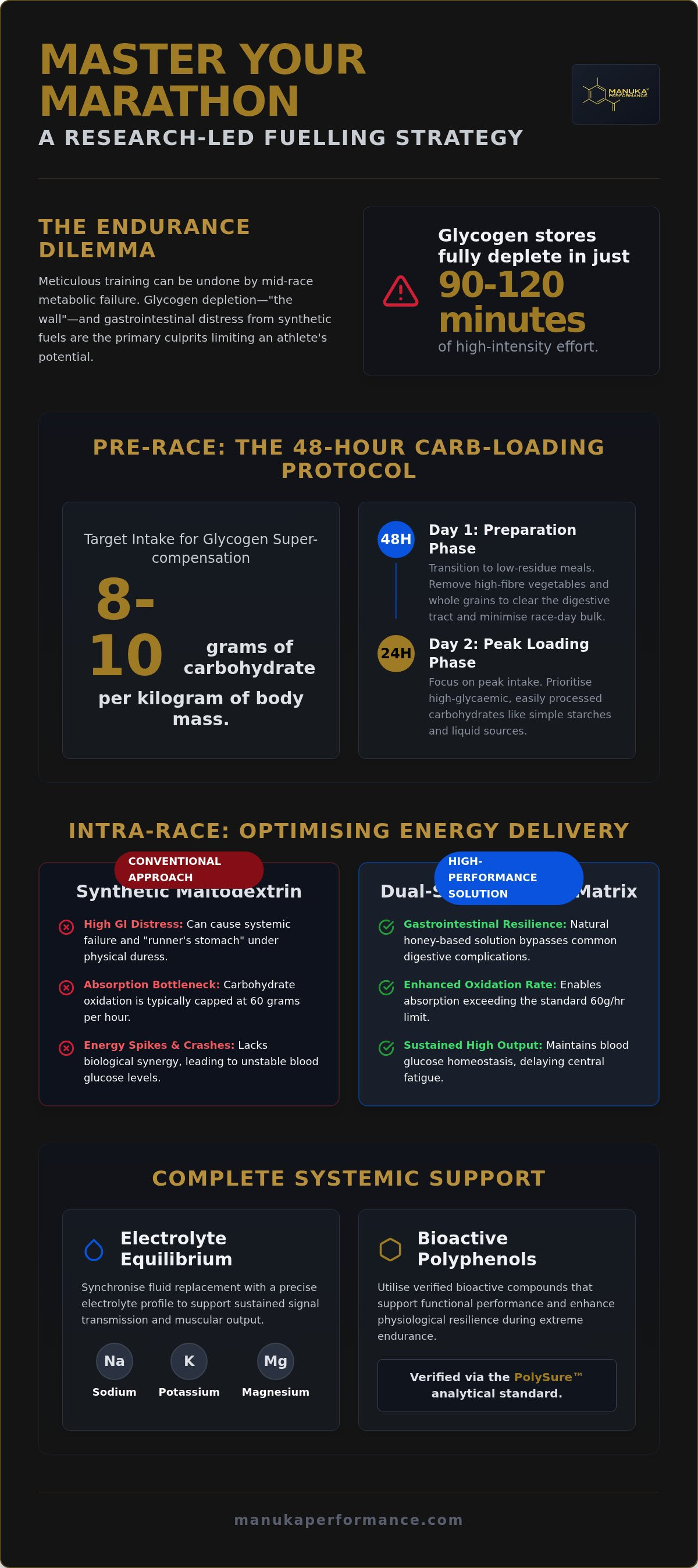
- Super-compensate muscle glycogen stores by adhering to a 48-hour loading protocol that targets a specific intake of 8 to 10 grams of carbohydrate per kilogram of body mass.
- Optimise energy delivery through a dual-source carbohydrate matrix, enabling you to exceed the standard 60 grams per hour oxidation rate without compromising gastrointestinal integrity.
- Refine your marathon fueling strategy NZ by integrating natural honey-based solutions that bypass the digestive complications often associated with synthetic, maltodextrin-heavy formulations.
- Maintain systemic equilibrium by synchronising fluid replacement with a precise electrolyte profile of sodium, potassium, and magnesium to support sustained signal transmission and muscular output.
- Utilise the PolySure™ analytical standard to identify and incorporate verified bioactive polyphenols that support functional performance and physiological resilience throughout the 42.2 kilometre distance.
The Biochemical Basis of Marathon Fatigue and Glycogen Management
Successful endurance performance is contingent upon the efficient management of glycogen, the branched polysaccharide that serves as the primary substrate for high-intensity aerobic respiration. During a 42.2 kilometre event, the body relies on these finite stores located within the skeletal muscles and the liver to produce adenosine triphosphate (ATP) at the rate required to maintain race pace. The physiological phenomenon colloquially known as "the wall" represents the critical point of hepatic and muscular glycogen depletion. When these stores are exhausted, the body is forced to transition from glycogenolysis to gluconeogenesis and lipid oxidation. While lipid oxidation provides a theoretically limitless energy pool, the metabolic cost of oxygen required to oxidise fats is significantly higher than that of carbohydrates. This inefficiency necessitates a forced reduction in mechanical output, as fat cannot be processed quickly enough to sustain the anaerobic threshold. Implementing sophisticated Carbohydrate loading protocols in the days preceding the event is a prerequisite for success, but a comprehensive marathon fueling strategy NZ must also prioritise the preservation of endogenous glycogen through the systematic delivery of exogenous fuel.
Understanding Glycogen Depletion Rates
At a sustained intensity of 70-80% VO2 max, a runner typically oxidises between 1.0 and 3.0 grams of carbohydrate per minute. Given that the human body can only store approximately 400 to 500 grams (roughly 2,000 calories) of glycogen, most athletes will exhaust their primary fuel source within 90 to 120 minutes of high-intensity effort. It's a biological limit that dictates performance. In New Zealand, variable environmental factors such as coastal winds and sudden temperature shifts can further disrupt metabolic efficiency. These conditions increase the rate of glycogen turnover as the body works harder to maintain thermoregulatory stability and overcome external resistance. Without intervention, the result is a systemic failure of the primary energy pathway.
The Role of Exogenous Carbohydrates
Exogenous fuel, delivered through gels or liquid solutions during the event, provides a direct source of glucose to the bloodstream. This supplemental energy prevents the central nervous system from "throttling" performance, a protective mechanism where the brain reduces motor unit recruitment when it detects falling blood glucose levels. By maintaining blood glucose homeostasis, athletes can delay the onset of central fatigue and maintain their intended velocity. A structured marathon fueling strategy NZ ensures that the rate of exogenous intake is matched to the individual's absorption capacity, preventing the metabolic crisis that occurs when the body attempts to synthesise energy from protein and fat stores under duress. It's the difference between a controlled finish and a total physiological collapse.
Designing a High-Performance Carb Loading Protocol
The implementation of a successful marathon fueling strategy NZ begins 48 hours before the starting gun, during the critical window for muscle glycogen super-compensation. To achieve maximum saturation, athletes must target a specific intake of 8 to 10 grams of carbohydrate per kilogram of body mass. This volume of intake requires a strategic shift in dietary composition, moving away from complex, fibrous foods toward high-glycaemic index sources that provide rapid glucose availability without excessive gastrointestinal residue. It's essential to align these protocols with expert advice on runner nutrition to ensure the metabolic system is primed for the endurance task ahead.
The 48-Hour Loading Schedule
Day one of the protocol involves transitioning to low-residue meals, which effectively clears the digestive tract of bulk that might cause discomfort during the race. This involves removing high-fibre vegetables and whole grains in favour of more easily processed alternatives. By day two, the focus shifts to peak intake, prioritising liquid carbohydrates and simple starches to hit the 8 to 10 gram target. This nutritional surge must be accompanied by a strict taper in training volume; any significant physical exertion during this period will oxidise the very stores you're attempting to build. Resting the musculature ensures that ingested glucose is partitioned directly into the myocytes for later use, providing a full tank for race morning.
Sample Nutrient Distribution for NZ Athletes
A high-performance loading phase requires a macronutrient split of approximately 70-80% carbohydrates, 10-15% protein, and 5-10% fat. In the New Zealand context, athletes can achieve this by utilising clean-label staples such as white rice, peeled potatoes, and refined wheat products. It's critical to avoid introducing new or experimental foods during the final 72 hours to prevent unforeseen allergic or digestive reactions. Precision in hydration is equally vital; every gram of glycogen stored requires approximately 3 grams of co-ingested water to facilitate the storage process. Without adequate fluid, the glycogen cannot be chemically bound within the muscle, leading to suboptimal energy reserves. Utilising a clean-label energy gel as a supplementary carbohydrate source during this window can help meet your targets without the digestive burden of heavy solid meals. Integrating these variables into your marathon fueling strategy NZ ensures that your physiological preparation is as rigorous as your physical training.
Managing Intra-Race Carbohydrate Intake for Gastrointestinal Resilience
Effective execution of a marathon fueling strategy NZ requires a detailed understanding of the rate-limiting steps in intestinal absorption. The human gut utilises specific transport proteins to move carbohydrates from the lumen into the bloodstream; primarily the sodium-glucose linked transporter (SGLT1) for glucose and the GLUT5 transporter for fructose. Because SGLT1 becomes saturated at approximately 60 grams per hour, relying solely on glucose or maltodextrin-based gels often leads to an accumulation of unabsorbed solutes in the intestine. This triggers an osmotic imbalance, drawing water into the gut and resulting in the acute gastrointestinal distress frequently termed "runner's stomach." By contrast, utilising a dual-source carbohydrate matrix leverages both transport pathways simultaneously, allowing for total oxidation rates to exceed 90 grams per hour. This approach is a cornerstone of any modern marathon nutrition guide, as it maximises energy availability while mitigating the risk of systemic rejection.
The Little and Often Strategy
Maintaining blood glucose homeostasis necessitates a consistent, metered delivery of exogenous fuel. Clinical observation advocates for the ingestion of 20 to 30 grams of carbohydrates at intervals of 20 to 30 minutes throughout the event. This "little and often" approach prevents significant insulin spikes and the subsequent reactive hypoglycaemia that can occur with large, infrequent boluses. It's also imperative to implement "gut training" during preparatory long runs. This process involves gradually increasing carbohydrate intake to upregulate the expression of SGLT1 and GLUT5 transporters, thereby enhancing the body's capacity to process high fuel loads under physiological stress.
Overcoming Gastrointestinal Barriers
The use of a natural honey-based matrix offers distinct advantages over synthetic formulations due to its inherent glucose-to-fructose ratio and lower osmolality. High-osmolality synthetic gels can delay gastric emptying, causing the fuel to sit in the stomach rather than moving into the small intestine for absorption. Natural honey contains phytochemicals that assist in soothing the digestive lining during the mechanical stress of running. For a deeper technical review, consult our research on Natural Honey-Based Energy Gels: A Performance Analysis of NZ Innovation. Integrating these bioactive solutions into a marathon fueling strategy NZ allows athletes to sustain peak performance without the metabolic interruptions common to traditional sports nutrition.
Hydration and Electrolyte Equilibrium in New Zealand Conditions
Achieving systemic homeostasis during an endurance event requires a precise calibration of fluid volume and solute concentration. Within a robust marathon fueling strategy NZ, athletes must differentiate between simple dehydration, which is the net loss of total body water, and hyponatremia, a potentially critical condition where plasma sodium levels fall below 135 mmol/L due to excessive dilution. In New Zealand’s coastal marathon environments, high humidity often impairs evaporative cooling, while persistent winds can accelerate sweat evaporation, frequently leading runners to underestimate their actual fluid requirements. Maintaining an equilibrium of electrolytes, specifically sodium, potassium, and magnesium, is essential for sustaining the sodium-potassium pump that governs muscular contraction and neural signal transmission. A baseline fluid intake of 400 to 800ml per hour is generally recommended, though this must be meticulously adjusted based on environmental variables and individual physiology.
Calculating Individual Sweat Rates
Precision in hydration is only possible through the quantification of individual sweat rates. To establish a reliable data point, perform a 60-minute trial run at race intensity in conditions that simulate the target event. Weigh yourself in the nude before and after the session, accounting for any fluid consumed during the hour. One kilogram of weight loss is approximately equivalent to one litre of fluid loss. If your weight decreases by more than 2% of your total body mass, your hydration protocol is insufficient. Conversely, a weight gain indicates over-hydration with plain water, which increases the risk of osmotic dilution. Your intra-race fluid intake should aim to replace 60-80% of these losses to prevent the cognitive and physical decline associated with hypohydration.
The Synergy of Carbohydrates and Electrolytes
The relationship between hydration and energy delivery is synergistic rather than parallel. Sodium plays a pivotal role in the SGLT1 transport mechanism, as glucose absorption in the small intestine is coupled with the active transport of sodium ions. Without adequate sodium, the rate of carbohydrate uptake is significantly attenuated, regardless of the volume of fuel ingested. During the final stages of a race, the use of isotonic solutions, which possess an osmolality of 250 to 340 mOsmol/kg, ensures rapid gastric emptying and efficient absorption. If your primary fuel source doesn't contain a comprehensive electrolyte profile, the timed administration of electrolyte capsules may be necessary to prevent intracellular cramping. To optimise your systemic mineral balance, you should consider integrating a scientifically validated sports nutrition product into your race-day protocol.
Integrating Bioactive Honey Matrices into Your Performance Strategy
The final component of a sophisticated marathon fueling strategy NZ is the integration of bioactive compounds that support systemic resilience beyond mere glycogen replenishment. While traditional sports nutrition relies heavily on isolated synthetic sugars, LiquidFuel offers a technologically advanced alternative through a natural honey-based matrix. This formulation is validated by the PolySure™ analytical standard, a rigorous methodology used to quantify seven specific naturally occurring polyphenols. These bioactives are critical for managing the oxidative stress induced by sustained high-intensity output, providing a functional advantage that synthetic, maltodextrin-heavy bases cannot replicate. By transitioning to a bioactive-rich fuel source, athletes can address the biochemical toll of endurance racing with greater precision.
The PolySure™ Advantage
The PolySure™ standard ensures that every LiquidFuel 10-Pack Running Gel contains a standardised concentration of functional bioactives. These seven naturally occurring polyphenols serve as a tool for systemic performance, supporting physiological resilience as athletes enter the "dark miles" beyond the 32 kilometre mark where cellular fatigue is most acute. Unlike industry-standard synthetic gels that often present a high osmotic load, the clean-label profile of this honey-based matrix aligns with the body's natural absorptive pathways. This reduces the metabolic tax on the digestive system, allowing the athlete to focus entirely on mechanical output rather than managing internal distress. The result is a more stable energy profile and a reduction in the inflammatory markers associated with prolonged aerobic duress.
Practical Implementation on Race Day
To maximise the efficacy of this bioactive matrix, athletes should adhere to a precise administration protocol. We recommend the ingestion of one LiquidFuel gel approximately 15 minutes prior to the commencement of the event to prime blood glucose levels. Subsequent doses should be administered every 30 to 45 minutes throughout the duration of the race. This schedule ensures a steady state of both multi-transportable carbohydrates and protective bioactives. The inherent bioavailability of the honey matrix facilitates rapid gastric emptying even under significant physiological stress. Prioritising New Zealand-made innovation within your marathon fueling strategy NZ not only supports local biotech research but provides a distinct competitive advantage through superior ingredient provenance and validated functional efficacy.
Achieving Peak Metabolic Efficiency
Mastering the biochemical complexities of endurance requires a shift from intuitive guesswork to a rigorous, data-driven framework. By synchronising a 48-hour glycogen super-compensation phase with a dual-source carbohydrate matrix during the event, you effectively mitigate the risk of metabolic depletion and gastrointestinal rejection. This integrated marathon fueling strategy NZ ensures that your physiological output remains consistent through the final, most demanding stages of the 42.2 kilometre distance.
Success is predicated on the quality of your exogenous fuel and its ability to support systemic resilience. Our LiquidFuel formulations feature a scientifically balanced glucose-fructose matrix and PolySure™ validated bioactive content, ensuring every gram of intake contributes to measurable performance. These developments are trusted by competitive New Zealand endurance athletes who demand clinical precision in their nutritional preparation. Optimise your marathon fuelling with the LiquidFuel 10-Pack Running Gel to secure your competitive advantage. Your commitment to scientific rigour in your preparation will translate into a superior race-day outcome.
Frequently Asked Questions
How many grams of carbs per hour should I aim for during a marathon?
Clinical guidelines suggest an intake of 60 to 90 grams of carbohydrates per hour for optimal endurance maintenance. This volume is predicated on the body's ability to process exogenous fuel through multiple transport pathways. Achieving the upper limit of this range requires a dual-source matrix, such as the glucose-fructose ratio found in LiquidFuel, to bypass the saturation limits of individual intestinal transporters. Adhering to this quantification is a critical component of a robust marathon fueling strategy NZ.
Is honey a better fuel source than synthetic maltodextrin gels?
Honey serves as a superior substrate because it naturally contains a multi-transportable carbohydrate profile, whereas many synthetic gels rely solely on maltodextrin. The presence of both glucose and fructose allows for simultaneous absorption via SGLT1 and GLUT5 pathways, increasing total oxidation rates. Additionally, the bioactive properties and lower osmolality of honey-based matrices reduce the risk of osmotic imbalances in the gut, providing a more stable energy platform than artificial alternatives.
How do I avoid runners stomach during the second half of the race?
Mitigating gastrointestinal distress requires the avoidance of high-osmolality synthetic gels that cause fluid shifts in the intestine. You should utilise a natural, clean-label matrix that facilitates rapid gastric emptying and intestinal absorption. Consistent "gut training" during preparatory long runs is also essential to upregulate transporter proteins. By maintaining a steady, metered intake of 20 to 30 grams every 30 minutes, you prevent the accumulation of unabsorbed solutes that typically triggers "runner's stomach."
Should I drink water or sports drinks at the NZ marathon aid stations?
Athletes should prioritise fluids that contain a precise balance of electrolytes and carbohydrates to maintain plasma osmolality. While plain water is necessary for thermoregulation, excessive consumption without sodium can lead to hyponatremia. Most New Zealand aid stations provide standard electrolyte drinks, but these vary in concentration. It's often more effective to carry your own validated gels and supplement with water to ensure your specific marathon fueling strategy NZ remains controlled and predictable.
What is the best way to carb load if I have a sensitive stomach?
For individuals with gastrointestinal sensitivity, the 48-hour loading phase should focus on low-residue, high-glycaemic index carbohydrates. Transitioning to liquid fuel sources and refined starches like white rice or peeled potatoes minimises digestive bulk. Aim for 8 to 10 grams of carbohydrate per kilogram of body mass, but distribute this intake across multiple small meals. This approach reduces the mechanical load on the digestive system while still achieving full muscle glycogen super-compensation before the event.
Can I use LiquidFuel gels if I am also using an electrolyte drink?
Integration of LiquidFuel with an electrolyte drink is viable, provided you monitor the cumulative carbohydrate and sodium concentrations. The goal is to stay within the 60 to 90 gram per hour carbohydrate threshold while ensuring sodium intake matches your calculated sweat rate. Using a clean-label gel alongside a hypotonic electrolyte solution can optimise both energy delivery and hydration. Always validate this combination during high-intensity training sessions to ensure your digestive system tolerates the combined osmolality.
When should I take my last gel before the finish line?
The final exogenous fuel bolus should ideally be administered approximately 30 to 45 minutes before your projected finish time. This timing allows for the transit and absorption of glucose into the bloodstream to support the final metabolic surge. Taking a gel too late, such as within the final two kilometres, provides negligible performance benefits as the nutrients won't be fully oxidised before the event concludes. Consistency in the 30-minute dosing schedule remains the most effective protocol.
How does the PolySure™ standard benefit my marathon recovery?
The PolySure™ standard validates the presence of seven specific polyphenols that are instrumental in managing the systemic oxidative stress associated with endurance racing. By quantifying these bioactives, we ensure that the fuel source provides functional support for cellular resilience during and after the event. These antioxidants help mitigate the inflammatory response triggered by prolonged aerobic duress, which facilitates a more rapid return to physiological homeostasis and accelerates the overall muscle repair process post-marathon.