


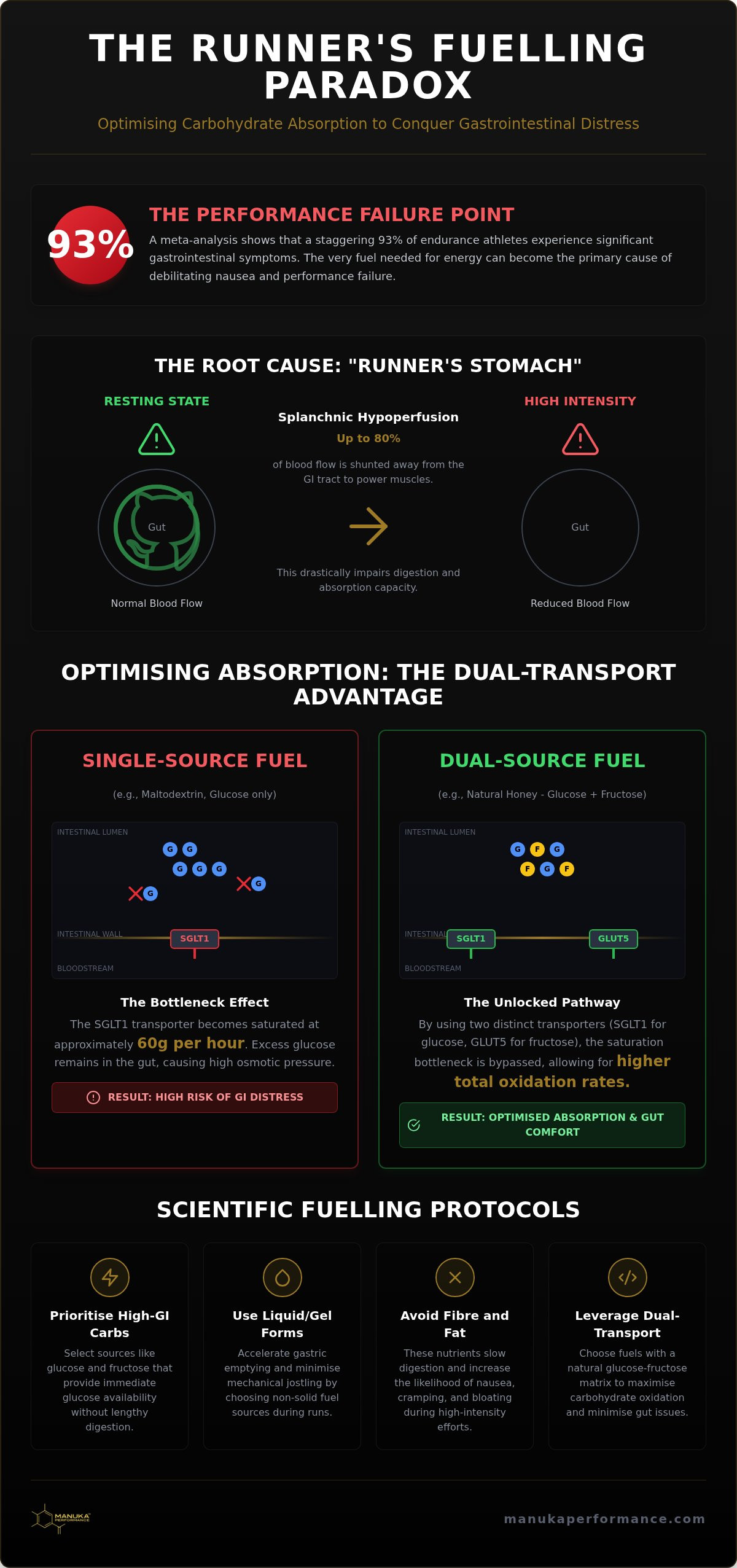
A 2026 meta-analysis of endurance athletes indicates that while high carbohydrate ingestion is critical for sparing muscle glycogen, approximately 93% of participants experience significant gastrointestinal symptoms that can lead to total performance failure. You've likely encountered the frustrating paradox where the very fuel required to prevent energy depletion becomes the primary source of debilitating nausea or systemic distress during high-intensity efforts. Identifying truly easy to digest carbs for runners requires moving beyond superficial marketing claims and into the rigorous biochemistry of carbohydrate bioavailability and metabolic pathway saturation.
This article provides an authoritative analysis of the molecular mechanisms governing nutrient absorption, specifically focusing on how natural carbohydrate matrices can optimise energy intake without the inflammatory responses often triggered by synthetic maltodextrin. We'll examine the dual-transport interactions of SGLT1 and GLUT5 transporters and evaluate how specific bioactive profiles facilitate rapid gastric emptying. By the conclusion of this technical review, you'll possess a scientific framework for selecting fuel sources that maintain steady blood glucose levels and improve your running economy through the application of precision-engineered nutrition.
Key Takeaways
- Understand the physiological impact of splanchnic blood shunting on gastric emptying and the necessity of specific carbohydrate structures to mitigate gastrointestinal dysfunction during high-intensity exertion.
- Maximise nutrient absorption through the strategic utilisation of dual-pathway transporters, specifically SGLT1 and GLUT5, to increase carbohydrate oxidation rates beyond standard saturation points.
- Identify easy to digest carbs for runners by assessing the bio-analytical matrix of fuel sources and their documented impact on intestinal transit times and systemic bioavailability.
- Develop precise fuelling protocols that incorporate pre-exertion loading and intra-run micro-dosing to maintain blood glucose stability without compromising gastrointestinal comfort.
- Explore the application of PolySure™ validated bioactive ingredients in maintaining gut barrier integrity and enhancing the metabolic efficiency of natural glucose-fructose matrices.
The Physiological Mechanism of Carbohydrate Digestion in Runners
For an endurance athlete, easy to digest carbs for runners are defined as those requiring minimal enzymatic intervention to reach the systemic circulation. When you consume complex carbohydrates, your digestive system must execute a series of hydrolytic reactions to break down long-chain polysaccharides into simple monosaccharides. Under resting conditions, this process is efficient; however, the metabolic cost of this breakdown becomes prohibitively high during high-intensity exertion. The body's primary objective during a run is to maintain glycaemic homeostasis, ensuring a constant supply of glucose to the working muscles to prevent the premature depletion of glycogen stores.
The physiological challenge arises from the "Runners Stomach" phenomenon, which is scientifically characterised by splanchnic hypoperfusion. As exercise intensity increases, the autonomic nervous system shunts up to 80% of blood flow away from the gastrointestinal tract toward the skeletal muscles and skin for thermoregulation. This drastic reduction in oxygenated blood to the gut impairs the motility of the stomach and the absorptive capacity of the small intestine. While many athletes utilise Carbohydrate Loading strategies to saturate muscle glycogen before an event, the intra-race requirement shifts toward substrates that don't demand significant blood flow for processing.
The Role of the Glycaemic Index in Intra-Workout Fuelling
The glycaemic index (GI) serves as a critical metric for categorising how rapidly specific carbohydrates elevate blood glucose levels. During the active phase of a run, high-GI carbohydrates are preferred because they facilitate immediate glucose availability. Monosaccharides like glucose and fructose bypass the lengthy breakdown required by low-GI complex starches, moving rapidly through the intestinal lumen. This rapid transit is essential for maintaining performance, as it provides the fuel necessary for cellular respiration without the lag time associated with complex digestion. It's the difference between a direct metabolic contribution and a delayed energy release that may arrive too late to prevent "bonking".
Gastrointestinal Transit and Exercise-Induced Stress
Mechanical factors also dictate the efficacy of your fuelling strategy. Running involves significant vertical oscillation and jostling, which can exacerbate gastrointestinal distress if the stomach contains undigested solids. Liquid or gel-based easy to digest carbs for runners are superior in this context because they accelerate gastric emptying. You should strictly avoid fibre and fat during high-intensity efforts, as these nutrients slow the rate at which food leaves the stomach, increasing the likelihood of nausea and cramping. Bioavailability in the context of endurance nutrition is the measured rate and extent at which exogenous carbohydrates reach the systemic circulation to become available for metabolic oxidation.
Optimising Absorption via the Dual-Transport Mechanism
The efficacy of easy to digest carbs for runners is dictated by the saturation kinetics of intestinal transport proteins. While glucose molecules utilise the Sodium-Glucose Linked Transporter 1 (SGLT1) to cross the intestinal wall, fructose relies on a distinct pathway known as the GLUT5 transporter. When an athlete relies on a single carbohydrate source, such as maltodextrin, the SGLT1 transporters reach a saturation point at approximately 60 grams per hour. Any exogenous glucose consumed beyond this threshold remains in the intestinal lumen, creating a high osmotic pressure that draws water into the gut and triggers gastrointestinal distress.
Natural honey provides a pre-existing matrix of these two primary sugars, offering a biological advantage over isolated synthetic polymers. By delivering a blend of glucose and fructose, honey-based matrices bypass the single-transporter bottleneck. This dual-transport mechanism allows for higher total carbohydrate oxidation rates because both transport pathways are utilised simultaneously, ensuring that the fuel reaches the bloodstream rather than stagnating in the digestive tract. Research from 2026 confirms that for efforts exceeding 90 minutes, runners should target an intake of 60 to 120 grams per hour to maximise performance.
The Science of Glucose-Fructose Synergies
Utilising dual-pathway fuelling can increase carbohydrate absorption to over 90 grams per hour, a significant improvement over the 60 grams per hour limit of glucose-only solutions. The biochemical advantage of a natural honey matrix over synthetic maltodextrin-fructose blends lies in the molecular complexity and the presence of co-factors that facilitate transport. Furthermore, these natural solutions often exert lower osmotic pressure in the gut, which reduces the risk of cellular dehydration and improves gastric emptying rates. For athletes seeking to implement this science, the LiquidFuel 10-Pack Running Gel offers a validated honey-based matrix designed for optimal dual-pathway absorption.
Preventing Osmotic Diarrhoea and Bloating
Osmotic diarrhoea and bloating occur when unabsorbed sugars reach the colon, where they undergo fermentation and trigger fluid retention. This physiological disruption is a primary cause of race abandonment, with a 2025 study of triathletes showing that 93% of participants experienced at least one gastrointestinal symptom. Maintaining gastric comfort is essential for preserving psychological focus during competition; a calm gut allows the athlete to concentrate on pace and biomechanics rather than internal distress. Once successfully absorbed, these carbohydrates are transported to the mitochondria for metabolic oxidation, where they are converted into ATP via the citric acid cycle to power muscular contractions.
Comparing Carbohydrate Sources: Whole Foods vs. Engineered Matrices
While the standard athletic diet often prioritises whole food sources, the distinction between pre-race loading and intra-race fuelling is frequently overlooked. Common recommendations for easy to digest carbs for runners typically include white rice, bananas, and refined sourdough. These foods are selected for their high glycaemic availability and low residue. However, the physical bulk and residual fibre content of whole foods present significant challenges during high-intensity intervals. When blood is shunted away from the gut, the presence of solid matter in the stomach increases the risk of mechanical irritation and delayed gastric emptying.
Synthetic energy gels were developed to solve this volume issue, yet many traditional formulations introduce new variables that compromise gastrointestinal integrity. The inclusion of thickeners like xanthan gum, chemical preservatives, and artificial flavourings can irritate the intestinal lining. This irritation often manifests as the "gut rot" experienced by many endurance athletes. A transition toward a "Clean Label" standard represents a move toward nutritional purity, prioritising ingredients that provide metabolic fuel without the physiological burden of synthetic additives.
Whole Food Performance: Bananas and White Rice
Bananas and white rice are valued for their simple starch structures and potassium content, which supports electrolytic balance. White rice, particularly varieties with a high amylopectin-to-amylose ratio, provides a rapid glucose release. Despite these benefits, the limitations of solid food become apparent during high-heart-rate efforts. The metabolic energy required to process even soft solids can detract from athletic output. Additionally, the preparation time and lack of portability make whole foods impractical for most competitive running scenarios where timing is critical.
The Evolution of Energy Gels: From Syrups to Natural Matrices
Early iterations of energy gels relied heavily on concentrated glucose syrups and maltodextrin, which often resulted in high osmolality and subsequent stomach cramps. Modern advancements in sports science have facilitated a shift toward more sophisticated delivery systems, such as hydrogels and natural honey-based matrices. These innovations aim to mimic the body's natural absorptive capacity while providing a higher density of bioactive compounds. This evolution is detailed extensively in the research on Natural Honey-Based Energy Gels: A Performance Analysis of NZ Innovation, which examines how New Zealand's unique biological resources are redefining endurance nutrition. Natural honey-based solutions offer a lower concentration of complex starches that traditionally cause fermentation and bloating, making them ideal easy to digest carbs for runners who require high-density energy without the gastrointestinal cost.
Strategic Fuelling Protocols for Different Running Distances
Implementing a scientifically validated fuelling protocol is essential for translating nutritional theory into measurable performance gains. The strategic application of easy to digest carbs for runners involves a four-step methodology that begins in the pre-exertion phase and extends through systemic recovery. Within the 90-minute pre-run window, athletes should prioritise high-glycaemic availability while strictly limiting fibre intake to ensure rapid gastric clearance. This prevents the presence of undigested matter in the gut, which can lead to mechanical distress once the shunting of blood to working muscles commences.
During the active phase, intra-run micro-dosing provides a steady supply of exogenous glucose to maintain blood glucose levels without overloading the intestinal transporters. Post-run, the focus shifts to glycogen resynthesis; 2026 clinical guidelines recommend consuming 1.0 to 1.2 grams of carbohydrates per kilogram of body weight per hour for the first four hours, paired with 20 to 40 grams of protein to facilitate rapid tissue repair. Managing hydration in tandem with this intake is critical; if the osmolarity of the stomach contents becomes too high, the resulting fluid shift can cause dehydration and gastrointestinal cramping.
Half Marathon and Marathon Fuelling Strategies
Targeting specific carbohydrate volumes is dependent on intensity and duration. Sub-3 hour marathoners should aim for 60 to 90 grams of carbohydrates per hour, whereas those in the 4-hour range may find 30 to 60 grams sufficient. To tolerate these higher loads, a "train the gut" protocol is advised, where intake is gradually increased over a 6 to 10 week training cycle. Identifying warning signs like bloating or a "sloshing" sensation is vital; these symptoms indicate that gastric emptying has slowed and intake should be temporarily paused to allow for absorption.
Ultra-Endurance and Trail Running Considerations
In ultra-endurance contexts, managing flavour fatigue and varied textures is necessary to maintain caloric intake over extended durations. Electrolytes, particularly sodium, play a fundamental role in facilitating the transport of glucose across the gut lining via the SGLT1 pathway. For instances where gastrointestinal distress prevents ingestion, carbohydrate mouth rinsing for five to ten seconds can provide neural activation of the brain's reward centres to reduce perceived exertion without requiring digestion. To ensure your protocol is supported by high-bioavailability nutrition, you can optimise your race-day strategy with the LiquidFuel 10-Pack Running Gel, which is formulated for maximum gastrointestinal resilience.
Leveraging Bioactive Honey for Superior Gastrointestinal Resilience
The integration of the PolySure™ analytical standard into sports nutrition represents a significant advancement in the quantification of bioactive efficacy for endurance athletes. While previous discussions focused on the transport mechanisms of simple sugars, the systemic resilience of the gut depends on more than just caloric throughput. Easy to digest carbs for runners must be evaluated not only for their glycaemic availability but also for their capacity to maintain intestinal barrier function under intense physiological stress. New Zealand honey, when validated through rigorous laboratory testing, provides a unique matrix that supports this requirement by offering a natural glucose-fructose ratio that ensures steady energy delivery without the metabolic "crash" associated with isolated synthetic sugars.
The LiquidFuel 10-Pack Running Gel utilizes this validated honey-based matrix to provide a clean-label alternative to traditional engineered products. By leveraging a naturally occurring carbohydrate structure, this formulation reduces the digestive burden on the small intestine. This is particularly relevant for athletes who have previously struggled with the high osmolality of maltodextrin-based gels, which can draw excess water into the colon and trigger systemic distress. The result is a fuelling solution that aligns with the body's natural absorptive capacity while providing the high-density energy required for competitive performance.
Beyond Sugars: The Role of Polyphenols in Gut Health
Specific honey bioactives, particularly the seven naturally occurring polyphenols validated by the PolySure™ standard, play a critical role in mitigating exercise-induced oxidative stress within the intestinal lumen. Unlike raw table honey, which lacks standardised bioactive concentrations and may contain impurities, performance-led honey matrices are validated to ensure consistent biochemical output. These polyphenols assist in maintaining the integrity of the gut lining, potentially reducing the systemic inflammation that often leads to increased intestinal permeability during long runs. For competitive athletes, this level of validation provides the scientific certainty that their fuel source actively contributes to gastrointestinal stability rather than merely providing raw calories.
Practical Implementation: Transitioning to Honey-Based Fuel
Transitioning to a honey-based fuelling strategy involves integrating LiquidFuel into your existing training regimen to assess individual tolerance and palatability during varied intensities. The sensory profile of natural honey offers a distinct advantage over synthetic alternatives; its natural viscosity and refined flavour profile significantly reduce the likelihood of flavour fatigue during ultra-endurance events. Because the New Zealand honey matrix is naturally lower in the complex starches that traditionally cause fermentation and bloating, it's an ideal source of easy to digest carbs for runners. You can optimise your endurance fuelling with PolySure™ validated honey gels to ensure your nutritional strategy is supported by the intersection of natural provenance and biotechnological precision.
Optimising Athletic Output Through Precision Nutrition
The transition from generic sports nutrition to a scientifically validated fuelling strategy is essential for any athlete seeking to surpass previous performance plateaus. By prioritising the dual-transport mechanism and selecting easy to digest carbs for runners that bypass the limitations of single-sugar saturation, you can maintain metabolic homeostasis even under extreme physiological stress. The evidence indicates that natural, bioactive matrices provide a significant advantage in maintaining gut barrier integrity and preventing the systemic inflammation often triggered by synthetic additives.
To implement these findings into your next endurance effort, explore the LiquidFuel 10-Pack Running Gel for Bioavailable Performance. These formulations are validated by the PolySure™ analytical standard and utilise a natural glucose-fructose matrix for superior absorption; they're entirely free from synthetic thickeners and artificial preservatives. Achieving your peak performance requires a commitment to rigorous nutritional standards that respect your body's complex biological systems. You now possess the scientific framework to fuel with confidence and precision.
Frequently Asked Questions
What are the easiest carbohydrates for a runner to digest before a race?
High-glycaemic, low-fibre options such as white rice, bananas, or honey-based matrices are the most efficient because they require minimal enzymatic breakdown to enter the bloodstream. These substrates facilitate rapid gastric emptying, ensuring that energy is available in the systemic circulation before the onset of exercise-induced blood shunting. By prioritising monosaccharides over complex polysaccharides, you reduce the metabolic workload on the gastrointestinal tract during the critical pre-race window.
Why do synthetic energy gels often cause stomach cramps or bloating?
Synthetic gels frequently utilise high concentrations of maltodextrin or isolated glucose, which can saturate the SGLT1 intestinal transporters and lead to high osmotic pressure. This pressure draws water into the gut, resulting in bloating and discomfort. Additionally, the inclusion of artificial thickeners and preservatives can irritate the intestinal lining, exacerbating the risk of gastrointestinal distress during high-intensity intervals where gut motility is already compromised.
Is honey a better carbohydrate source than maltodextrin for runners?
Honey serves as a superior source of easy to digest carbs for runners because it naturally provides a glucose-fructose matrix that leverages dual-transport pathways. Unlike synthetic maltodextrin, which relies solely on the SGLT1 transporter, honey's fructose component utilises the GLUT5 pathway. This prevents transporter saturation and allows for a higher total carbohydrate oxidation rate. Honey-based matrices are also naturally lower in the complex starches that typically trigger fermentation.
How many grams of carbohydrates should a runner consume per hour?
Current 2026 clinical guidelines recommend an intake of 60 to 120 grams of carbohydrates per hour for efforts exceeding 90 minutes. For recreational runners, starting at the lower end of this range is advisable to assess individual gastrointestinal tolerance. To achieve the upper threshold of 90 to 120 grams without distress, a 1:1 or 1:0.8 ratio of glucose to fructose is essential to maximise absorption through both intestinal transport pathways.
Can I use white bread as a fast-digesting carb before a run?
Refined white bread provides a high-glycaemic response and is generally well-tolerated, but its efficacy is limited compared to liquid or gel-based matrices. While it lacks the fibre found in wholemeal varieties, the solid structure still requires more mechanical digestion and enzymatic intervention than monosaccharide solutions. For runners with sensitive stomachs, refined sourdough or white rice may be preferable alternatives due to their lower potential for residual fermentation in the colon.
What is the best way to avoid "hitting the wall" without upsetting my stomach?
The most effective method involves "gut training" and the strategic use of dual-source carbohydrates to maintain blood glucose stability. By gradually increasing your carbohydrate intake during training over 6 to 10 weeks, you enhance the gut's absorptive capacity. Utilising a honey-based matrix validated for high bioavailability ensures that the fuel is absorbed efficiently, preventing the energy depletion known as "bonking" while significantly minimising the risk of osmotic diarrhoea.
How does the PolySure™ standard ensure better digestibility for athletes?
The PolySure™ analytical standard validates the presence of seven naturally occurring polyphenols that support intestinal barrier integrity and mitigate oxidative stress. This rigorous quantification ensures that the honey-based matrix maintains high bioavailability and gastrointestinal tolerance. For competitive athletes, this standard provides a level of scientific validation that generic honey lacks, ensuring that the easy to digest carbs for runners are both pure and metabolically efficient.
Should I consume carbohydrates during a run shorter than 60 minutes?
Carbohydrate ingestion is generally unnecessary for efforts under 60 minutes, as existing muscle glycogen stores are typically sufficient for this duration. However, for high-intensity sessions, a carbohydrate mouth rinse can be employed to stimulate the central nervous system and reduce perceived exertion. If the run serves as a "gut training" session for an upcoming marathon, consuming small amounts of fuel can help adapt the digestive system to higher intake rates.