


The persistent reliance on synthetic maltodextrin as a primary ergogenic aid is increasingly recognised as a compromise rather than a gold standard for elite endurance performance. While athletes have long tolerated gastrointestinal distress and the unpalatable, "chemical" texture of traditional options, the search for a sophisticated Gu energy gel alternative has led to a paradigm shift in contemporary sports nutrition. This transition prioritises bio-analytical validation over industrial convenience, focusing on how complex natural matrices interact with human physiology during periods of prolonged, high-intensity exertion.
We understand that the "bonk" and subsequent metabolic crash are often the direct results of inconsistent glycaemic responses triggered by isolated, synthetic sugars. This article demonstrates how high-performance athletes are now utilising New Zealand honey-based systems, validated by the PolySure™ standard, to achieve superior osmotic balance and gastrointestinal resilience. We will analyse the clinical advantages of these bioactive-rich formulations and provide a data-driven framework for integrating clean-label, phytochemical-dense fuelling strategies that support both immediate competitive outcomes and long-term metabolic health.
Key Takeaways
- Understand why elite athletes are transitioning from synthetic maltodextrin to a bio-analytically validated Gu energy gel alternative to mitigate the physiological impact of "Runner’s Stomach".
- Analyse the biochemical superiority of natural honey matrices, which provide an optimal glucose-fructose ratio for enhanced bioavailability and systemic resilience during high-intensity efforts.
- Examine the PolySure™ analytical standard and its role in quantifying seven essential polyphenols, distinguishing performance-led formulations from standard raw table honey.
- Identify the mechanisms behind gastrointestinal distress and how sophisticated osmotic balancing prevents the nausea and bloating often triggered by synthetic gel structures.
- Gain insights into LiquidFuel as a clean-label, biotech-driven solution designed to maintain precise glycogen levels throughout the most demanding endurance training cycles.
Why Endurance Athletes are Seeking a Gu Energy Gel Alternative
The evolution of endurance performance in 2026 is defined by a rigorous focus on systemic efficiency rather than mere caloric density. For decades, the reliance on high-density synthetic gels was considered a necessary evil, despite the ubiquitous prevalence of gastrointestinal distress, colloquially termed "Runner's Stomach". Modern athletes now recognise that performance is fundamentally limited by the gut's capacity to process fuel under physiological stress. Consequently, the search for a sophisticated Gu energy gel alternative has moved beyond flavour preferences toward a requirement for bio-analytical validation and phytochemical integrity. Athletes are no longer satisfied with "gutting it out" through nausea; they require a fuelling strategy that aligns with their body's complex biochemical needs.
The Problem with Synthetic Maltodextrin
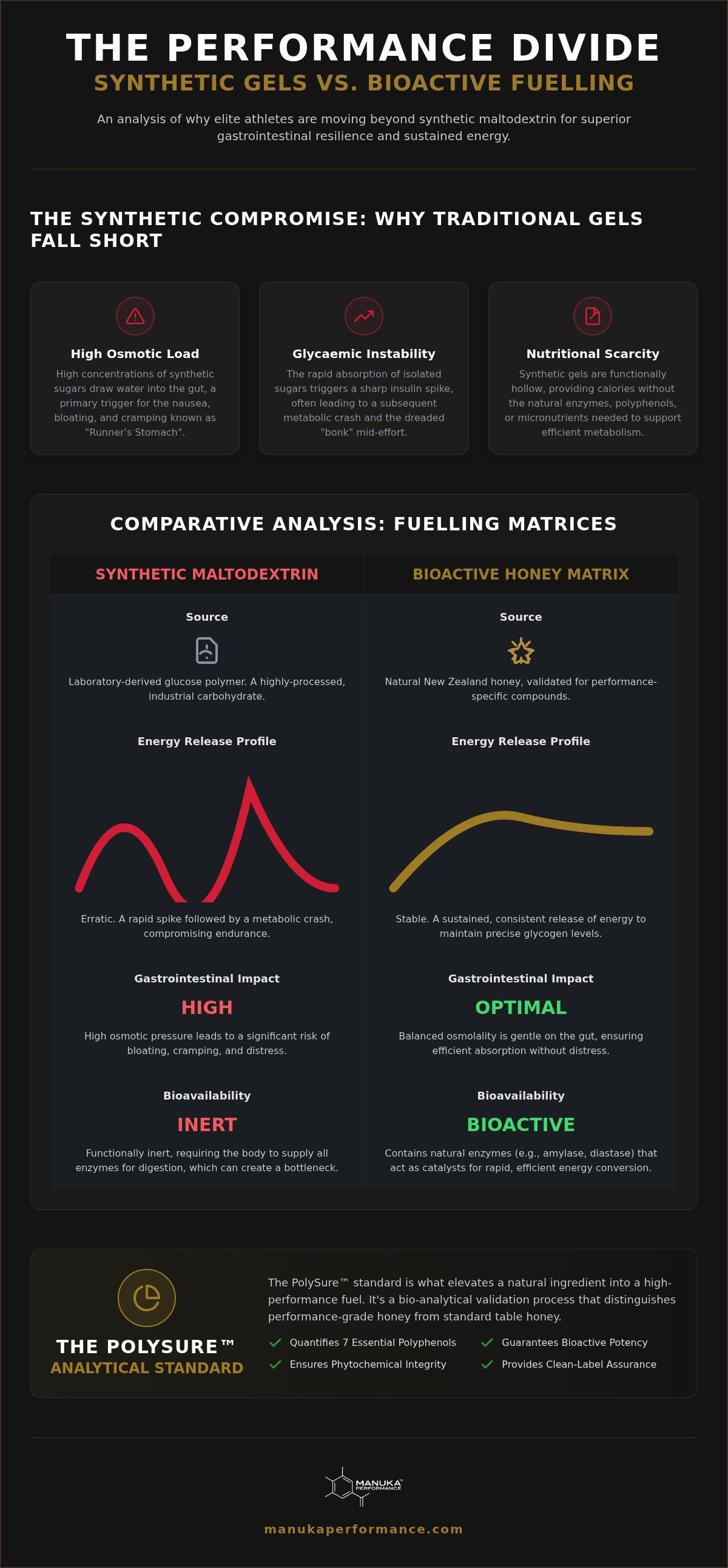
Synthetic maltodextrin, a long-chain glucose polymer, remains the cornerstone of many traditional sports drinks and gels due to its low production cost and high energy density. However, these laboratory-derived matrices often exert high osmotic pressure within the intestinal lumen, drawing extracellular fluid into the digestive tract. This frequently manifests as nausea, bloating, and acute cramping during high-intensity efforts. The lack of naturally occurring co-factors in these refined sugars often results in an erratic glycaemic response, where a rapid insulin spike is followed by a metabolic crash. These products are functionally hollow, providing energy without the micronutrients necessary to support cellular recovery.
- Elevated Osmotic Load: High concentrations of maltodextrin pull water from the bloodstream into the colon, leading to dehydration and bloating.
- Glycaemic Instability: Rapid absorption of refined sugars triggers insulin spikes that can lead to reactive hypoglycaemia mid-race.
- Nutritional Scarcity: Synthetic gels lack the polyphenols and enzymes found in natural matrices that assist in carbohydrate metabolism.
The Shift Toward Functional Nutrition
Functional nutrition has emerged as a critical discipline for elite competitors who view fuelling as a mechanism for both immediate output and long-term metabolic health. In Australia, athletes are increasingly prioritising products that offer measurable biological advantages over simple carbohydrate delivery. This evolution has birthed the concept of the bio-analytical alternative. It's a strategy that utilises naturally occurring carbohydrate matrices, such as those found in specific honey varieties, which are inherently balanced for optimal absorption. By choosing a Gu energy gel alternative grounded in phytochemical research, athletes can maintain stable glycogen levels without compromising their internal environment. Performance is no longer synonymous with synthetic compromise; it's about leveraging the precision of nature through scientific validation.
Comparative Analysis: Synthetic Matrices vs. Natural Honey Matrices
The clinical superiority of a honey-based matrix over synthetic polymers resides in its inherent chemical complexity. While industrial gels utilise isolated maltodextrin chains to mimic high-density energy, the LiquidFuel matrix provides a sophisticated blend of monosaccharides that the human digestive system is evolutionarily primed to recognise. This biological familiarity ensures that the transition from ingestion to glycogen synthesis is both rapid and efficient; it avoids the metabolic friction often associated with a synthetic Gu energy gel alternative. By leveraging nature's precision, athletes can maintain a more stable energy curve that resists the erratic fluctuations common in laboratory-derived fuels.
Bioavailability is further enhanced by the presence of naturally occurring enzymes such as diastase, amylase, and glucose oxidase. These bioactive components act as catalysts in carbohydrate metabolism, assisting the body in breaking down sugars without overtaxing the primary digestive organs. In contrast, synthetic gels are functionally inert, requiring the body to provide all the necessary enzymes for processing. This often leads to a "bottleneck" in energy delivery during the later stages of endurance events, where systemic fatigue already compromises digestive efficiency.
Absorption Rates and Glycaemic Response
Research indicates the human body can process approximately 60 grams of glucose and 30 grams of fructose per hour. This 2:1 ratio is frequently replicated in labs using maltodextrin and crystalline fructose, but these synthetic versions often trigger fructose malabsorption. This occurs when the GLUT5 transporters are overwhelmed by isolated sugars, leading to osmotic pressure and distress. A bio-analytical analysis of honey gels reveals that natural honey facilitates multi-transport uptake more harmoniously. For competitors seeking sustained power, the LiquidFuel carbohydrate matrix offers a verified pathway to consistent glycogen levels without the risk of a mid-race crash.
Micronutrients and Performance
Synthetic alternatives provide what researchers call "empty calories", delivering energy without the supporting biological infrastructure. LiquidFuel contrasts this by providing a matrix rich in essential electrolytes, minerals, and amino acids. Given that sodium loss during a marathon averages 400 to 1,200 mg per hour in warm conditions, the presence of naturally occurring minerals is vital for maintaining systemic function. These micronutrients aren't mere additives; they are fundamental to the biochemical processes that allow for ultra-endurance efforts. By prioritising a nutrient-dense Gu energy gel alternative, athletes support their metabolic health while simultaneously pursuing peak performance metrics.
Overcoming Gastrointestinal Distress and "Runner’s Stomach"
Gastrointestinal resilience is defined as the physiological capacity of the digestive tract to sustain nutrient absorption and barrier integrity while under the metabolic strain of high-intensity aerobic effort. In many traditional fuelling protocols, the ingestion of synthetic polymers leads to "gut rot", a condition where high-osmolality solutions cause significant fluid sequestration in the intestinal lumen. This process effectively stalls gastric emptying, resulting in the nausea, bloating, and acute distress that frequently compromise competitive performance. A bio-analytically validated Gu energy gel alternative addresses these systemic failures by utilizing a natural honey matrix that maintains an osmotic pressure more closely aligned with human plasma, thereby facilitating smoother transit and absorption.
The Science of Osmotic Balance
The primary mechanism behind mid-race "bathroom emergencies" is often the high osmotic load of synthetic gels, which forces the body to divert water from the bloodstream into the gut to dilute the concentrated sugars. This fluid shift creates a volatile environment that the intestinal lining cannot manage effectively during exercise. Honey-based gels, however, present a lower osmotic pressure, allowing for rapid nutrient transport without the disruptive fluid influx. Athletes can find detailed protocols for managing these physiological variables in our scientific guide to avoiding runner’s stomach, which examines the intersection of carbohydrate concentration and gastric comfort.
Texture and Palatability at Intensity
As an event progresses, athletes often experience "palate fatigue", a sensory aversion to the cloying, artificial flavours and sticky textures of synthetic maltodextrin. This sensory rejection is a precursor to nausea and can lead to a total cessation of fuelling, resulting in a glycogen deficit. The liquid-honey consistency of a high-quality Gu energy gel alternative provides a significant advantage here, as it's easily swallowed without requiring excessive water intake to clear the palate. This is particularly critical during high-heart-rate efforts where the coordination of breathing and swallowing is already challenged; the natural, subtle flavour profile reduces the likelihood of sensory-induced gastric rejection.
Transitioning from synthetic to natural energy sources requires a methodological approach to ensure the gut adapts to the new nutrient matrix. We recommend an incremental introduction during sub-maximal training sessions, allowing the digestive system to recalibrate its enzymatic response to the complex sugars found in honey. By prioritising gastrointestinal resilience through superior ingredient selection, athletes can maintain their fuelling schedule even during the final, most demanding stages of a race.
The Significance of Bioactive Validation in Sports Nutrition
The assumption that raw table honey serves as a functional equivalent to a performance-led gel is a common misconception in endurance circles. While generic honey contains natural sugars, it lacks the rigorous chemical standardisation and concentration of bioactives necessary to function as a reliable ergogenic aid. Selecting a Gu energy gel alternative based on rigorous data ensures that every gram of carbohydrate is supported by a validated bioactive profile; this provides a level of predictability that raw agricultural products cannot match. Mānuka Performance has bridged this gap by applying pharmaceutical-grade analytical techniques to natural matrices, ensuring that the final product operates at the intersection of nature and biotechnology.
PolySure™: The New Standard for Performance Honey
The PolySure™ analytical standard was developed to quantify the presence of seven specific, naturally occurring polyphenols that are essential for managing the systemic oxidative load during prolonged exertion. Unlike traditional MGO ratings, which primarily measure antibacterial markers, the PolySure™ profile focuses on the phytochemical components that directly influence metabolic efficiency and cellular resilience. This level of quantification is critical for elite athletes who require exactitude in their fuelling protocols. By identifying and preserving these specific compounds, we ensure that the energy delivered is not merely caloric, but functionally enhanced to support the body’s internal environment under stress.
- Quantified Polyphenols: Verification of seven distinct compounds that support systemic resilience.
- Predictable Outcomes: Standardised batches ensure consistent performance benefits across every training block.
- Beyond Sugars: Moving from simple carbohydrate delivery to a complex, bioactive-rich delivery system.
Phytochemical Innovation in New Zealand
New Zealand’s unique environmental conditions, characterised by high UV intensity and distinct soil compositions, produce honey with an exceptionally dense phytochemical profile. Preserving these delicate compounds through the manufacturing process requires advanced biotech research and temperature-controlled innovation. This scientific rigour is encapsulated in the LiquidFuel 10-Pack, where the bioactive integrity of the honey is maintained from the hive to the sachet. For the Australian endurance community, this represents a shift toward "phytochemical fuelling", where the focus is on how plant-based compounds can optimise human performance metrics without the use of synthetic additives.
The future of elite sports nutrition resides in the ability to measure and harness these natural complexities. Athletes who demand the highest standards of purity and efficacy can examine the PolySure™ validated LiquidFuel range to understand how analytical validation transforms a natural ingredient into a sophisticated performance tool. By prioritising verified bioactive content, competitors can achieve a level of metabolic stability that was previously thought to be the exclusive domain of laboratory-synthesised fuels.
LiquidFuel: The Sophisticated Evolution of Endurance Fuelling
The culmination of phytochemical research and athletic demand has resulted in LiquidFuel, a product that transcends the limitations of traditional industrial nutrition. As the premier Gu energy gel alternative, it provides a bio-analytically validated pathway to sustained glycogen levels without the systemic compromises inherent in synthetic polymers. LiquidFuel is defined by its clean-label integrity; it contains no artificial colours, flavours, or synthetic preservatives. This commitment to purity ensures that athletes can maintain their fuelling protocols during high-volume training blocks without the cumulative inflammatory load associated with processed additives. For competitors who prioritise metabolic precision, this represents the definitive evolution of sports nutrition.
Organising a training programme requires consistency in both effort and intake. The LiquidFuel 10-Pack serves as a logistical cornerstone for marathon and triathlon preparation, providing the necessary volume for athletes to refine their fuelling strategies before race day. Integration into an existing organisation is seamless; the liquid-honey matrix is designed for rapid deployment, allowing for easy consumption during intense efforts where coordination is often challenged. By adopting a natural, biotech-led solution, athletes align their performance goals with their long-term physiological health.
Strategic Fuelling with LiquidFuel
Optimal absorption requires a methodical approach to intake that accounts for the body’s limited carbohydrate processing capacity. For half-marathons, we recommend one to two sachets to maintain glycaemic stability. In full marathons or ultra-endurance events, a protocol of one sachet every 45 to 60 minutes is ideal, ensuring a steady influx of glucose and fructose. Combining LiquidFuel with a hydration strategy of 500 to 750ml of water per hour facilitates the multi-transport uptake of sugars and maintains osmotic balance. Using a clean, natural performance tool also provides a psychological advantage; athletes can push their limits with the confidence that their fuel is supporting, rather than hindering, their internal environment.
Sustainable Performance and Recovery
The benefits of a PolySure™ validated matrix extend beyond the finish line. The quantified polyphenols within LiquidFuel play a critical role in managing the oxidative stress generated during prolonged aerobic efforts. By avoiding synthetic additives in daily training, athletes support their long-term metabolic health and reduce the risk of chronic gastrointestinal sensitivity. This sustainable approach ensures that the body remains resilient and ready for the next session. Those ready to transition from industrial synthetics to a scientifically superior matrix can experience the difference of LiquidFuel honey-based gels and redefine their competitive potential.
Advancing Your Competitive Edge Through Phytochemical Precision
The transition from synthetic maltodextrin to a bio-analytically validated Gu energy gel alternative represents a fundamental shift in ergogenic strategy. By prioritising a New Zealand honey-based matrix, athletes achieve superior gastrointestinal resilience and metabolic stability through an optimal glucose-fructose ratio. The PolySure™ analytical standard provides the necessary rigour to ensure that every sachet delivers a quantified profile of seven essential polyphenols. This level of validation ensures that your fuelling strategy is grounded in measurable data rather than industrial convenience.
This clean-label approach eliminates the systemic load of artificial additives, allowing for sustained glycogen levels without the risk of gastrointestinal distress. It's time to align your fuelling protocol with the precision of your training. Upgrade your endurance fuelling with the LiquidFuel 10-Pack to integrate this phytochemical innovation into your next competitive cycle. Your pursuit of professional excellence deserves a fuel source that is as rigorously tested and refined as your own performance metrics.
Frequently Asked Questions
Is honey a better energy source than maltodextrin for runners?
Honey represents a superior carbohydrate matrix because it provides a balanced glucose-fructose ratio that facilitates multi-transport uptake across the intestinal lining. Unlike synthetic maltodextrin, which often requires significant water for dilution to prevent osmotic distress, the natural sugars in honey are absorbed more harmoniously. This makes it an effective Gu energy gel alternative for athletes seeking sustained power without the bloating associated with laboratory-derived polymers.
Will honey energy gels cause a sugar crash during a marathon?
Honey energy gels are engineered to provide a stable energy curve rather than a singular insulin spike. The presence of complex sugars and bioactive co-factors ensures that glucose is released into the bloodstream at a controlled rate. This prevents the reactive hypoglycaemia, or "crash", frequently experienced with refined, high-glycaemic synthetic gels. Maintaining consistent glycogen levels is achievable when using a matrix that the body is evolutionarily primed to process.
How many LiquidFuel gels should I take per hour during a triathlon?
For optimal performance during a triathlon, we recommend an intake of one to two LiquidFuel sachets per hour, depending on the intensity of the effort and individual metabolic requirements. This protocol aims to deliver between 30 and 60 grams of carbohydrates, which aligns with standard physiological absorption limits. It's essential to combine this with a structured hydration plan to maintain osmotic balance and ensure the efficient transit of nutrients during the bike and run legs.
Are honey-based gels safe for athletes with sensitive stomachs?
Athletes with sensitive stomachs frequently find honey-based gels more tolerable due to their lower osmotic pressure compared to synthetic alternatives. This reduced pressure prevents the sequestration of fluid in the gut, which is the primary cause of nausea and bloating during exertion. By choosing a Gu energy gel alternative that prioritises gastrointestinal resilience, competitors can maintain their fuelling schedule without the risk of acute distress or interruptions to their performance.
What makes Mānuka Performance different from regular honey?
Mānuka Performance is distinguished from raw table honey by its rigorous analytical validation and performance-led formulation. While standard honey varies significantly in its chemical composition, our products are standardised using the PolySure™ method to ensure consistent levels of seven specific polyphenols. This phytochemical integrity transforms a natural ingredient into a sophisticated ergogenic aid, providing the predictability and efficacy required for elite-level endurance sports and high-intensity training cycles.
Does LiquidFuel contain as many carbohydrates as a standard Gu gel?
LiquidFuel is formulated to provide a carbohydrate density that is comparable to traditional synthetic options, typically delivering a concentrated dose of glucose and fructose. However, the biological efficiency of the honey matrix means these carbohydrates are often processed more effectively by the digestive system. This allows athletes to achieve their required hourly caloric intake with a lower risk of the gastrointestinal "bottleneck" that frequently occurs with high-density synthetic polymers.
Can I use LiquidFuel for cycling and other endurance sports?
LiquidFuel is highly versatile and suitable for all high-intensity endurance disciplines, including cycling, ultra-running, and competitive swimming. Its liquid-honey consistency is particularly advantageous for cyclists, as it can be consumed easily at high heart rates without the need for excessive chewing or water. The bioactive profile supports systemic resilience across various modalities, making it a foundational tool for any athlete prioritising clean-label nutrition and metabolic health.
What is the PolySure™ standard and why does it matter for my performance?
The PolySure™ standard is a proprietary analytical framework that validates the presence and concentration of seven naturally occurring polyphenols within the honey matrix. For an athlete, this matters because these quantified bioactives assist in managing the oxidative stress generated during prolonged physical exertion. By using a validated product, you ensure that your fuelling strategy supports cellular integrity and systemic recovery, providing a level of scientific rigour that is absent in unvalidated natural products.