


The best carb source for long distance running isn’t automatically the most advanced gel or the food that works for another runner. Your event duration, fuelling plan and individual gut tolerance all matter. A convenient option on paper may not suit you on the course, especially if it is awkward to carry, needs water or is difficult to eat at your pace.
This guide compares gels, drinks, chews and familiar foods so you can choose a carbohydrate source that fits your race and your preferences. It explains how the format affects carrying and consuming fuel, and why practising your plan during training is more reliable than trying something new on race day.
Honey-based gels are one option. Mānuka Performance’s LiquidFuel uses a New Zealand honey-based matrix containing naturally occurring glucose and fructose. Use the comparisons below to narrow your choices, then trial your preferred format on a suitable training run before relying on it in an event.
Key Takeaways
- The best carb source for long distance running depends on more than its ingredients. Consider how you’ll carry, consume and access it during your event.
- Gels and chews offer portable fuel, while sports drinks also contribute fluid. Familiar foods can be another option when they’re practical to carry and eat.
- Compare the carbohydrate content per serving so you can see how different formats fit into your fuelling plan.
- For longer events, rotating sweet and savoury options may help keep your choices appealing over time.
- Use training runs to assess your plan. Change one element at a time so you can identify what suits you.
What makes a carb source the best choice for long-distance running?
A running carbohydrate source is food or a product consumed before or during exercise to provide carbohydrate as part of an athlete’s fuelling plan. There isn’t one best ingredient or format for every runner. Suitability depends on how long you’ll run, what you can carry and access, what you prefer to eat, and what your gut tolerates while moving.
In brief: Choose a carbohydrate source that fits your event and fuelling plan, is practical to consume, and has been tested in training so you know how it sits with you.
It helps to distinguish familiar carbohydrate-containing foods from products designed for use during exercise. A banana, sandwich or other portable food may suit some runs. Gels, chews and sports drinks offer purpose-made formats that can be easier to portion, carry or consume in particular conditions. Neither category is automatically superior.
What should runners compare when choosing fuel?
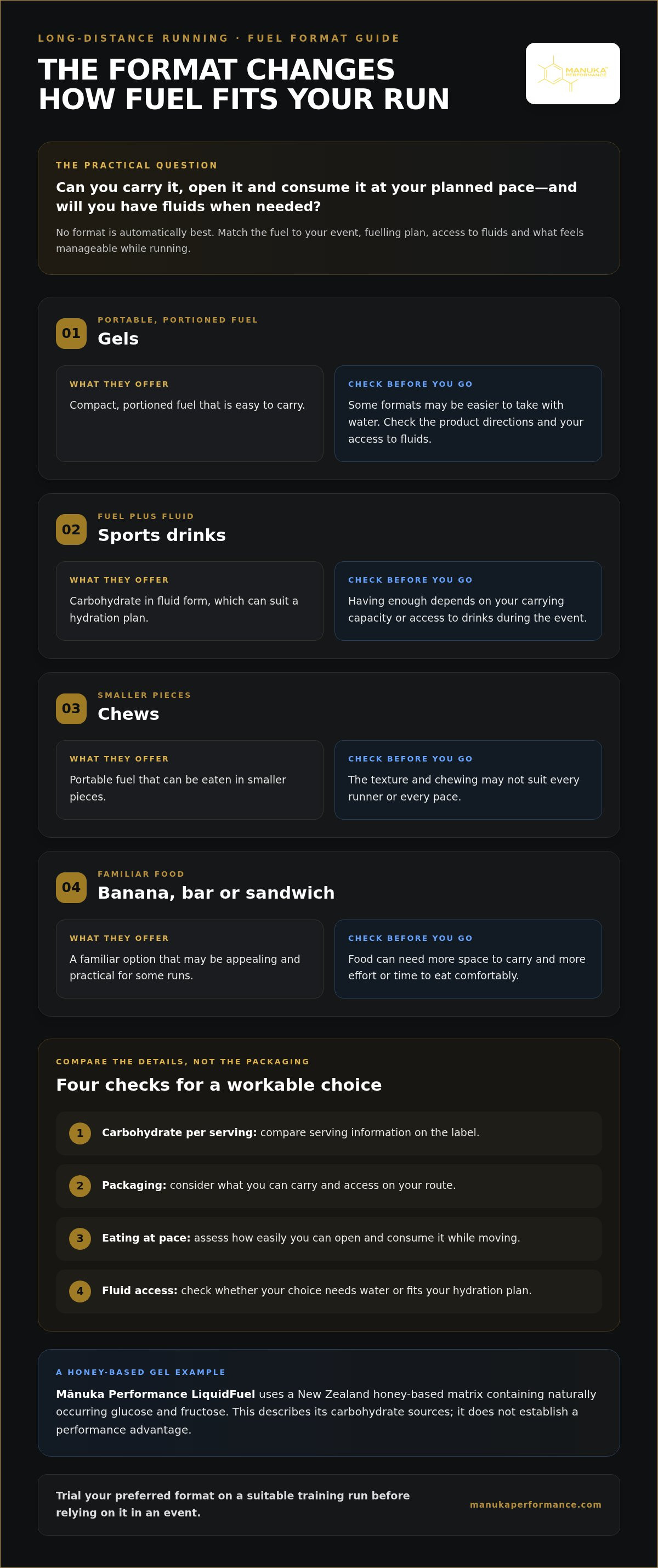
Start with four practical details: the carbohydrate in each serving, the packaging, how easily you can consume it at your planned pace, and whether you’ll have access to fluids. A compact gel may be easy to carry but could require water, while a drink combines fuel with fluid. Your route, event support and carrying setup all affect what’s workable.
Compare serving information rather than judging by package size or marketing language. A product’s ingredients and claims don’t tell you whether its format will suit your event or digestion. Evidence-based fuelling guidance can inform your plan, but it can’t determine personal preference or guarantee individual tolerance.
Does every long run require a sports product?
No single format is required for every long run. Whether in-run fuel is useful depends partly on duration, intensity and your planned approach. A shorter outing may not call for the same strategy as a prolonged event. Consider the demands of the session and what you’ll realistically be able to eat or drink, rather than choosing a product by default.
Familiar foods can be appealing and practical, particularly when you have room to carry them and time to eat comfortably. Purpose-made options may offer a compact, portioned format that’s easier to manage on the move. Carbohydrate loading is a separate pre-event strategy, not a substitute for deciding what, if anything, to consume during a run.
Use the comparison that follows to narrow your options, then practise your intended choice during training. Think about whether you can carry it, open it and consume it at your pace, and whether you’ll have fluids when needed. A format that works in those real conditions is more useful than a theoretical winner.
How carbohydrate type and delivery shape endurance fuelling
Carbohydrate sources differ in their sugars and the form in which you consume them. Glucose and fructose are distinct simple carbohydrates. During digestion and absorption, glucose primarily uses the intestinal transporter SGLT1, while fructose uses GLUT5. These differences help explain why some endurance products combine carbohydrate sources. The blend alone, however, doesn’t establish that a product will feel comfortable or improve an individual runner’s performance.
What is the difference between glucose and fructose in running fuel?
Multiple-transportable carbohydrate formulations combine glucose, or maltodextrin that is digested into glucose, with fructose, which uses a different intestinal transporter. Research reviewed by sports scientist Asker Jeukendrup indicates that this combination can support higher rates of exogenous carbohydrate oxidation during exercise than glucose alone under studied conditions. That finding doesn’t guarantee a particular race outcome or level of gut tolerance.
For runners, the practical point is that carbohydrate type can matter when a fuelling plan involves substantial intake during prolonged exercise. It isn’t a reason to assume every mixed-sugar product is interchangeable. Formulations and serving sizes vary, so read the label and assess the product in training. For broader practical context on food choices and timing, see Mayo Clinic Health System’s Good nutrition for your run.
How do gels, drinks, chews and foods differ?
The format affects how fuel fits into your run, not whether it is inherently superior. A gel is compact and portioned, though some formats may be easier to take with water. A sports drink supplies carbohydrate in fluid form, which can suit a hydration plan, but carrying enough may be less convenient. Chews are portable and can be eaten in smaller pieces, although their texture may be less practical at a fast pace.
- Gels: compact and easy to carry. Check whether the product directions call for water.
- Drinks: combine fluid and carbohydrate, but depend on carrying capacity or event access.
- Chews: can be portioned, although chewing may not suit every pace or runner.
- Foods: a banana or bar may be familiar and appealing, but can take more space and effort to eat.
Carbohydrate content varies between products and servings, so compare labels rather than judging by format or package size. The best carb source for long distance running is the one that fits your plan and is manageable in real conditions. Mānuka Performance’s LiquidFuel running gel uses a New Zealand honey-based matrix containing naturally occurring glucose and fructose. That describes its carbohydrate sources, not a proven performance advantage. Explore honey-based running gels as one option to assess alongside other fuels.
Gels, sports drinks and real food: which carb source fits your run?
Carbohydrate sources aren’t interchangeable in practical use. Packaging, texture, fluid needs and access along the course all affect how easily you can follow a fuelling plan. A gel that’s simple to carry may suit a self-supported trail run, while a drink may fit better where you can refill. Familiar food may be more appealing when you have time to eat it comfortably. The best carb source for long distance running depends on your event as well as your preferences and tolerance.
| Source | Portability and use | Fluids and event access |
|---|---|---|
| Gels | Compact, portioned packets are easy to carry and open while moving, though handling can be fiddly. | Some gels are best taken with water. Check the product directions and plan access to fluids. |
| Sports drinks | Convenient to sip, but carrying enough may be cumbersome. | Can provide carbohydrate and fluid together where the formulation allows. Availability depends on what you carry or what the event supplies. |
| Chews | Portable and can be eaten in pieces, but chewing and opening wrappers may be awkward at pace. | They don’t provide fluid, so account for drinking separately and consider access to water. |
| Portable foods | A banana or bar may feel familiar, but can take more space and time to eat. | They don’t provide fluid. Suitability also depends on storage, handling and whether you can eat them comfortably during the event. |
When might a gel be more practical than food?
A gel’s compact packaging can make it easier to carry than a banana or bar, particularly when you’re travelling light or have limited storage. That’s a logistical advantage, not a performance guarantee. Consider your course: a supported event may offer places to collect water, while a remote route may require you to carry both fuel and fluids. Honey-based gels are one option in this category. Mānuka Performance’s LiquidFuel uses a New Zealand honey-based matrix containing naturally occurring glucose and fructose. This describes its composition, not a claim of superiority.
When might drinks, chews or everyday foods suit better?
A drink may be convenient if you already plan to carry fluid and its carbohydrate content fits your fuelling plan. Chews offer smaller portions, while everyday foods can suit runners who prefer familiar textures and have the time and space to manage them. Product formulations and carbohydrate amounts differ, so compare serving information rather than assuming one gel, drink, chew or food portion equals another.
Choose according to the conditions you’ll face, then practise carrying and consuming your preferred combination during training. Consider not just the fuel itself, but when you’ll take it and where you’ll get water. A format that works at an aid station may be less practical on an unsupported route.
How to choose and practise your long-distance running fuel
Build a reliable fuelling plan through assessment and practice, not by selecting a product on race morning. Start with the event, choose a format that suits its conditions, test it during training, then refine the details using what you observe. This helps you work out whether the fuel is practical to carry and consume and whether it fits your established hydration approach.
How can runners trial a carbohydrate source in training?
Introduce one chosen format during a suitable long or race-specific training session, rather than changing several parts of your plan at once. Record what you used, when you consumed it, how much fluid was available, and whether opening and eating it felt manageable at your pace. Note any tolerance concerns without trying to diagnose their cause.
Use those observations to make gradual adjustments, then repeat the trial under similar conditions. If you experience persistent or concerning issues, seek advice from a qualified health professional or sports dietitian. For numerical carbohydrate targets, consult current guidance from a recognised sports nutrition organisation, such as Sports Dietitians Australia, and account for individual needs rather than treating a general range as a universal prescription.
How should the plan account for event conditions?
Map the course before settling on a format. Consider the expected duration, where aid stations are located, what they provide, and how much you can comfortably carry. A plan based on collecting drinks at regular stations may not suit an unsupported route. Conversely, carrying every serving could be unnecessary if the event provides reliable access to fuel and fluids.
Review carbohydrate and hydration together. A drink may contribute both, depending on its formulation, while a gel or food may require you to plan fluid separately. Keep quantities grounded in current evidence and your own circumstances, including event demands and training history. The best carb source for long distance running is part of a workable overall plan, not a stand-alone product choice.
For a more complete preparation strategy, pair fuelling practice with guidance on gastrointestinal resilience and the carbohydrate-loading protocol. These address related but distinct parts of race preparation: practising intake during exercise and planning carbohydrate availability before an event.
Explore honey-based running gels as one option to assess within your training plan.
Where honey-based gels fit among long-distance running carb sources
Honey-based gels sit within the portable-fuel category, alongside other gels, chews and drinks. Their practical role is similar: they offer a compact format that a runner can include in a wider fuelling plan. Whether one suits you depends on how it fits your event, access to fluids, preferences and training-tested tolerance, not simply on its ingredient source. A honey-based gel isn’t automatically more suitable than familiar food or another sports product.
What is confirmed about Mānuka Performance’s honey-based gel?
Mānuka Performance’s LiquidFuel 10-Pack Running Gel uses a New Zealand honey-based matrix containing naturally occurring glucose and fructose. These are composition details, not evidence that the gel will produce a particular performance outcome or suit every runner. Use the product label for serving-level carbohydrate information when working out how it fits your plan.
PolySure™ is an analytical standard used to validate seven naturally occurring polyphenols in the finished product. That measurement concerns polyphenol validation; it shouldn’t be interpreted as proof of a fuelling benefit. Keeping composition, analytical validation and performance claims distinct makes it easier to assess a product based on what matters to your needs.
How can runners decide whether this format suits their plan?
Compare the gel with the alternatives you already use. A compact packet may be convenient if you want fuel that takes up little space. A drink may suit a plan that incorporates fluid, while a banana or bar may be preferable if you value familiar food and have room to carry it. Consider the course, expected water access, packaging and whether the texture is manageable at your running pace.
Trial the gel during training before relying on it in an event. Practise carrying and opening it, follow the product directions, and note how it fits with your planned fluid intake and other fuel. Introduce it in a suitable session and refine your approach based on experience rather than assuming the ingredient profile guarantees tolerance.
The best carb source for long distance running remains the option that works within your complete plan. For further reading, explore our analysis of honey-based energy gels and comparison of whether honey gels work.
Put your fuelling plan to the test in training
The best carb source for long distance running is the one that fits your event, fuelling strategy and individual tolerance. Gels, drinks, chews and familiar foods each have practical trade-offs. Compare how you’ll carry and consume them, then practise your chosen approach before race day.
For runners considering a honey-based gel, Mānuka Performance’s LiquidFuel 10-Pack Running Gel uses a New Zealand honey-based matrix containing naturally occurring glucose and fructose. PolySure™ validates seven naturally occurring polyphenols in the finished product. This measures polyphenol content, not evidence of a fuelling or performance benefit.
Explore Mānuka Performance’s honey-based running fuel as one option to assess within your plan. Test your choice on a training run, refine what you carry and how you use it, and head into your event with a strategy you’ve practised.
Frequently Asked Questions
What is the best carbohydrate source for long-distance running?
There isn’t one best option for every runner. The best carb source for long distance running is one that fits your event duration and fuelling plan, is practical to carry and consume, and has been tested for personal tolerance. Gels, drinks, chews and familiar foods each have different trade-offs. Consider course access to fluids and fuel, then practise your preferred format during training before relying on it in an event.
Are gels better than real food for long-distance running?
Gels aren’t universally better than real food; each format has practical advantages and limitations. A gel is compact and portioned, while a banana or bar may appeal if you prefer familiar food and have space and time to eat it. Your pace, course conditions, access to water and individual tolerance can influence which option works best. Compare carbohydrate amounts by serving, as they vary between products and foods.
Can you use honey as a carbohydrate source while running?
Yes. Honey contains carbohydrates, and honey-based sports gels offer it in a portable format. Mānuka Performance’s LiquidFuel 10-Pack Running Gel uses a New Zealand honey-based matrix containing naturally occurring glucose and fructose. This describes the product’s composition, not a guaranteed fuelling or performance effect. Use the product label for serving information, and trial the gel during training to assess how it fits your fuelling plan.
How many carbohydrates should you take during a long-distance run?
General guidance commonly suggests 30-60 g of carbohydrate per hour for runs lasting around 1.5-2.5 hours, and 60-90 g per hour for longer events. These ranges aren’t a prescription for every athlete: duration, intensity, training and tolerance can affect an individual plan. Practise any intended intake during training, and consult a qualified sports dietitian or current sports nutrition guidance when deciding on a target.
Should you take a gel with water?
Follow the directions for the specific gel, as products differ in formulation. Some gels are intended to be taken with water, while other formats may have different instructions. Include fluid access in your event plan, particularly if aid stations are limited or you’re carrying your own supplies. Practise taking the gel as directed during training, alongside your established hydration approach, rather than trying an unfamiliar routine on race day.
When should you practise your long-distance running fuel?
Practise during training, ideally in a suitable long or race-specific session, rather than introducing unfamiliar fuel on event day. Test one format at a time and note when you take it, how easy it is to carry and consume, your access to fluid, and any tolerance concerns. Make gradual adjustments based on your experience. If issues persist or concern you, seek advice from a qualified health professional or sports dietitian.
Are glucose and fructose the same type of carbohydrate?
No. Glucose and fructose are both simple carbohydrates, but they’re distinct sugars and use different transporters in the intestine during absorption. Some sports fuels combine glucose or maltodextrin with fructose, a formulation studied for delivering carbohydrate during exercise. That composition doesn’t guarantee better performance or tolerance for every runner. Check the product information and assess your response during training before using a fuel in an event.