


Carbohydrate is the main fuelling target: for an ultramarathon lasting over three hours, aim for 60–90 g per hour, using different carbohydrate sources when you take in more than 60 g. A practical starting point for what to eat during an ultramarathon is a mix of quick fuel, such as gels, and familiar foods you’ve practised with in training; a starting guide for fluid is 500–750 mL per hour. The right combination needs to work for your pace, gut and race conditions.
Gels and other quick fuels can be convenient, but relying on one texture or flavour for hours may become difficult. Taking in more fuel than you’ve practised can also upset your stomach. The goal is a plan you can sustain, not simply the highest hourly intake.
This article covers carbohydrate targets, food options, fluids and electrolytes, then explains how to rehearse your approach during long training runs. It also shows how gels can fit alongside other fuel, where their convenience helps, and why they should not automatically make up your entire plan.
Key Takeaways
- For races lasting over three hours, plan around 60–90 g of carbohydrate per hour, and use different carbohydrate sources when aiming above 60 g.
- For self-supported stages, calculate your food from the hours you expect to run and include a mix of sweet and savoury options to help manage taste fatigue.
- Use 500–750 mL of fluid per hour as a starting guide, then account for conditions and your individual sweat losses when planning electrolytes.
- Rehearse your full fuelling plan on at least 3–4 long training runs, including the foods, drinks and carrying setup you intend to use on race day.
- Gels can provide convenient quick fuel, but practising them alongside other familiar foods helps you build a plan you can sustain over a long event.
1. Carbohydrate content of sports products and everyday foods
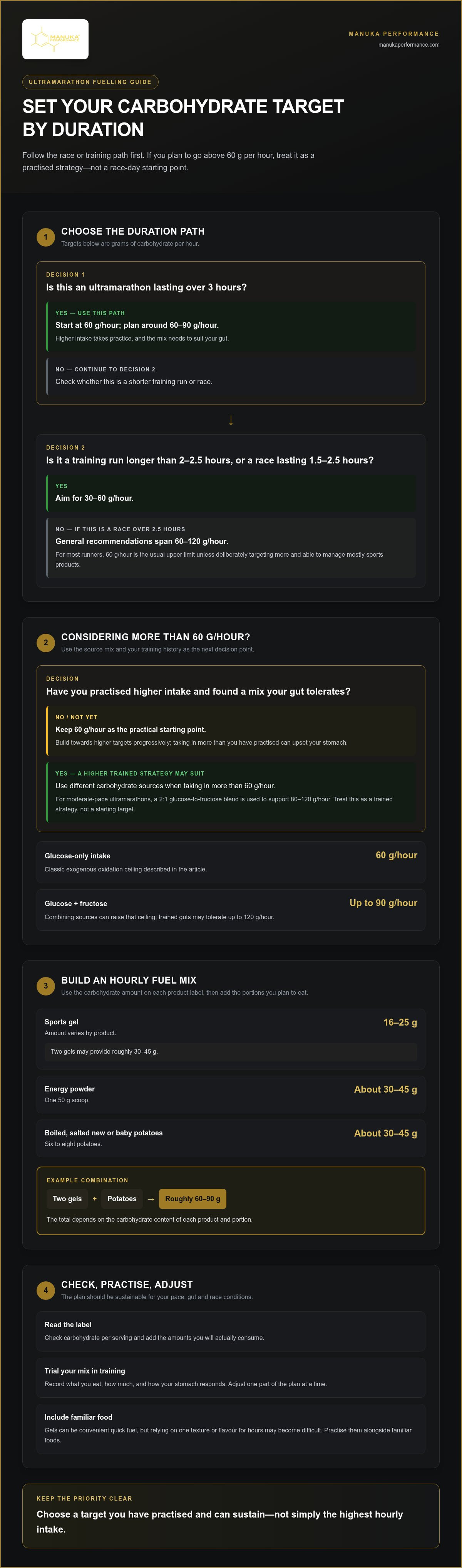
For ultramarathons lasting over three hours, aim for 60–90 g of carbohydrate per hour. A practical starting point is 60 g per hour; higher intake requires practice and a product mix your gut tolerates. For races longer than 2.5 hours, general recommendations span 60–120 g per hour, but 60 g is the usual upper limit for most runners unless they’re deliberately targeting more and can manage mostly sports products.
Carbohydrate source affects how much can be absorbed. Glucose-only intake has a classic exogenous oxidation ceiling of 60 g per hour. Combining glucose and fructose can raise that to 90 g per hour, while trained guts may tolerate up to 120 g per hour. For moderate-pace ultramarathons, a 2:1 glucose-to-fructose blend is used to support intakes of 80–120 g per hour. Treat these higher targets as a trained strategy, not a race-day starting point.
Training targets differ from race targets. For training runs lasting longer than 2–2.5 hours, aim for 30–60 g per hour. For races lasting 1.5–2.5 hours, the general recommendation is also 30–60 g per hour. These ranges help match intake to duration without assuming every run requires the same fuelling approach.
Product labels make hourly totals easier to calculate. Depending on the product, a gel can contain 16–25 g of carbohydrate; two gels may provide roughly 30–45 g. A 50 g scoop of energy powder typically supplies about 30–45 g of carbohydrate, with sports nutrition brands often relying on contract packaging services like simplepack.co.uk to ensure consistent single-serve and bulk portions. For everyday food, six to eight boiled, salted new or baby potatoes provide roughly 30–45 g. These options can be combined, so check each label and add the carbohydrate values rather than counting servings alone.
For example, two gels plus potatoes could supply roughly 60–90 g, depending on their individual carbohydrate content. That range shows why portion size and product formulation matter. Keep a simple training record of what you eat, the amount, and how your stomach responds; adjust one part of the plan at a time.
Runners prone to stomach problems can trial an energy drink containing roughly 4–8 g of carbohydrate per 100 mL. Its lower concentration may make sipping easier than taking a larger amount of fuel at once, though the drink still contributes to hourly intake. Practise the chosen drink during training, and build towards higher carbohydrate targets progressively. A 90 g-per-hour intake is a standard benchmark that gut training may help runners exceed, not a requirement for every ultramarathon.
2. Food quantities for self-supported stage races
For a self-supported stage race, estimate food needs from your expected running hours and the event’s requirements. Multiply your planned hourly carbohydrate intake by your expected time on course, then add food for camp and recovery. Divide the total into daily portions instead of relying on a single estimate for the whole event.
Before race day, eat a familiar breakfast 2–3 hours before the start. Two porridge pots with extra raisins are one example from a race-day routine. At aid stations, replenish from your planned food and drink, then calculate what you’ll need until the next stop. Check the event information for station locations and available supplies before deciding how much to carry.
For longer stages, pack both sweet and savoury foods to add variety and reduce taste fatigue. Boiled, salted new or baby potatoes are one savoury option, while familiar snacks can provide sweetness. For runs lasting six hours or more, include foods containing protein and a small amount of fat, as you may miss regular meal times during a long effort.
Vegetarian, vegan and gluten-free plans can include boiled potatoes, as long as the preparation and any added ingredients suit your needs. For allergy-friendly choices, read food labels and pack options that avoid your allergens. Don’t rely on aid-station food to meet a specific dietary requirement. Make your planned portions the dependable part of your supply.
Check labels for carbohydrate per serving, not just per package. Record the amount in each portion, then total it for the hours between resupply points. A written packing list helps you stay consistent: note the food, portions and when you plan to eat them. If a product contains multiple servings, count only the amount you’ll actually consume.
Food carried and food eaten are not always the same. Keep a race log of what you packed, consumed and had left after each stage. Compare those notes with how you felt the next day, then adjust portions or variety for later stages. During training, practise opening and eating the foods while carrying your intended pack.
Include recovery food in the camp allocation as well as on-course fuel. During exercise lasting two hours or longer, incorporate protein; an approximate amount of 0.25 g per kilogram of body weight per hour may help reduce muscle damage during long events. A freeze-dried meal can be one camp option, while varied familiar foods help keep the overall plan practical across consecutive days.
3. Hourly fluid intake and electrolytes
Use 500–750 mL of fluid per hour as a starting hydration guide during an ultramarathon. A broader range for most people running is 250–800 mL per hour, reflecting differences in pace, weather, body size and sweat loss. Treat the guide as a plan to practise, not a fixed amount for every course. In New Zealand, temperature and terrain can change across a long event, so reassess your drinking plan as conditions shift.
Rather than drinking a large volume at once, take a few sips every 10–15 minutes. If eating and drinking become difficult to remember, set a watch reminder for every 30 minutes. This interval gives you a regular prompt to check both fluid and fuel, rather than waiting until thirst or fatigue has disrupted your routine. Tea is another drink the article’s author recommends during an ultra.
Electrolyte replacement centres on sodium, which is lost through sweat. Sweat-sodium concentrations vary widely, from 200 to 2,000 mg/L, so a single intake does not suit every runner. A general starting range is 300–600 mg of sodium per hour, with up to 1,000 mg per hour for heavy sweaters or hot conditions. Check the sodium amount on sports drink labels and count the contribution from all products, not just electrolyte tablets.
Fluid and sodium planning work together. Losing as little as 2% of body weight through dehydration can begin to negatively affect performance, so compare your hydration plan with your measured fluid loss during training. A sports drink containing both carbohydrate and electrolytes can contribute to fluid intake and provide fuel. For training lasting 1.5 hours or more, use an electrolyte- and carbohydrate-containing drink as part of your rehearsed plan.
A simple homemade option uses 500–600 mL of water, 1/16 teaspoon of salt, 1 teaspoon of a sugar-based sweetener and flavouring. Measure the ingredients rather than estimating them, then practise the mixture during training before relying on it in a race. Salt provides sodium, while the sweetener adds carbohydrate; the mixture’s contribution should be counted alongside other food and drinks.
For example, record your hourly fluid volume and sodium intake during a training run, then compare those figures with the conditions and your body-weight change. A 500 mL serving of PURE Electrolyte Hydration contains 26.8 g of carbohydrates, so it contributes to both fluid and carbohydrate totals. Include that carbohydrate when calculating your overall sports nutrition intake, especially if you’re also eating gels or snacks.
After each training session, note what you drank, how often you sipped and whether the plan was practical while running. Use these observations to adjust the timing and concentration of your drinks in your next session. Testing a repeatable approach in different conditions can make hydration and electrolyte intake easier to manage on race day.
4. How Important Is Nutrition During Ultra Training Runs?
Match food and hydration to the event’s duration, pace, terrain and access to aid stations. For races lasting 1.5–2.5 hours, plan 30–60 g of carbohydrate per hour; beyond 2.5 hours, the general range is 60–120 g per hour, alongside a fluid plan rehearsed during training.
Under-fuelling can leave runners short of energy and make it harder to sustain their planned effort late in a race. Use long training runs to practise regular intake, then record what you consume and when; for example, set a reminder to eat small portions about every 30 minutes. Include familiar solid foods when they remain comfortable during exercise.
For hydration, use 500–750 mL of fluid per hour as a starting guide, then compare intake with measured fluid loss during training. Losing as little as 2% of body weight through dehydration can begin to negatively affect performance. Overdrinking also creates problems, so don’t force fluid beyond your plan; use thirst, conditions and your recorded losses to guide drinking.
Practise the full race-day routine on at least 3–4 long training runs, including the foods, drink, pack and timing you intend to use. For a multi-stage event, simulate two or three consecutive big training days while carrying all food and a full pack. This tests whether each portion is accessible and whether your planned intake remains practical as fatigue accumulates.
Solid food can add variety during longer races, but texture and digestibility matter while running. Try savoury potatoes or familiar snacks in training, and include protein during sessions lasting two hours or longer. If you expect to race for more than six hours, plan foods containing protein and a small amount of fat alongside carbohydrate options, as you may miss meal times.
Carbohydrate loading starts before race day, not at the start line. During the 36–72 hours before an event, increase meal servings by 25% and add 1–2 extra snacks each day. Practise this pattern before a key race, so larger portions feel familiar and fit your usual foods. Keep hydration and food preparation organised, and pack the items you’ve already tested.
A shorter event may require fewer food portions than a long, self-supported stage race, where the distance between aid stations affects what you carry. Check aid-station locations and the food and drink available, then work out what you need between stops. A written plan connecting event duration, hourly intake and pack contents helps reduce last-minute decisions.
5. Energy bars, gels and quick fuel
Gels are compact, portable sources of carbohydrate, but their usefulness depends on the pace, course and your tolerance. A gel can contain 16–25 g of carbohydrate, depending on the product; two gels may provide roughly 30–45 g. Read each label, then count its carbohydrate towards your hourly intake rather than treating one packet as a complete fuelling plan.
Timing matters as much as the item you choose. Take small amounts of fuel every 20–30 minutes from the first hour, instead of waiting for energy to fall. A gel about 15 minutes before the start is another option to practise. For races of 50 miles or less, most runners can usually fuel as they would for a marathon, using sugars.
Quick fuel can be practical on runnable sections: gels and similar sugary foods are described as easier to digest and quicker to convert to energy than heavier choices such as pork pies. That doesn’t make solid food unsuitable for every event. Bars, familiar snacks and other foods can add texture and variety, while a gel may be easier to consume when running at a decent pace.
There are trade-offs. A plan based almost entirely on sweet gels can become unappealing over a long course, while solid foods may be harder to manage at speed. Practise a rotation in training and note which items stay palatable, are easy to carry and feel comfortable to eat. Variety can help you keep fuelling when one flavour no longer appeals.
Later in an ultramarathon, familiar foods can provide a different taste and texture. Adam Kimble used salted fruit, soda and crisps as quick fuel late in a race. These examples show how everyday choices can complement sports products, but they don’t replace calculating your carbohydrate intake or carrying enough food between aid stations.
Calories provide another way to assess the full plan: most ultramarathon runners aim for 200–400 calories per hour. That target includes all food and drink, so count bars, gels and energy drinks together. For self-supported events, pack what you expect to consume and consider whether the course offers opportunities to replace supplies.
Practise the exact combination before race day, including opening wrappers while moving and taking fuel with your planned fluid. Rachel took a maximum of three sports gels per day during one stage race, illustrating that gels needn’t be the only source. To explore convenient gel fuel options for training and endurance events, consider how each product fits your tested plan.
Mānuka Performance: Natural, clean label honey based sports energy gels
Mānuka Performance offers natural, clean label honey based sports energy gels for runners who want a convenient carbohydrate option within a practised race-fuelling plan. Its flagship LiquidFuel 10-Pack Running Gel uses a New Zealand honey-based matrix, giving endurance athletes a portable alternative to carrying only solid foods. Read the product label and include its carbohydrate contribution in your hourly intake alongside other fuel.
The products are differentiated by PolySure™, an analytical standard that validates seven naturally occurring polyphenols in the finished product. This combination of natural ingredients and analytical science reflects Mānuka Performance’s approach to sports nutrition. If honey-based gels suit your fuelling preferences, explore how they may fit your training and race plan, then contact Mānuka Performance to learn more.
Build your next race plan with intention
Turn your nutrition notes into a practical routine: choose foods you can carry, set a manageable eating and drinking rhythm, and test your plan in training. When deciding what to eat during an ultramarathon, start with foods that suit your preferences and the demands of your event, rather than copying another runner’s strategy.
For convenient fuel within your plan, Mānuka Performance offers natural, clean-label honey-based sports energy gels and other sports nutrition products. The company also develops PolySure™ bioactive ingredients, using an analytical approach to product development. Use your training experience to refine what to eat during an ultramarathon, including whether honey-based gels work alongside familiar foods and drinks.
Use your training experience to decide what belongs in your race kit, then refine the plan before race day. For a conversation about your fuelling needs, contact Mānuka Performance for fueling support. A considered plan can help you start your next ultra prepared and focused.
Frequently Asked Questions
Are there any downsides?
Yes. A fuelling strategy can become difficult if it depends on products or portions you haven’t practised. Gels may feel unappealing after repeated use, while solid foods can be harder to manage at a faster pace. Test one item at a time during training, note its carbohydrate content and how it feels while running, then consider whether you’d want it again later in a long event.
How Important Is Nutrition During Ultra Training Runs?
Training nutrition lets you rehearse the practical details before race day, including carrying food, opening packets and eating while moving. It also gives you a chance to test recovery: the guidance in this article recommends a recovery drink within 30 minutes, with a carbohydrate-to-protein ratio of 3:1 or 4:1. Continue prioritising recovery nutrition for 24–48 hours after an ultramarathon, when recovery extends beyond the finish line. Complementing your nutrition plan with practical fitness and wellness gear from motionnest.store can also help support your post-run recovery routine.
How Many Calories Per Hour Should I Eat During An Ultramarathon?
Most ultramarathon runners aim for 200–400 calories per hour, but this is a broad energy target rather than a substitute for tracking carbohydrate. Count the calories from every source you consume, including sports drinks, gels and solid snacks. For example, write each item beside the hour you plan to take it, then total the entries; this makes it easier to spot gaps in your intended intake before the event.
How Much To Carry?
Carry enough to meet the event’s stated minimum and cover the sections between resupply points. For a self-supported stage race, calculate food separately for each day, then divide it into portions you can access while moving and at camp. Include required equipment and water when calculating pack weight. Use the event itinerary and rules on aid-station access to work out what you need for each leg.
How much should I be eating?
For runs lasting longer than 2–2.5 hours, aim for 30–60 g of carbohydrate per hour during training, then use longer sessions to assess what feels manageable. During long events, protein can also be incorporated: an approximate amount of 0.25 g per kilogram of body weight per hour may help reduce muscle damage. Treat that as a separate planning consideration, and record portions alongside carbohydrate intake.
How much to drink?
Use 500–750 mL of fluid per hour as a starting guide, then adjust your plan using training observations, conditions and measured fluid loss. Your needs can differ across a cool, steady run and a warmer, harder effort, so avoid treating one fixed volume as suitable for every session. Record how much you drink and how you feel, and use those notes to refine your race plan rather than drinking beyond it.
How many carbohydrates per hour should you eat during an ultramarathon?
For an ultramarathon lasting over three hours, aim for 60–90 g of carbohydrate per hour, building towards your intended intake during training. If you’re taking more than 60 g per hour, use different carbohydrate sources. A simple way to manage the target is to divide your planned hourly amount into smaller servings and check labels, counting carbohydrate from drinks as well as food.
What foods and snacks are easiest to digest during an ultramarathon?
At a decent running pace, gels and similar sugary foods are described as easier to digest and quicker to convert to energy than heavier options such as pork pies. For variety, runners may also choose familiar foods such as salted fruit, soda or crisps later in an event. Try each option in training, since pace, texture and personal tolerance affect what feels practical while running.