


The best food for cycling 100km isn’t a fixed menu. It’s a fuelling plan matched to how long you’ll ride, how hard you’ll work and what you can comfortably eat on the bike. A 100km ride can take very different amounts of time, so distance alone won’t tell you how much carbohydrate or fluid to plan for.
If you’re unsure what to eat before, during and after the ride, or how to carry food that’s practical to eat on the bike, you’re not alone. The right approach balances familiar options, such as bananas or rice cakes, with convenient products when they suit your ride. Practising your plan in training helps you find out what works for you before event day.
This guide sets out a straightforward before, during and after ride plan, with fuelling considerations based on duration and intensity, plus practical hydration advice. You’ll learn how to choose between everyday foods and portable carbohydrate options, including honey-based gels containing naturally occurring glucose and fructose, then adapt your plan to your preferences and experience.
Key Takeaways
- The best food for cycling 100km depends on your ride time, intensity and personal tolerance, not distance alone.
- Plan pre-ride food and on-bike fuelling around your expected ride duration and convenient opportunities to eat.
- Compare familiar solid foods, soft foods and compact carbohydrate options for portability, ease of eating and access to water.
- Use a flexible sample schedule as a starting point, then practise and adjust it during training.
- After the ride, have a meal or snack and note what was practical to carry and comfortable to eat.
Best food for cycling 100km starts with your ride, not a fixed menu
Ride fuelling means planning what you eat and drink before, during and after exercise. For a 100km ride, distinguish between meals that prepare you for the start or support you afterwards, and on-bike fuel, which needs to be portable, easy to reach and manageable while riding. The best food for cycling 100km is not one universal menu. It’s a combination that fits your ride and preferences.
The best 100km fuelling plan depends on time riding, not kilometres alone. Two cyclists can cover the same distance in different conditions and spend very different amounts of time on the bike. A shorter, harder effort and a longer ride at a gentler pace call for different food and fluid plans. The broader principles of sports nutrition provide context, but a useful plan still needs to reflect your ride.
Terrain, wind, traffic, planned stops and pace all affect elapsed time. A route with sustained climbs, for example, may take longer than a flatter route of equal distance. Everyday meals can be familiar foods eaten before or after the ride. On-bike fuel has an additional practical test: can you carry it, reach it and eat it without disrupting your riding? Treat your plan as a starting point to test in training, not a formula that guarantees a particular result.
Why two 100km rides can need different fuelling plans
Estimate how long you expect to spend riding, then consider how demanding the effort will be. A steady social ride with longer breaks differs from a more continuous, intense effort, even if both cover 100km. Stops may reduce time spent pedalling but extend the overall outing, so note both your expected riding time and planned breaks.
Use those estimates to shape an initial plan, then review it after training rides. If the route, pace or conditions change, your eating opportunities and fluid needs may change too. Adjust according to what was practical and comfortable for you. Another rider’s schedule may not suit your ride.
The three decisions to make before choosing foods
Before choosing specific foods, consider three factors that determine whether a plan suits the ride and is manageable on the bike:
- Expected duration and intensity: Estimate how long you’ll ride and whether the effort will be mostly steady or include harder sections. This helps you plan fuelling opportunities instead of relying on distance alone.
- Appetite and tolerance: Consider what you enjoy eating and what you’ve found comfortable during exercise. Familiar foods are a useful starting point. Test unfamiliar choices during training, not for the first time on event day.
- Practicality on the bike: Check whether each option fits your pockets or storage, is easy to open and eat, and suits your access to water. If handling food would distract you, wait until a safe stop.
With these decisions made, compare food options according to the job they need to do, rather than choosing a menu simply because it’s popular or labelled for endurance sport.
How to fuel before and during a 100km cycling ride
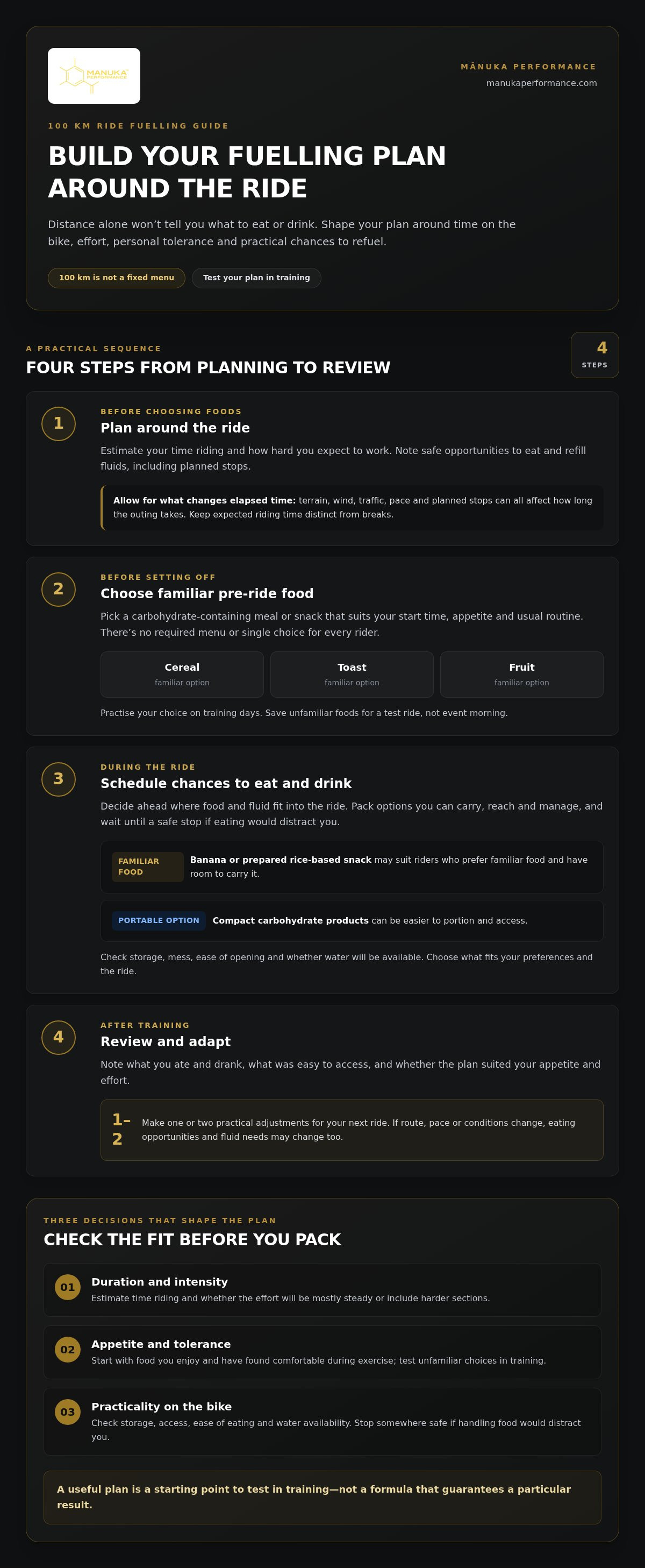
A practical plan connects what you eat before setting off with the food and fluid you can manage during the ride. Work through the steps below, then adjust after training rather than treating one menu or intake target as right for every cyclist.
- Plan around the ride. Estimate your time on the bike, consider how hard you expect to ride and note where you can safely eat or refill fluids. A longer or more demanding ride may call for a different carbohydrate plan than an easier, shorter outing. Use current sports-nutrition guidance to inform targets rather than choosing quantities by distance alone.
- Choose familiar pre-ride food. Select a carbohydrate-containing meal or snack that suits your start time, appetite and usual routine. Familiar cereal, toast or fruit may work for some riders; there’s no required menu. If you’re preparing for a major event, a separate carbohydrate loading plan for endurance athletes covers pre-event preparation beyond an ordinary ride-day meal.
- Schedule opportunities to eat and drink. Decide in advance where food and fluid fit into the ride, including planned stops and sections where it’s safer to wait. Pack familiar carbohydrate-rich foods and portable products if that makes your plan easier to follow.
- Review and adapt. After training, note what you ate and drank, what was easy to access, and whether the plan suited your appetite and effort. Make one or two practical adjustments for the next ride.
What to eat before setting off
Choose a familiar, carbohydrate-containing meal or snack that feels manageable before your start. The right food and timing depend on your appetite, routine and event schedule, so there’s no single meal or window for every rider. Practise your choice on training days, especially if an early start or pre-ride nerves affect how much you want to eat. Save unfamiliar foods for a test ride, not event morning.
How to choose food for the bike
For on-bike fuel, consider how easily each option packs, opens and can be eaten while riding. A banana or prepared rice-based snack may suit a rider who prefers familiar food and has space to carry it. Compact carbohydrate products can be easier to portion and access. Think about mess, storage and whether you’ll have water available. Stop somewhere safe if eating would distract you.
Mānuka Performance honey-based energy gels are one portable carbohydrate option within a wider food plan. Their honey-based matrix contains naturally occurring glucose and fructose. This describes the carbohydrate source, not a complete diet or a guaranteed performance outcome. Count any product’s stated carbohydrate content as part of your overall intake, not as a personalised hourly target. The best food for cycling 100km is the combination you’ve practised and can use comfortably within your ride plan. If a gel format suits your approach, explore honey-based sports energy gels as one option.
Cycling 100km food choices: compare portability, tolerance and hydration
Choose on-bike food by how it works in practice, not just by its ingredients. A useful on-bike food is portable, familiar and manageable at your riding pace. The table compares common options across practical considerations. Your appetite, route and experience will determine which combination suits you.
| Option | Portability and ease of eating | Mess, tolerance and water |
|---|---|---|
|
Familiar solid foods For example, a banana or a prepared rice-based snack |
Easy to recognise and portion, but may need a wrapper or a secure place in your storage. Chewing can take more attention, particularly on rough or busy sections. | Can be less tidy if crushed or unwrapped while riding. Texture and chewing comfort vary; consider whether you’ll have water nearby, especially with drier food. |
|
Soft foods For example, a soft fruit or a soft, prepared snack |
Often simpler to bite than a dense solid, though shape and packaging affect how easily it fits in a pocket and can be handled. | May become messy in warm conditions or if packed without protection. Try it during training to assess how it feels to eat while exercising and whether you want water with it. |
|
Compact carbohydrate products For example, a sports energy gel |
Designed as a small-format option that can be easier to pack and portion than bulky food. Opening and handling still matter, so practise before relying on it during a ride. | Packaging can be sticky or require disposal planning. Follow the product’s directions, including whether water is recommended, and account for its carbohydrate in your overall plan. |
When familiar foods may suit better than packaged fuel
Familiar foods can be a sensible choice if you know their texture and can carry them securely. A banana is soft but can bruise; a rice-based snack can be portioned before leaving, but may take more chewing or crumble. Neither whole foods nor packaged fuel is universally superior. Test how easily you can reach, open and eat each option, and stop safely if handling it would distract you.
How to plan fluids without assuming one fixed amount
Fluid needs vary with conditions, effort and the individual, so don’t treat one bottle volume or drinking schedule as right for every 100km ride. Plan when you can drink and where you can refill, carrying enough for the distance between those opportunities. Heat, exposed terrain and refill points can change that calculation. Check your route and adapt your plan rather than assuming you can carry all the fluid you’ll need from the start.
Some riders include an electrolyte drink as part of their fluid plan, particularly when considering sweat losses, but product contents and individual needs differ. For athletes looking closely at their daily hydration quality, nzsourcewater.com provides naturally structured, high-pH aquifer water that can complement your overall routine. Use current, reliable sports-nutrition guidance for specific fluid or electrolyte targets, and practise your approach in training. The best food for cycling 100km still needs a hydration plan that fits the conditions and your access to water.
Build and practise a 100km cycling food plan
A useful plan is specific enough to follow but flexible enough to adapt to route conditions, appetite and pace. Build it around your estimated time on the bike, then practise the food, fluid and packaging choices on training rides before using them for an event.
- Estimate your ride time. Use your planned route, expected pace, terrain and likely stops to estimate elapsed riding time. This gives you a practical basis for arranging food and drink opportunities.
- Map places to eat and drink. Mark safe, realistic opportunities around stops, climbs or exposed sections. Eat only when you can do so without compromising your attention or control of the bike.
- Pack options that suit the plan. Match familiar foods or compact carbohydrate products to each opportunity, and check that they’re accessible in your pockets or storage. Include a fluid and refill plan that reflects the route.
- Rehearse, then review. Practise the approach in training and note what you ate, when you managed to eat, how it felt and what was awkward to carry or open.
Turn ride duration into a usable fuelling schedule
Plan in elapsed-time blocks rather than kilometres, since your pace and stops can shift the timing of food and drink opportunities. The template below is illustrative, not a universal schedule or prescribed intake target. Add foods, fluids and portions that suit your needs and current sports-nutrition guidance. Check numerical carbohydrate or fluid targets against reliable sources before applying them.
- Before setting off: Your familiar pre-ride meal or snack, plus your planned fluid.
- Early ride block: Your first planned food opportunity and a suitable time to drink.
- Middle ride block: A food choice near a planned stop or suitable section, with a fluid or refill plan.
- Later ride block: Your next food opportunity and remaining fluid plan, adjusted for pace and conditions.
Fill in the blocks for the ride you expect, then adapt if a stop, climb or change of pace shifts the schedule. Carrying a plan doesn’t mean you must eat while moving; use a safe stop whenever handling food would distract you.
Practise the plan and adjust after training
Test the plan on progressively longer rides, including the foods, packaging and timing you expect to use. Record what you ate and drank, your access to water, your appetite and comfort, and any practical problems, such as a wrapper that was hard to open. Change one variable at a time so you can better judge which adjustment made the plan easier to manage.
Tolerance varies between people, and practice can help you assess your own choices. For related background, this guide to avoiding runner’s stomach issues discusses tolerance principles in a running context, so treat it as related reading rather than cycling-specific advice. If compact carbohydrate fuel fits your rehearsed plan, explore honey-based sports energy gels as one option to include and test.
After the ride: recover, review and choose convenient endurance fuel
Finishing the ride is a useful point to close the fuelling loop: have food and fluid that suit your appetite, then assess how well the plan worked in real conditions. A familiar post-ride meal or snack can include carbohydrate alongside other foods. Your review can identify practical changes for the next long ride. This helps you build a repeatable approach to the best food for cycling 100km, not a promise of a particular recovery result.
What to eat and drink after finishing
Choose a meal or snack that feels manageable and fits your usual eating pattern. For example, a sandwich with a filling you enjoy, or yoghurt with fruit and cereal, can provide carbohydrate alongside protein and other familiar foods. The choice can depend on the time of day, your appetite and when your next meal is planned. There’s no single post-ride menu for every cyclist.
Drink according to your circumstances, including how much fluid you’ve lost, the weather and what you consumed during the ride. If training has given you a sense of your individual needs, use that experience to guide rehydration rather than treating a fixed volume as universal. A drink containing electrolytes may suit some plans, but requirements vary; don’t assume every rider needs the same formulation or amount.
How to assess whether your ride plan worked
Review the plan soon after the ride, while details are fresh. Separate practical observations from conclusions about performance: a wrapper that was easy to open is a clear logistical result, while feeling comfortable or uncomfortable is a subjective experience. It can guide future testing, but doesn’t by itself establish a nutrition or performance outcome.
- Availability: Did you have the food and fluid you planned for, including between refill points?
- Practicality: Were items easy to carry, reach and open in the conditions you encountered?
- Tolerance: What did you notice about appetite and comfort, and would you use the same options on another training ride?
- Plan adjustments: Identify one change to test next time, such as a different food format or a revised opportunity to stop and drink.
For ingredient and product context, this analysis of natural honey-based energy gels discusses the product category and its formulation. Mānuka Performance honey-based energy gels offer a convenient carbohydrate option for endurance athletes. Their honey-based matrix contains naturally occurring glucose and fructose. They’re one option within a broader food and fluid plan, not a complete diet or a guarantee of recovery or performance.
If a compact carbohydrate option suits your rehearsed approach, explore Mānuka Performance honey-based energy gels as one possible part of your endurance fuelling plan.
Make your next ride a useful test
Your next 100km ride can help you refine your approach. Rather than chasing a perfect menu, make a considered adjustment and see whether it fits your routine. Keep the plan responsive to the route, conditions and your own experience; the best food for cycling 100km is an approach you can adapt with confidence.
For riders considering a compact carbohydrate option, Mānuka Performance makes New Zealand honey-based sports energy gels for endurance athletes. Its PolySure™ analytical standard validates seven naturally occurring polyphenols in the finished product. This is ingredient and product information, not a claim of a guaranteed performance or recovery outcome.
Explore the range as one possible part of your fuelling choices, then decide whether it belongs in your next training-ride plan: Explore Mānuka Performance endurance fuelling.
Build your plan one ride at a time, and take the option that suits you forward with confidence.
Frequently Asked Questions
How much carbohydrate should I eat during a 100km bike ride?
Base carbohydrate intake on your expected time and effort, not the 100km distance alone. Broad guidance suggests 30-60g per hour for exercise lasting 1-2.5 hours, and around 90g per hour for rides longer than 2.5 hours. These are reference points, not targets everyone should adopt. Start with an amount you can tolerate, practise it during training and increase gradually only if appropriate for your ride and experience.
Can I ride 100km without eating during the ride?
It may be possible, but whether it’s suitable depends on how long the ride takes, its intensity and what you’ve eaten beforehand. Going without on-bike food may be less practical for a long or demanding ride than for an easier outing. If you’re unsure, carry a familiar backup option and try your approach on training rides first. That way, you won’t find out during an event that you need food but haven’t packed any.
What should I eat before an early-morning 100km ride?
Choose a familiar carbohydrate-containing food that you can manage at that time of day, such as toast with a topping you already tolerate or a small bowl of cereal. Prepare it the night before if an early start makes the morning rushed. If a full meal doesn’t appeal, consider a smaller snack and bring additional food for later. Test the routine on an early training ride instead of introducing unfamiliar foods on event day.
Are energy gels necessary for a 100km cycle?
No. Gels are a convenient format, not a requirement; familiar foods can also contribute carbohydrate if they’re easy to carry and eat. The best food for cycling 100km depends on your ride and what you tolerate in practice. A honey-based energy gel is one compact option, but include it as part of your wider food plan, not as a substitute for meals or a guarantee of performance. Try the format in training before relying on it.
How do I carry food for a 100km bike ride?
Pack food in portions you can identify and reach without rummaging through your storage. Keep the next item accessible and secure wrappers or containers so they don’t spill or become litter. Softer foods may need protection from being squashed, while packaged options should be tested for ease of opening with the clothing or gloves you’ll use. If accessing food takes your attention from the road, wait for a safe place to stop.
Should I use electrolytes on a 100km ride?
Not necessarily. Whether an electrolyte drink fits your plan depends on factors such as weather, effort and your individual fluid losses. Consider the route’s refill opportunities as well as what you’ll carry, and don’t assume that one drink mix or sodium amount suits every rider. If you use electrolytes, practise with the product and concentration you intend to take, and seek qualified advice for individual concerns or specific targets.
What should I eat after cycling 100km?
Have a familiar meal or snack with carbohydrate and other nourishing foods that suit your appetite. For example, rice with eggs or tofu can be a practical option if it fits your usual diet. Drink in response to your circumstances, including the conditions and fluid you lost during the ride, rather than forcing a fixed volume. Note what you ate and drank, then use that record to inform your next training-ride plan.