


The pervasive reliance on maltodextrin as the foundational substrate for endurance performance represents a legacy of industrial convenience rather than a reflection of optimal human biochemistry. Many elite athletes and high-performance endurance enthusiasts have reached a threshold where the recurrent physiological cost of gastrointestinal distress and the sensory rejection of chemical flavourings outweighs the perceived caloric benefit. Identifying viable natural alternatives to synthetic energy gels has transitioned from a dietary preference to a clinical necessity for those seeking to maintain peak power output without systemic interruption. This review explores the biochemical advantages of transitioning from isolated synthetic sugars to complex, whole-food carbohydrate matrices that facilitate superior dual-pathway absorption. You will discover how these natural substrates, validated by rigorous analytical standards like PolySure™, provide a sophisticated solution to the limitations of traditional fueling protocols. We will examine the role of naturally occurring polyphenols in modulating oxidative stress and detail how a honey-based glucose-fructose matrix serves as a high-density, portable fuel source that prioritises both performance efficacy and metabolic health.
Key Takeaways
- Understand the biochemical mechanisms behind gastrointestinal distress and why synthetic polysaccharides like maltodextrin often compromise endurance performance during high-intensity efforts.
- Identify the most effective natural alternatives to synthetic energy gels by prioritising whole-food carbohydrate matrices that facilitate dual-pathway absorption.
- Recognise the performance advantages of maintaining a 1:0.8 glucose-to-fructose ratio to optimise carbohydrate oxidation and minimise residual gastric volume.
- Learn how to implement the 'Train the Gut' methodology to transition seamlessly from industrial formulations to natural fueling strategies during your base-phase training.
- Explore the role of quantified polyphenols and bioactive ingredients in athletic recovery, validated through the rigorous PolySure™ analytical standard.
The Efficacy Gap: Why Athletes are Moving Beyond Synthetic Formulations
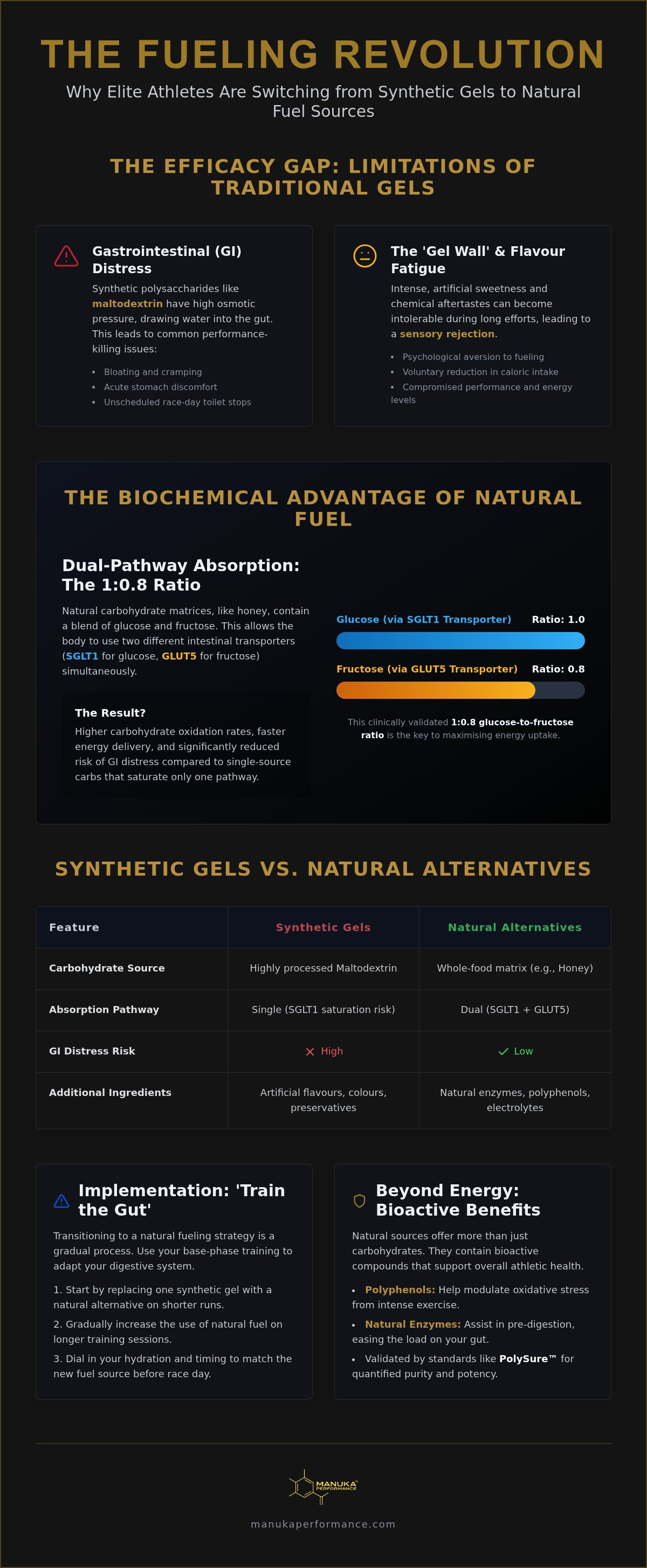
The endurance community is witnessing a significant paradigm shift as athletes increasingly report systemic failures associated with traditional fueling protocols. A substantial portion of marathoners and triathletes experience gastrointestinal distress, often colloquially termed 'runners' stomach', which can be traced directly to the molecular composition of synthetic energy gels. These formulations typically rely on maltodextrin, a highly processed polysaccharide derived from corn or wheat starch. While maltodextrin is favoured by manufacturers for its low sweetness and rapid glucose delivery, its high osmotic pressure in the gut often leads to water being drawn into the small intestine. This results in bloating, cramping, and acute discomfort that can compromise months of training in a single race session.
Beyond physiological distress, athletes frequently encounter the 'Gel Wall', a state of psychological and sensory rejection known as flavour fatigue. The intense, artificial sweetness and chemical aftertaste of synthetic gels can become intolerable during high-intensity efforts, leading to a voluntary reduction in caloric intake. This sensory aversion isn't merely a matter of preference. It's a biological signal that the body is struggling to process isolated, refined sugars under metabolic stress. Consequently, the search for natural alternatives to synthetic energy gels has become a priority for those seeking to maintain power output without the risk of gastric interruption.
The Limitations of Single-Source Carbohydrates
The primary mechanism for carbohydrate absorption in the human gut involves the SGLT1 transporter, which possesses a finite capacity for glucose processing. When an athlete consumes excessive amounts of a single-source carbohydrate like maltodextrin, these transporters become saturated. This leads to gastric pooling. This unabsorbed glucose remains in the stomach, fermenting and attracting water, which triggers the onset of GI distress. In contrast, natural carbohydrate matrices offer a broader spectrum of sugars that utilise multiple transport pathways. This reduces the metabolic cost of processing and provides a more sustainable fuel profile for long-range endurance events.
Identifying the Synthetic 'Red Flags' in Sports Nutrition
Professional Australian athletes are increasingly scrutinising ingredient labels for artificial stabilisers, colourings, and preservatives that offer no functional benefit to performance. Synthetic flavourings, while designed to mask the bitterness of chemical bases, often exacerbate palate fatigue during ultra-endurance efforts. The transition toward clean-label standards reflects a growing understanding that purity and provenance are essential for performance longevity. By opting for natural alternatives to synthetic energy gels, competitors can avoid the systemic inflammation and oxidative stress associated with highly refined additives, ensuring their nutrition supports both immediate power and systemic recovery. This dedication to authentic performance often carries over into an athlete's personal style, where brands such as Flavor First Sports help them represent their passion for sporting heritage and urban culture.
Natural Carbohydrate Matrices: The Biochemical Advantage of Real Food
The transition toward natural alternatives to synthetic energy gels is predicated on the biological superiority of the whole-food carbohydrate matrix. Unlike isolated polysaccharides such as maltodextrin, a natural matrix is an integrated system of monosaccharides, enzymes, and phytochemicals that work in synergy with human physiology. Central to this advantage is the 1:0.8 ratio of glucose to fructose, which has been clinically identified as the optimal balance for maximising carbohydrate oxidation. This specific ratio ensures that the body's metabolic pathways aren't overwhelmed, allowing for a higher rate of energy delivery without the systemic stress associated with single-source sugars. By adhering to these foundational athletic nutrition principles, competitors can maintain high-intensity efforts for longer durations while preserving metabolic efficiency.
Whole-food sources also provide natural enzymes, such as diastase and amylase found in honey, which assist in the pre-digestion process. These enzymes facilitate the breakdown of complex structures before they reach the small intestine, reducing the workload on the pancreas and gut. Additionally, natural matrices contain an inherent spectrum of electrolytes, including potassium, magnesium, and sodium, in bioavailable forms. These minerals are essential for maintaining cellular hydration and nerve transmission during prolonged exertion, offering a more nuanced approach to fluid balance than the isolated salts found in industrial formulations.
Dual-Pathway Absorption Mechanisms
Maximising carbohydrate uptake requires the simultaneous utilisation of two distinct transport proteins in the intestinal lining: SGLT1 for glucose and GLUT5 for fructose. Synthetic gels often saturate the SGLT1 transporter, leading to the gastric pooling and discomfort discussed previously. A honey-based matrix naturally provides both glucose and fructose, engaging both pathways to increase the total hourly carbohydrate absorption ceiling. This dual-pathway approach significantly lowers the osmotic load in the small intestine. Because the solution is more easily absorbed, it doesn't draw excess water into the gut, effectively eliminating the primary cause of 'runners' stomach'. Integrating a honey-based fueling strategy ensures that every gram of carbohydrate is supported by a suite of bioactive compounds that aid in rapid assimilation.
Phytochemicals and Athletic Resilience
The distinction between 'empty calories' and 'functional nutrition' is most evident in the presence of phytochemicals. Natural alternatives to synthetic energy gels, particularly those derived from high-quality New Zealand honey, contain significant levels of polyphenols. These bioactive compounds play a critical role in mitigating the oxidative stress and systemic inflammation generated during intense physical activity. Rather than just providing raw energy, these gels support the body's internal resilience mechanisms. When an athlete chooses fuel validated for its polyphenol content, they're prioritising long-term recovery alongside immediate performance, ensuring the body remains capable of consistent, high-level training blocks. This commitment to phytochemical-rich, fresh ingredients is mirrored in broader dietary choices; for instance, you can discover le jus to see how fresh produce is being used to create functional, natural beverages.
A Comparative Roundup of Natural Energy Gel Alternatives
Transitioning from biochemical theory to practical application requires a rigorous evaluation of available substrates. While the market for natural alternatives to synthetic energy gels is expanding, the efficacy of each source depends heavily on its carbohydrate density and logistical viability. Many athletes begin their transition by incorporating unprocessed staples, yet the physical constraints of racing often reveal the limitations of these rudimentary options. The objective is to identify a fuel source that maintains a high caloric density while providing the micronutrient profile necessary for sustained cellular function.
Whole-Food Options: Pros, Cons, and Use Cases
Medjool dates are frequently cited for their high potassium content and caloric density. However, their significant fibre profile can exacerbate the gastric motility issues discussed earlier; this makes them more suitable for low-intensity efforts where digestion is less compromised. Bananas offer an excellent electrolyte profile. Their susceptibility to bruising and the requirement for mechanical mastication can be problematic during technical trail running. For those competing in ultra-endurance events, boiled potatoes provide a critical savoury alternative. This starch-based option helps combat the sensory rejection of sweet flavours, though the carbohydrate-to-weight ratio is significantly lower than concentrated gels. Referencing a comprehensive whole-food fueling guide can assist in calculating the exact volume required to meet hourly metabolic demands without overloading the gut.
The Evolution of the Natural Energy Gel
The development of sophisticated honey-based gels represents the clinical evolution of these whole-food principles. By refining the delivery mechanism, these products bridge the gap between the phytochemical density of real food and the portability required for elite competition. Unlike solid fruit purées or dates, a liquid honey matrix offers a superior 'mouth-to-muscle' time because the monosaccharides require minimal enzymatic breakdown before entering the bloodstream. This liquid state also ensures that bioactive compounds remain intact. When comparing the phytochemical profile, raw honey matrices validated by analytical standards like PolySure™ provide a more complex array of polyphenols than heat-treated fruit concentrates. This ensures that functional nutrition isn't sacrificed for convenience. For the professional athlete, the move toward natural alternatives to synthetic energy gels is a move toward a more integrated, research-driven approach to endurance fueling that respects the body's internal chemistry.
Implementation Protocols: Transitioning to a Whole-Food Fuelling Strategy
The successful integration of natural alternatives to synthetic energy gels is contingent upon a structured physiological adaptation period. Athletes cannot simply substitute their fuelling protocol on race day without risking metabolic inefficiency. The 'Train the Gut' methodology involves progressively exposing the digestive system to whole-food carbohydrate matrices under varying degrees of intensity. This process enhances the expression of specific transport proteins, such as GLUT5, which are essential for processing the fructose found in natural sources. By gradually shifting the metabolic load, you ensure that the gut becomes more efficient at absorbing complex nutrient profiles without the risk of gastric distress.
Determining hourly carbohydrate requirements is a quantitative exercise that must account for body mass and exercise duration. Most endurance athletes require between 60 and 90 grams of carbohydrates per hour to maintain glycogen stores during prolonged efforts. When using natural sources, strategic timing is paramount. Fast-acting honey matrices are reserved for high-intensity threshold efforts or the final stages of a race when immediate glucose delivery is critical. Conversely, slow-release whole foods like potatoes or dates are more appropriate for the early, steady-state phases of an ultra-marathon where gastric motility is less compromised. Hydration synergy is the final component of a successful transition. Natural carbohydrate matrices require precise fluid intake to maintain osmotic homeostasis within the small intestine. Consuming water alongside natural fuel sources facilitates the transport of nutrients across the gut wall, preventing the gastric pooling associated with dehydration.
A 4-Week Transition Plan for Athletes
A methodical transition programme is essential for identifying individual tolerance levels. During weeks 1 and 2, athletes should replace 25% of their synthetic intake with natural alternatives during low-intensity base runs. This allows the microbiome to adapt to the presence of enzymes and phytochemicals. By week 3, testing honey-based matrices during threshold and interval sessions is critical to ensure gastric tolerance at elevated heart rates. Finally, week 4 involves a full-scale simulation of race-day fuelling protocols, ensuring every gram of carbohydrate is derived from natural sources. To facilitate this transition, many professionals opt for liquid honey-based energy gels that provide the required carbohydrate density in a portable format.
Managing Logistics on the Move
The logistical burden of carrying whole foods like bananas or medjool dates can be prohibitive during technical trail running or high-speed cycling. While these sources provide excellent nutritional density, their physical volume often leads to packaging failures or bruising. To keep these whole-food options fresh and cool before use, freezable lunch bags Australia offer a practical solution for athletes on the move. For consistent carbohydrate delivery, portioned sachets represent the most efficient solution for the modern endurance athlete. These allow for rapid access and precise dosing without the need for mechanical mastication or bulky storage. Organising your fuelling kit for rapid access ensures that you can maintain your caloric intake without breaking stride or compromising your aerodynamic position.
Mānuka Performance represents the clinical-grade evolution of the movement toward natural alternatives to synthetic energy gels, bridging the gap between raw botanical sources and rigorous biotechnological validation. While many consumer-packaged goods in the sports nutrition sector rely on vague claims of 'natural' purity, this New Zealand innovator prioritises the quantification of bioactive efficacy through its proprietary PolySure™ analytical standard. This approach ensures that every formulation provides a consistent, measurable density of phytochemicals, transforming a simple carbohydrate source into a sophisticated delivery vehicle for functional nutrition. For the science-led athlete, this represents a transition from speculative fueling to a protocol rooted in data-driven research and clinical precision.
Beyond Simple Honey: The PolySure™ Standard
The PolySure™ standard distinguishes Mānuka Performance from standard CPG offerings by validating the presence of seven naturally occurring polyphenols in every batch. These bioactive compounds are essential for modulating oxidative stress and supporting systemic resilience during high-intensity training blocks. By implementing rigorous testing protocols that mirror pharmaceutical standards, the brand ensures that the natural variations inherent in honey do not compromise the consistency of the athletic outcome. This level of quantification is critical for professional competitors who require absolute certainty regarding the provenance and phytochemical profile of their fueling substrates. It moves the conversation beyond simple caloric intake toward a more nuanced understanding of how bioactive ingredients support long-term performance longevity.
LiquidFuel: Engineering the Ultimate Natural Alternative
LiquidFuel is the culmination of this biotech research, specifically engineered to provide a natural alternative to synthetic energy gels without sacrificing the convenience of modern packaging. The formulation of the LiquidFuel 10-Pack leverages a New Zealand honey-based matrix to provide a precise glucose-fructose ratio, which facilitates the dual-pathway absorption mechanisms necessary for elite endurance. This precision-led approach optimises carbohydrate oxidation while maintaining a clean-label profile that is entirely free from synthetic additives or maltodextrin. Athletes seeking a deeper understanding of these developments should explore our Natural Honey-Based Energy Gels: A Performance Analysis of NZ Innovation. By prioritising the synergy between nature and advanced technology, Mānuka Performance provides the definitive solution for those who refuse to compromise between gastric comfort and peak endurance performance.
Advancing Endurance Through Clinical-Grade Natural Innovation
The transition toward natural alternatives to synthetic energy gels represents a necessary evolution for athletes who refuse to let gastrointestinal limitations dictate their performance outcomes. By prioritising a 100% natural New Zealand honey matrix, you aren't just avoiding the osmotic complications of maltodextrin; you're engaging dual-pathway absorption mechanisms that facilitate higher carbohydrate oxidation rates. This shift from industrial convenience to functional nutrition ensures that your fuelling protocol supports systemic resilience through clinically-led biotech innovation. Every training block and race session provides an opportunity to refine this strategy, ensuring your metabolic health remains as robust as your power output.
The integration of PolySure™ validated polyphenol content provides a sophisticated layer of protection against oxidative stress, a benefit that isolated synthetic sugars simply can't match. Maintaining this level of analytical rigour allows you to approach endurance challenges with the quiet confidence of a science-led competitor. It's time to elevate your fuelling standards and experience the measurable efficacy of a matrix designed for human biochemistry. Optimise your endurance with PolySure™ validated LiquidFuel and redefine what your body can achieve during sustained high-intensity efforts.
Frequently Asked Questions
Are natural energy gels as effective as synthetic ones for marathons?
Yes. Clinical performance reviews suggest that natural alternatives to synthetic energy gels provide comparable caloric density while offering superior absorption. By utilising a dual-pathway glucose-to-fructose matrix, these natural options allow for high carbohydrate oxidation rates without the gastric saturation often seen with single-source maltodextrin. Athletes can maintain their required power output while benefiting from a lower osmotic load; this reduces the risk of mid-race performance declines due to gastrointestinal distress.
Can honey-based gels cause the same stomach issues as maltodextrin?
It is highly unlikely when the gel uses a validated glucose-fructose ratio. Stomach issues with maltodextrin typically arise from its high osmotic pressure and the saturation of the SGLT1 transporter. Honey-based matrices engage both the SGLT1 and GLUT5 transporters, facilitating more efficient gastric emptying. This dual-pathway approach significantly reduces the likelihood of 'runners' stomach', as the carbohydrates are assimilated into the bloodstream rather than pooling in the small intestine.
How many grams of carbohydrates should I consume per hour using natural fuel?
Most endurance athletes should aim for 60 to 90 grams of carbohydrates per hour. When utilising natural fuel, this requirement remains consistent with traditional protocols, but the delivery mechanism is more efficient. It is essential to calculate the specific carbohydrate-to-weight ratio of your chosen natural source to ensure you meet these targets. High-performance honey gels are often portioned to provide approximately 25 to 30 grams per sachet, making it easier to track your hourly intake precisely.
What is the difference between raw honey and a performance-led honey matrix?
Raw honey is a variable agricultural product, whereas a performance-led honey matrix is a standardised functional fuel. Performance-led matrices, such as those validated by the PolySure™ standard, ensure a consistent ratio of glucose to fructose and a measured concentration of bioactive polyphenols. This level of analytical rigour is absent in raw table honey. Clinical-grade formulations are also engineered for a specific viscosity that facilitates rapid 'mouth-to-muscle' energy delivery during high-intensity efforts.
Is it possible to fuel an entire ultra-marathon using only real food?
While possible, the logistical burden of carrying enough whole food is a significant constraint. Real foods like bananas and potatoes have a lower carbohydrate-to-weight ratio compared to concentrated gels, requiring a larger volume of intake to meet metabolic demands. Many ultra-endurance competitors find that a hybrid approach, or the use of natural alternatives to synthetic energy gels in a portable sachet format, provides the necessary caloric density without the physical bulk of solid food during technical sections.
How do polyphenols in natural gels assist with post-race recovery?
Polyphenols serve as potent bioactive compounds that help modulate the systemic oxidative stress and inflammation generated during intense physical activity. By incorporating these into your fuelling protocol, you provide the body with the phytochemicals needed to manage cellular damage in real-time. This proactive approach to recovery, supported by quantified polyphenol levels, ensures that the physiological cost of a race is managed more effectively, allowing for a faster return to consistent training cycles.
Do natural alternatives to energy gels contain enough electrolytes for Australian summers?
Natural matrices provide a spectrum of bioavailable electrolytes, including potassium and magnesium, but the exact concentration varies by source. During the extreme heat of Australian summers, athletes with high sweat rates might need to supplement their natural gels with additional sodium to maintain electrolyte homeostasis. However, the inherent mineral content in honey-based gels offers a more complex hydration profile than the isolated salts found in synthetic formulations, supporting cellular fluid balance more holistically during prolonged heat exposure.
What is the shelf life of natural energy gels compared to synthetic ones?
The shelf life of natural energy gels typically ranges from 12 to 24 months, which is comparable to synthetic versions. This stability is achieved through the low water activity and natural antimicrobial properties of the honey matrix rather than the addition of artificial preservatives. While synthetic gels rely on chemical stabilisers for longevity, high-quality natural formulations remain stable under various environmental conditions, provided the packaging integrity is maintained. This ensures they are reliable for long-term event planning.