


The traditional reliance on synthetic maltodextrin polymers in endurance nutrition represents a fundamental misunderstanding of gastrointestinal transport capacity and metabolic resilience. Most athletes accept intestinal distress as a necessary trade-off for high-intensity output, yet this compromise often leads to systemic volatility and the inevitable sugar crash that undermines ultra-endurance performance. Selecting the correct liquid fuel energy gels requires a shift from mere caloric density to a protocol rooted in quantified bioactives and carbohydrate absorption efficiency. It's a biological reality that inferior fueling protocols lead to systemic fatigue regardless of an athlete's physical conditioning.
This guide explores how to identify high-performance liquid fuel energy gels that facilitate rapid gastric emptying and sustained power without the metabolic cost of artificial additives. We will examine the biochemical advantages of a natural honey matrix, the analytical rigor of the PolySure™ standard, and the logistical necessity of resealable packaging to optimise intra-workout fueling. By prioritising clean-label formulations backed by rigorous phytochemical science, athletes can finally align their fueling logistics with the sophisticated demands of their biological systems.
Key Takeaways
- Comprehend the physiological advantages of a dual-transport carbohydrate matrix in facilitating maximal oxidation rates without the gastric load associated with traditional synthetic polymers.
- Evaluate the efficacy of liquid fuel energy gels through the lens of phytochemical science to ensure sustained power output and systemic resilience during high-intensity efforts.
- Distinguish between the glycaemic volatility of maltodextrin-based gels and the stable metabolic profile provided by a natural honey-based carbohydrate matrix.
- Recognise the importance of quantified polyphenols and the PolySure™ standard in managing oxidative stress and maintaining performance during ultra-endurance events.
- Optimise intra-workout logistics by utilising modular, resealable packaging designed to eliminate mess and support precise caloric intake during extended efforts.
The Evolution of Liquid Fuel Energy Gels in Endurance Sport
Liquid fuel energy gels represent a specialised category of high-viscosity carbohydrate solutions engineered to facilitate rapid adenosine triphosphate (ATP) resynthesis during prolonged physiological exertion. For decades, the sports nutrition industry relied almost exclusively on synthetic maltodextrin, a polysaccharide derived from corn or wheat starch, to provide the necessary glucose units for aerobic and anaerobic metabolism. While effective at providing raw caloric input, these early formulations often neglected the complex systemic requirements of the human digestive and metabolic pathways. It's a fundamental limitation that modern science is finally addressing.
The emergence of the 'Clean Label' movement within the endurance community isn't merely a preference for natural ingredients; it's a response to documented concerns regarding long-term metabolic health and systemic inflammation. Elite athletes are moving away from simple caloric supplementation toward performance-led functional nutrition. This paradigm shift prioritises ingredients that offer biological utility beyond basic energy, such as quantified bioactives that support oxidative balance and systemic resilience. Performance is no longer just about the total calories consumed. It's about the biological cost of processing those calories.
Why Synthetic Gels Often Fail the Elite Athlete
Synthetic energy gels frequently induce gastrointestinal distress due to the high osmotic pressure exerted by concentrated maltodextrin in the small intestine. This osmotic load draws water into the gut, resulting in bloating, cramping, and the condition colloquially known as 'runner's stomach'. Additionally, the high glycaemic index of these polymers often creates a 'spike and crash' cycle; rapid insulin responses lead to subsequent hypoglycaemia. When athletes consume these formulations over high-volume training blocks, the cumulative ingestion of artificial preservatives and stabilisers can further compromise the integrity of the gut microbiome.
The Rise of Bio-Analytical Natural Fueling
Modern sports nutrition is transitioning from purely 'natural' marketing to a framework of bio-analytical validation. This involves the use of ingredients like New Zealand Mānuka honey. This substrate offers a natural glucose-fructose matrix that utilises multiple intestinal transporters for superior carbohydrate oxidation. New Zealand innovation currently leads the phytochemical sports nutrition sector by utilising rigorous analytical standards to quantify naturally occurring polyphenols. This focus on provenance ensures that the liquid fuel energy gels used by professional athletes are free from contaminants and validated for their specific biochemical properties. Provenance matters for systemic purity.
The Biochemistry of Honey-Based Carbohydrate Matrices
High-quality Mānuka honey possesses a unique carbohydrate profile, typically maintaining a natural 1:1.2 ratio of glucose to fructose. This specific molecular arrangement is crucial for endurance athletes because it bypasses the saturation limits of single-source carbohydrate transporters. While synthetic maltodextrin relies solely on the SGLT1 pathway, honey-based liquid fuel energy gels utilise both SGLT1 (for glucose) and GLUT5 (for fructose) transporters. This dual-transport mechanism allows for a higher total carbohydrate oxidation rate, often exceeding the 60g per hour limit associated with isolated glucose solutions. It's a fundamental shift in how we approach intra-workout fueling.
The presence of naturally occurring enzymes such as diastase, invertase, and glucose oxidase within the honey matrix further enhances its biological utility. These enzymes facilitate the pre-digestion of complex sugars, reducing the intestinal workload required during periods of high physiological stress. Unlike isolated starches that demand significant metabolic energy for hydrolysis, the sugars in honey are presented in a state that is nearly ready for systemic uptake. This enzymatic synergy ensures a more sustained glycaemic response, preventing the rapid insulin spikes and subsequent crashes that often characterise synthetic fueling protocols. You can explore the technical specifications of these honey-based liquid fuel energy gels to understand how they integrate into a professional performance protocol.
Bioavailability and Absorption Kinetics
The liquid state of Mānuka honey inherently requires less metabolic energy to process during intense efforts compared to solids or high-density pastes. Gastric emptying rates are also influenced by the low pH of honey, which typically ranges between 3.2 and 4.5. This acidity supports a more efficient transition from the stomach to the small intestine, where absorption occurs. Absorption speed is often superior in Mānuka-based formulations due to the precise viscosity and validated bioactive content that maintains osmotic balance.
The Protective Role of Naturally Occurring Electrolytes
The efficacy of carbohydrate absorption is intrinsically linked to sodium levels. Natural salts found within the honey matrix aid in the sodium-glucose co-transport process, which is the primary driver of water and nutrient uptake in the gut. Beyond sodium, the presence of trace minerals like potassium and magnesium in a whole-food matrix provides systemic benefits that isolated electrolytes cannot replicate. These minerals support cellular function and neuromuscular transmission during extended ultra-endurance efforts. The synergy between honey bioactives and natural electrolyte salts creates a balanced osmotic environment that facilitates maximal absorption with minimal gastrointestinal risk.
Selection Criteria: What to Look for in a Premium Energy Gel
Selecting liquid fuel energy gels requires a departure from subjective preferences like flavour and a move toward objective physiological metrics. The most critical factor for the elite athlete is the carbohydrate-to-weight ratio. High-performance gels should deliver maximal caloric density without unnecessary bulking agents that slow gastric emptying. Beyond raw energy, athletes should evaluate the presence of quantified polyphenols to manage oxidative stress during prolonged efforts. Rigorous third-party laboratory testing for WADA compliance is also a non-negotiable requirement. It ensures that the formulation is free from prohibited substances, protecting the athlete's professional standing and systemic health.
The PolySure™ Standard: Beyond Simple Ingredients
While many products claim to be natural, the PolySure™ standard provides the analytical validation necessary for elite performance. It isn't enough for a gel to contain honey; it must contain a quantified profile of seven naturally occurring polyphenols. These bioactives aren't just flavour enhancers. They're functional components that support systemic resilience and oxidative balance during extreme physical exertion. This level of quantification transforms a natural ingredient into a validated performance tool. It allows athletes to rely on data rather than vague marketing terminology when building their fueling protocol. By identifying specific markers like gallic acid and caffeic acid, the PolySure™ standard ensures that every batch meets a clinical threshold for bioactive efficacy.
Logistical Integrity: Resealability and Portability
The physical delivery system of liquid fuel energy gels is as important as the biochemistry. Traditional 'tear-top' pouches are inherently flawed for ultra-endurance efforts. They force the athlete to consume the entire volume at once or risk a sticky mess in their jersey or pack. A 45g resealable pouch supports modular fueling, allowing for precise titration of carbohydrate intake over several kilometres. This no-leak technology also reduces environmental waste and ensures that logistics don't distract from the primary objective of sustained power output. Precision in delivery is just as vital as precision in formulation. When you're operating at your physiological limit, you don't want to struggle with non-resealable packaging that creates unnecessary waste and mess.
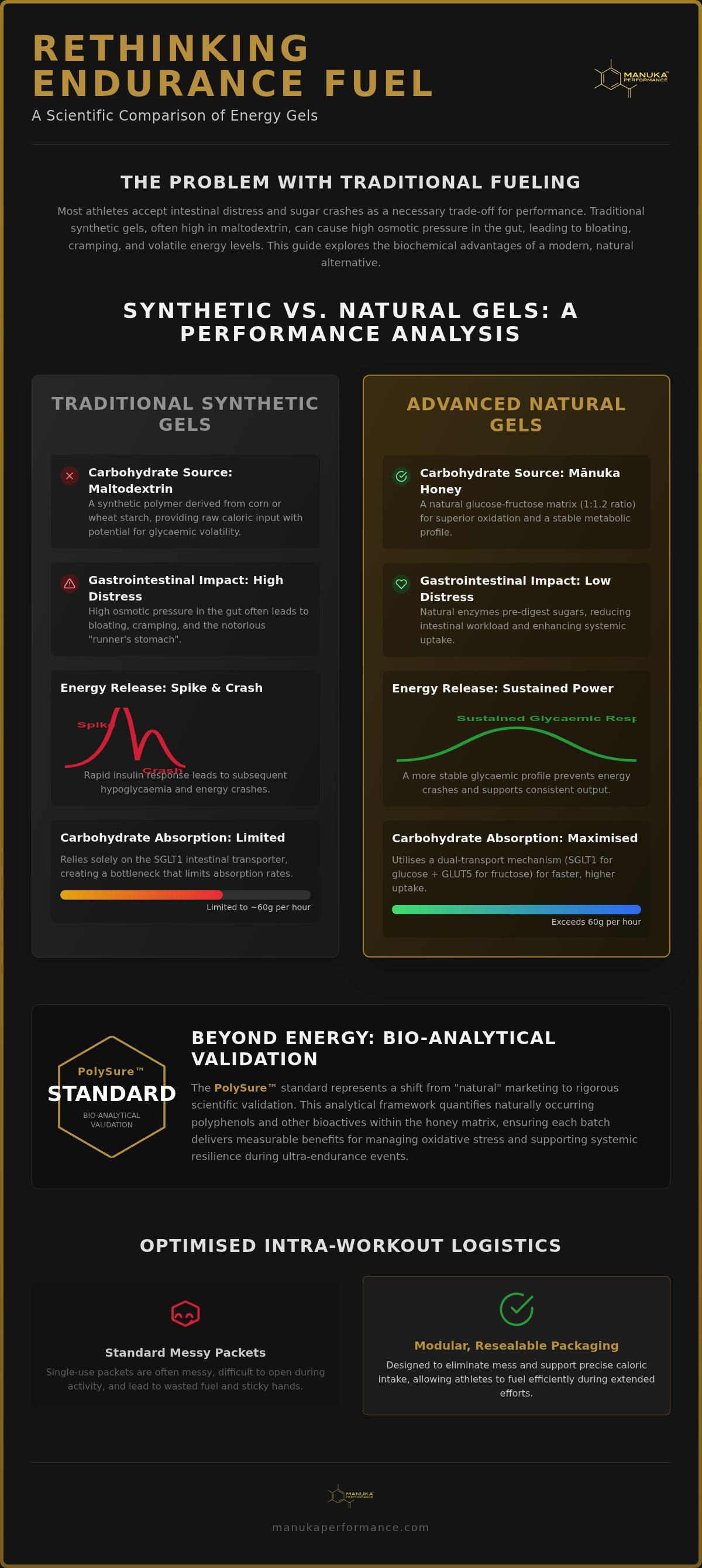
Synthetic vs. Natural Gels: A Comparative Performance Analysis
The comparative analysis of synthetic versus natural carbohydrate sources reveals a significant divergence in metabolic stability. Synthetic maltodextrin, while providing rapid glucose availability, possesses a glycaemic index that often exceeds 100, necessitating precise timing to avoid reactive hypoglycaemia. In contrast, honey-based liquid fuel energy gels provide a more tempered glycaemic response due to the presence of complex sugars and organic acids. This stability is critical for ultra-endurance athletes who require sustained power output without the systemic volatility inherent in synthetic polymers. Training consistency is often superior in athletes who adopt a clean-label protocol, as the reduced inflammatory load and improved gut health support faster recovery between sessions.
Clinical observations suggest a higher incidence of 'Runner's Stomach' in athletes relying on high-osmolarity synthetic gels. These formulations often require significant water intake to facilitate gastric emptying, which isn't always feasible during high-intensity efforts. Natural matrices are more bio-compatible, allowing for efficient absorption with a lower risk of osmotic-induced distress. By prioritising a natural carbohydrate structure, athletes can maintain their fueling schedule without the fear of sudden gastrointestinal compromise.
Palate Cleansing and Sensory Performance
Sensory performance is frequently overlooked in nutritional planning, yet palate fatigue can terminate a race effort as effectively as physical injury. Artificial sweeteners and thickeners used in mass-market gels create a cloying sensation that becomes intolerable during extended efforts. Utilising natural acidity, such as that found in Green Apple juice, serves as a palate cleanser, maintaining the athlete's desire to fuel. The psychological benefit of consuming recognisable, real-food ingredients shouldn't be understated; it reduces the cognitive load associated with forced consumption of synthetic pastes. Natural textures are simply easier for the body to accept when operating at its physiological limit.
WADA Compliance and Athlete Safety
For the professional athlete, WADA compliance is a fundamental requirement of their sporting career. Mass-produced synthetic supplements carry an inherent risk of cross-contamination in facilities that process a wide array of chemical additives. Independent laboratory batch testing is non-negotiable to ensure the absence of prohibited substances. The New Zealand manufacturing sector offers a distinct advantage here, where stringent provenance and purity standards are built into the production of validated liquid fuel energy gels. This clinical approach to safety ensures that systemic performance is never compromised by manufacturing or supply chain oversights.
The LiquidFuel Collection: Validated Nutrition for the Elite
The LiquidFuel collection represents the practical application of translational phytochemical science, moving beyond generic sports nutrition into the territory of biotech-validated endurance fuel. By utilising a New Zealand Mānuka honey matrix, these liquid fuel energy gels provide a sophisticated solution for athletes who demand systemic integrity alongside caloric density. The specific inclusion of Green Apple juice acts as a biological palate cleanser, while natural electrolyte salts ensure osmotic balance is maintained during prolonged efforts. This formulation is the result of rigorous research, designed to support the physiological demands of the elite athlete without the metabolic cost of synthetic alternatives.
Strategic Fueling with the LiquidFuel 10-Pack
The LiquidFuel 10-Pack serves as the foundational unit for any structured training programme. Each 45g pouch is designed for modularity, allowing athletes to organise their fueling protocol in precise increments based on effort duration and metabolic rate. This format is particularly effective when integrated into a broader natural honey-based energy gels NZ performance strategy, ensuring that the athlete remains in a state of high-performance homeostasis. The resealable nature of the pouch means that a single unit can be titrated over multiple kilometres, providing a level of logistical efficiency that traditional single-use alternatives cannot match. It's a format that accommodates both the high-volume requirements of an Ironman and the targeted intensity of a marathon.
Why LiquidFuel is the Professional’s Choice
LiquidFuel is frequently the preferred selection for professionals due to the rigorous analytical standards applied to its production. The PolySure™ standard ensures that every batch contains a quantified profile of seven key polyphenols, providing consistent bioactive delivery that supports systemic resilience. This clinical focus is supported by endorsements from medical doctors who specialise in sports physiology and recognise the biological cost of synthetic additives. For athletes transitioning from a reactive to a proactive, bio-analytical fueling model, LiquidFuel offers a validated, clean-label alternative that prioritises long-term systemic health. It's the definitive choice for those who view nutrition as a critical component of their competitive advantage.
Advancing Your Endurance Protocol through Bio-Analytical Validation
The transition from synthetic polymers to a natural honey-based matrix represents a significant advancement in sports nutrition logistics. By prioritising liquid fuel energy gels that adhere to the PolySure™ standard, athletes ensure their systemic performance is supported by quantified bioactives rather than unsubstantiated marketing claims. This commitment to analytical rigor, combined with the safety of WADA batch testing, provides the foundational security necessary for high-intensity efforts. The logistical advantage of resealable 45g pouches further facilitates precise carbohydrate titration, allowing for a modular approach to fueling that eliminates waste and gastrointestinal distress.
Aligning your biological requirements with validated phytochemical science is the most effective way to maintain sustained power output during ultra-endurance events. It's time to move beyond the limitations of traditional synthetics and adopt a protocol rooted in clinical purity and research-driven innovation. Optimise your performance with the LiquidFuel collection and secure your competitive advantage through superior nutritional integrity.
Frequently Asked Questions
Are liquid fuel energy gels better than solid bars for marathons?
Gels are generally superior for marathons because they don't require significant metabolic energy for digestion. Solid bars demand increased blood flow to the stomach to facilitate mechanical breakdown, which diverts oxygen away from working muscles. During high-intensity efforts, this can lead to gastrointestinal distress and reduced power output. These concentrated carbohydrate solutions provide a more direct route to ATP resynthesis, allowing athletes to maintain their pace without the systemic burden of processing solid food.
How often should I consume a liquid fuel energy gel during a long run?
Consumption frequency depends on your individual carbohydrate oxidation rate, which typically ranges from 30g to 90g per hour. For most athletes, this equates to one 45g pouch every 45 to 60 minutes during sustained efforts. It's essential to test this protocol during training blocks to determine your specific systemic tolerance. Modular fueling with resealable liquid fuel energy gels allows you to titrate intake more precisely than traditional single-use alternatives, ensuring consistent energy delivery.
Can honey-based energy gels cause an upset stomach?
Honey-based formulations are significantly less likely to cause gastrointestinal distress than synthetic maltodextrin. This is because the natural glucose-to-fructose ratio utilises dual-transport mechanisms (SGLT1 and GLUT5) in the gut. By distributing the carbohydrate load across multiple pathways, these gels prevent the osmotic imbalance that often leads to cramping or 'runner's stomach'. The enzymatic profile of Mānuka honey further facilitates efficient, low-stress absorption during periods of high physiological stress and intense physical exertion.
What makes Mānuka honey different from standard clover honey for performance?
Mānuka honey is distinguished by its unique phytochemical profile and higher concentration of quantified polyphenols. Unlike standard clover honey, which functions primarily as a simple sweetener, Mānuka honey validated by the PolySure™ standard offers specific bioactive benefits for oxidative stress management. These naturally occurring compounds support systemic resilience during extreme efforts. Additionally, the specific viscosity and mineral content of Mānuka honey provide a more stable glycaemic response than common table varieties found in most households.
Are liquid fuel energy gels safe for athletes under WADA regulations?
Liquid fuel energy gels are safe for competitive use provided they've undergone rigorous independent batch testing for prohibited substances. Formulations like LiquidFuel are specifically batch-tested to ensure compliance with WADA standards, protecting the professional integrity of the athlete. It's critical to verify that any performance nutrition product is manufactured in a controlled environment to eliminate the risk of cross-contamination with banned chemical additives often found in mass-produced synthetic supplements or lower-quality alternatives.
How many carbohydrates are in a typical 45g LiquidFuel pouch?
A typical 45g LiquidFuel pouch contains approximately 28g to 30g of carbohydrates, providing an optimal caloric density that supports rapid absorption. This carbohydrate matrix is derived from a natural Mānuka honey base, ensuring that the energy provided is metabolically stable and free from synthetic fillers. This volume is designed to support the standard hourly requirements of endurance athletes while remaining easy to transport. It's a format that allows for highly modular fueling strategies during both training and competition.
Do I need to drink water when consuming a liquid fuel energy gel?
You should always consume water alongside energy gels to maintain proper osmotic balance in the small intestine. While liquid-state gels are more hydrated than thick pastes, additional water is necessary to facilitate the transport of carbohydrates across the gut wall. This practice prevents the gel from drawing internal fluids into the intestine, which is a primary cause of dehydration and cramping. It's best to aim for approximately 150ml to 200ml of water with every serving to ensure optimal absorption.
What is the shelf life of a natural honey-based energy gel?
Natural honey-based energy gels typically have a shelf life of 12 to 18 months when stored in a cool, dry environment. Honey's a natural preservative due to its low moisture content and acidic pH, which naturally inhibits microbial growth without synthetic stabilisers. While the bioactive properties remain stable over this period, it's advisable to check the specific batch expiry date to ensure maximal efficacy of the quantified polyphenols and electrolytes within the formulation.