


The fastest-sounding ingredient on a label isn’t automatically the best fuel for your session. Choosing fast absorbing carbohydrates for sport means looking beyond claims of speed: glucose, fructose and maltodextrin differ in structure and how the body processes them, while serving size, timing and gut tolerance also affect what works in practice.
If carbohydrate amounts and ingredient names make gels, drinks and chews hard to compare, that’s understandable. A source that suits a short, steady outing may not be practical for a longer or more demanding event. And a higher intake needs to be tested, not assumed to feel comfortable.
This guide explains what “fast absorption” means during exercise, compares common carbohydrate sources using practical criteria, and shows how to match fuel to your session. You’ll also learn why glucose and fructose combinations are used for higher intakes, what to check on a nutrition panel, and how to practise a fuelling plan gradually in training so your event-day choices are informed by experience, not guesswork.
Key Takeaways
- Understand why fast absorbing carbohydrates for sport involve more than digestion speed, and how absorption and energy use differ.
- Compare glucose, fructose, maltodextrin, mixed-source fuels and honey-based options by carbohydrate profile, format and label details.
- Match your fuel choice to the demands of your session, then practise it in training to assess comfort and practicality.
- Use carbohydrate targets as a starting point, not a fixed prescription. Adjust your approach to the event and your tolerance.
- See how LiquidFuel’s New Zealand honey-based matrix, with naturally occurring glucose and fructose, fits into a broader fuel comparison.
What are fast absorbing carbohydrates for sport?
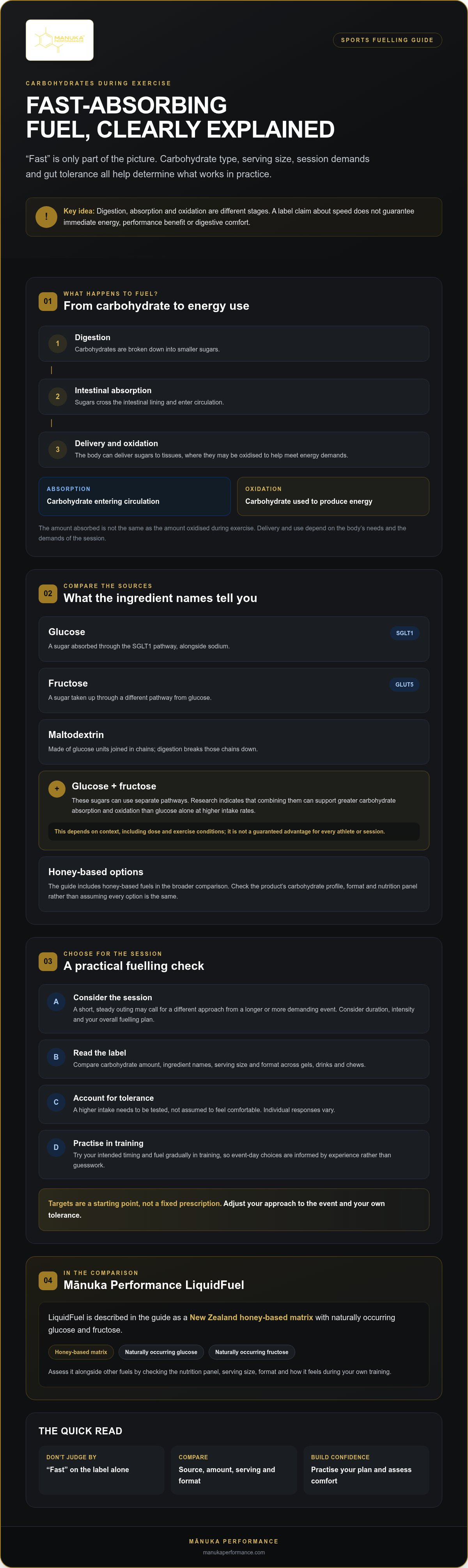
Fast-absorbing carbohydrates for sport are sources that can be digested into absorbable sugars and made available for use during exercise, although digestion, intestinal absorption and oxidation are separate processes. Digestion breaks carbohydrates into smaller units. Absorption moves those units from the intestine into circulation, while oxidation describes their use in the body to produce energy. A carbohydrate entering the bloodstream isn’t automatically delivered to working muscles or used at the same rate.
Carbohydrate is an important fuel source in sports nutrition, particularly as exercise becomes prolonged or demanding. The Sports nutrition basics overview provides broader context on athletes’ energy and nutrient needs. This guide focuses on carbohydrate consumed around a session. The value of rapidly available fuel depends on the activity and your overall fuelling plan, not simply on a label claiming that a product is “fast”.
Speed alone doesn’t establish suitability, a performance benefit or digestive tolerance. The carbohydrate type and amount, product format, exercise conditions and individual response all matter. A source that feels comfortable for one person may not suit another, so assess your options in context.
What does fast absorption mean during exercise?
Many carbohydrates must first be broken down during digestion into smaller sugars that can cross the intestinal wall. Once absorbed, these sugars enter circulation. Their subsequent delivery to tissues and oxidation for energy are distinct steps, influenced by the body’s needs and the demands of exercise. “Fast-absorbing” is therefore a useful shorthand, not a guarantee of immediate energy or a uniform response across athletes and fuel sources.
When might athletes consider rapidly available fuel?
Athletes may consider carbohydrate during a sustained session or demanding event if their fuelling strategy includes intake while exercising. The amount and timing should reflect factors such as session duration, intensity and personal tolerance. A short, easy workout may call for a different approach from a longer event. Practise any intended strategy in training rather than relying on an untested choice on event day.
Fuelling during a session is distinct from everyday dietary carbohydrate, which contributes to overall intake, and from pre-event preparation. Carbohydrate loading is a separate strategy for some events and requires broader planning. Readers considering it can consult a dedicated guide to strategic carbohydrate loading.
How are carbohydrates digested, absorbed and used during sport?
After you consume a carbohydrate source, digestion makes its sugars available for uptake in the small intestine. Once they cross the intestinal lining, they enter circulation. From there, the body can deliver them to tissues, where they may be oxidised to help meet energy demands. These stages are related but distinct, and the amount absorbed isn’t the same as the amount oxidised during exercise.
Absorption describes carbohydrate entering circulation; oxidation describes carbohydrate being used to produce energy. This distinction matters when interpreting exercise-fuelling research: the rate of absorption alone doesn’t establish how much carbohydrate an athlete will use during a session. Jeukendrup’s review of carbohydrate intake during exercise discusses the role of transport and oxidation in this process (Jeukendrup, 2014, Sports Medicine).
Glucose, fructose and carbohydrate transport
Glucose and fructose cross the intestinal lining through different transport pathways. SGLT1, short for sodium-glucose linked transporter 1, carries glucose into intestinal cells alongside sodium. GLUT5, or glucose transporter 5, enables fructose uptake. These transporter names describe mechanisms, not a promise of better fuelling or comfort for every athlete.
When a fuel supplies both glucose and fructose, the sugars can use these separate pathways. Research on multiple-transportable carbohydrates indicates that combining them can support greater carbohydrate absorption and oxidation than relying on glucose alone at higher intake rates. The finding depends on context, including dose and exercise conditions. It shouldn’t be treated as a guaranteed advantage for every person or session.
Why carbohydrate form and formulation matter
Glucose and fructose are sugars, while maltodextrin is made of glucose units joined in chains that digestion breaks down. Ingredient names describe composition, but don’t by themselves demonstrate a particular absorption rate or outcome. A mixed-source product may provide more than one type of carbohydrate, but you’ll need the nutrition panel and serving size to understand what it delivers.
Practical use also depends on formulation. Concentration, the amount of fluid taken alongside a fuel, and individual digestive tolerance can influence how comfortable a product is to consume during exercise. Test options during training rather than assuming that a mechanism will translate into a suitable fuelling choice.
Honey-based products have their own matrix and carbohydrate composition, so their bioavailability is a separate question from the general transport mechanisms described here. Mānuka Performance’s sports nutrition range is one New Zealand example of this category. Read more about New Zealand honey-based sports nutrition for further product context.
Which fast carbohydrate sources can athletes compare?
To compare fast absorbing carbohydrates for sport, assess the carbohydrate profile alongside serving size, format and label details. The table below is a decision aid, not a ranking. Ingredient names alone can’t guarantee a particular absorption rate, digestive response or suitability for your session.
| Source | Carbohydrate profile | Common formats and portability | What to check and possible use |
|---|---|---|---|
| Glucose | A single sugar, also listed as dextrose. | Often found in powders, drinks, gels and chews. Packaged formats can be convenient to carry. | Check carbohydrate per serving and how the product is prepared. It may suit planned fuelling where a glucose source is appropriate. |
| Fructose | A single sugar found naturally in foods such as fruit, and used in some formulated products. | Available in some drinks, gels and chews. Portability depends on the product. | Check whether it is a standalone source or part of a blend, and review the serving information. |
| Maltodextrin | A glucose polymer: many glucose units joined in chains that digestion breaks down. | Common in drink powders and gels, which may be portable but can require water or mixing. | Review carbohydrate per serving, preparation directions and any other carbohydrate sources in the formula. |
| Mixed-source products | Combine carbohydrate types, often glucose or maltodextrin with fructose. | Found in drinks, gels and chews. Convenience depends on packaging and use instructions. | Check each listed source and total carbohydrate. A blend may be considered for higher planned intakes, but individual response varies. |
| Honey-based options | Honey contains naturally occurring sugars, including glucose and fructose. Composition varies by product. | May be supplied in gels or other formats designed for exercise. Portability depends on packaging. | Use the current nutrition panel to check carbohydrate per serve and ingredients, rather than assuming all honey-based products are alike. |
How do the sources differ in practice?
Glucose and fructose are distinct simple sugars, while maltodextrin is a chain of glucose units. These compositional differences can matter when selecting a product, particularly if your fuelling plan uses more than one carbohydrate type. They don’t establish that one ingredient is universally faster or superior. Format matters too: a powder needs suitable preparation, while a ready-to-use gel or chew may be easier to carry, depending on the session.
Where do honey-based sports fuels fit?
Mānuka Performance’s LiquidFuel running gel uses a New Zealand honey-based matrix containing naturally occurring glucose and fructose. It’s one example to compare, not evidence that honey-based fuel suits every athlete. Check the current product label for serving and ingredient details, and consult the Natural Honey-Based Energy Gels performance analysis for further category context.
For any option, compare the labelled carbohydrate per serve with your plan, and practise using it in training before relying on it during an event.
How can you choose and practise fast-absorbing sports fuel?
Choosing fast absorbing carbohydrates for sport means matching fuel to the session, then testing whether the plan is practical and comfortable. Duration and intensity influence fuelling needs, as do access to fluids, carrying requirements, event conditions and individual tolerance. No single intake target or product format suits every athlete.
Match carbohydrate choice to the session
Use this sequence to build a plan you can evaluate:
- 1. Define the session. Consider its duration and intensity, when you expect to take fuel, and whether you’ll have access to water or other fluids.
- 2. Check product information. Read the current nutrition panel and ingredient list. Compare carbohydrate per serving, serving size and preparation instructions rather than relying on front-of-pack descriptions.
- 3. Select a workable format. Consider whether a drink, gel, chew or food is easy to carry and consume in the conditions you’ll face. Ease of intake may matter as much as the carbohydrate source.
- 4. Practise in training. Trial your intended timing and amount in a comparable session. Start conservatively and change one factor at a time.
- 5. Review and adjust. Record what you consumed, when you took it, fluid intake, session conditions and how manageable the plan felt. Use those observations to guide your next trial.
For context, guidance cited by the Gatorade Sports Science Institute and Precision Hydration gives a range of 30-60 g of carbohydrate per hour for exercise lasting 1-2 hours, and 60-90 g per hour for exercise lasting more than 2 hours. These are general reference ranges, not personalised prescriptions. Needs vary with the athlete and session, so check current professional guidance before setting a target. Higher intakes may require particular care in selecting and practising a suitable approach.
Practise intake and assess tolerance
Repeat trials in training before using a fuelling plan at an event. A simple record can help you identify whether timing, serving size, product format or fluid availability seems to affect your experience, without assuming that one factor explains digestive discomfort. For a deeper discussion, consult a gastrointestinal resilience guide and consider advice from a qualified sports dietitian, particularly if you need an individualised plan.
For context on one New Zealand honey-based sports fuel, see Mānuka Performance sports nutrition.
How does Mānuka Performance’s LiquidFuel fit into a fuelling comparison?
Assess LiquidFuel using the same criteria as other options for fast absorbing carbohydrates for sport: carbohydrate composition, serving information, format and fit with your session. It’s an example of a honey-based running gel, not evidence that honey-based fuel is inherently faster, more effective or suitable for every athlete.
What confirmed product information can an athlete assess?
Mānuka Performance’s flagship running gel is the LiquidFuel 10-Pack Running Gel. Its New Zealand honey-based matrix contains naturally occurring glucose and fructose. These details describe its carbohydrate source and composition. They don’t establish a specific absorption rate, carbohydrate quantity per serving, digestive tolerance or sports outcome.
Before comparing it with a drink, chew or another gel, check the current product information and nutrition panel for serving size, carbohydrate per serving, ingredients and directions for use. Product details can change, so rely on the current label rather than estimates based on honey or information from another product version.
PolySure™ is a separate point of product information: it validates seven naturally occurring polyphenols in the finished product. That validation concerns polyphenol presence. It isn’t evidence of carbohydrate absorption speed, athletic performance or health outcomes. Keeping these claims distinct makes the comparison more useful and precise.
How to decide whether this format suits your needs
Consider the gel alongside alternatives in light of your event and preferences. A gel may be convenient to carry, while a drink can combine fluid with carbohydrate and a chew offers a different texture and method of intake. The practical choice depends on factors such as access to fluids, how you carry fuel and whether you can comfortably consume it while exercising.
Include the product in a training trial before relying on it during an event. Assess how the serving information fits your fuelling plan, whether the format is easy to use under realistic conditions, and how it feels for you. A honey-based source won’t suit everyone, and the product’s composition alone can’t predict an individual response.
If its confirmed composition and gel format match what you want to assess, see LiquidFuel as a running gel option, then compare its current label with your session plan before making a choice.
Build a fuelling plan you can trust
Choosing fast absorbing carbohydrates for sport involves more than looking for the ingredient that seems quickest. Digestion, absorption and oxidation are distinct steps, while session demands, product format and individual tolerance all influence whether a fuel is practical for you.
Compare carbohydrate sources by their composition and current nutrition-panel details, then match the serving and format to your event. Most importantly, trial your plan in training and review how it works before relying on it on event day. A considered, practised approach is more useful than assuming one source suits every athlete.
Mānuka Performance’s LiquidFuel 10-Pack Running Gel offers one New Zealand honey-based option, with naturally occurring glucose and fructose in its matrix. PolySure™ validates seven naturally occurring polyphenols in the finished product. This is separate from evidence about carbohydrate absorption or sports outcomes.
To compare LiquidFuel with your session needs, explore Mānuka Performance’s LiquidFuel running gel and check its current product information. Consider whether its format fits your fuelling plan.
Frequently Asked Questions
What are the fastest-absorbing carbohydrates for sport?
There isn’t one carbohydrate source that can be named fastest for every athlete and situation. Glucose, fructose and maltodextrin are used in sports drinks, gels and chews, and their digestion and absorption depend on the source, formulation, amount consumed and individual response. When comparing fast absorbing carbohydrates for sport, check the nutrition panel and serving information, then test the product during training rather than treating a “fast” label as a guarantee.
Are glucose and fructose absorbed in the same way?
No. Glucose and fructose use different transport pathways across the intestinal lining: glucose is transported through SGLT1, while fructose uses GLUT5. A product containing both sugars may use these separate pathways, which is relevant to some fuelling strategies, particularly at higher carbohydrate intakes. However, transporter mechanisms don’t guarantee improved performance or digestive comfort, and individual responses can vary.
Is maltodextrin a fast-absorbing carbohydrate?
Maltodextrin is a carbohydrate made from chains of glucose units, which digestion breaks down into smaller sugars. It’s used in sports products such as drinks and gels, but its presence on an ingredient list doesn’t by itself establish how quickly a particular product will be absorbed or whether it will suit you. Check carbohydrate per serving and preparation instructions, then assess the product in training under conditions similar to your event.
Can honey provide carbohydrates during exercise?
Yes. Honey contains naturally occurring sugars, including glucose and fructose, and honey-based sports products can provide carbohydrate during exercise. Composition and serving information vary by product, so check the current nutrition panel rather than assuming all honey-based options provide the same amount. Mānuka Performance’s LiquidFuel running gel uses a New Zealand honey-based matrix containing naturally occurring glucose and fructose. That composition alone doesn’t establish absorption speed or suitability for every athlete.
How many carbohydrates should I consume during sport?
The appropriate amount depends on the session and the athlete. Guidance cited by the Gatorade Sports Science Institute and Precision Hydration gives 30-60 g of carbohydrate per hour for exercise lasting 1-2 hours, and 60-90 g per hour for sessions lasting more than 2 hours. These are general reference ranges, not personal prescriptions. Check current sports nutrition guidance, and consider a qualified sports dietitian for advice tailored to your training and event.
What happens if fast-absorbing carbohydrates upset my stomach?
If a fuel causes digestive discomfort, don’t assume that a faster-absorbing source will solve it. Review what you consumed, the serving size, timing, fluid intake and session conditions, then consider discussing your experience with a qualified sports dietitian. Avoid testing a new product or a substantially different intake for the first time during an event. Persistent or concerning symptoms warrant advice from an appropriate health professional.
Are fast-absorbing carbohydrates better than complex carbohydrates for exercise?
Not necessarily. The most suitable carbohydrate depends on when you’ll eat it, the session demands and your overall fuelling approach. Sports products often provide carbohydrates in convenient formats for planned intake during exercise, while foods containing more complex carbohydrates can contribute to everyday meals and preparation. These categories aren’t a simple ranking. Consider the purpose, serving information and practicality of each option rather than assuming one type is always superior.
When should I practise taking carbohydrate fuel during training?
Practise during training before using a fuelling plan at an event, ideally in sessions that reflect your event’s duration, intensity and conditions. Trial your intended product, timing and amount progressively, changing one factor at a time. Record what you took, fluid intake and how manageable the approach felt. This gives you a basis for refining your plan, although training trials can’t guarantee the same response in every event.