


The traditional reliance on synthetic maltodextrin and isolated fructose chains in endurance nutrition has reached a point of diminishing returns, often manifesting as acute gastrointestinal distress rather than physiological advantage. For athletes navigating the high-stakes environment of long-distance performance, the reality of cramping, bloating, and osmotic imbalances represents a frequent barrier to reaching peak potential. You understand that the search for the best energy gels for sensitive stomachs NZ isn't merely about flavour preference; it's a fundamental requirement for a fuelling strategy that respects the delicate biochemical balance of the gut under high-intensity stress. This guide provides a rigorous analysis of the scientific criteria essential for optimising carbohydrate absorption while systematically eliminating the gastric interruptions that plague many professional and amateur competitors. We will examine the PolySure™ analytical standard and its measurement of seven naturally occurring polyphenols, the role of natural honey-based matrices in maintaining osmotic stability, and the specific data-driven advantages of the LiquidFuel 10-Pack for those requiring professional-grade, gut-resilient nutrition.
Key Takeaways
- Understand how high osmolarity in synthetic formulations triggers gastrointestinal distress by disrupting the systemic absorption of nutrients during physiological stress.
- Identify the best energy gels for sensitive stomachs NZ by selecting carbohydrate matrices that utilise both SGLT1 and GLUT5 transporters for maximum oxidation without gastric interruption.
- Recognise the importance of the PolySure™ analytical standard in validating the precise phytochemical composition and polyphenol content of high-performance fuelling solutions.
- Apply a rigorous selection framework to audit ingredient lists for synthetic binders, artificial sweeteners, and thickeners that frequently compromise intestinal integrity.
- Learn how the LiquidFuel 10-Pack integrates honey-based matrices with clinical research to provide a sophisticated alternative to mainstream synthetic nutrition.
Understanding the Pathophysiology of Gastrointestinal Distress in Athletes
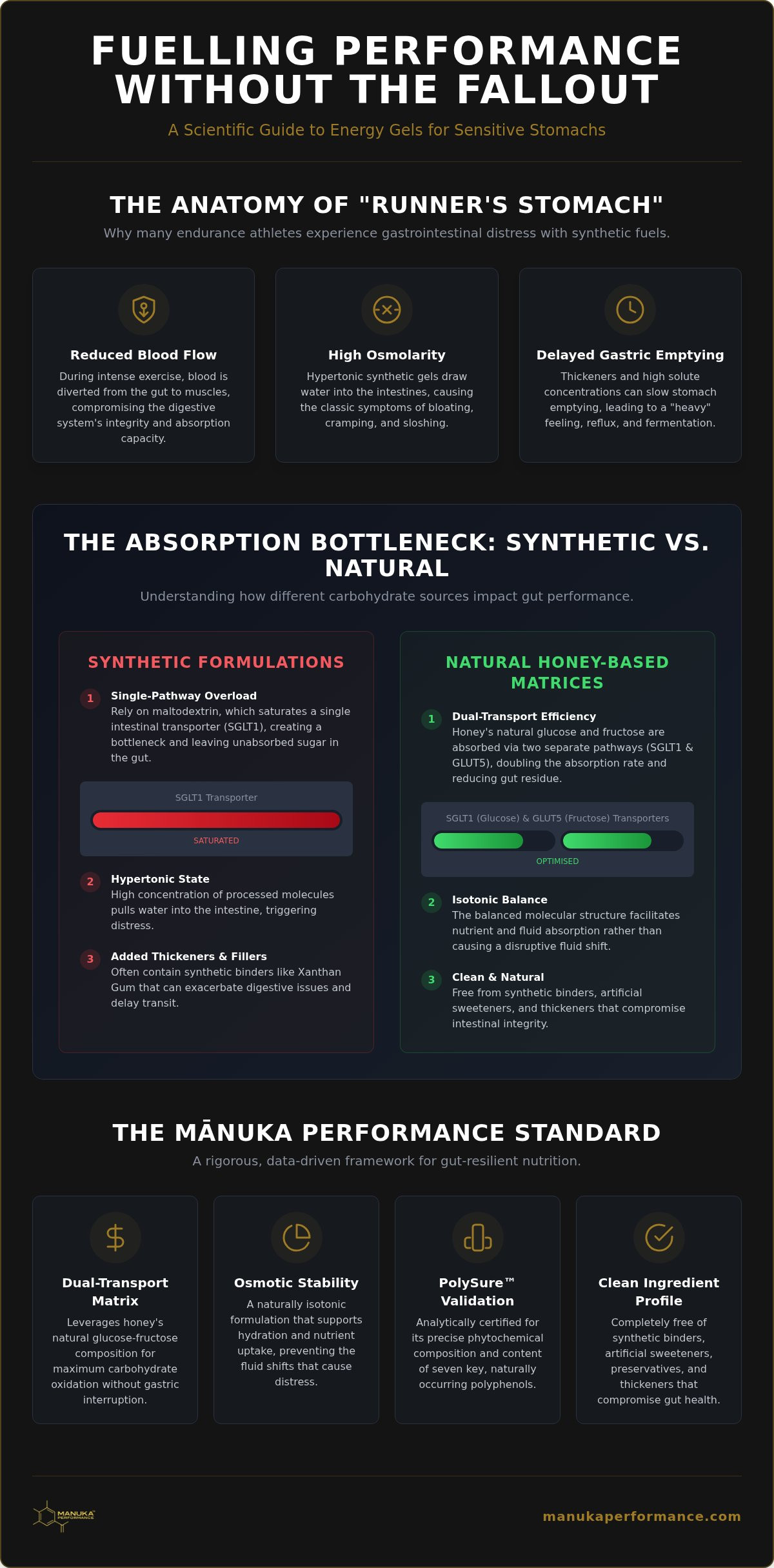
"Runners' Stomach" is often dismissed as mere discomfort, but it's more accurately defined as a systemic failure of nutrient absorption occurring under physiological stress. During high-intensity endurance performance, splanchnic blood flow is diverted away from the digestive tract to support skeletal muscle and thermoregulation. This reduction in perfusion compromises the integrity of the intestinal lining and reduces the efficiency of carbohydrate transporters. When the gut's capacity to process exogenous fuel is exceeded, the result is an accumulation of undigested solutes. Identifying the best energy gels for sensitive stomachs NZ requires a deep understanding of this mechanical and chemical threshold.
The role of osmolarity in sports nutrition is a critical factor often overlooked in standard retail formulations. Many synthetic gels are hypertonic, meaning they possess a solute concentration significantly higher than that of human blood. When these concentrated solutions enter the small intestine, they trigger an osmotic shift, drawing water out of the vascular system and into the intestinal lumen. This fluid influx leads to the classic symptoms of bloating, sloshing, and acute cramping. Maltodextrin-heavy formulations often reach a concentration threshold where the gut's transport capacity is saturated, leading to delayed gastric emptying and subsequent fermentation in the lower intestine.
The Impact of Osmotic Pressure on Gastric Emptying
Hypertonic solutions don't just cause fluid shifts; they actively delay gastric emptying. When the stomach detects a high concentration of maltodextrin or synthetic thickeners, it slows the rate at which contents are released into the duodenum to prevent overwhelming the absorptive surface. This stagnation results in a "heavy" sensation and increases the risk of reflux. Synthetic thickeners like xanthan gum or cellulose gum frequently exacerbate these transit issues by increasing the viscosity of the bolus, making it more resistant to enzymatic breakdown and movement through the digestive tract.
FODMAPs and Fermentation in the Endurance Athlete
Malabsorption during exercise creates an environment ripe for microbial fermentation. Unabsorbed sugars, particularly those from poorly balanced synthetic sources, serve as substrates for gut microbiota. This process produces gas and organic acids, leading to distension and urgent bowel movements. For athletes with existing sensitivities, the requirement for naturally compliant, low-FODMAP fuelling sources is absolute. Choosing the best energy gels for sensitive stomachs NZ involves selecting matrices that align with intestinal transport capacity rather than exceeding it. By leveraging multiple pathways, such as the SGLT1 and GLUT5 transporters, athletes can maximise carbohydrate oxidation while minimising the residue left for fermentation.
The Bio-Analytical Advantages of Honey-Based Carbohydrate Matrices
The shift from synthetic carbohydrate polymers to natural honey-based matrices represents a significant evolution in endurance biochemistry. While conventional industry standards rely on corn-derived maltodextrin, a processed glucose polymer, high-performance New Zealand honey offers a sophisticated, naturally occurring assembly of monosaccharides. It's a structural distinction that is vital for athletes identifying the best energy gels for sensitive stomachs NZ, as the natural matrix facilitates a more efficient metabolic response. Honey's inherent bioavailability ensures that energy is delivered with minimal digestive friction, contrasting sharply with the heavy, synthetic load of processed alternatives that often linger in the stomach and cause osmotic imbalances.
Dual-Transport Carbohydrate Absorption explained
Maximising exogenous carbohydrate oxidation requires a strategic approach to intestinal transport kinetics. The human gut possesses distinct pathways for different sugars; glucose is absorbed via the SGLT1 transporter, while fructose is processed through the GLUT5 pathway. When an athlete consumes a gel dominated by a single carbohydrate source, these transporters quickly reach a saturation point, leading to residual sugar in the gut and subsequent osmotic distress. By leveraging the natural 1:1 ratio found in specific honey varieties, athletes can achieve an intake of up to 90 grams of carbohydrate per hour. It's a method of sustaining energy levels that avoids the precipitous "sugar crashes" often seen with high-glycaemic synthetic alternatives, ensuring that neither pathway is overloaded during peak exertion.
Bioactive Polyphenols and Gut Membrane Integrity
Maintaining the systemic resilience of the digestive tract during prolonged exertion is often compromised by exercise-induced oxidative stress. As blood flow is redirected to active muscle groups, the resulting ischaemia-reperfusion cycle in the gut can damage the mucosal lining and increase intestinal permeability. The phytochemical complexity of New Zealand honey provides a suite of bioactive compounds that support gut membrane integrity under these specific stressors. These naturally occurring polyphenols act as targeted antioxidants, neutralising free radicals and reducing the inflammatory markers that lead to gastric distress. Synthetic alternatives don't offer the same phytochemical protection as this natural matrix. The PolySure™ analytical standard serves as the benchmark for bioactive validation in 2026, measuring seven naturally occurring polyphenols to ensure a quantified and consistent phytochemical profile. This level of bio-analytical rigour ensures that the best energy gels for sensitive stomachs NZ provide more than just fuel; they offer a protective environment for the athlete's internal systems. For those seeking a validated, high-performance solution, the Mānuka Performance LiquidFuel range represents the intersection of biotechnology and natural efficacy.
Comparative Analysis: Natural PolySure™ vs. Synthetic Formulations
Evaluation of the best energy gels for sensitive stomachs NZ must extend beyond mere ingredient lists to the systemic impact of additives on the intestinal environment. Mainstream synthetic gels frequently incorporate artificial preservatives like potassium sorbate and sodium benzoate, alongside thickeners such as xanthan gum, to maintain shelf stability and specific mouthfeel. These compounds, while commercially convenient, often act as intestinal irritants during high-intensity exercise when the gut is already compromised by reduced blood flow. Mānuka Performance adopts a clean-label philosophy, utilising a natural honey matrix that eliminates the need for synthetic stabilisers or artificial colourings. This results in a product that aligns with physiological requirements rather than industrial manufacturing constraints, providing a streamlined fuelling option for those prone to gastric distress.
Phytochemical Validation: The PolySure™ Difference
The term "natural" has become diluted in the sports nutrition sector, often used as a vague marketing descriptor for unverified raw honey products. Without rigorous quantification, the efficacy of natural ingredients remains speculative and inconsistent. The PolySure™ analytical standard addresses this gap by providing a precise measurement of seven naturally occurring polyphenols within the honey matrix. This laboratory-driven validation ensures that every batch in a LiquidFuel 10-Pack maintains a consistent phytochemical profile, offering a level of reliability that unverified raw honey cannot match. For the professional athlete, this data-driven approach transforms a natural ingredient into a validated performance tool, ensuring that the antioxidant properties required to mitigate oxidative stress are present in every serving.
Texture and Palatability: Reducing Nausea Through Form
Beyond biochemical composition, the physical form of a supplement significantly influences gastric tolerance and the psychological ease of ingestion. High-viscosity synthetic gels, designed for maximum caloric density, often trigger a gag reflex or exacerbate nausea during peak exertion. This "sickly sweet" profile and thick texture necessitate the consumption of large volumes of water to facilitate transit, further increasing the risk of sloshing and bloating in the stomach. In contrast, the liquid-honey matrix of the LiquidFuel range provides a lower viscosity that is easily ingested under physiological stress. This streamlined form reduces the flavour fatigue common in multi-hour endurance events, allowing for sustained fuelling without the sensory overload associated with engineered synthetic flavours. Identifying the best energy gels for sensitive stomachs NZ requires this focus on texture, ensuring that the fuelling process does not become a secondary source of performance-limiting discomfort.
A Framework for Selecting Gut-Resilient Energy Gels in New Zealand
Developing a systematic methodology for selecting the best energy gels for sensitive stomachs NZ involves moving beyond the anecdotal evidence that often dominates sports nutrition circles. A clinical framework ensures that every fuelling decision is rooted in physiological compatibility and biochemical logic. Rather than relying on trial and error, athletes should adopt a rigorous selection protocol that prioritises the integrity of the gastrointestinal barrier under peak physiological stress. This structured approach minimises the variables that lead to malabsorption and ensures that the exogenous carbohydrate supply remains a performance-enhancing asset rather than a digestive liability.
The following protocol provides a rigorous approach to selection:
- Audit the ingredient profile: Identify and eliminate synthetic binders, such as xanthan gum, and artificial sweeteners that are known to disrupt intestinal microflora and provoke osmotic imbalances.
- Verify carbohydrate bioavailability: Prioritise natural glucose-fructose matrices over corn-derived maltodextrin to ensure superior transport kinetics through multiple intestinal pathways.
- Seek analytical validation: Look for quantified bioactive standards, such as PolySure™, to ensure consistent phytochemical delivery and antioxidant protection for the gut lining.
- Assess osmolarity requirements: Determine the precise water volume required for co-ingestion to facilitate an isotonic transition from the stomach to the small intestine.
- Execute protocol-driven trials: Validate gastric resilience through a specific training block that simulates race-day intensity and environmental conditions.
Identifying Clean Label Standards in NZ
New Zealand’s functional nutrition sector is globally recognised for its commitment to provenance and technological innovation. The integration of indigenous botanical knowledge with advanced biotech solutions has positioned the country as a leader in gut-resilient fuelling. For a comprehensive review of these developments, refer to Natural Honey-Based Energy Gels: A Performance Analysis of NZ Innovation. This focus on locally sourced, phytochemical-rich ingredients ensures that the products meet the professional standards required by elite endurance athletes, providing a level of purity that synthetic alternatives cannot replicate.
Managing Intra-Workout Carbohydrate Protocols
Optimising performance requires a calculated approach to hourly carbohydrate requirements, typically ranging between 60 and 90 grams depending on intensity and individual metabolic rates. Layering gels with specific hydration strategies is essential to maintain osmotic balance within the intestinal lumen. Pre-workout nutrition should also be viewed as a priming phase, preparing the gut for the sustained exogenous load of intra-race fuel. By adhering to a structured protocol, athletes can mitigate the risk of malabsorption and ensure that their energy levels remain consistent throughout the duration of the event. For those ready to implement these standards, the LiquidFuel range provides the analytical validation necessary for high-intensity endurance success.
Mānuka Performance: Validated Nutrition for High-Performance Gastric Resilience
The synthesis of advanced analytical biotechnology with New Zealand’s unique phytochemical resources defines the operational philosophy of Mānuka Performance. It's a commitment to moving beyond the generic "natural" label towards a quantified, research-driven standard that prioritises systemic resilience and metabolic efficiency. By integrating the PolySure™ analytical standard, which measures seven naturally occurring polyphenols, the brand ensures that each batch meets a rigorous biochemical threshold previously reserved for pharmaceutical applications. This level of precision is essential for athletes who require more than just caloric density; they require a fuelling matrix that won't compromise the intestinal barrier during peak physiological stress.
Selecting the best energy gels for sensitive stomachs NZ is often a process of elimination for endurance competitors who have been sidelined by synthetic irritants. Mānuka Performance addresses this by providing a clean-label alternative that is fundamentally different from corn-based competitors. The brand operates at the intersection of nature and clinical research, ensuring that the provenance of its materials is matched by the measurable efficacy of its developments. It's a sophisticated approach to functional nutrition that views the gut as a critical performance system requiring specific, bioavailable support rather than a generic fuel tank.
LiquidFuel: The Professional Standard for NZ Runners
The LiquidFuel 10-Pack represents the practical application of our research-driven methodology. Designed with a performance-led honey matrix, these gels provide the 1:1 glucose-fructose ratio necessary for dual-transport carbohydrate absorption. Elite athletes are increasingly transitioning to PolySure™ validated nutrition because it offers a level of consistency that unverified raw honey products cannot provide. Each 10-pack is engineered for structured training blocks, allowing runners to precisely calibrate their hourly carbohydrate intake without the fear of osmotic imbalance. The lower viscosity of the liquid-honey matrix ensures rapid gastric clearance, making it a reliable tool for those who have historically struggled with the thick, synthetic texture of traditional gels.
The Future of Functional Nutrition and Biotech
Mānuka Performance continues to pioneer phytochemical innovation within the sports nutrition sector. Our ongoing research into PolySure™ Bioactive Ingredients explores the systemic benefits of measured polyphenols, focusing on how these compounds support recovery and mitigate exercise-induced oxidative stress. We don't view nutrition as a static field but as a platform for continuous biotechnological advancement. This dedication to professional-grade standards ensures that our offerings remain at the forefront of the industry. We invite you to move beyond the limitations of synthetic fuelling and experience the difference of a scientifically validated, natural matrix designed for the rigours of high-intensity performance. It's time to align your fuelling strategy with the same precision you apply to your training.
Optimising Endurance Performance Through Bio-Analytical Precision
The transition from synthetic carbohydrate polymers to a naturally occurring, honey-based matrix represents a fundamental shift in endurance physiology. By addressing the osmotic pressure and transport kinetics that lead to intestinal failure, athletes can finally eliminate the systemic barriers to peak performance. This guide has detailed how the integration of PolySure™ Validated Bioactives and a research-driven biotech focus provides a level of gastric resilience that was previously unattainable with standard retail formulations. As a proudly New Zealand Made & Owned innovator, Mānuka Performance remains committed to providing the best energy gels for sensitive stomachs NZ through rigorous laboratory testing and phytochemical quantification.
You now possess the scientific framework required to audit your current fuelling protocol and select a solution that aligns with your specific biological requirements. Explore the LiquidFuel range and experience scientifically validated gastric resilience. Your path to sustained, uninterrupted energy starts with a commitment to professional-grade, research-driven biotech innovation.
Frequently Asked Questions
Why do most energy gels cause stomach upset during long runs?
Most conventional gels induce gastrointestinal distress due to their high osmolarity and the inclusion of synthetic stabilisers. These hypertonic solutions create an osmotic gradient that draws water into the intestinal lumen, leading to distension and acute cramping. Additionally, the reliance on industrial thickeners like xanthan gum can delay gastric emptying. This stagnation increases the likelihood of fermentation in the lower gut, particularly when splanchnic blood flow is compromised during intense physiological exertion.
What makes honey-based energy gels better for sensitive stomachs?
Honey-based matrices provide a naturally occurring 1:1 ratio of glucose and fructose, which facilitates simultaneous absorption through the SGLT1 and GLUT5 transporters. This dual-pathway approach prevents the saturation of a single transport mechanism, thereby reducing the volume of unabsorbed carbohydrates that trigger osmotic imbalances. The lower viscosity of the liquid-honey matrix found in the best energy gels for sensitive stomachs NZ ensures rapid transit through the stomach, minimising the risk of nausea and reflux.
Is maltodextrin bad for runners with digestive issues?
Maltodextrin is a highly processed glucose polymer that can exacerbate digestive issues due to its concentrated glycaemic load and the requirement for significant enzymatic breakdown. While it provides rapid energy, its high molecular weight often necessitates the addition of synthetic thickeners to achieve a palatable texture. For athletes with sensitive systems, this combination often leads to delayed gastric emptying and osmotic sloshing. Transitioning to a natural, honey-based matrix offers a more bioavailable alternative with superior intestinal compatibility.
How many grams of carbohydrates should I consume per hour without upsetting my stomach?
Optimal carbohydrate ingestion typically ranges between 30 and 60 grams per hour for moderate intensity, though this can increase to 90 grams when utilising a dual-transport matrix. To avoid upsetting the stomach, it's essential to match the intake with the gut’s transport capacity. Consuming more than 60 grams of a single-source carbohydrate often leads to malabsorption. Using a validated glucose-fructose blend allows for higher oxidation rates while maintaining the gastric stability necessary for prolonged endurance performance.
Are Mānuka Performance gels low-FODMAP compliant?
Mānuka Performance products are engineered to align with clean-label standards, utilising a honey-based matrix that is naturally compliant with low-FODMAP principles. By avoiding the synthetic sweeteners and high-fructose corn syrups found in mainstream formulations, these gels reduce the risk of microbial fermentation in the small intestine. This makes them a premier choice for athletes seeking the best energy gels for sensitive stomachs NZ, providing a fuel source that respects the delicate biochemical balance of the digestive tract.
Do I need to drink water with every energy gel to avoid cramping?
Co-ingestion of water with energy gels is a critical requirement for achieving isotonicity within the stomach. Without adequate fluid, a concentrated gel remains hypertonic, which actively draws water from the bloodstream into the gut and increases the risk of cramping. For most formulations, approximately 200 to 250 millilitres of water per gel is sufficient to facilitate a smooth transition into the duodenum. This practice ensures that the carbohydrate load is delivered to the intestines at a rate that matches absorptive capacity.
What is the PolySure™ analytical standard and why does it matter for athletes?
The PolySure™ analytical standard is a rigorous biotechnological framework that quantifies the presence of seven naturally occurring polyphenols within a honey matrix. This validation is vital for athletes because it ensures a consistent phytochemical profile, providing targeted antioxidant support to the gut lining during oxidative stress. Unlike unverified raw products, PolySure™ offers a measurable benchmark for bioactive efficacy. This data-driven approach guarantees that every batch provides the systemic resilience required for high-performance endurance applications without the variability of standard retail honey.
Can I use honey-based gels for triathlons and cycling as well as running?
Honey-based gels are highly effective across all endurance disciplines, including triathlons and long-distance cycling. The physiological requirement for stable, dual-transport carbohydrate absorption remains constant regardless of the specific athletic modality. In cycling, the lower impact on the digestive system allows for higher caloric intake, while triathletes benefit from the rapid gastric clearance during the transition to the run. The LiquidFuel 10-Pack provides the structured, professional-grade nutrition necessary for maintaining consistent power output and metabolic stability throughout multi-hour events.